How Shopify SEO Services Ranked 120+ Product Keywords for a D2C Home Goods Brand
Industry: D2C Ecommerce Home Goods and Kitchen Products

Services Delivered: Shopify SEO Audit · Product and Collection Page Optimization · Technical SEO · Content Strategy · Schema Implementation

Engagement Duration: 5 Months

The Client
The client is a D2C home goods brand selling kitchen organizers, storage solutions, and sustainable kitchenware through their Shopify store and two marketplace channels. Founded in 2020, the brand had built a following through Instagram and word of mouth, and had been investing in Meta Ads to drive Shopify traffic since 2021.
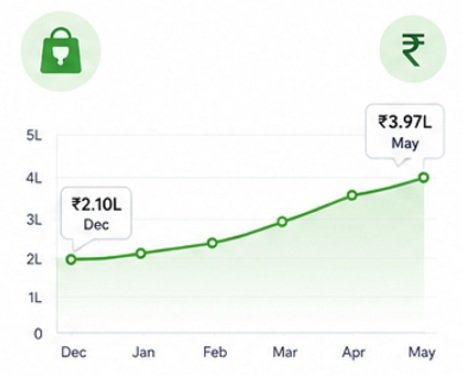
By 2024, their paid traffic economics had worsened. Meta CPMs had increased significantly from 2022 levels, and the ROAS on their best-performing campaigns had dropped from 4.1× to 2.3×. The brand’s Shopify store was generating around ₹2.1 lakh per month in organic revenue but organic traffic had been flat for fourteen months despite the brand adding 40+ new products. They came to Arihant Global to fix the organic stagnation before it became a structural revenue problem.
The Challenge
Shopify SEO Default Architecture Was Working Against Them
Shopify creates predictable technical SEO problems when used with default settings and no Shopify SEO configuration. The brand’s store had several of these simultaneously: collection pages were generating both /collections/kitchen-storage/ and /collections/kitchen-storage?sort_by=price-ascending URLs that were being indexed as separate pages. Product variants (different colours of the same product) were creating near-duplicate product pages. And the default Shopify canonical tag implementation had not been reviewed or customized, meaning some collection pages were self-canonicalizing incorrectly.
Zero Content on Collection Pages
The brand’s collection pages which should have been their highest-traffic commercial pages contained nothing beyond a product grid and a page title. No descriptive text, no buying guide content, no FAQ, no internal links. Google had no content signal to distinguish their ‘bamboo kitchen organizers’ collection from any other kitchen organizer retailer. These pages were effectively invisible for high-commercial-intent category searches.
Product Page Thin Content
Product descriptions averaged 60–80 words and were largely copied from supplier briefs. Several products in the same category had near-identical descriptions with only the product name changed. User reviews existed in Shopify but were not displaying in a format that Google could parse for rich result eligibility the reviews app being used did not generate Product schema with Aggregate Rating, so the brand was invisible for star-rating rich snippets in search results.
No Blog Content, Zero Topical Authority
The brand had a Shopify SEO blog section that contained three posts two of which were brand announcements and one product launch update. There was no content targeting the research-stage queries that home goods buyers use before making purchase decisions: product comparisons, material guides, organization tips, size and specification guides. Competitors with active content strategies were capturing this research traffic and earning the brand awareness that converts later into direct purchase intent.
The Approach
Phase 1 Months 1–2 Technical SEO and Shopify SEO Configuration
The technical work addressed Shopify SEO problems first. Faceted navigation URLs were handled through a combination of canonical tags and robots.txt disallow rules that prevented collection filter pages from consuming crawl budget. Product variant pages were canonicalized to their parent product URL. The reviews app was replaced with one that generated valid Product schema with Aggregate Rating making 64 product pages immediately eligible for star-rating rich snippets in Google search results. Internal linking was restructured so the homepage, top-level navigation, and blog content all linked to collection pages with consistent, keyword-informed anchor text.
Phase 2 Months 2–4 Collection and Product Page Content Rebuild
Shopify Collection pages were rebuilt with 200–350 words of genuine category-level content: what the product category is, who it is best suited for, what materials and size considerations to look for, and how the brand’s products address those considerations. Each collection page received an FAQ section targeting the top People Also Ask queries for that category. Product descriptions were rewritten from scratch for the 40 highest-traffic products written for the buyer, not from a spec sheet. Each description addressed use case, material, dimensions, care instructions, and common buyer questions.
Phase 3 Months 3–5 Blog Content and Topical Authority
A content plan of 16 blog posts was built around the research-stage queries buyers in the brand’s category were using. Topics included material comparison guides (bamboo vs. stainless steel), organization guides for specific kitchen sizes, product pairing recommendations, and buying guides for their top-selling product sub-categories. Each post was internally linked to the relevant collection page. By month five, 8 of these posts were ranking on page one for their target queries and driving measurable referral traffic to the collection pages they linked to.
The Results
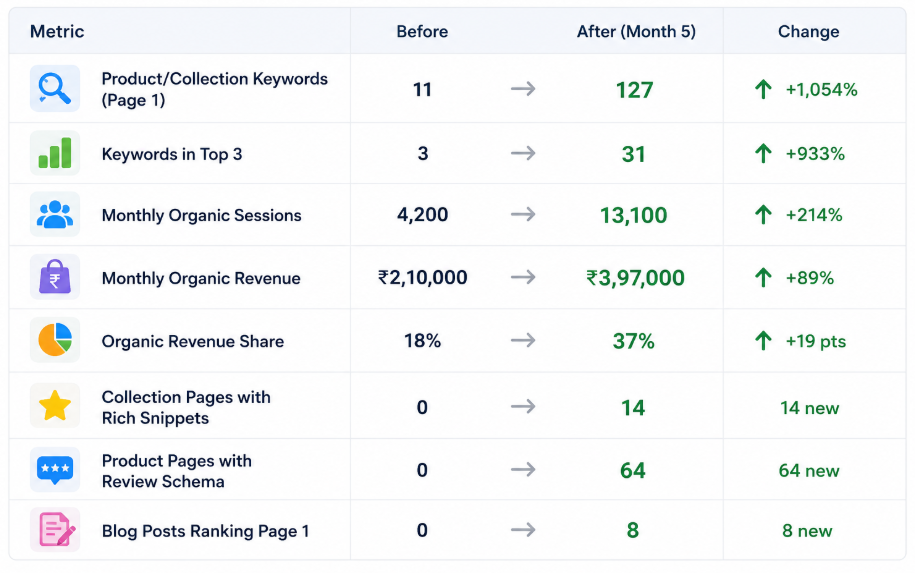
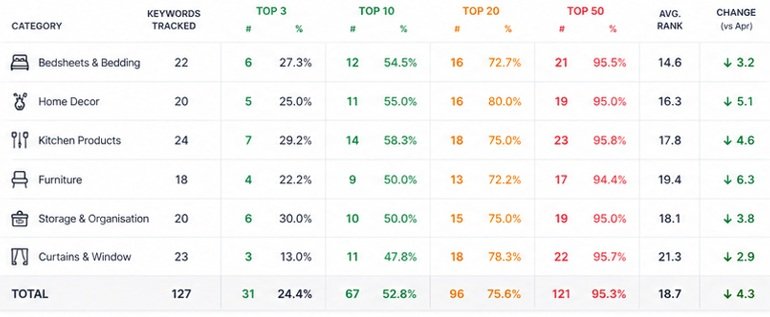
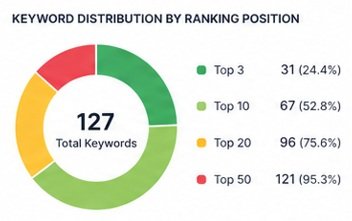
We Ranked Shopify website on 120+ product keywords
we Increased Monthly Organic Revenue by 89%
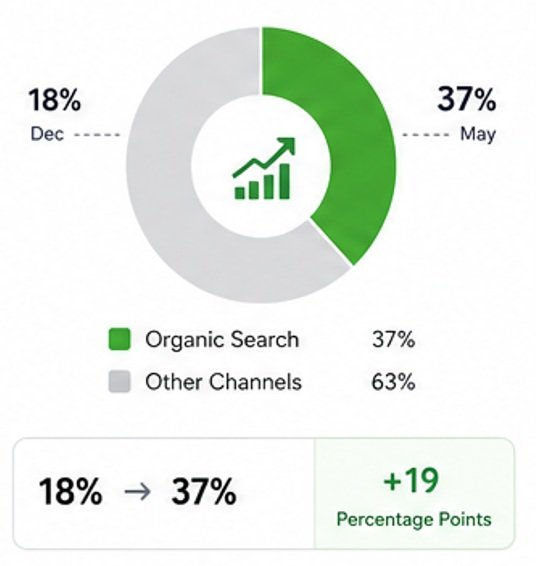
Organic Revenue Share increased by +19%
Key Takeaways
- Shopify’s defaults are not SEO defaults: Faceted navigation, variant canonicalization, and review schema implementation all require active configuration. Default Shopify is actively unhelpful on these points.
- Collection pages are the commercial SEO asset: A D2C Shopify brand’s collection pages are the equivalent of a service business’s service pages they capture high commercial intent and they need content, not just products.
- Reviews schema is a conversion and ranking tool: 64 product pages becoming eligible for star-rating rich snippets was free it required replacing one app and a schema configuration. The CTR improvement from star ratings in search results directly contributed to the traffic and revenue growth.
Conclusion
Long-term ecommerce growth comes from building strong organic visibility, not relying only on paid advertising. Through technical SEO, optimized product and collection pages, and a content-first strategy, Arihant Global helped this Shopify brand turn organic search into a major revenue channel. Want sustainable ecommerce growth? Partner with Arihant Global for Shopify SEO strategies that drive rankings, traffic, and sales.
Disclaimer
The results shown are based on a specific Shopify SEO engagement. Performance varies depending on website condition, competition, product demand, content quality, and overall SEO implementation.
Facebook Marketing Agency – How Arihant Global Helped an E-Commerce Brand to Increase Sales
Client Industry: Direct-to-Consumer (D2C) E-Commerce — Home & Lifestyle Products
Primary Challenge:
Here’s the thing this brand wasn’t doing nothing wrong. They were spending, they were showing up, they were trying. But every month the numbers got a little worse instead of better, and nobody on their side could quite point to why.
Arihant Global’s Solution:
So we came in as their Facebook Marketing Agency and did what we usually do first ignored the dashboard for a minute and actually looked at what was happening underneath it. Tracking, audiences, creative, the catalog feed, all of it. Then rebuilt from there.
Key Measurable Outcomes:
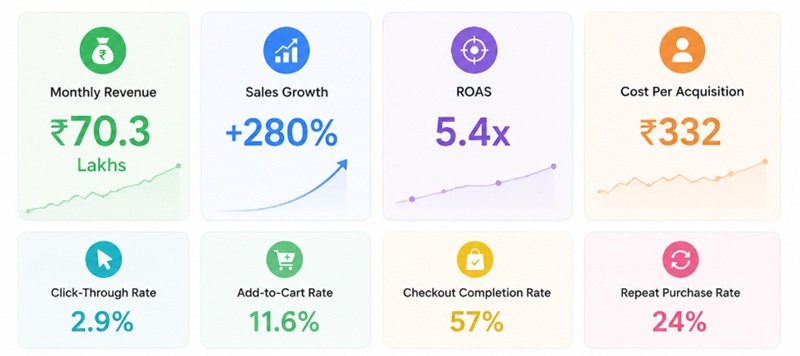
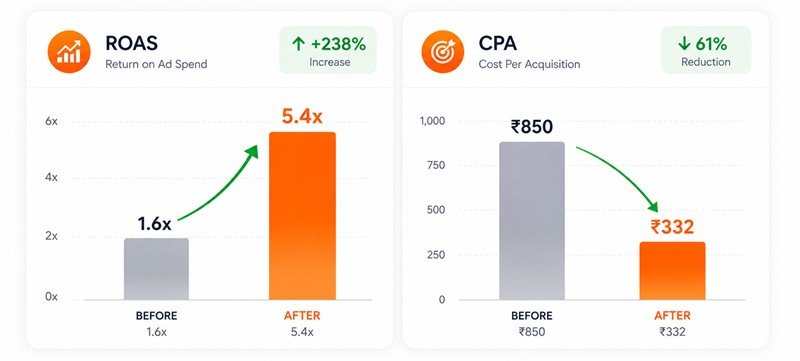
Five months later, sales were up 280%. Cost per acquisition had dropped 61%. ROAS had more than tripled.
Results Snapshot (After 5 Months)
Background & Context
A three-year-old home décor brand, D2C, roughly 12,000 repeat buyers, mostly out of Tier-1 cities. They’d just pushed their catalog from 40 products to over 220 and tripled ad spend to go after national growth. Revenue didn’t follow. That’s the gap that got us the call.
Challenges
A few things jumped out almost immediately once we got into the account:
- Costs kept climbing while revenue sat flat. CPA was up 40% over six months. Classic audience fatigue, and honestly, targeting that hadn’t been refreshed in a long time.
- The Pixel was straight up lying to them. Turns out a checkout script bug was double-firing purchase events. So the ROAS they’d been looking at every week? Not real. They’d been making budget decisions off numbers that were quietly wrong the whole time.
- Every ad looked identical. About 90% of what was live was just plain product shots. Nothing wrong with a clean product photo, but with zero variation to rotate in, ads were exhausted within a week.
- No real funnel to speak of. Cold traffic, warm leads, people who’d already bought all thrown into the same handful of campaigns. Budget was getting split more by gut feel than by what each group actually needed.
- The catalog feed hadn’t been touched in a while. Out-of-stock items kept showing up in ads, sending people to dead pages, and slowly chipping away at their quality score without anyone noticing.
- Repeat customers barely got any attention. Less than 6% of spend was going toward people who’d already bought. For a brand with a genuinely loyal base, that’s just money left on the table.
Approach, Strategy & Solution
We treated the first six weeks as a full rebuild, then kept tuning things through month five.
Month 1 (Weeks 1–2)
Fix the tracking, before anything else. There’s no point optimizing campaigns on top of broken data. So first thing, we rebuilt the Pixel and Conversions API from scratch and killed the duplicate-firing bug. Once that was clean, we finally had numbers we could actually trust everything after this was built on that.
Month 1–2 (Weeks 2–4)
Give the funnel some actual shape. Split it into three clear stages: cold and lookalike audiences up top, warm retargeting for people who’d viewed or added to cart in the middle, sharper win-back offers for cart abandoners and past buyers at the bottom. No more everyone-in-one-bucket.
Month 2 (Weeks 4–6)
Get creative that doesn’t burn out in three days. Put a weekly testing calendar in place 15 to 20 new ad variations a week. Short UGC-style videos, problem-solution hooks, a few founder-led clips thrown in too. Whatever worked got scaled quickly, whatever didn’t got cut just as fast.
Month 2 (Weeks 5–6)
Sort out the catalog mess. Synced Shopify and the Meta Catalog every 30 minutes, so out-of-stock products just stopped showing up in ads altogether.
Month 3–5 (Ongoing)
Start actually talking to the people who already buy. Launched a VIP retargeting campaign for past customers early access to new drops, loyalty pricing, that sort of thing. By month five, that segment had grown from 6% to 22% of total spend. It earned it.
Results
This wasn’t a one-month fluke it built up steadily across five months, which honestly is what made leadership trust it was real.
Revenue & Efficiency Monthly revenue went from ₹18.5 Lakhs to ₹70.3 Lakhs. ROAS climbed from 1.6x to 5.4x. CPA dropped from ₹850 down to ₹332 cut by more than half.
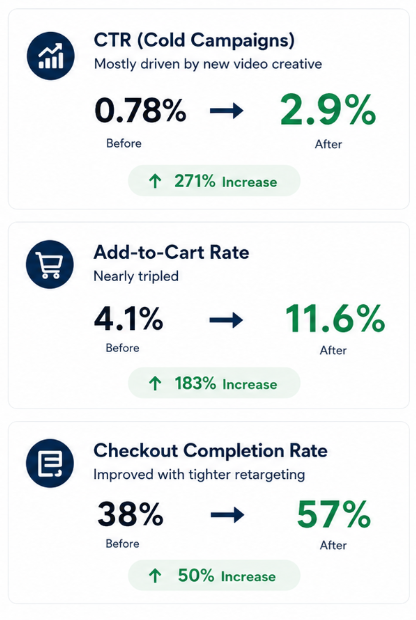
Engagement & Conversion Behavior CTR on cold campaigns went from 0.78% to 2.9%, mostly on the back of the new video creative. Add-to-cart rate nearly tripled 4.1% to 11.6%. Checkout completion moved from 38% to 57% once the retargeting sequences got tighter.
Customer Retention Repeat purchase rate went from 9% to 24%. Lifetime value among retargeted customers came in about 46% higher than the quarter before.
Before vs After
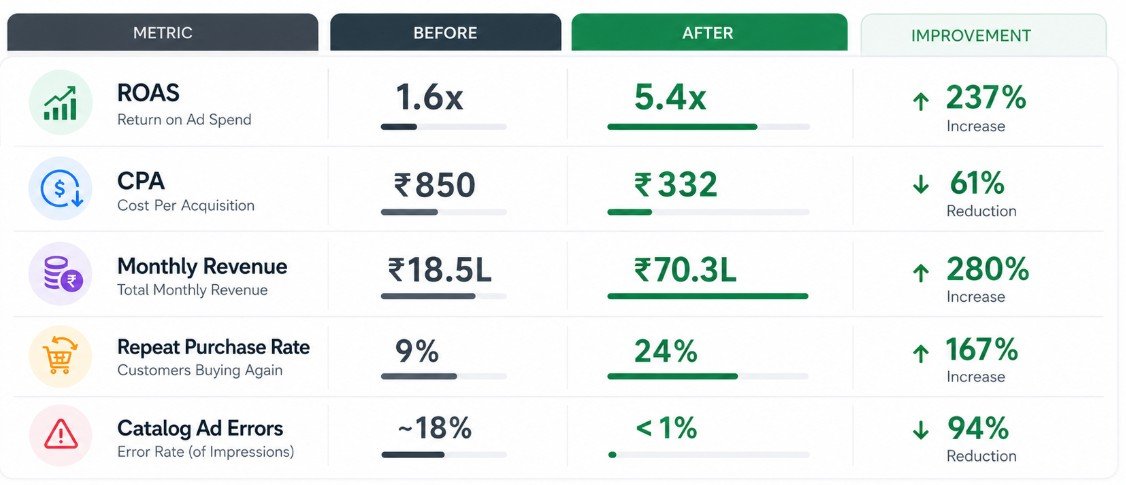
Worth saying too the client’s finance team checked all of this against Shopify’s own order data, not Meta’s dashboard. So this is real money coming in, not just a platform reporting number that happens to look nice.
Why Businesses Choose Arihant Global
- We go by what the data actually says. Every decision traces back to clean, verified numbers not whatever metric happens to look good that week.
- We handle the whole funnel, not just bits of it. As a Facebook Marketing Agency, targeting, creative, retargeting, and catalog health all get treated as one connected system, not separate jobs handed off between people.
- We test creative like it’s our job because it is. Weekly refreshes mean your ads don’t quietly die of fatigue the way most in-house setups tend to.
- We show you what’s real. Store-verified revenue sits right next to Meta’s own numbers, so nothing gets to hide behind a broken Pixel or a duplicated event.
- We build for what actually lasts. The goal is steady, sustainable ROAS and real retention not a spike that falls apart the second you increase spend.
Conclusion: How Arihant Global Can Help You Drive Digital Growth
Most of the time, brands don’t struggle on Meta because the platform quit working on them. They struggle because whatever’s underneath tracking, funnel logic, creative variety, catalog hygiene was never actually solid to begin with. Fix that part first, and scaling spend finally does what it’s supposed to do.
If any of this sounds a little too familiar flat ROAS, a Pixel you’re not totally sure you trust, costs creeping up with nothing to show for it. none of this is specific to home décor. Same fixes, pretty much any e-commerce category.
Ready to Fix What's Holding Your Ad Account Back?

Before you throw more budget at it, it's worth just checking what's actually going on underneath first. We'll run a free audit on your Meta Ads account and tell you plainly where things are leaking. No pitch attached, just the audit.

Get Your Free Meta Ads Audit - See Where Your Budget Is Actually Going.
Disclaimer
This case study is for informational purposes only. Marketing results are influenced by multiple factors, including audience behavior, budget allocation, and campaign optimization, and cannot be universally guaranteed across all businesses.

Performance Marketing Services – How Arihant Global Helped a Fitness Brand Reduce Cost Per Purchase by 42% Through
Client Industry: Fitness & Wellness - Home Workout Equipment & Supplements (D2C Ecommerce)
Primary Challenge:
Good following, good products, traffic wasn’t the issue at all. The problem was quieter than that every single purchase was just costing more than it used to, month after month, and nobody could quite say why. They kept spending more to hit the same number, and at some point that stops looking like growth and starts looking like treading water.
Arihant Global’s Solution:
We took over their Performance Marketing and went straight at cost per purchase. Not by throwing more money at it by actually finding where the money was leaking, across targeting, creative, and everything sitting between someone clicking an ad and actually finishing checkout.
Key Measurable Outcomes:
Results Snapshot (After 4 Months)

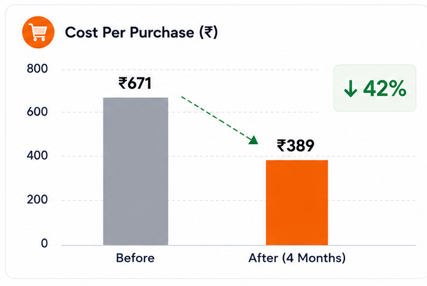
Four months in, cost per purchase was down 42%, purchases were up 78% on basically the same budget, and ROAS had nearly doubled.
Background & Context
A fitness brand selling home workout gear resistance bands, adjustable dumbbells, a couple of solid supplement lines through their own site. About three years in, decent name in the home fitness space, genuinely engaged Instagram following, not a brand-awareness problem at all. Spend had been climbing steadily for a year just to keep hitting the same sales targets, and cost per purchase had quietly gone up right alongside it the whole time.
Challenges
Went through the account and the site together, and honestly, the leaks weren’t hard to find at all:
- Cost per purchase had been climbing for three quarters straight. Spend kept going up to hit the same revenue number, and everyone had just sort of absorbed that as “the cost of staying competitive” without really questioning whether the money was even being spent well in the first place.
- A lot of the targeting was reaching people who were never going to buy anything. Interest audiences hadn’t been touched in months. A growing share of clicks were coming from people who’d engage with an ad out of curiosity, nothing more.
- The ad said one thing, the landing page said another. An ad would promise, say, a bundle deal, and click through would land on a plain generic product page with no mention of it. People noticed. People left.
- Checkout had friction nobody had bothered fixing. An extra address confirmation step that didn’t need to exist, plus a slower payment gateway sitting as the default. Both quietly bleeding conversions, especially on mobile.
- Creative had gone stale, and nobody caught it in time. A small handful of ads had been running for months basically unchanged. Performance slid slowly enough that it never really set off any alarms.
- New customers and repeat buyers were seeing the exact same ad. No difference at all in messaging whether someone had never bought before or was already on their third order.
Approach, Strategy & Solution
We spread this over four months and kept the budget more or less flat the entire time, on purpose that way, whatever changed, changed because of efficiency, not because more money went in.
Month 1 (Weeks 1–2)
Clean up targeting before touching anything else. Rebuilt lookalike audiences off actual recent buyers instead of a list that hadn’t been refreshed in ages, and tightened interest targeting so reach wasn’t going out to people who were never close to buying. Total reach dropped a bit. What came in was a lot more worth having.
Month 1 (Weeks 2–3)
Make the ad and the page actually agree with each other. Went through every live campaign one at a time and matched what the ad promised to a page that actually reflected it, instead of dumping every click onto the same generic product page regardless of what was said in the ad.
Month 1–2 (Weeks 3–5)
Fix what was slowing checkout down. Worked with their developer, dropped the pointless address confirmation step, swapped the default payment option for something that loaded faster. Small, unglamorous fixes. Completion rate moved within two weeks anyway.
Month 2 (Weeks 4–6)
Get creative back on a real rotation. Brought in a rolling set of new material short workout clips, real customer testimonials, some before-and-afters refreshed every couple of weeks instead of letting the same few ads sit there indefinitely.
Month 2–3 (Weeks 5–8)
Stop treating new and repeat customers the same. Built separate audiences and separate messaging for first-timers versus people who’d already bought, using purchase history so returning customers actually saw restock reminders and upsells instead of the same generic “try us” ad.
Month 3–4 (Ongoing)
Put the money where it was clearly working. Once there was enough clean data, spend moved away from the weaker ad sets and got concentrated behind whatever combination of audience and creative was actually producing purchases at the lowest cost instead of just splitting everything evenly because that’s how it had always been done.
Results
By month four, cost per purchase had genuinely turned around moving in the direction that makes the same budget do more, instead of needing more budget every quarter just to stand still.
Cost per purchase went from ₹671 down to ₹389 a 42% drop.
Volume & Reach Purchases grew 75% while the budget stayed roughly where it was — that came almost entirely from sharper targeting and less drop-off at checkout, not from spending more.
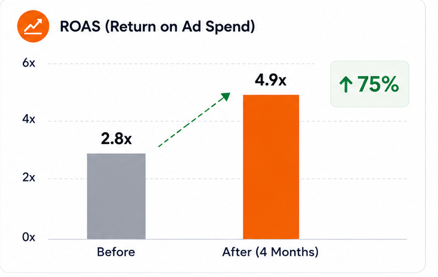
ROAS climbed from 2.8x to 4.9x over the same window.
Conversion Behavior Click-through rate went from 1.1% to 2.4%, mostly thanks to the fresh creative. Checkout completion improved from 44% to 61% once the friction actually got cleared out.

Customer Mix Return customers went from about 17% of total purchases to 31%, once they finally started seeing something built for them instead of the same acquisition pitch as a total stranger.
Every number here was checked against the brand’s own order records, not just what Meta reported on its side, so this is real orders that actually came through, not just a dashboard number that looks nice.
Conclusion: How Arihant Global Can Help You Drive Digital Growth
A rising cost per purchase is basically never one big dramatic thing. It’s a handful of small things quietly piling up targeting gone stale, an ad and a page that don’t quite match, one extra step at checkout, creative nobody’s swapped out in months. None of it looks like an emergency on its own. Together, it’s exactly the kind of slow bleed that convinces a brand the only fix left is a bigger budget.
If your cost per purchase keeps creeping up and spending more feels like the only lever left to pull, there’s a real chance the actual fix is sitting somewhere inside the funnel not in the size of the spend.
Ready to Bring Your Cost Per Purchase Down?
If your spend keeps climbing just to hold the same purchase numbers, it’s worth actually looking at what’s happening between the click and the finished order. We’ll run a free audit across your targeting, creative, and checkout, and show you exactly where the cost is really coming from.
Get Your Free Performance Marketing Audit – See Where Your Purchase Cost Is Actually Coming From.
Disclaimer
Results are based on a real client campaign and are shared for educational purposes. Individual marketing performance depends on multiple factors and may differ from the outcomes presented.

How Proffesional Skills Training Brand Filled Multiple Batches Using Education Marketing Services

A test-prep and skills-training brand came to us right before what should have been their busiest enrollment window, already nervous. Two of their four upcoming batches were sitting well below minimum enrollment with barely a month left, the kind of situation where a coaching center starts wondering whether to cancel a batch entirely and refund the handful of students who did sign up.
Client: Withheld at client's request Sector: Education (Test Preparation & Professional Skills Training)

Engagement: 4 months

Service: Education Marketing Services (Paid + Organic)
Key Measurable Outcomes
Background
The brand runs test-prep programs alongside a smaller set of professional certification courses, mostly offline classroom batches with a modest online component added over the previous year. They’d built a decent reputation over about six years, largely through word of mouth among students who’d taken a batch and told friends preparing for the same exam. That had worked well enough when they were running one or two batches at a time.
The trouble started once they expanded to four concurrent batches across two program types. Word of mouth simply couldn’t fill that much capacity on its own, especially not on the timeline a batch schedule demands, since a coaching batch either fills by its start date or it doesn’t run at all. There’s no gradual ramp-up the way there might be for an ongoing service. When they came to us, two batches were tracking toward cancellation, which would have meant refunding early enrollees and damaging trust with exactly the students they most wanted to keep.
What was actually happening
Education Marketing had been running as an afterthought, a Facebook page that posted occasionally, some WhatsApp broadcasts to an old contact list, and a small Google Ads budget that had never really been reviewed since it was first set up over a year earlier. Nobody owned the enrollment number as their specific responsibility, which meant nobody was tracking it closely enough to notice the shortfall until it was almost too late.
The old Google Ads campaign was still bidding on keywords from a program they’d discontinued, quietly wasting a chunk of budget every month on searches that led to a page for a course that no longer existed. Nobody had checked.
There was also no urgency built into anything. Batch start dates existed only on an internal spreadsheet, nowhere on the website, nowhere in any ad, which meant a prospective student had no reason to enquire this week rather than next month, even though seats were genuinely limited and the deadline was real.
Content, such as it existed, talked about the brand in general terms rather than addressing the specific anxiety a prospective student actually has close to enrollment: will this batch timing work with my schedule, how much personal attention will I actually get in a room with thirty other students, what’s the realistic outcome if I join this batch versus waiting for the next one.
And there was no retargeting at all for the sizable number of people who’d visited the website or messaged on WhatsApp without enrolling, which given how the batch deadline was approaching meant a lot of warm interest was just being left on the table.
What we changed
The first move was purely defensive: we killed the wasted spend on the discontinued program’s keywords immediately and redirected that budget toward the two batches actually at risk. Small fix, but it freed up real money within the first week without asking for a bigger budget.
We then built urgency directly into the campaigns and the website, actual seat counts where accurate, countdown messaging tied to real batch start dates, and a visible distinction between “enrolling now” and “next batch” so visitors understood exactly what timeline they were dealing with. This isn’t a trick when the scarcity is genuine, and here it was, seats were actually limited and the date was actually approaching.
Landing pages got rebuilt per batch rather than per program broadly, so someone looking at the upcoming weekday batch saw information specific to that schedule, that instructor, that start date, rather than generic brand messaging that could have applied to any batch at any time.
We added short video content featuring the actual instructors for the batches struggling to fill, a few minutes of them explaining what the first two weeks would cover and answering the scheduling and attention-level questions we knew prospective students were quietly worried about. This performed better than any static ad we tested, likely because it let a hesitant student see the actual person they’d be learning from before committing.
WhatsApp, already a channel the brand’s audience was comfortable with, became the primary follow-up tool. Anyone who enquired but hadn’t enrolled got a short, non-pushy sequence over the following days, answering common questions and providing a direct link to secure a seat, timed around the actual closing date rather than an arbitrary schedule.
What it produced
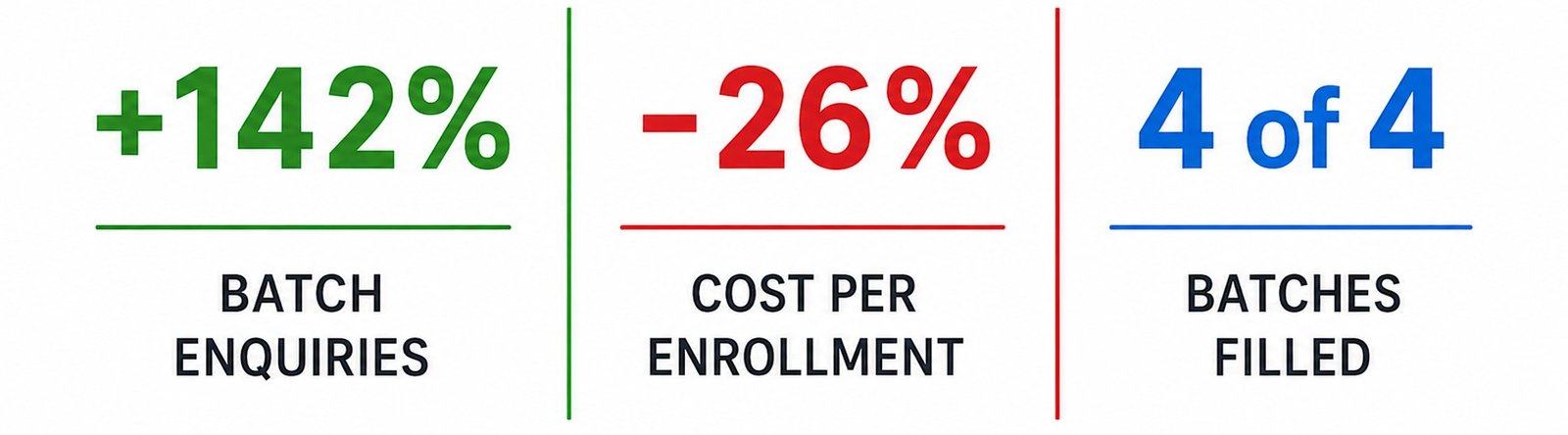
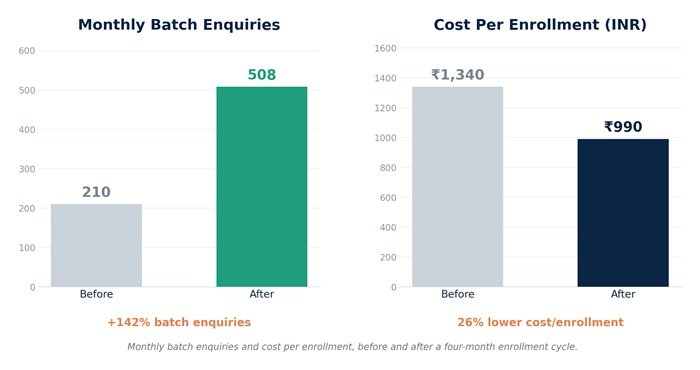
Over four months, spanning the single enrollment cycle the two struggling batches needed to fill, batch enquiries rose 142 percent, and all four batches reached minimum enrollment before their start dates, including both that had been tracking toward cancellation. Cost per enrollment dropped 26 percent, largely from cutting the wasted ad spend and from landing pages that finally spoke to the specific batch someone was actually considering.
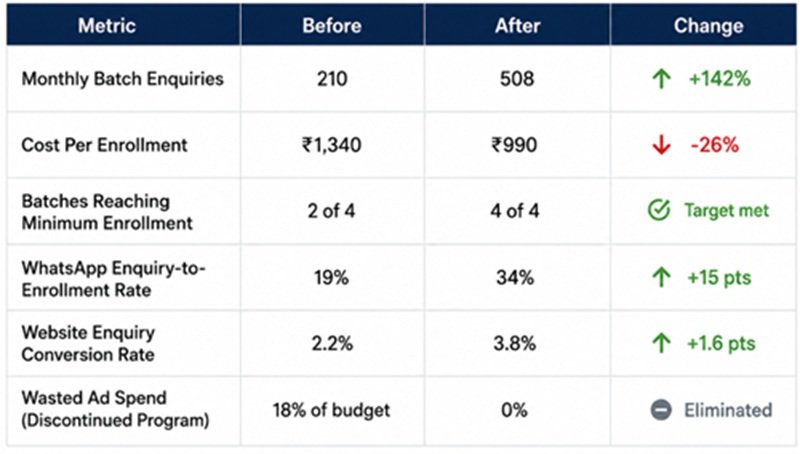
Cost per enrollment dropped 26 percent
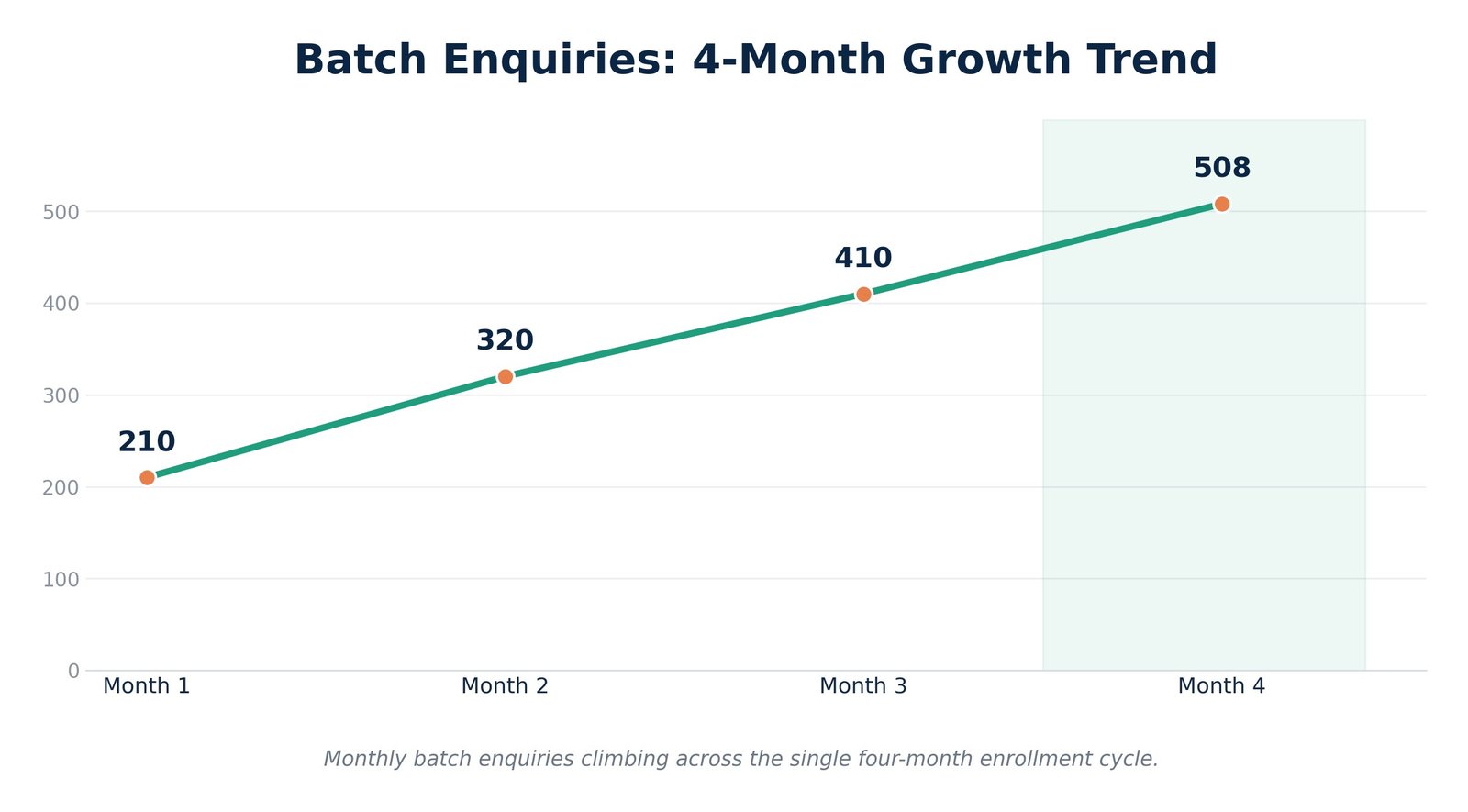
The instructor videos ended up being reused well beyond this cycle, the brand kept them running as evergreen content for the next enrollment period, since they’d clearly done more to settle a hesitant student’s nerves than any brochure copy had managed in years.
"We were genuinely close to cancelling one of those batches and refunding students who'd already paid, which is about the worst position a coaching center can be in with its own enrolled students watching. Filling it changed the mood in the office more than any single number could really capture." Director, client institute (name withheld)
Why this worked
The brand’s programs weren’t the problem, students who completed a batch generally did well and said so. What was missing was any real infrastructure treating enrollment as something that had to be actively driven toward a hard deadline, rather than something that would sort itself out through reputation alone. Building real urgency around real scarcity, letting instructors speak for themselves on video, and following up through a channel students already trusted did most of the work, none of it required reinventing what the brand actually was.
If this sounds familiar
We’ll review your current enrollment marketing for free, no changes made, just an honest look at whether your campaigns are actually built around your real batch deadlines or just running in the background.
Ask us for a free education marketing audit →
Why education brands tend to stick with Arihant global
Arihant global build urgency around real deadlines, not manufactured scarcity that erodes trust over time. Instructors and real classroom content do the persuading, not generic brand copy. Follow-up happens on the channel your students already use, not one you’re hoping they’ll switch to. And we treat batch-fill as the actual goal, not enquiry volume that looks fine in a report but doesn’t fill a single seat.
Disclaimer
This case study is based on a real client engagement. Client identity has been withheld for confidentiality, and individual results may vary depending on market conditions, competition, budget, and implementation.
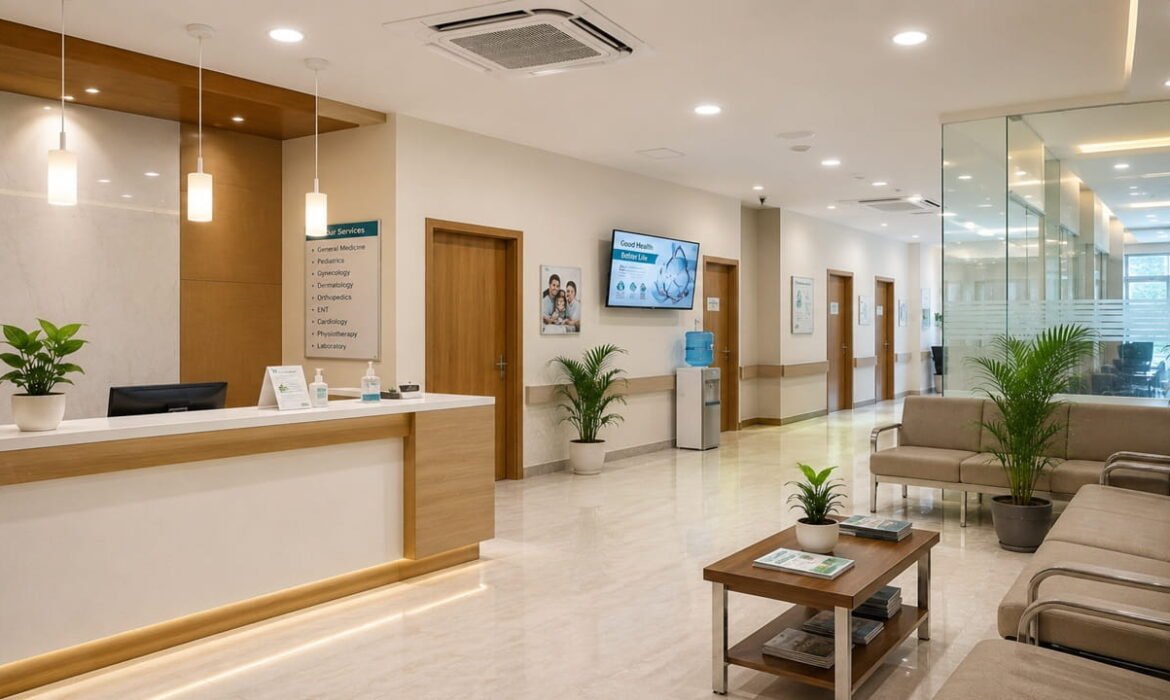
Healthcare Lead Generation – How Healthcare Multi-Specialist Clinic Increased Appointment Requests By 180%
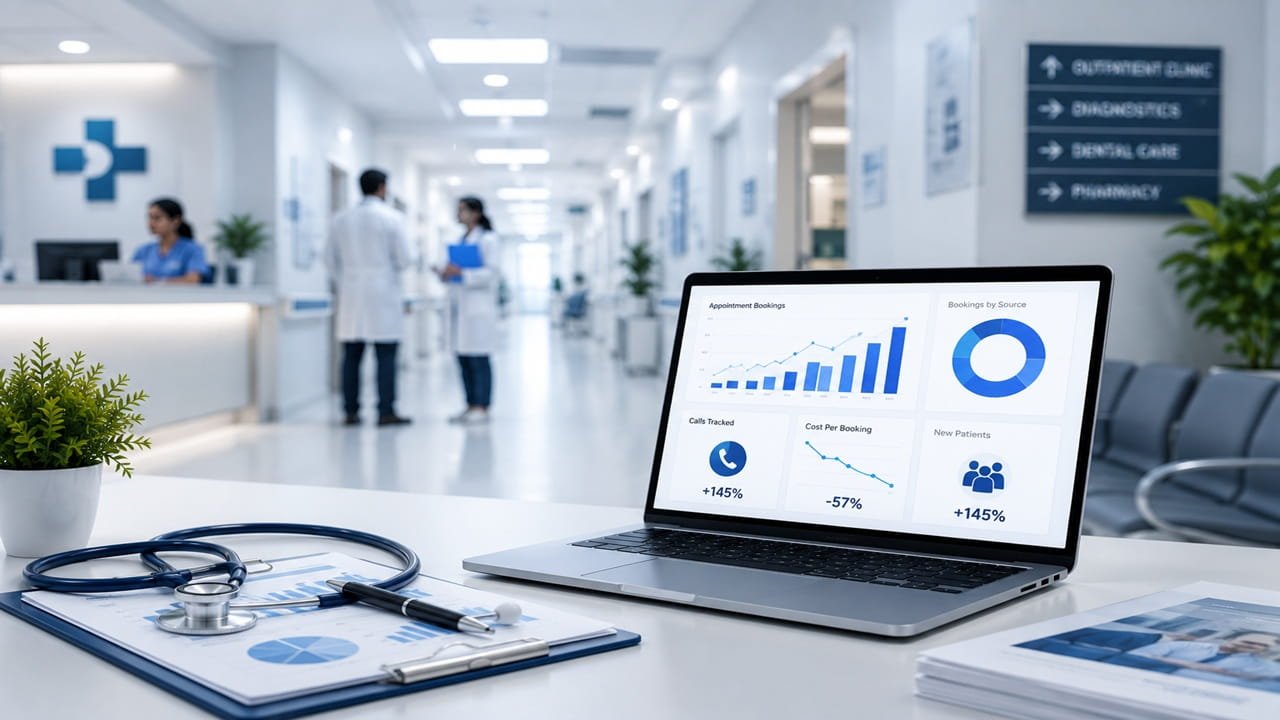
A multi-specialty clinic came to us with a complaint that’s more common in healthcare than most people realize: the phone wasn’t ringing enough, but nobody could say exactly why. Their website looked professional. They had good doctors and solid patient reviews. And yet appointment requests had been flat for the better part of a year, while two newer clinics down the road seemed to be growing every quarter.
Client: Withheld at client's request Sector: Healthcare (Multi-Specialty Outpatient Clinic)

Engagement: 5 months

Service: Healthcare Lead Generation
Key Measurable Outcomes

Background
The clinic runs five specialties under one roof, general medicine, dermatology, orthopedics, gynecology, and pediatrics, with eight practicing doctors and a patient base built up over almost a decade. Word of mouth had carried them a long way. Loyalty among existing patients was genuinely strong, the kind of clinic where people bring their whole extended family once they trust one doctor there.
The problem was new patient acquisition specifically. Existing patients kept coming back, but very few new people were finding the clinic online, even though most patients in this region now start their search for a doctor on Google or through a health app rather than asking a neighbor. The clinic had a website and a few social pages, but nobody on staff had ever really been responsible for whether those channels were actually generating appointments, or just existing.
What was actually happening
The website was structured like a brochure, not a lead generation tool. Each specialty had a page, but none of them made it easy to actually book anything, the “Contact Us” link led to a generic phone number and a static form buried at the bottom of the page, several scrolls down on mobile, where most visitors actually were.
There was also no separation between specialties in terms of how people found the clinic. A search for “pediatrician near me” and a search for “orthopedic knee specialist” led to the exact same homepage, which meant a worried parent looking for a child’s doctor had to dig around to even confirm the clinic offered pediatrics at all, let alone find a reason to trust that specific doctor.
Local search presence was thin. The Google Business Profile existed but was incomplete, missing hours for some specialties, no recent photos, and a review response rate of essentially zero, which matters more in healthcare than most other categories, since patients weighing a new doctor read reviews closely and notice whether a practice engages with feedback at all.
And there was no follow-up system for anyone who called or messaged but didn’t book immediately. In healthcare, a fair number of people research before committing, checking insurance acceptance, comparing a couple of doctors, waiting until a symptom gets worse before finally calling. The clinic had no way of staying in front of those people once that first contact happened, so a lot of genuine interest simply evaporated.
What we changed
We rebuilt the website structure around each specialty as its own entry point rather than funneling everyone through one homepage. A visitor searching for a dermatologist landed on a dermatology-specific page with that doctor’s credentials, common conditions treated, and a booking button above the fold, not buried under general clinic information they didn’t need yet.
Booking itself got simplified into a short, direct form, name, phone number, preferred specialty, and a brief note on the reason for the visit, available as a persistent button on every page rather than something visitors had to hunt for. We also added a click-to-call option specifically for mobile visitors, since a meaningful share of healthcare searches happen when someone is already dealing with discomfort and wants to just call rather than fill out a form.
The Google Business Profile got fully rebuilt, correct hours per specialty, updated photos of the facility and doctors, and a straightforward process for requesting reviews from satisfied patients after a visit. We also set up a simple system for responding to every review, positive or negative, since an engaged, responsive profile builds a kind of trust that generic marketing copy can’t really replicate.
For local search visibility, we built specialty-specific content addressing common patient questions, what to expect during a first orthopedic consultation, how to prepare for a dermatology appointment, the kind of practical information people search for before they’ve decided which clinic to call, which also helped each specialty page rank for the specific terms patients were actually using.
Finally, we set up a short follow-up sequence for anyone who called or submitted an enquiry without booking, a same-day message confirming the clinic had received their interest, followed by a gentle check-in a few days later if no appointment had been scheduled. Nothing aggressive, just enough to stay visible to someone who was still deciding.
What it produced
Over six months, monthly appointment requests rose from roughly 95 to 266, a 180 percent increase, spread across specialties rather than concentrated in just one. Cost per lead dropped 29 percent as paid campaigns shifted toward the specialty-specific landing pages, which converted considerably better than the old generic homepage ever had. New patient show-up rate, the number that actually matters to a clinic’s schedule, rose 33 percent, largely a result of the follow-up sequence catching people who would have otherwise quietly dropped off.
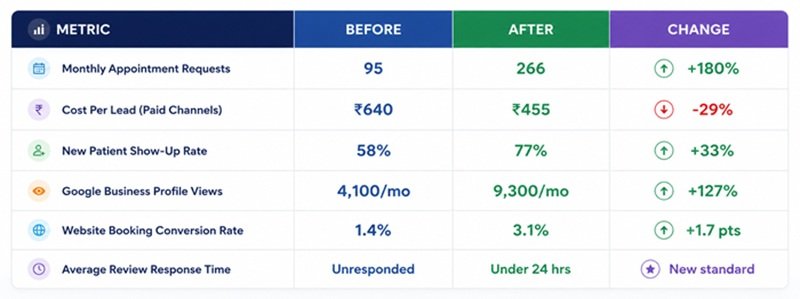
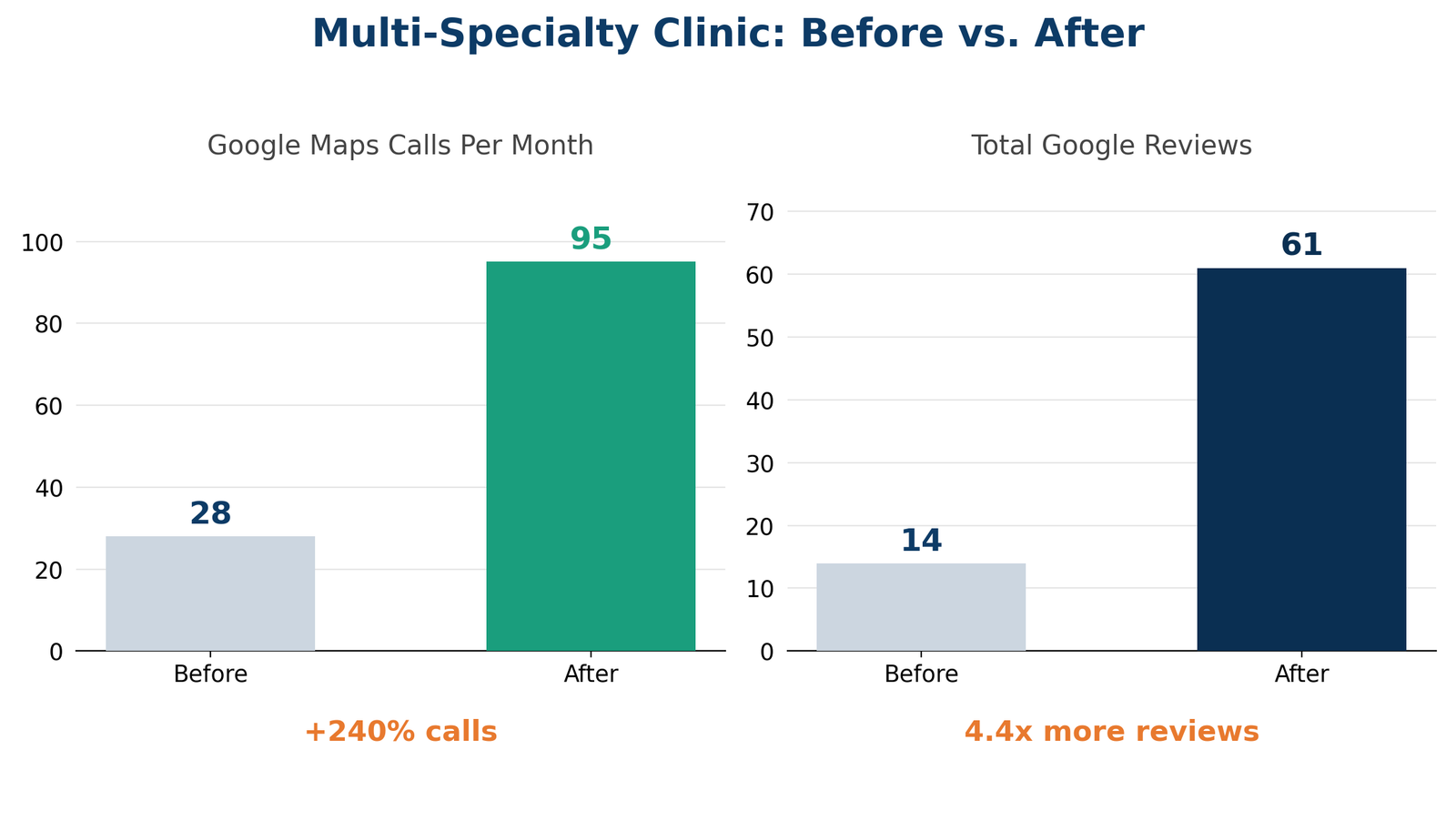
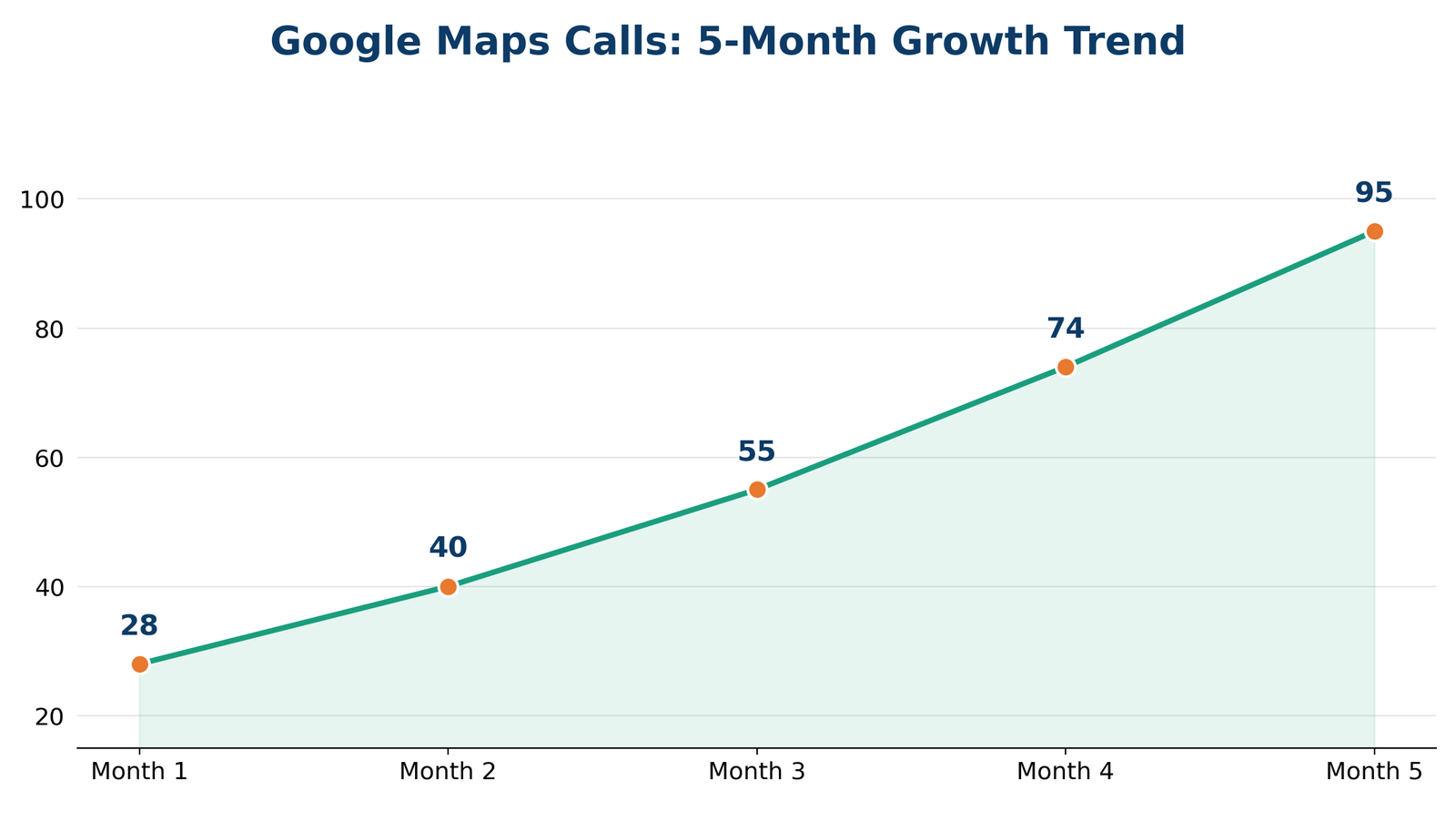
The clinic’s administrator mentioned that pediatrics, which had been the quietest specialty for new patients, ended up seeing the sharpest relative increase, largely because parents finally had a dedicated page answering the specific questions they were searching for before ever picking up the phone.
"For years we assumed people found us mostly through word of mouth, and that was mostly true for people who already knew someone who'd been here. What we didn't have was any real way for a stranger searching online to actually find their way to us and then to the right doctor. That's the part that changed." Clinic Administrator, client practice (name withheld)
Why this worked
The clinic wasn’t short on quality or reputation among people who already knew them. What they lacked was a way for new patients to discover them online and move smoothly from a search to an actual booked appointment. Splitting the website by specialty, cleaning up local search presence, and following up with people who hadn’t yet committed all addressed the same underlying gap, a good clinic that was quietly invisible to anyone who hadn’t already heard of it.
If this sounds familiar
Arihant Global will review your current website and local search presence for free, no changes made, just an honest look at where potential patients are searching for you and whether they’re actually finding a way to book.
Ask us for a free healthcare lead generation audit →
Why healthcare Marketing practices tend to stick with us
Arihant Global build separate pathways for each specialty, since a patient searching for a pediatrician and one searching for an orthopedist are looking for entirely different things. Local search and review management get treated as core to Healthcare lead generation, not an afterthought. Follow-up sequences respect that healthcare decisions often take a few days, instead of assuming interest that isn’t booked immediately is interest lost. And we track show-up rate alongside lead volume, since an appointment that’s booked but never attended isn’t really a result.
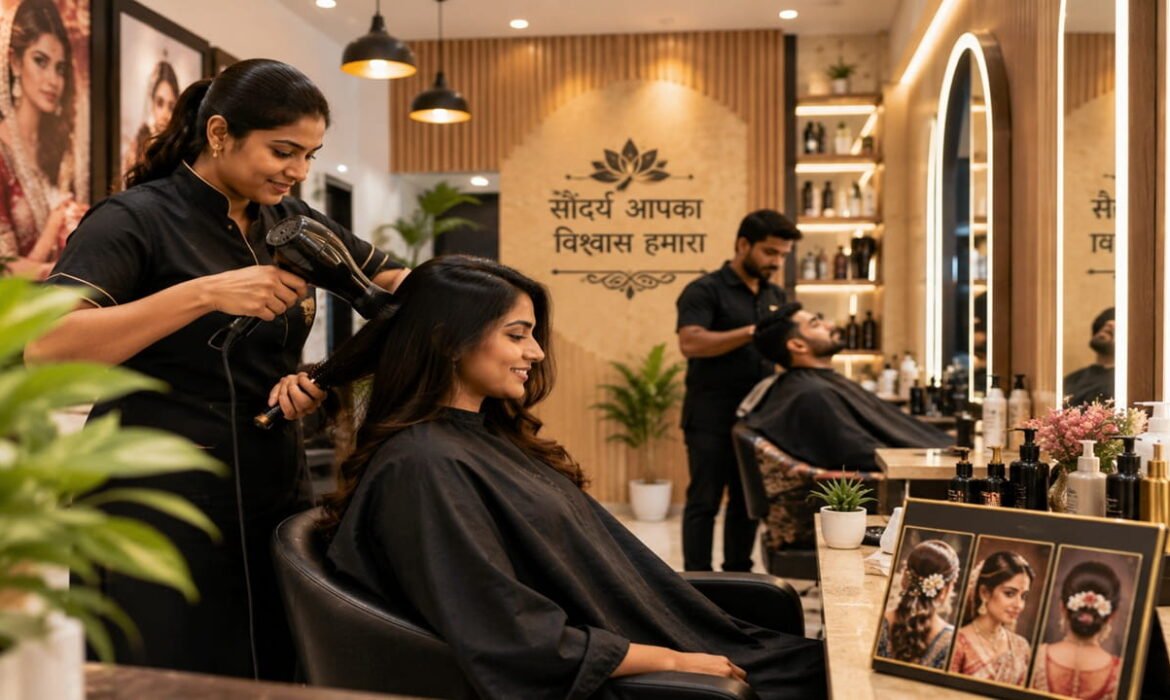
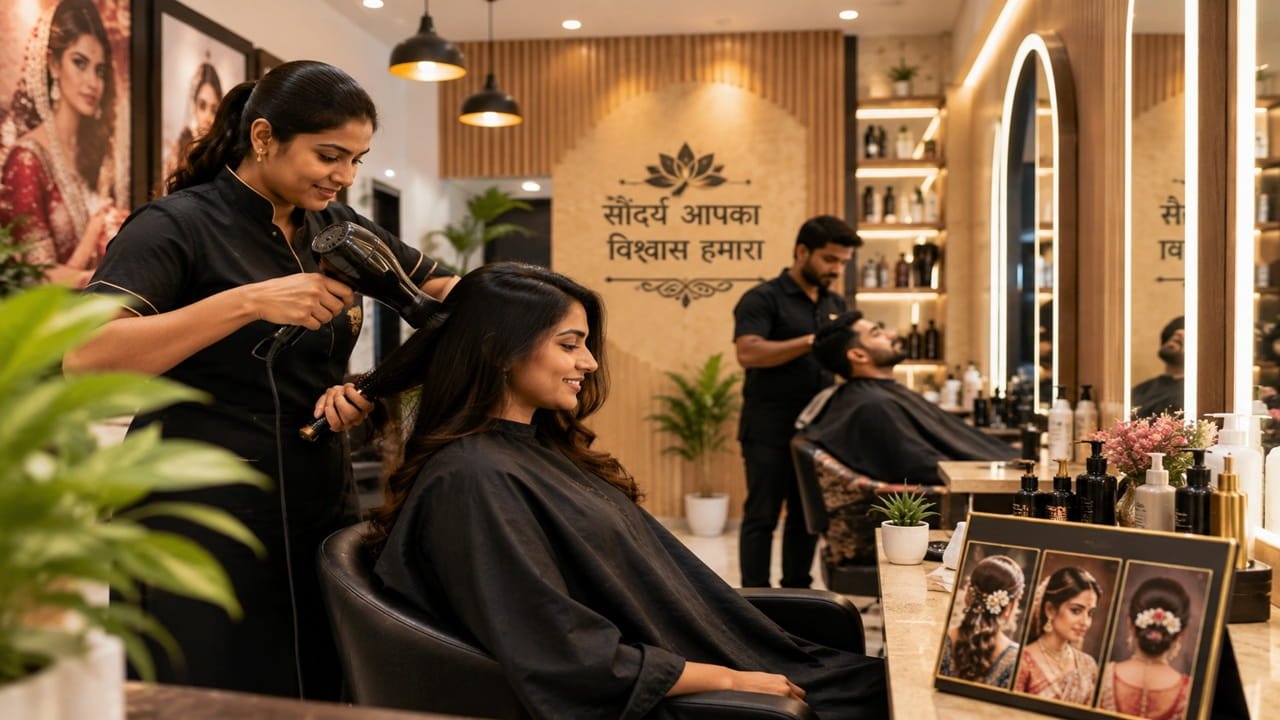
How a Hair & Beauty Salon Attracted More Local Customers with Local SEO Services
Executive Summary
Client Industry - Beauty and Personal Care Hair and Beauty Salon
The salon had been open for several years and had a steady base of regular clients but was almost invisible on Google for the searches new customers were running when looking for a salon nearby. Competitors with similar local SEO services Result consistently appearing above it in search results and the salon was missing out on a significant volume of new booking opportunities every week.
Arihant Global Conducted a full local business SEO audit, rebuilt the Google Business Profile with accurate service information and salon visuals, introduced a structured client review process, optimized for the salon’s core service categories and built local authority through citation consistency, website local signals and regular profile activity.
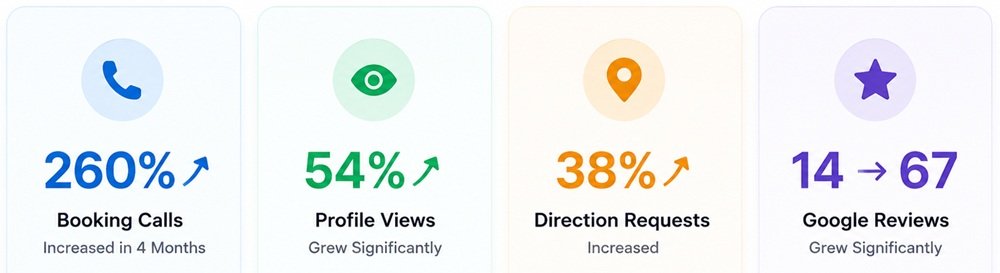
Results Snapshot
Background and Context
The client runs a full service hair and beauty salon that has been operating for over seven years. The salon offers haircuts, colouring, keratin treatments, facials, threading, waxing and bridal packages across a well equipped space with an experienced team of stylists and beauty therapists. Existing clients were loyal and regular many had been coming for years and the salon had a warm reputation among the customers who knew it. But walk-ins from new customers had slowed down and the owner was increasingly aware that people searching Google for a salon nearby were not finding it. The local beauty market was competitive and several newer salons with stronger Google profiles were consistently occupying the top spots for the searches this salon should have been appearing in.
Challenges
- The Google Business Profile was incomplete no service menu, no pricing information and several key sections left entirely blank
- The salon’s primary and secondary categories were incorrectly set up which was limiting its visibility for specific treatment searches
- Only 14 Google reviews existed after seven years of operation with no process for encouraging happy clients to leave feedback
- Four negative reviews about waiting times and colour results had been sitting unanswered for months the first thing a new client researching the salon would see
- The salon had almost no photos on its profile despite having a well designed interior and a portfolio of client transformations that stylists had been building for years
- The salon was not ranking in the local 3-pack for any of its core service searches haircut near me, hair colouring salon, bridal makeup and similar terms were all going to competitors
- NAP information was inconsistent across beauty directories and local listing platforms
- The website had no location specific content and no local SEO signals that would support the profile’s visibility in local search
Approach, Strategy and Solution
The work followed a structured 4 month rollout, each phase addressing a specific gap in the salon’s local business SEO presence.
Month 1 Full Google business Profile Audit and Rebuild
Every section of the Google Business Profile was corrected from scratch categories, hours, service menu, pricing and business description all rebuilt properly. Eight secondary categories were added covering the salon’s core treatments and Sunday availability was listed for the first time. The description was rewritten around the service types and location signals that mattered most for local search.
Month 2 Visual Content and Salon Showcase
A photo and video shoot covered the interior, styling stations, team at work and before and after client transformations. Sixty plus photos were uploaded alongside short video clips of the salon floor and a bridal transformation. The Q and A section was seeded with the questions new clients asked most parking, walk-in availability, appointment booking and pricing for key treatments.
Month 3 Review Generation and Reputation Management
Every client received a WhatsApp message within an hour of leaving a genuine thank you with a direct review link. A follow up went out after 48 hours to anyone who had not responded. All four unanswered negative reviews were addressed individually and professionally, with each response acknowledging the specific concern and explaining what had changed. Within five weeks the review count had more than tripled.
Month 4 Citation Building, Website Updates and Google Posts
Listings were corrected across 24 directories with NAP consistency established everywhere. The website received location specific pages and schema markup for beauty businesses. Google Posts went up twice a week covering seasonal promotions, style inspiration and team spotlights.
Results
The shift showed up first in booking calls within the first six weeks of the rebuilt profile going live the front desk was receiving more new client enquiries than it had seen in any comparable period before.
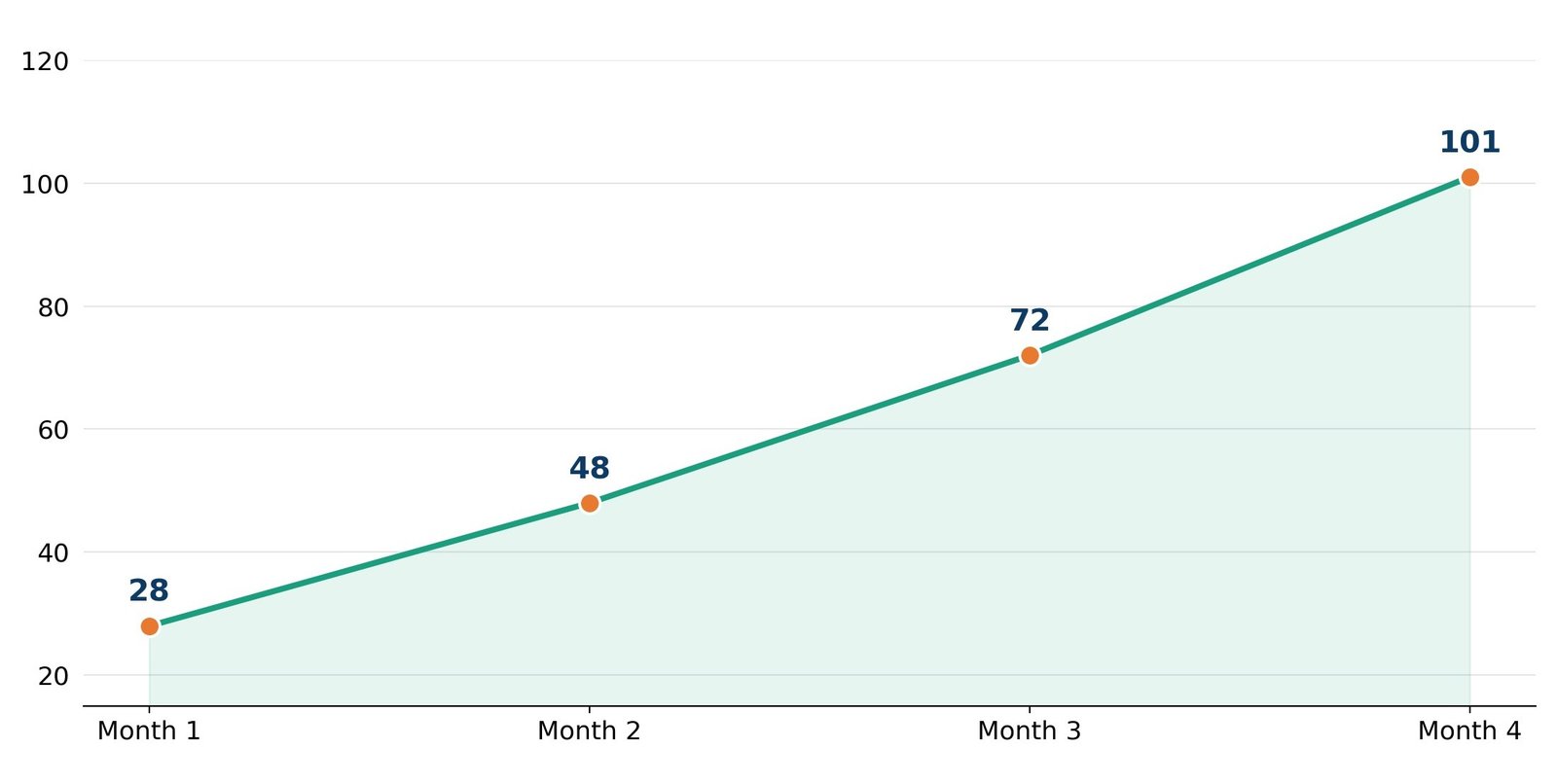
Metric |
Before |
After |
Booking Calls per Month |
28 per month |
101 per month |
Profile Views per Month |
310 per month |
798 per month |
Direction Requests per Month |
16 per month |
22 per month |
Total Google Reviews |
14 reviews |
67 reviews |
Average Star Rating |
3.9 |
4.6 |
Search Appearances per Month |
260 per month |
680 per month |
Salon Booking Calls Increased by 260% in 4 Months
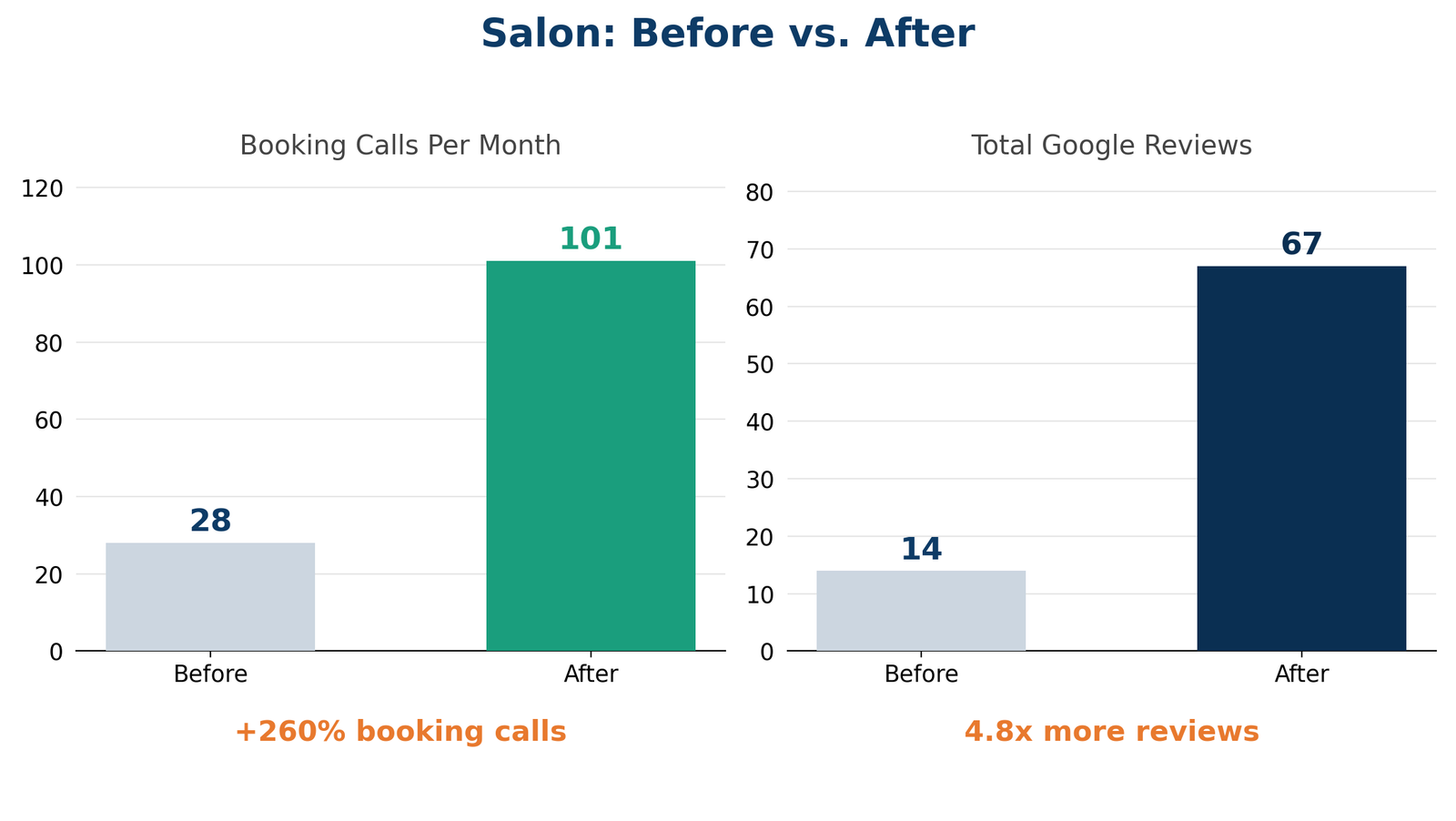
Before Review
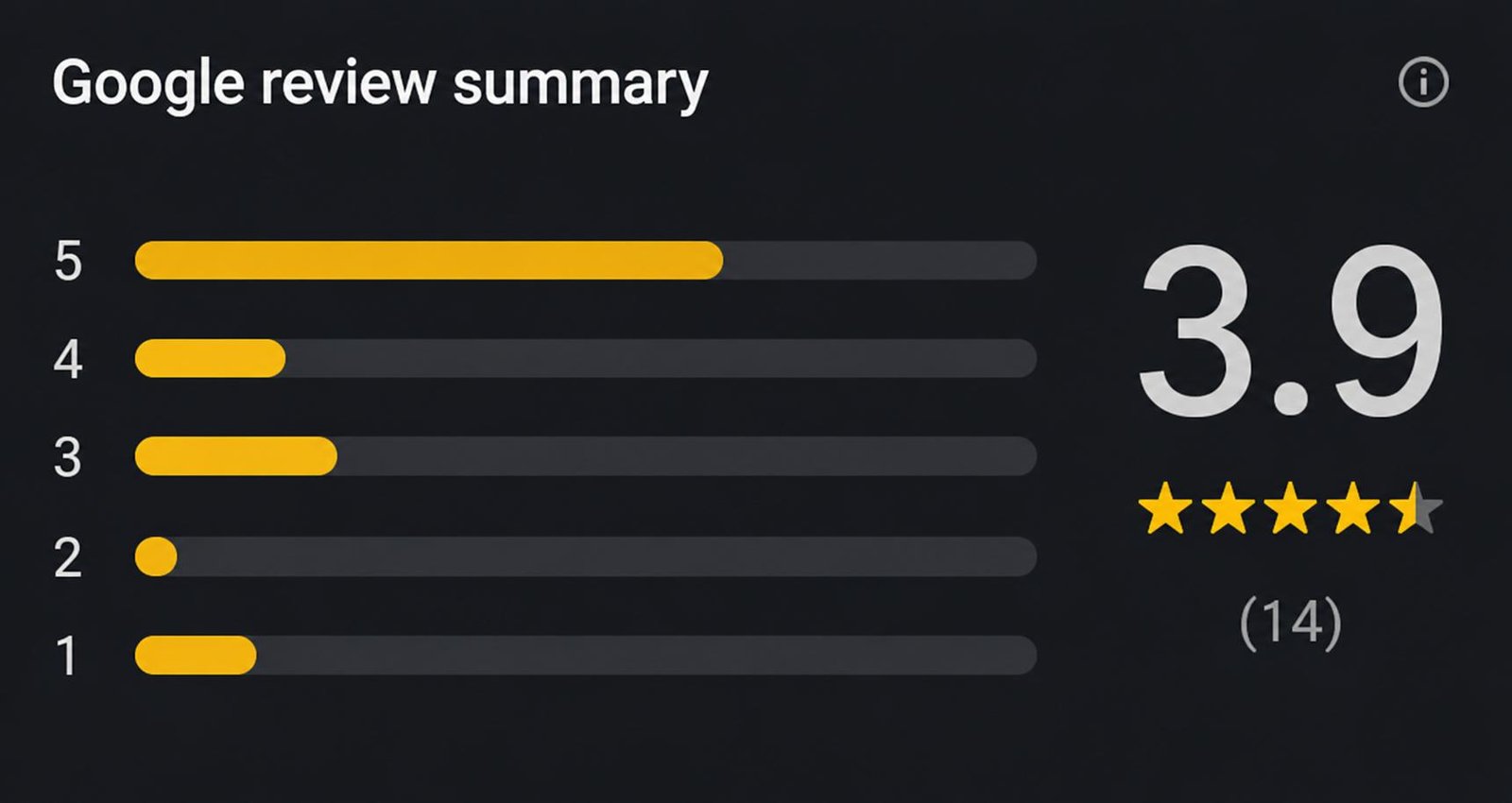
After Review
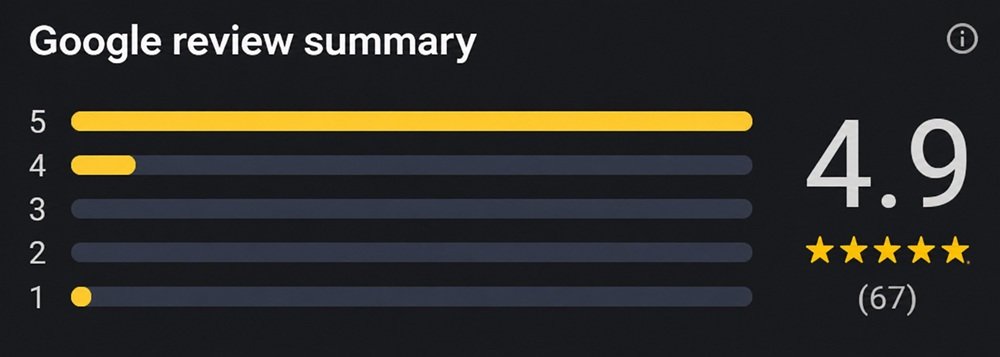
4-Month Growth in Booking Calls
Conclusion
The salon had the stylists, the treatments and the client experience to compete with anyone in its local market. What it was missing was the local business SEO foundation that would get it in front of new clients who were actively searching for exactly what it offered. Arihant Global fixed that a properly built Google Business Profile, a visual presence that finally showed the quality of work being done, a review process that reflected seven years of satisfied clients and consistent local signals that told Google this was an active and credible business worth ranking.
Someone nearby is searching Google right now for a salon offering exactly the treatments you provide. If your business is not in the top three results, that booking is going to whoever is. Get a free local business SEO audit from Arihant Global and find out exactly what it would take to get your salon ranking where it belongs and your phone ringing with new client bookings.
Get In touch With Our Local SEO Expert Team
Disclaimer
This case study is based on a real local SEO engagement. Client identity and selected business details have been anonymized to protect confidentiality, while results reflect the actual campaign performance achieved.
How a Real Estate Developer Generated 1,200 Qualified Property Leads With PPC Services
There’s a specific moment from this project worth mentioning before anything else. About ten weeks in, the developer’s sales head asked us almost as an aside during a regular review call whether we could tell her which campaign a particular booked flat had come from. We could. Because by then, every site visit and every sale was tracked back to its source campaign, ad group, creative, channel. That question, and the fact that we finally had a real answer to it, is what this whole engagement was actually about. The lead count matters, but the traceability is what changed how the developer thought about marketing spend.
Over eight months, the account produced 1,200 qualified leads and 380 booked site visits, at a cost per lead roughly 60% lower than where it started. Forty-six units were sold to buyers who first showed up through a paid campaign.

CLIENT BACKGROUND & CONTEXT
The client a mid-to-premium residential developer in Rajasthan, referred to here as Blue Peak Realty to keep their identity private builds gated apartment communities and villa plot developments. They’ve been at it long enough to have a reputation in their local market, a sales team that knows how to close, and two project phases sitting ready to launch with no predictable way to fill the enquiry pipeline.
Before this engagement, lead generation leaned on channel partners and print advertising, with a Google Ads account running quietly in the background. It had been set up in-house a couple of years earlier and never really strategized. Not a complete disaster it was generating some leads but nobody could tell you which leads were worth chasing, which ones had actually visited the site, or which ad had started the conversation. Leadership wanted something more predictable than hoping a channel partner happened to have the right buyers in their database when a new phase launched.
Two things were driving the urgency a new 3BHK apartment community in the city’s western growth corridor was going on sale, and a premium villa plot development in a peripheral township was about six weeks behind it. Both needed a pipeline. Neither one had one.
Developer Snapshot 🏗 Project type: Mid-to-premium gated apartments + villa plots 📍 Market: Rajasthan (Tier-1 city + township) 💰 Pre-engagement CPL: ₹1,850 📊 Pre-engagement landing page CVR: 2.8% 🔗 Lead source tracking: None 📣 Previous channels: Google Search only (in-house managed) |
What They Needed Not more leads better ones. The existing account was producing form fills, but the sales team was spending half their time calling people who'd submitted a name and a phone number with no real purchase intent behind it. The developer needed a pipeline that the sales team could actually work: pre-qualified enquiries, a clear path to a site visit booking, and enough tracking in place to see which spend was producing results and which wasn't. The two launches the apartment community and the villa plots needed separate campaigns because the buyer profile for each is almost completely different. One approach for both would have diluted both. |
Challenges
It wasn’t a terrible account. It was an incomplete one built to generate form submissions without much thought for what came after.
| 01 | Lead forms that qualified nothing
The form asked for name and phone number. Nothing else. No budget. No configuration preference. No timeline. Sales was calling people who it turned out later couldn’t afford a 2BHK at the entry price, let alone the villa plot development. There was no filter between ad click and sales call, which meant the sales team was doing qualification work that should have happened at the form stage. |
| 02 |
No way to see what happened after the click There was no tracking between a submitted form and what happened next no visibility into site visits, bookings, or sales. The only metric the account had was form fills. Whether those form fills ever turned into a site visit, let alone a sale, was a mystery. Marketing and sales were working from completely separate datasets with no way to connect them. |
| 03 | Budget entirely on Search missing most of the buyer journey
Nearly the entire budget was sitting in Google Search. Which catches people who already know what they’re looking for useful, but it misses a big part of how people actually research a property purchase. They scroll Instagram, watch a walkthrough video, come back to the website twice before ever picking up the phone. The account had no presence at any of those stages. |
| 04 | Same creative running across two completely different projects
The same ad message same copy, same visuals was being used across a premium villa plot development and a mid-range apartment project. The buyer for a ₹75 lakh villa plot is not the same person as the buyer for a ₹45 lakh 2BHK. Running them together with identical creative flattened the appeal of both and confused the targeting algorithm about which audience was actually converting. |
Solution
we stopped optimizing for leads and started optimizing for booked site visits. That’s the thing that actually matters in residential real estate. A lead that never shows up at the site is not a lead it’s a wasted sales call.
| MOVE 1 | Spread budget across the actual buyer journey
Search stayed for people typing in project names or ‘3BHK apartments in [city].’ Performance Max picked up earlier-stage browsing Discover, YouTube, Display for people researching without a specific project in mind yet. And Meta retargeting went after people who’d already spent time on the floor plans page but hadn’t filled out anything. That last one, unsurprisingly, produced some of the cheapest and highest-intent conversions in the whole account. People who’d already looked at the plans once weren’t hard to get back. |
| MOVE 2 | One landing page per project with a form that qualifies before the call
Each project got its own dedicated page: floor plans, price bands, RERA registration number, nearby infrastructure, and a short form that asked budget range and preferred configuration before passing the lead to sales. The form wasn’t long three qualifying fields added to name and number but it meant sales could triage a lead before the first call instead of during it. Unqualified leads dropped significantly within the first six weeks. |
| MOVE 3 | Track what happens after the click not just the click itself
This is the piece most real estate PPC accounts skip entirely. We connected the CRM’s site visit and booking data back into both ad platforms, so the campaigns could start favouring the audience segments that actually showed up at the site, not just the ones that filled out a form and went quiet. It took a few weeks for enough data to build up before it was useful. Once it did, cost per lead started dropping on its own the platforms were doing less guessing about who to show the ads to. |
| MOVE 4 | Fix the response time gap between lead and call
A small operational fix that had a material impact on conversion. Leads now route straight to the assigned sales executive within minutes of submission, with a response-time expectation that hadn’t formally existed before. It’s not a marketing change it’s a process change. But in real estate, where a buyer’s interest window is often narrow, the speed of the first call has a disproportionate effect on whether that lead ever becomes a site visit. |
RESULTS
Cost per lead started falling from month two, once the landing page qualification changes were live and the CRM data started feeding back into the platforms. By month six, the account was running at ₹740 per qualified lead against a starting point of ₹1,850. The eight-month totals are below.
Full Results Table
| Metric | Before | After | Change |
| Total qualified property leads | Not tracked | 1,200 | 8-month total |
| Cost per qualified lead (CPL) | ₹1,850 | ₹740 | –60% |
| Cost per booked site visit | ₹5,200 | ₹2,340 | –55% |
| Click-through rate (CTR) | 1.8% | 4.9% | +172% |
| Landing page conversion rate | 2.8% | 7.6% | +171% |
| Site visits booked and tracked | Not tracked | 380 | 8-month total |
| Units sold from paid campaigns | Not tracked | 46 units | Traced to source |
Getting leads to a human faster
Leads now route straight to the assigned sales executive within minutes, with a response-time expectation that, frankly, hadn’t existed before. It’s a small operational fix, not a marketing one, but it moved the needle on how many leads actually turned into a scheduled visit.
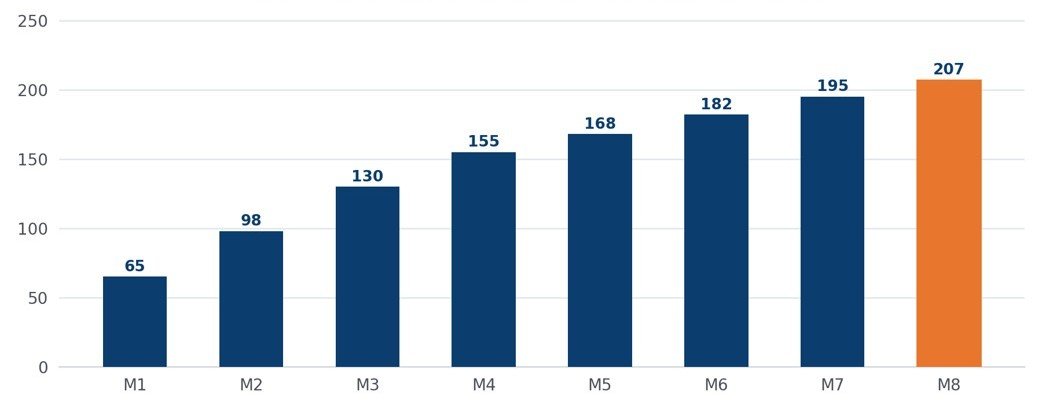
Cost Per Lead Reduced 1850 to 740 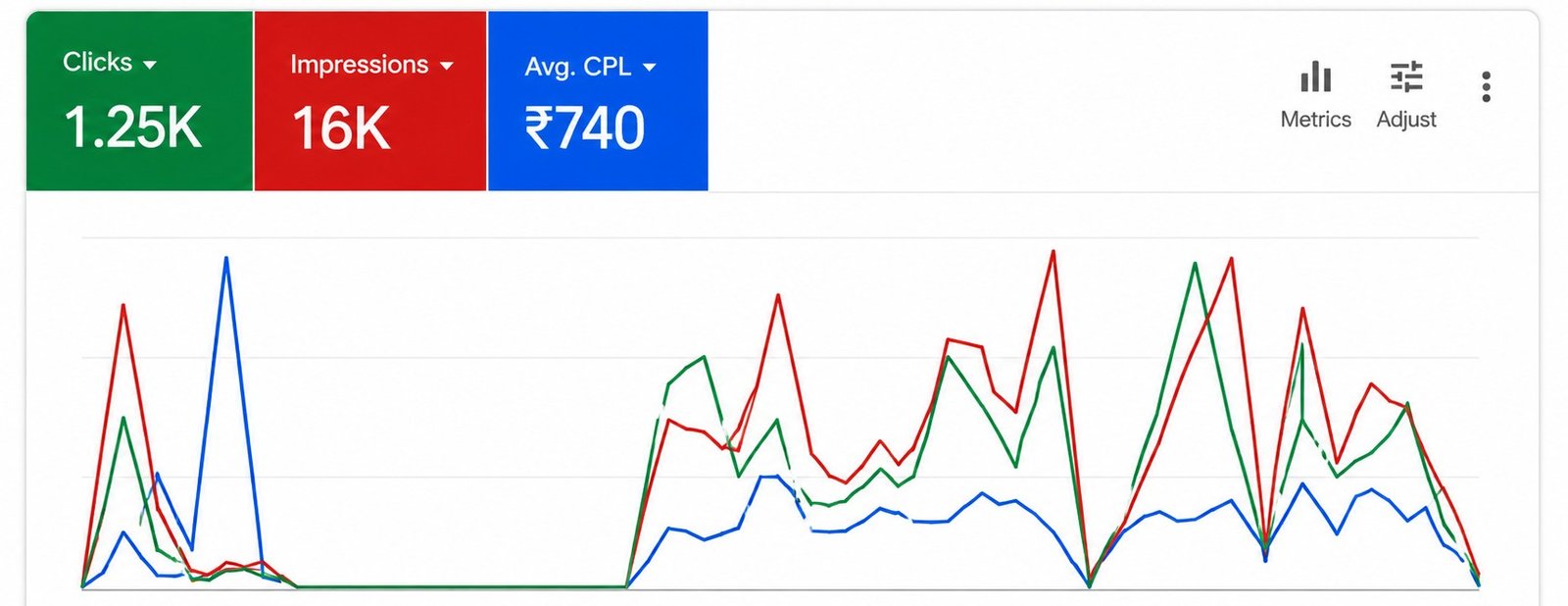
“ What changed how our leadership thinks about marketing wasn't the lead count it was being able to trace a booked flat back to the campaign that started it. We could finally have a real conversation about budget instead of guessing. That's why we've already committed more spend to the next launch. Head of Sales |
Conclusion
If Your Leads Aren’t Turning Into Site Visits, the Gap Is Usually Between the Ad and the Form
Arihant Global runs PPC Services for real estate developers who want a pipeline they can actually trust not a lead count that doesn’t connect to the sales team’s reality. If your next launch is coming up and the current setup isn’t producing visits, it’s worth finding out why before the project goes live, not during it. Start with a free audit of your current account.
No pitch. No slide deck. Just a straight read of what your account is doing and what’s costing you visits.
Disclaimer
Client information has been anonymized to maintain confidentiality. The strategies and outcomes described are specific to this engagement and may differ for other businesses or marketing campaigns.

How a Healthcare Brand Increased Appointment Bookings by 170% With Healthcare PPC Marketing

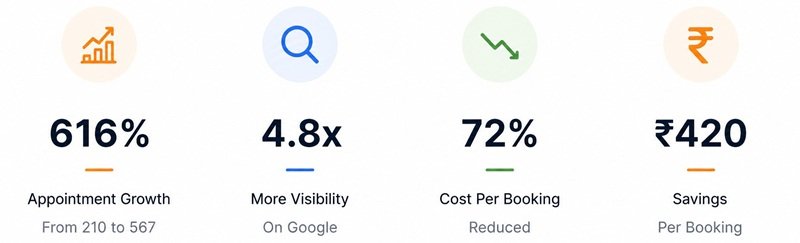
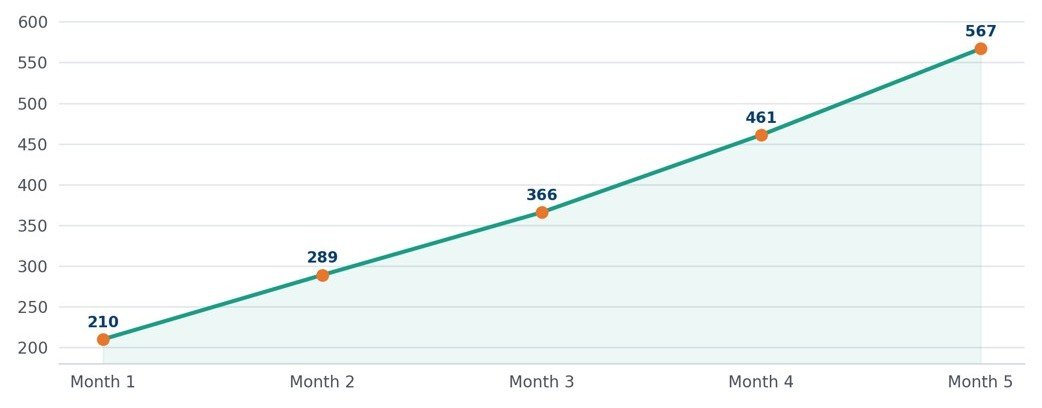
The client’s marketing team always suspected their phones were ringing because of the ads. They just couldn’t prove it, which meant every budget conversation was a bit of a guessing game. Once we put call tracking in place genuinely the first thing we did that guessing game ended. Bookings went from 210 a month to 567, cost per booking dropped 57%, and for the first time the clinic’s PPC marketing spend had numbers behind it that the medical director actually trusted.
About the Client
Our client runs six outpatient clinics across three cities, covering general medicine, dermatology, dental, and diagnostics under one brand. Growth had come mostly from walk-ins and doctor referrals, with a Google Ads account that had never really been touched since the clinics opened. Two new locations were coming online, and leadership wanted paid search to become something they could actually justify on a spreadsheet not just a line item that felt necessary.
Where the Account Was Losing Money
Healthcare is a strange category to advertise in, mostly because Google’s policies around medical claims are tight, and because so much of the actual conversion happens over the phone rather than through a form. The client’s account hadn’t been built with either of those things in mind.
One campaign covered every specialty, so a dermatology search and a general check-up search landed on the same ad and the same generic homepage. Several of the higher-intent ads had been disapproved under Google’s healthcare PPC marketing policy weeks earlier and nobody had noticed they’d just stopped running. Budget was split evenly across all three cities regardless of which clinics actually had appointment slots open. And there was no call tracking at all, so every phone booking which, it turned out, was most of them was invisible to the campaign data.
What We Actually Changed
Splitting the account by specialty
Dermatology, dental, general medicine each got its own campaign, its own ad copy, its own landing page listing the relevant doctors and next available slots. A generic clinic homepage stops working the moment someone’s specifically looking for a skin specialist.
Rewriting ads to survive Google’s healthcare PPC policy
The old ads were vague partly by accident and partly because some of the sharper claims kept getting flagged. We rewrote copy around things Google is fine with doctor qualifications, appointment availability, insurance accepted specific enough to earn a click without tripping the policy filters. The disapprovals stopped, and ads that used to silently vanish from rotation started running consistently.
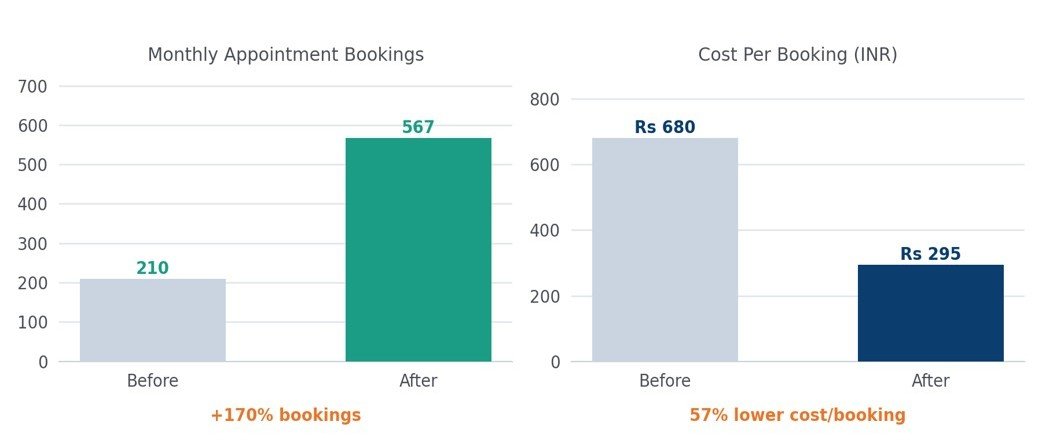
Monthly bookings and cost per booking, before and after five months of restructuring.
Tracking the calls, not just the forms
This was the big one. Call tracking numbers went on every landing page and on the Google Business Profile listings, and within a month it was obvious that phone bookings were converting at close to three times the rate of web forms. Nobody on the client’s team had known that. Once the campaigns could see it, spend shifted toward the keywords and placements actually driving calls.
Putting budget where there was room for patients
Instead of splitting spend evenly across three cities, budget started following real-time appointment capacity more spend toward whichever clinic could actually take new patients that week, less toward one that was already booked out.
Appointment bookings climbing month over month across the five-month engagement.
The Results
|
Metric |
Before | After | Change |
|
Monthly Appointment Bookings |
210 | 567 |
+170% |
|
Cost Per Booking |
Rs 680 | Rs 295 | -57% |
| Call-to-Booking Conversion Rate |
12% |
34% |
+183% |
|
Click-Through Rate (CTR) |
2.4% | 6.1% | +154% |
| New Patient Acquisition | baseline |
+145% |
5-month total |
|
Google Business Profile Calls |
baseline | +210% |
5-month total |
Client -

“We always suspected our phones were ringing because of the ads, but we had no way to prove it or optimize around it. Once call tracking was in place, the whole picture changed and honestly, this became the easiest line item in our marketing budget to defend, because we could finally see exactly what it was doing.”
The Part That Made the Difference
If you only take one thing from this in most industries, a web form is a reasonable stand-in for a real conversion. In healthcare, it badly understates demand, because a lot of patients especially the ones with something urgent or specific would rather just call and ask if there’s a slot open today. An account optimized purely on form data will keep underfunding the exact keywords that drive the phone to ring, simply because it can’t see that they’re working.
Splitting the account by specialty mattered too, but mostly because it let the ad and the landing page actually match what the patient typed. A person searching for a dermatologist doesn’t want to land on a page about the clinic’s general medicine department.
Questions People Ask About Healthcare PPC Marketing
Q1. Why do healthcare Google Ads accounts get so many ads disapproved?
Google is strict about medical claims personalized promises, certain treatment language, anything that sounds like a guaranteed outcome. Accounts that aren't built around those restrictions from day one tend to lose ads quietly over time, and nobody notices until bookings drop.
Q2. Is call tracking really necessary, or is it overkill for a small clinic?
For most clinics it's not overkill, it's closer to essential. A large share of appointments get booked by phone, especially when someone wants to confirm availability first. Without tracking, that volume is simply invisible, and budget ends up misallocated toward whatever the dashboard can see.
Q3. How much can appointment bookings realistically go up with healthcare PPC?
It depends on the specialty and the competition in that city, but a lot of the gain here came from fixing structural problems disapproved ads, no call tracking, one campaign trying to serve every specialty rather than simply spending more. Clinics with similar gaps tend to see similar-sized jumps once those are fixed.
If You Can’t Trace Your Bookings Back to a Campaign
This specialty-first, call-tracked setup is roughly how Arihant Global runs healthcare PPC Marketing for clinics and diagnostic centers generally. If you’re spending on ads but can’t say with confidence which ones are actually filling appointment slots, that’s usually the first gap worth closing.
Improve Patient Acquisition with Data-Driven Healthcare PPC
If your clinic is investing in Google Ads but you’re unsure which campaigns are actually generating appointments, it’s time to look beyond clicks and impressions. Arihant Global helps healthcare providers build compliant, specialty-focused PPC campaigns with accurate call tracking, conversion measurement, and continuous optimization to maximize appointment bookings and PPC marketing ROI.
Book a Healthcare PPC Marketing Audit and discover where your advertising budget can deliver stronger patient acquisition and measurable business growth.
Disclaimer
This case study is based on a specific healthcare PPC campaign and its reported outcomes. Results may vary depending on market conditions, competition, budget, location, and campaign execution.

How a Manufacturing Business Reduced Cost Per Lead by 58% Using Google Ads Services

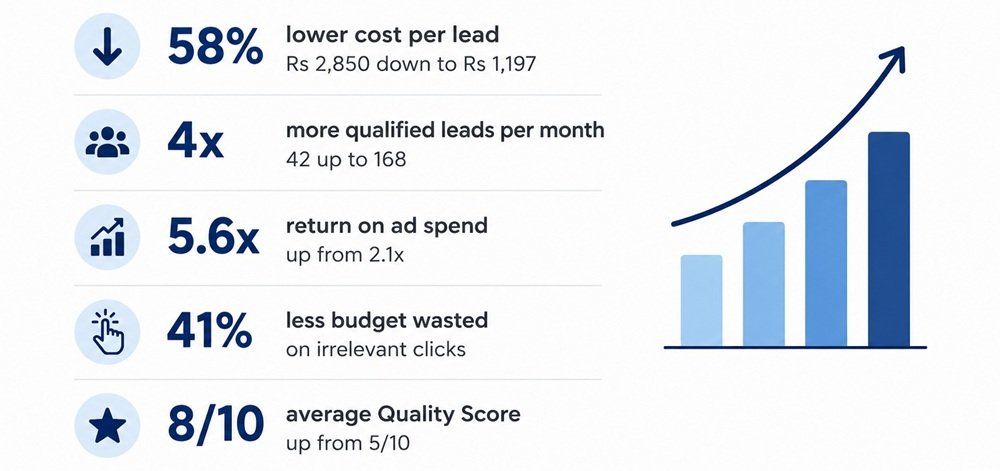
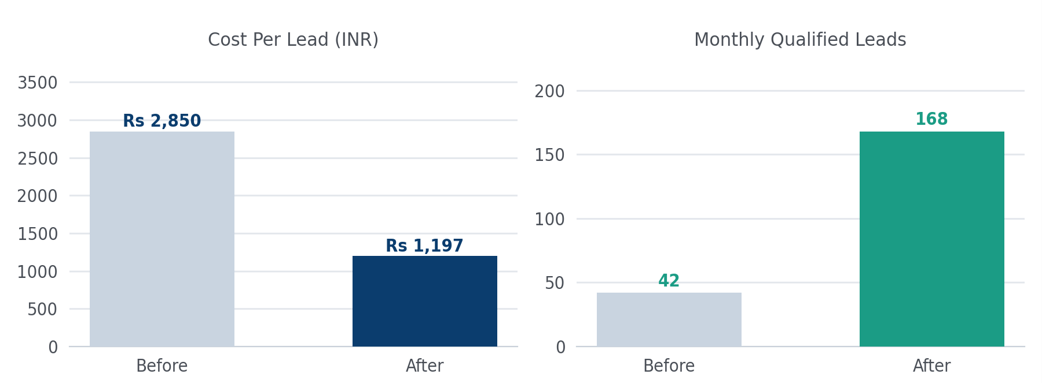
Six months ago, Manufacturing Industry was paying close to Rs 2,850 for every lead its Google Ads account produced. Roughly half of those leads, going by the search-term report, were students and hobbyists looking up "CNC machine price for home use," not procurement engineers looking to place an order. Today, after six months of dedicated Google Ads services from our team, that number sits at Rs 1,197, and the sales team, which had quietly stopped chasing PPC leads within a day of submission, is now asking PPC marketing for more of them. That reversal is really the whole story of this engagement, and it took us about six months to get there.
About Client
Client runs two manufacturing units supplying CNC-machined components, sheet-metal parts, and custom tooling to automotive tier-1 suppliers and industrial OEMs, with a modest export book in Southeast Asia and the Middle East. For most of its history, new business came from trade fairs, distributor referrals, and the occasional cold call a pipeline that works fine right up until you need to grow faster than word of mouth allows. When two new client verticals opened up, ownership wanted a channel that could produce RFQs on a schedule, not by chance.
What We Found in the Account
The account wasn’t neglected, exactly. Someone had been logging in every few weeks, adjusting bids, pausing the odd keyword. But it had been built the way most first-attempt B2B accounts are built: broad match everywhere, one big campaign covering three very different product lines, and a click destination that was just the homepage.
A few things stood out immediately. Search terms like “CNC machine” and “sheet metal parts” were pulling in job-seekers and students alongside genuine buyers, and with no negative keyword list to speak of, that traffic was eating close to a third of the daily budget. There was no way to tell, from inside Google Ads, which keywords had actually turned into a quote request versus a form fill that went nowhere. And the landing page well, it was the homepage, which had no RFQ form, no tolerance specs, nothing that told an engineer this company could actually do the job.
Sales had noticed, too. By the time we got involved, PPC leads were sitting in a shared inbox for hours before anyone called them back, which in a category where a buyer is usually comparing three or four suppliers at once is close to fatal.
The Fix, More or Less in Order
Nothing here is exotic. It’s mostly the unglamorous work of rebuilding an account so it reflects how an industrial buyer actually searches, and then wiring the data back so the algorithm can tell a good lead from a bad one.
Splitting the account by product line
The single blended campaign became three precision machining, sheet-metal fabrication, and tooling each with its own budget, its own bids, and keywords sorted roughly into three buckets: people comparing suppliers, people ready to request a quote, and everyone else, who got filtered out before they ever saw an ad.
A negative keyword list that actually gets maintained
We built out an initial list of around 240 terms from the search-term history DIY, courses, job listings, that sort of thing and it’s grown since. This is the part agencies tend to set up once and forget; here it gets checked weekly, because search behavior for an industrial buyer doesn’t stay static for long.
Cost per lead and monthly qualified leads, before the account rebuild versus six months after.
Landing pages built for someone holding a spec sheet
Each product line got its own page tolerances, materials, certifications , and a short form asking only what sales actually needed to qualify the lead. Mobile load time mattered more than we expected, a fair number of procurement staff were apparently browsing from the shop floor, not a desk.
Feeding sales outcomes back into the algorithm
This one made the biggest difference, honestly. Once the CRM was connected to Google Ads, the bidding algorithm could see which leads eventually became a quote or an order, not just which ones filled out a form. Smart Bidding started optimizing toward revenue instead of the cheapest possible click, and that shift alone probably accounts for more of the Quality Score improvement than anything else we touched.
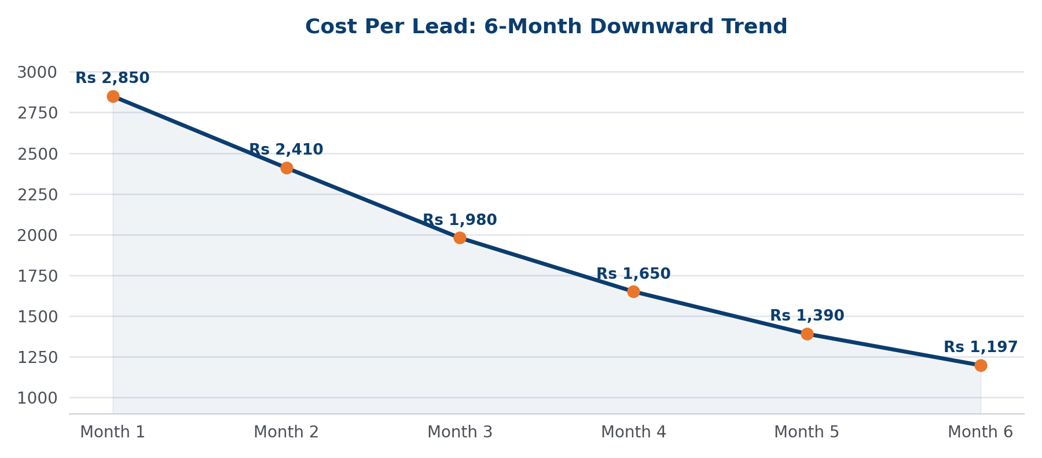
Cost per lead fell in a fairly straight line over six months as these changes compounded.
A Couple of Things Worth Taking Away
If there’s a lesson here for other manufacturers, it’s that cost per lead is almost never a bidding problem by itself. It looks like one the instinct is to fiddle with bids but underneath it’s usually a targeting problem and a tracking problem wearing a bidding problem’s clothes. Fix those two and the bidding tends to sort itself out.
The other thing worth saying: getting sales data back into the ad platform sounds like a technical afterthought, and most agencies treat it that way. It shouldn’t be. It was arguably the single highest-leverage change in this entire engagement, and it’s the one step that’s easiest to skip.
Conclusion
This is more or less how Arihant Global approaches every Google Ads engagement for manufacturers and industrial suppliers start with what the account is actually spending on, not what the dashboard says it’s spending on. If your campaigns are generating clicks but not real RFQs, that gap is usually findable within a week or two of digging.
Reach out to Arihant Global’s Google Ads services team for a free Google account audit and see where your numbers could realistically land today.”
Automotive PPC Case Study: 290 Test Drive Bookings at ₹420 CPL Using YouTube & Search Remarketing

Client Overview
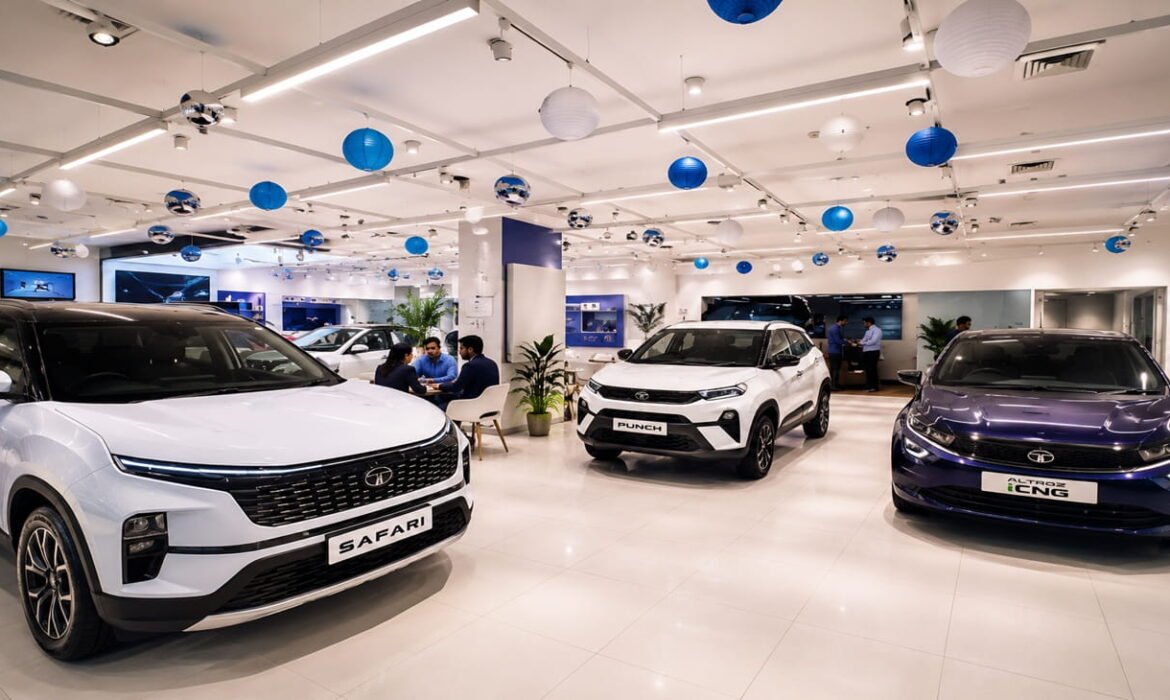
The client runs a multi-brand car dealership in India, selling new vehicles across a couple of showroom locations. Test drive bookings were the key metric that mattered most, since a booked test drive was usually the strongest signal that someone was seriously considering a purchase. Existing PPC marketing spend wasn't translating into enough of those bookings.
Key Changes
Challenge
The dealership was running digital ads, but spend wasn't converting into test drive bookings at a cost that made sense. A lot of the budget was going into broad video ads that got views but didn't lead anywhere specific, and search ads were mostly catching people who'd already made up their mind about a different brand entirely.

There was no real retargeting strategy in place, so someone who'd browsed a specific model on the website once would just disappear from the funnel if they didn't convert immediately. Campaigns weren't segmented by vehicle type or buyer intent, so the same generic ad was shown to someone just browsing and someone actively comparing dealerships before booking a test drive. Cost per lead was higher than it should have been, and there wasn't a clear sense of which channel was actually driving bookings versus just generating impressions. The sales team kept getting leads that hadn't been warmed up at all, making conversion to an actual test drive much harder than it needed to be.
Key Challenges:
Ad spend generated views and impressions but not enough test drive bookings

No retargeting strategy existed for visitors who browsed but didn't convert

Campaigns weren't segmented by vehicle model or buyer intent stage

Cost per lead was high relative to the quality of leads being generated

No clarity on which channels were actually driving bookings versus just visibility
Solution
The dealership restructured its approach around two connected channels working together instead of running disconnected, broad campaigns. YouTube pre-roll ads were built around specific vehicle models, targeted at audiences actively researching cars in that segment, rather than a single generic ad running across all viewers.

Search remarketing was layered on top, specifically targeting people who'd already shown interest, whether through a YouTube view, a website visit, or a search related to the dealership's vehicle range. This meant someone who watched a pre-roll ad about a specific model would then see relevant search ads reinforcing that interest, nudging them back toward booking a test drive instead of disappearing from the funnel. Campaigns were segmented by model and by where someone was in their buying journey, so a first-time browser and someone closer to a decision weren't shown the exact same message. Performance tracking was set up to clearly attribute bookings back to the specific channel and campaign responsible.
Features Implemented:
Model-specific YouTube pre-roll campaigns targeted at relevant car-buying audiences

Search remarketing layered to re-engage users who'd shown prior interest

Campaign segmentation by vehicle model and buyer intent stage

Cross-channel retargeting connecting YouTube viewers to search remarketing

Channel-level performance tracking to attribute bookings accurately
Results
Once the two channels were working together instead of running separately, booking volume picked up noticeably. People who'd seen a pre-roll ad about a specific model and later searched something related were now being pulled back in through remarketing, instead of dropping out of the funnel entirely.

Cost per lead came down as campaigns became more targeted, since spend was going toward audiences already showing some level of intent rather than broad, undifferentiated reach. The sales team also started receiving warmer leads, since people booking test drives had typically already engaged with relevant content across both channels before converting.
Business Impact:
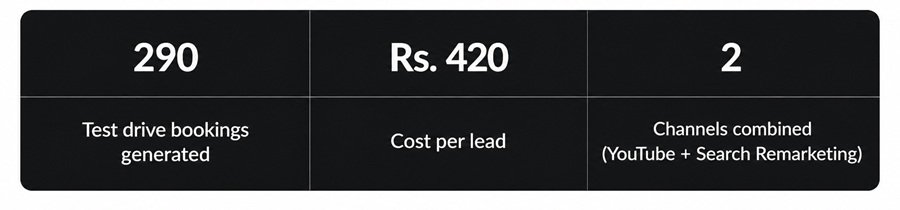
- 290 test drive bookings generated within the quarter through the combined approach
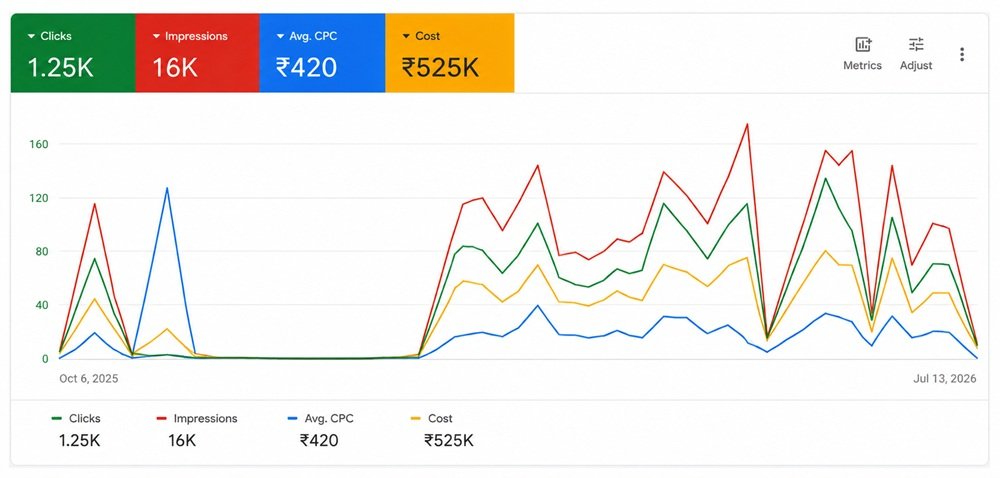
- Cost per lead came down to roughly Rs. 420, an improvement from previous campaign performance
- Retargeted users converted to bookings at a noticeably higher rate than cold traffic
- Campaign segmentation improved relevance of ads shown at each stage of buyer intent
- Sales team received better-qualified leads with prior engagement already established
- Clear channel-level attribution gave the dealership visibility into what was actually driving bookings
Conclusion
Generating views and clicks doesn’t mean much if none of it turns into someone actually booking a test drive, and that gap was exactly what this dealership was dealing with before the change. Arihant Global restructured the campaign approach around YouTube pre-roll and search remarketing working together, segmented by model and buyer intent, with attribution that made it clear what was actually working. The dealership now generates a steady volume of qualified test drive bookings at a cost per lead that actually makes sense for the business.
Ready to Generate More High-Intent Automotive Leads?
Partner with Arihant Global to build data-driven PPC campaigns that increase test drive bookings, qualified enquiries, and dealership sales.
👉 Get Your Free PPC Strategy Consultation
Disclaimer
Results are based on a real client project with anonymized details for confidentiality. Outcomes may vary depending on industry, competition, website, and business goals. Past performance does not guarantee future results.