
A multi-specialty clinic came to us with a complaint that’s more common in healthcare than most people realize: the phone wasn’t ringing enough, but nobody could say exactly why. Their website looked professional. They had good doctors and solid patient reviews. And yet appointment requests had been flat for the better part of a year, while two newer clinics down the road seemed to be growing every quarter.
Client: Withheld at client's request Sector: Healthcare (Multi-Specialty Outpatient Clinic)

Engagement: 5 months

Service: Healthcare Lead Generation
Key Measurable Outcomes

Background
The clinic runs five specialties under one roof, general medicine, dermatology, orthopedics, gynecology, and pediatrics, with eight practicing doctors and a patient base built up over almost a decade. Word of mouth had carried them a long way. Loyalty among existing patients was genuinely strong, the kind of clinic where people bring their whole extended family once they trust one doctor there.
The problem was new patient acquisition specifically. Existing patients kept coming back, but very few new people were finding the clinic online, even though most patients in this region now start their search for a doctor on Google or through a health app rather than asking a neighbor. The clinic had a website and a few social pages, but nobody on staff had ever really been responsible for whether those channels were actually generating appointments, or just existing.
What was actually happening
The website was structured like a brochure, not a lead generation tool. Each specialty had a page, but none of them made it easy to actually book anything, the “Contact Us” link led to a generic phone number and a static form buried at the bottom of the page, several scrolls down on mobile, where most visitors actually were.
There was also no separation between specialties in terms of how people found the clinic. A search for “pediatrician near me” and a search for “orthopedic knee specialist” led to the exact same homepage, which meant a worried parent looking for a child’s doctor had to dig around to even confirm the clinic offered pediatrics at all, let alone find a reason to trust that specific doctor.
Local search presence was thin. The Google Business Profile existed but was incomplete, missing hours for some specialties, no recent photos, and a review response rate of essentially zero, which matters more in healthcare than most other categories, since patients weighing a new doctor read reviews closely and notice whether a practice engages with feedback at all.
And there was no follow-up system for anyone who called or messaged but didn’t book immediately. In healthcare, a fair number of people research before committing, checking insurance acceptance, comparing a couple of doctors, waiting until a symptom gets worse before finally calling. The clinic had no way of staying in front of those people once that first contact happened, so a lot of genuine interest simply evaporated.
What we changed
We rebuilt the website structure around each specialty as its own entry point rather than funneling everyone through one homepage. A visitor searching for a dermatologist landed on a dermatology-specific page with that doctor’s credentials, common conditions treated, and a booking button above the fold, not buried under general clinic information they didn’t need yet.
Booking itself got simplified into a short, direct form, name, phone number, preferred specialty, and a brief note on the reason for the visit, available as a persistent button on every page rather than something visitors had to hunt for. We also added a click-to-call option specifically for mobile visitors, since a meaningful share of healthcare searches happen when someone is already dealing with discomfort and wants to just call rather than fill out a form.
The Google Business Profile got fully rebuilt, correct hours per specialty, updated photos of the facility and doctors, and a straightforward process for requesting reviews from satisfied patients after a visit. We also set up a simple system for responding to every review, positive or negative, since an engaged, responsive profile builds a kind of trust that generic marketing copy can’t really replicate.
For local search visibility, we built specialty-specific content addressing common patient questions, what to expect during a first orthopedic consultation, how to prepare for a dermatology appointment, the kind of practical information people search for before they’ve decided which clinic to call, which also helped each specialty page rank for the specific terms patients were actually using.
Finally, we set up a short follow-up sequence for anyone who called or submitted an enquiry without booking, a same-day message confirming the clinic had received their interest, followed by a gentle check-in a few days later if no appointment had been scheduled. Nothing aggressive, just enough to stay visible to someone who was still deciding.
What it produced
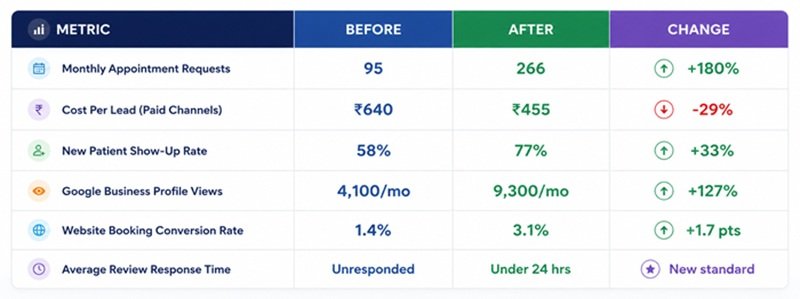
Over six months, monthly appointment requests rose from roughly 95 to 266, a 180 percent increase, spread across specialties rather than concentrated in just one. Cost per lead dropped 29 percent as paid campaigns shifted toward the specialty-specific landing pages, which converted considerably better than the old generic homepage ever had. New patient show-up rate, the number that actually matters to a clinic’s schedule, rose 33 percent, largely a result of the follow-up sequence catching people who would have otherwise quietly dropped off.
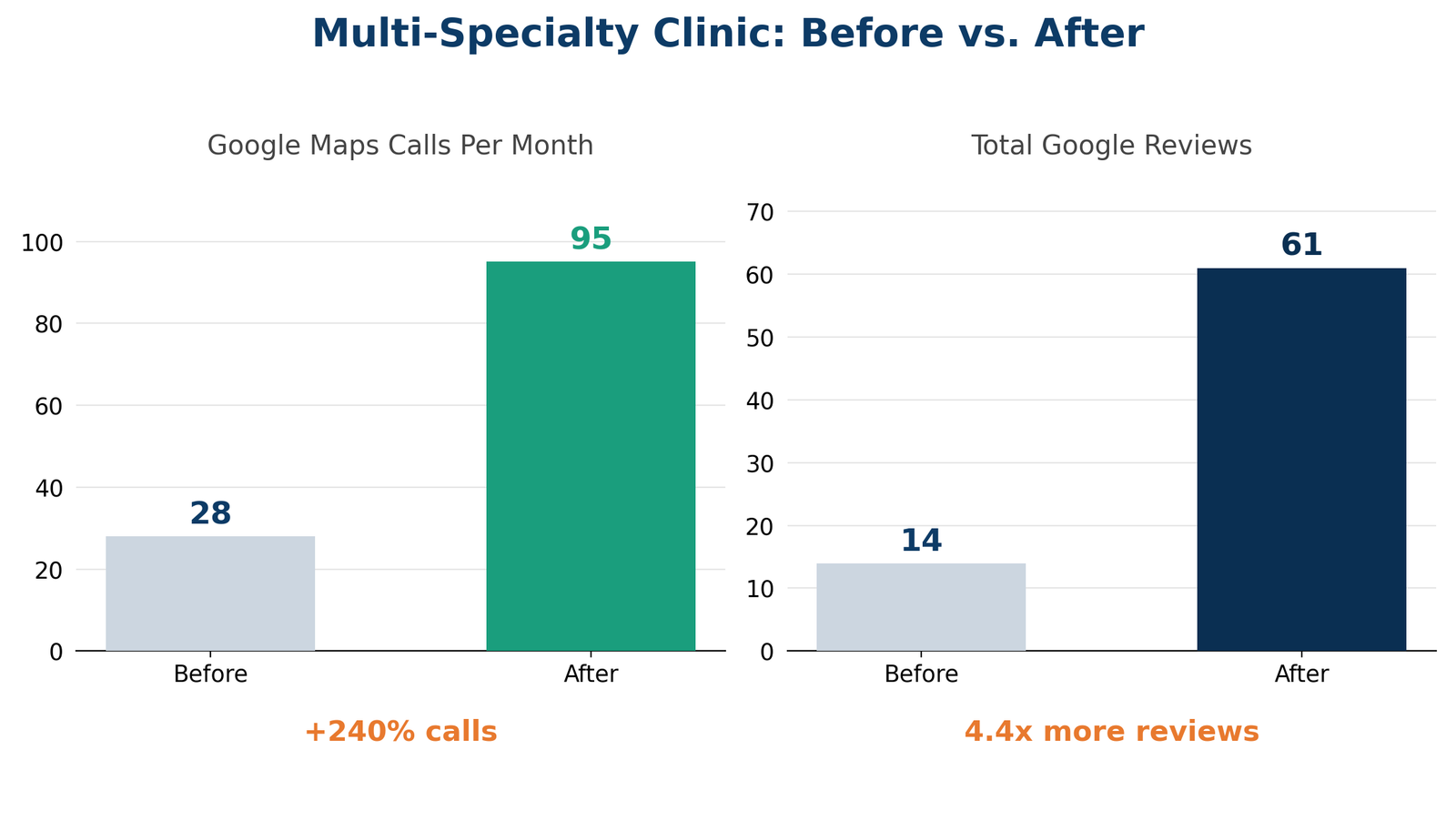
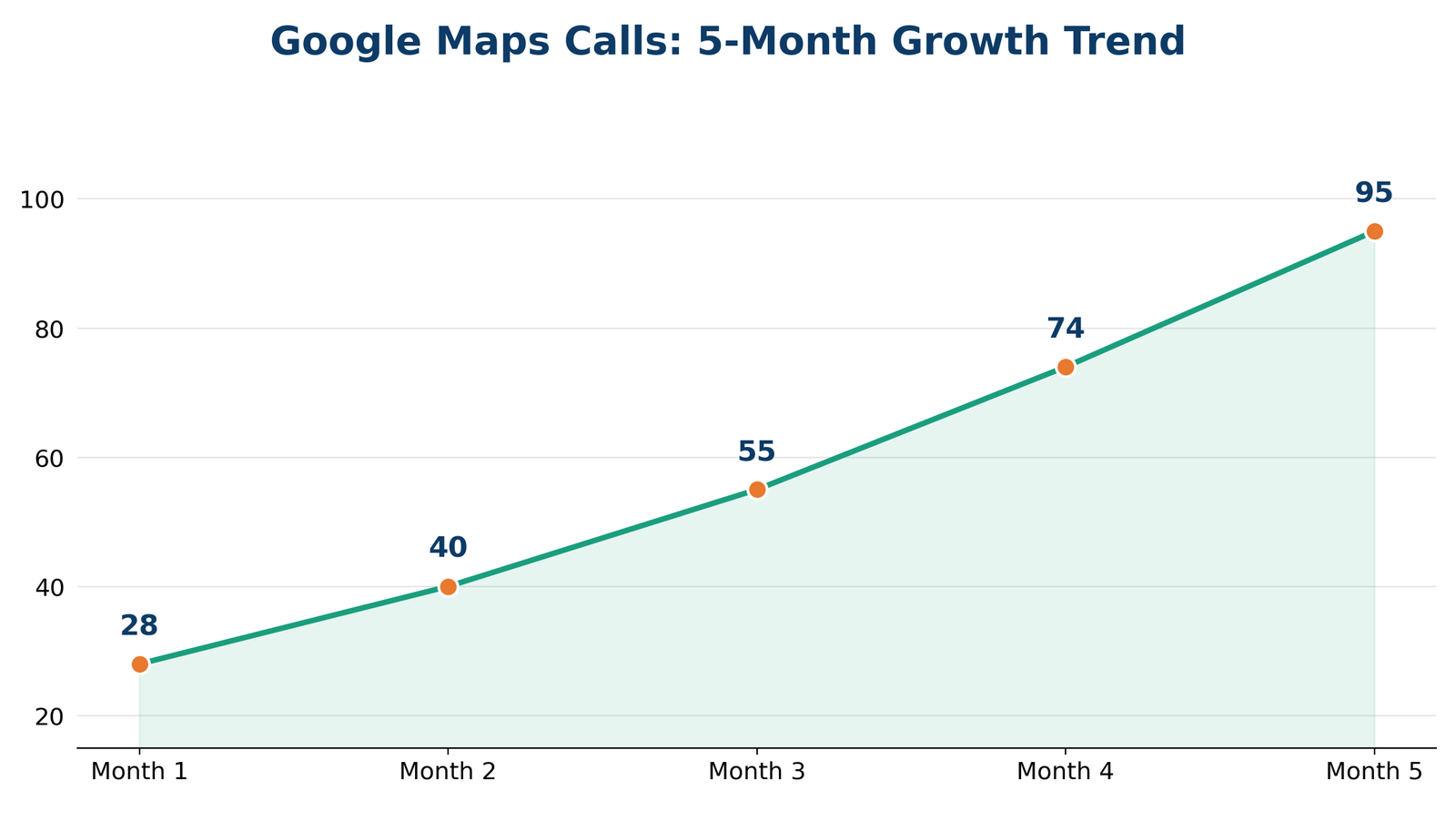
The clinic’s administrator mentioned that pediatrics, which had been the quietest specialty for new patients, ended up seeing the sharpest relative increase, largely because parents finally had a dedicated page answering the specific questions they were searching for before ever picking up the phone.
"For years we assumed people found us mostly through word of mouth, and that was mostly true for people who already knew someone who'd been here. What we didn't have was any real way for a stranger searching online to actually find their way to us and then to the right doctor. That's the part that changed." Clinic Administrator, client practice (name withheld)
Why this worked
The clinic wasn’t short on quality or reputation among people who already knew them. What they lacked was a way for new patients to discover them online and move smoothly from a search to an actual booked appointment. Splitting the website by specialty, cleaning up local search presence, and following up with people who hadn’t yet committed all addressed the same underlying gap, a good clinic that was quietly invisible to anyone who hadn’t already heard of it.
If this sounds familiar
Arihant Global will review your current website and local search presence for free, no changes made, just an honest look at where potential patients are searching for you and whether they’re actually finding a way to book.
Ask us for a free healthcare lead generation audit →
Why healthcare Marketing practices tend to stick with us
Arihant Global build separate pathways for each specialty, since a patient searching for a pediatrician and one searching for an orthopedist are looking for entirely different things. Local search and review management get treated as core to Healthcare lead generation, not an afterthought. Follow-up sequences respect that healthcare decisions often take a few days, instead of assuming interest that isn’t booked immediately is interest lost. And we track show-up rate alongside lead volume, since an appointment that’s booked but never attended isn’t really a result.