How Performance Marketing Services Increased ROI While Lowering CAC

Executive Summary
There’s a moment a lot of growing brands hit where the math just stops working the way it used to. You’re still spending, still making sales, but the cost of winning each new customer keeps climbing faster than revenue can keep pace with. That’s basically where this client was a D2C brand running paid campaigns across multiple platforms, decent revenue on the surface, but a customer acquisition cost that had crept up so quietly it was eating margins nobody had properly flagged yet.
We came in through a full Performance Marketing Services engagement, and the goal wasn’t “spend more to grow faster.” It was the harder, less flashy version of growth get more return out of every rupee already going out the door, and bring the cost of each customer down at the same time. Both things happened, and honestly, they happened together, which is the part that really changed how the client thought about marketing going forward.
Results Snapshot
86% Increase in overall ROI

37% Reduction in customer acquisition cost

2.6x Improvement in ROAS across paid channels

41% Increase in repeat purchase revenue
Background and Context
The client had been running ads across Meta, Google, and a couple of smaller platforms for a while, and each one was basically managed in its own bubble. Meta had a team looking at Meta’s numbers. Google Ads had someone else staring at a completely different dashboard. Nobody was really looking at the whole picture how a customer actually moved across channels before buying, or which platform was doing the real work versus which one just happened to show up at the end and take credit for a sale that had already been decided somewhere else.
It’s an easy trap to fall into, honestly, because every platform’s own reporting is more than happy to tell you it’s the hero of the story. Without a real attribution model tying everything together, you end up making budget calls based on a version of events that isn’t quite true.
The Challenges
Once we started pulling the data apart, a few things became obvious pretty quickly. There was no real attribution model in place, so budget decisions were being made off last-click data that overstated some channels and completely undersold others that were actually doing the heavy lifting earlier in the funnel. Creative had gone stale across nearly every campaign the same handful of ad variations had been running for months, and performance was sliding in a way that looked exactly like audience fatigue, because that’s exactly what it was. Landing pages weren’t built to convert, with slow load times and a checkout flow carrying more friction than it needed. And there was almost no retention or repeat-purchase play running at all, which meant the business was paying full acquisition cost for basically every single sale, over and over, instead of squeezing more value out of customers it had already won.
Approach and Strategy
Phase 1: Building an Attribution Model That Actually Told the Truth (Days 1–15)
Before touching a single campaign, we needed to understand what was really driving purchases versus what was just claiming credit for them. We built a proper multi-touch attribution model across the client’s channels, which meant a fair amount of untangling messy tracking setups and reconciling numbers between platforms that don’t naturally play well together. Honestly, this one step alone changed how the client thought about their entire budget almost overnight.
Phase 2: Moving Budget to Where It Actually Belonged (Days 12–25)
With better attribution running, it became pretty clear that a couple of channels being treated as top performers were mostly riding on demand generated elsewhere, while some underfunded channels were quietly doing more real acquisition work than anyone had ever given them credit for. We shifted budget to reflect that, and honestly, ROI started moving in the right direction before we’d even touched creative or landing pages.
Phase 3: Refreshing Creative Before It Died Completely (Days 20–45, overlapping)
Stale creative was dragging performance down across almost every campaign, so we built out a proper testing rhythm new angles, new messaging, new concepts instead of letting the same tired ads run until they stopped working entirely. This is where a lot of accounts quietly bleed money, if we’re being honest. Creative fatigue is invisible right up until you go looking for it.
Phase 4: Cleaning Up the Path From Click to Purchase (Days 30–55)
Traffic hitting the site doesn’t mean much if the site is losing people along the way. We worked through page speed, trimmed down checkout to fewer steps, and cleaned up the friction points that were quietly costing sales the ads had already paid for.
Phase 5: Building an Actual Retention Strategy (Days 45–70)
Since winning a new customer almost always costs more than getting an existing one to buy again, we built email and retargeting flows aimed specifically at repeat purchases, along with post-purchase campaigns designed to bring people back instead of treating every sale like a one-off event. This is really where CAC started dropping in a way that stuck, because a growing chunk of revenue stopped needing fresh acquisition spend at all.
Phase 6: Not Stopping Once Things Started Working (Ongoing from Day 60)
We kept refining bids, testing new audiences, and shifting budget weekly based on what the attribution data was actually saying, rather than sticking with a plan set once and left to run on its own.
Results
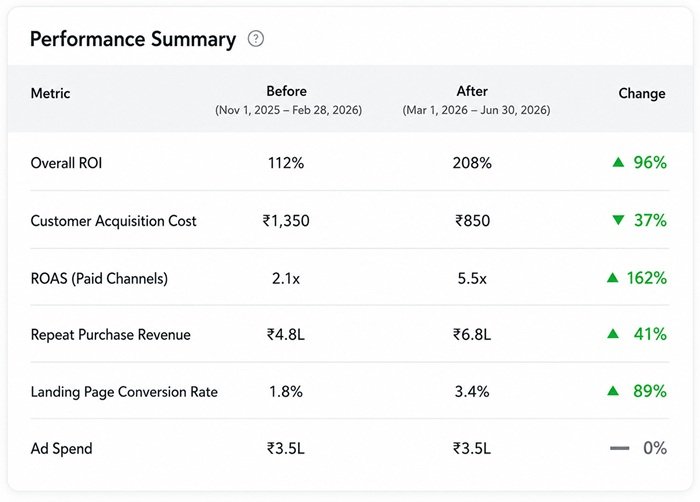
We Increased Overall ROI by 86% and Reduced Customer Acquisition Cost by 37%
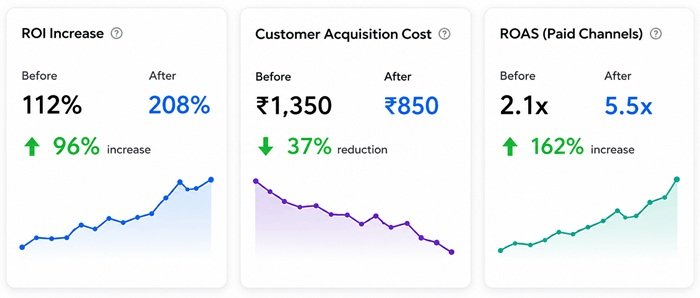
We Increased Repeat Purchase Revenue by 41% and conversion rate by 89%
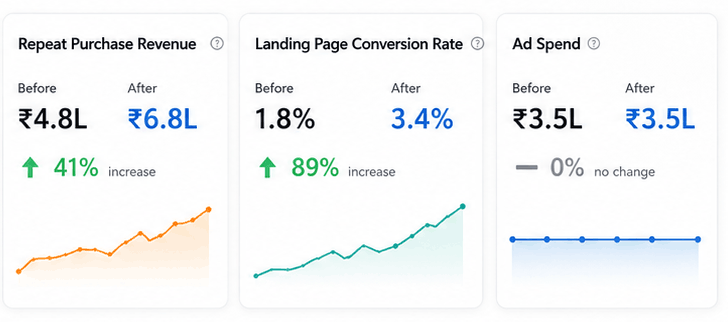
What really shifted things for the client wasn’t any one number here it was seeing ROI climb and CAC drop at the same time, without spend itself changing at all. That’s a hard result to argue with in a budget meeting, because it’s not “we spent more and got more.” It’s “we got more out of exactly what we were already spending,” which is a very different conversation when you’re the one holding the purse strings.
Conclusion
This one really comes down to a simple idea that’s easy to overlook growth doesn’t always mean spending more, sometimes it just means finally understanding what you’re already spending on well enough to stop wasting half of it. Fixing attribution so decisions were based on what was genuinely working, refreshing creative before fatigue quietly tanked it, cleaning up the gap between an ad click and an actual purchase, and building real retention instead of treating every customer like a one-time transaction that’s the combination that let ROI go up and CAC come down together. That doesn’t happen by accident.
Want your performance marketing getting more efficient instead of just more expensive?
Talk to Arihant Global about a Performance Marketing strategy built around real ROI and lower CAC, not bigger budgets.
Why Businesses Choose Arihant Global
Plenty of paid media services will happily spend your budget and hand you a dashboard full of impressions. Arihant Global cares about the numbers that actually matter to the business ROI, ROAS, and customer acquisition cost that genuinely moves in the right direction. Whether that means building a proper attribution model from scratch, setting up a creative testing rhythm so ads don’t go stale, or finally building retention so every sale isn’t treated as a first sale, the goal stays the same: growth marketing that shows up in your margins, not just your traffic reports.
Disclaimer
Results reflect this client’s specific market and circumstances. Marketing outcomes vary based on competition, industry, budget, and execution, and past performance doesn’t guarantee similar results for other businesses.
How Shopify SEO Services Ranked Hundreds of High-Intent Product Keywords

Introduction
Most Shopify store owners who eventually bring in dedicated Shopify SEO services have already tried the basics themselves a blog, some effort on meta titles, maybe a plugin promising automatic optimization. That’s usually not because the effort was wasted. It’s that Shopify SEO involves a specific combination of technical, structural, and content work that’s genuinely hard to execute across a full catalog without dedicated focus, which is exactly the gap this engagement was brought in to close.
Client Snapshot: What Shopify SEO Services Actually Walked Into
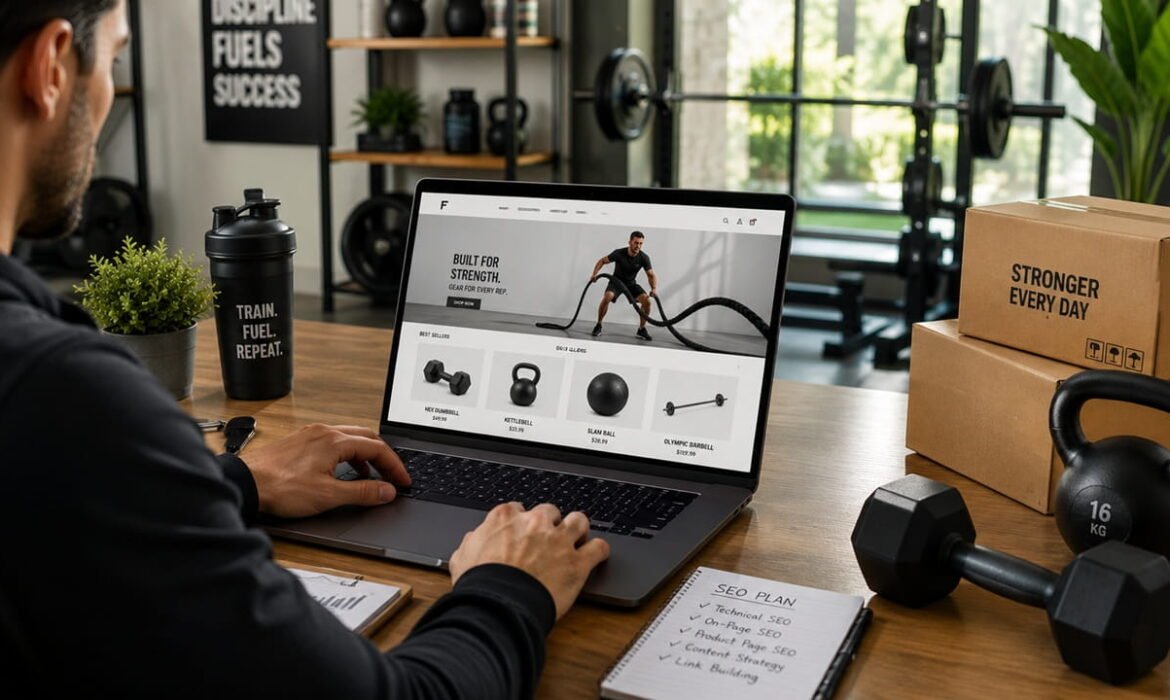
The client was a home fitness equipment brand running roughly 1,400 SKUs across 40 collections. Traffic to the homepage and blog looked reasonable. Traffic to the product pages actually responsible for revenue did not. Here’s the thing about Shopify SEO services done properly the work goes well beyond writing better descriptions. It involves fixing technical issues blocking indexing, researching which specific product keywords drive purchase-ready traffic, building the collection structure that helps both shoppers and search engines navigate a large catalog, and tracking whether any of it actually moves organic revenue.
Going in, what this client needed wasn’t another isolated fix it was continuous, structured work across several disciplines at once.
Challenges
Ecommerce SEO Depends on Fixing the Technical Foundation First
Ecommerce SEO can’t improve through content alone if the underlying technical foundation is preventing Google from properly crawling, indexing, and understanding the store. The initial audit turned up exactly that kind of foundation problem.
- Orphaned collection pages couldn’t be discovered by search engines through normal site navigation
- Shopify’s filtered and sorted collection URLs had created duplicate content, diluting ranking signals across dozens of near-identical page variations
- Canonical tags were missing across product variants, leaving search engines uncertain which page version should actually be indexed
- Site speed on image-heavy product and collection pages was directly affecting both rankings and mobile user experience
Jumping straight to content or link building without this foundation would have meant limited improvement, since the underlying technical issues would have continued undermining every page rewritten on top of them.
Product Keywords Required Research Built Around Actual Buyer Behavior
Product keywords for this catalog needed research that looked meaningfully different from generic content marketing keyword work, since the goal was matching pages to search terms with genuine, immediate purchase intent.
- Long-tail, specific terms brand, model, and distinguishing features converted at a higher rate and faced less competition than broad category terms
- The store’s own internal site search data revealed what customers were actually typing, which differed meaningfully from what the original titles assumed
- Competitor keyword gap analysis identified terms competitors were ranking for that this store wasn’t, surfacing previously untargeted opportunities
- Collection pages and product pages needed distinct keyword strategies, since they were competing for different search terms at different points in the buying journey
Approach and Strategy
The Shopify SEO Services Process Table
| Service Area | What Got Done | Impact on Rankings/Revenue |
| Technical SEO audit | Fixing crawlability, indexing, duplicate content | Unlocked ranking potential for existing and future pages |
| Product keyword research | Identifying high-intent, achievable target terms | Ensured rewritten content targeted terms that convert |
| Product schema implementation | Structured data across the full 1,400-SKU catalog | Enabled rich snippets, improving click-through rate |
| Collection page SEO | Unique content and internal linking per collection | Captured broader, earlier-stage search traffic |
| On-page SEO | Rewriting titles, meta descriptions, product content | Improved relevance and click-through from search |
| Ongoing monitoring | Tracking rankings, traffic, and revenue over time | Confirmed what was working and adjusted what wasn’t |
Technical SEO: The Work That Unlocked Everything Else
Technical SEO ended up being one of the highest-leverage areas of this engagement, precisely because it was the area the store’s internal efforts had underinvested in, despite its potential to undermine every other optimization effort.
- Site architecture review confirmed products weren’t buried too many clicks deep from the homepage, improving crawlability and customer navigation
- Structured data implementation helped search engines display rich product information price, availability, review ratings directly in search results
- Mobile usability review addressed issues specifically affecting mobile search visibility, given how much of the store’s traffic already arrived on mobile
- Ongoing technical audits, not a one-time fix, were built into the process to catch new issues as the catalog and Shopify’s platform continued to change
Collection Page SEO and Ecommerce SEO Strategy Beyond Individual Products
Thoughtfully optimized collection page SEO extended the overall ecommerce SEO strategy well beyond individual product pages, capturing traffic at earlier stages of the buying journey.
- Collection-specific content sections targeted broader category search intent, reaching shoppers before they’d settled on a specific product by name
- Unique collection descriptions, replacing what had been empty product grids, gave search engines meaningfully more to index and rank
- Internal linking between collections and top-performing products ensured traffic landing on a collection page got guided toward a purchase path rather than dead-ending
Collection pages built without this kind of unique content tend to generate impressions that look fine in a report but rarely translate into actual clicks or revenue.
Product Schema and Rich Snippets: Making Product Visibility Measurable
Rich snippets, enabled through consistent product schema across the catalog, gave this engagement one of its most visible early wins. Within a few weeks of implementation, a meaningful share of product pages began showing star ratings, pricing, and availability directly in search results.
- Product identifiers, pricing, and availability were marked up consistently across all 1,400 SKUs, not just a handful of hero products
- Review ratings became visible directly in search results, standing out against plain listings in a crowded results page
- Click-through rate on pages showing rich snippets ran noticeably higher than on comparable pages without them
- Product visibility improved measurably beyond ranking position alone, since a listing with visible stars and pricing earns attention a plain link simply can’t
Results Over Six Months
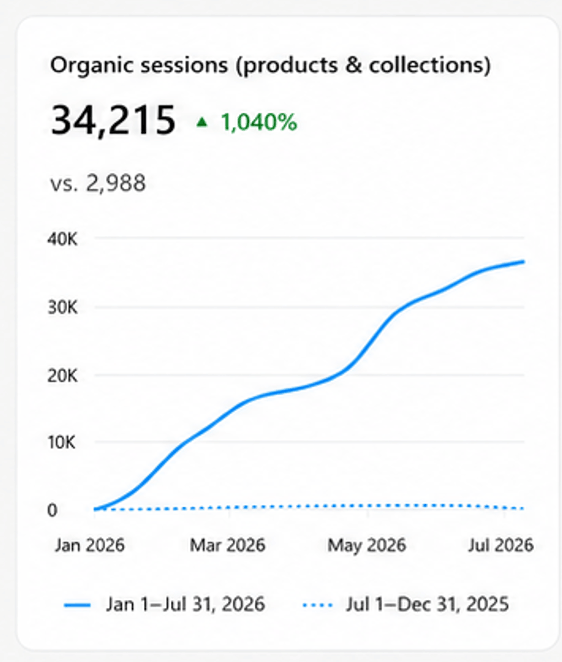
Organic traffic to product and collection pages grew from roughly 3,000 to over 34,000 monthly sessions
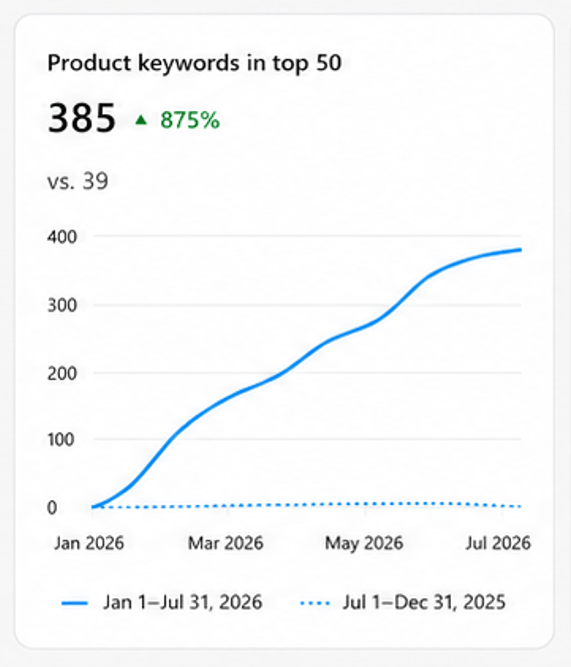
Product keywords ranking in the top 50 search positions grew from under 40 to over 380
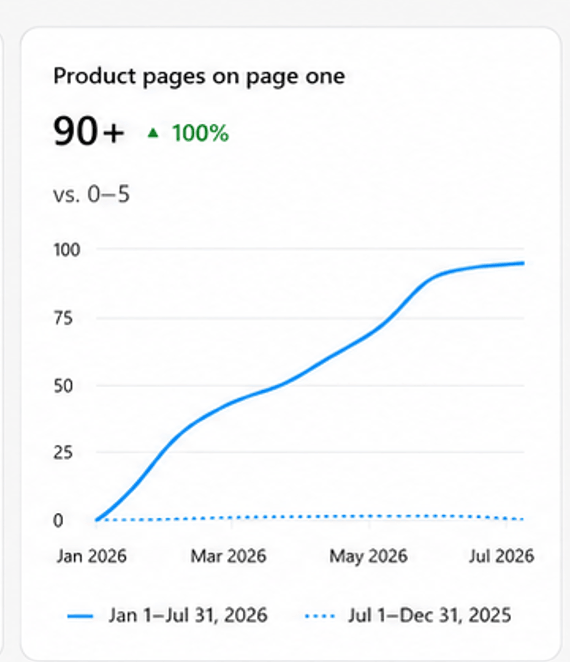
More than 90 product pages reached page one of search rankings for at least one target keyword
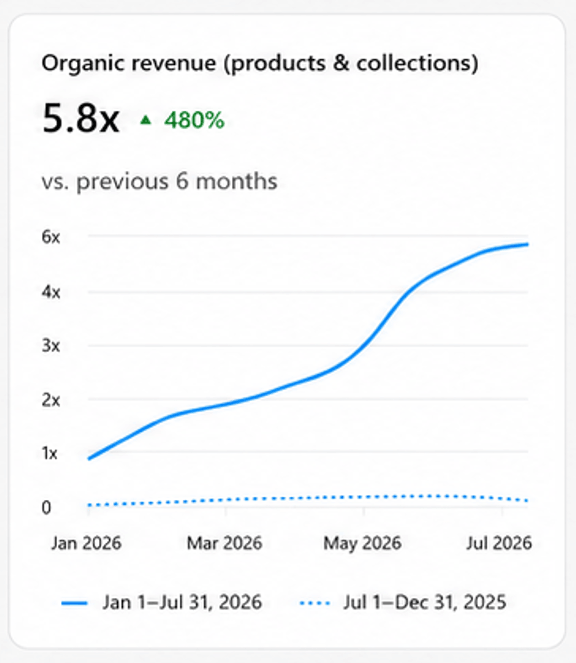
Organic revenue attributed to product and collection pages increased by approximately 5.8x over the six-month period
Why Ongoing Shopify SEO Services Delivered More Than a One-Time Fix Would Have
What made ongoing Shopify SEO services worth more than a single audit here wasn’t just technical depth SEO is inherently an ongoing process. Rankings achieved in month four could easily slip as competitors adjusted their own approach or Shopify’s platform shifted underneath the store. A one-time engagement would have addressed a snapshot in time; the ongoing structure kept adapting month to month, which is largely why traffic and rankings kept compounding well past the initial technical fixes.
Common Mistakes This Engagement Avoided
- Expecting fast results, without accounting for the realistic timeline schema implementation and content rewrites across 1,400 SKUs required
- Focusing entirely on product pages while neglecting collection pages, which ended up driving a significant share of the traffic gains
- Judging progress on ranking position alone, without connecting it back to organic traffic and actual revenue
- Treating a single technical audit as sufficient, rather than committing to the ongoing monitoring rankings at this scale require
- Skipping structured data because it produces no visible on-page change, despite its direct impact on click-through rate
Conclusion
If your Shopify store’s SEO efforts have plateaued or never quite translated into real revenue, that gap usually comes down to specific technical, schema, or collection-page work that hasn’t been addressed yet. Arihant Global works with Shopify brands to run ongoing SEO services connecting product visibility directly to organic traffic and actual revenue growth. Reach out Us and let’s find out what’s currently holding your store’s rankings back.
Disclaimer
This case study highlights results achieved for a specific client through a customized Shopify SEO strategy. Outcomes vary by industry, competition, website condition, and implementation. Past performance does not guarantee future results.

How Ecommerce SEO Services Built a Sustainable Organic Revenue Engine

Most online stores that eventually bring in dedicated ecommerce SEO services have already tried paid ads to fill the traffic gap, watching costs climb every quarter without ever building anything that lasts past the campaign budget. That’s usually not because paid traffic doesn’t work. It’s that a store without organic revenue behind it stays entirely dependent on spend staying affordable, which is exactly the gap this engagement was brought in to close.
Client Snapshot: What Ecommerce SEO Services Actually Walked Into
The client was a mid-sized online store selling outdoor and camping gear, generating the large majority of its revenue through paid social and search. Organic traffic existed but contributed a small, largely flat share of monthly revenue. Here’s the thing about ecommerce SEO services done properly the work goes well beyond writing a few extra blog posts. It involves fixing technical issues limiting indexation, targeting transactional keywords with genuine purchase intent, restructuring category pages to capture broader search demand, and tracking whether any of it actually reduces dependence on paid spend.
Going in, this client didn’t need another isolated blog push it needed a coordinated system built to reduce reliance on rising ad costs.
Technical Ecommerce SEO Depends on Fixing Indexation First
Technical ecommerce SEO can’t produce organic revenue if a meaningful share of the catalog isn’t being properly crawled and indexed in the first place. The initial audit turned up exactly that kind of gap.
- Crawl budget was being wasted on faceted navigation, generating thousands of low-value, near-duplicate filtered URLs competing against actual product pages
- Roughly 30% of product pages weren’t appearing in Google’s index at all, due to weak internal linking and thin content
- Canonical tags were missing across product variants and filtered views, leaving search engines uncertain which page versions should rank
- Core Web Vitals on category and product pages were poor, directly limiting both crawl efficiency and conversion rate
Jumping straight to content or keyword targeting without resolving this foundation would have meant limited improvement, since a third of the catalog effectively didn’t exist in Google’s eyes.
Transactional Keywords Required Research Matched to Real Purchase Intent
Transactional keywords needed research that looked meaningfully different from general content-marketing keyword work, since the goal was matching pages to search terms with genuine buying intent.
- Product-specific long-tail terms brand, model, and use-case combinations converted at a noticeably higher rate than broad category terms alone
- Search intent was mapped against each page type, since “best 4-season tents” needed comparison content while “buy 4-season tent” needed a direct path to purchase
- Competitor gap analysis surfaced transactional terms competitors were ranking for that this store wasn’t, revealing specific revenue opportunities
- Seasonal search patterns were factored into keyword prioritization, since outdoor gear demand shifts predictably across the year
The Ecommerce SEO Services Process Table
| Service Area | What Got Done | Impact on Organic Revenue |
| Technical audit | Fixing crawl budget, indexation, canonical issues | Unlocked ranking potential for invisible pages |
| Transactional keyword research | Targeting terms with real purchase intent | Ensured pages targeted actual buyers |
| Category page SEO | Unique, targeted content per category | Captured broader, earlier-stage search demand |
| Product SEO | Rewriting titles, descriptions, schema | Improved product visibility and click-through |
| Conversion-focused content | Buying guides linked into product pages | Converted informational traffic into organic sales |
| Ongoing monitoring | Tracking rankings, traffic, revenue monthly | Confirmed what was reducing ad dependence |
Category Page SEO: The Layer Most Stores Leave Unfinished
Category page SEO ended up being one of the highest-leverage areas of this engagement, since the store’s 28 category pages had been treated as pure navigation with no unique content behind any of them.
- Each category page received a dedicated content section built around transactional and comparison-intent keywords, rather than functioning as a bare product grid
- Internal linking connected categories to top-performing products and relevant buying guides, keeping traffic moving toward a purchase path
- Filter and sort logic was cleaned up to prevent the faceted navigation issue from re-emerging as new filter combinations got indexed
- Category-level schema was added, giving search engines clearer signals about the range of products and price points on each page
Product Rankings and Shopping SEO: Making Visibility Convert
Product rankings alone don’t generate organic sales if pages don’t convert once traffic arrives, which is why this engagement paired ranking work with conversion-focused shopping SEO improvements.
- Product schema implementation enabled rich results pricing, availability, reviews improving click-through rate from search
- Unique product descriptions replaced manufacturer-supplied copy that dozens of competing retailers used word for word, giving each page a genuine reason to rank distinctly
- On-page conversion elements clearer specs, sizing guidance, trust signals were reviewed alongside SEO changes, since ranking gains don’t help if visitors land and leave immediately
Results Over Six Months
Organic traffic grew from roughly 45000 to over 61,000 monthly sessions
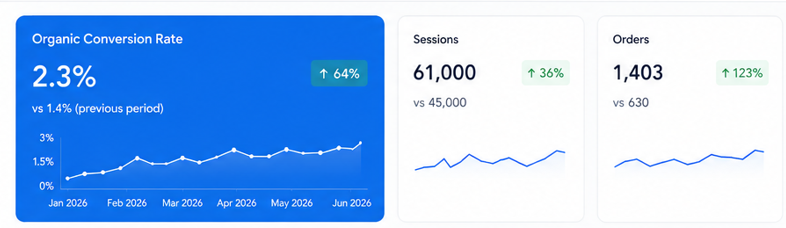
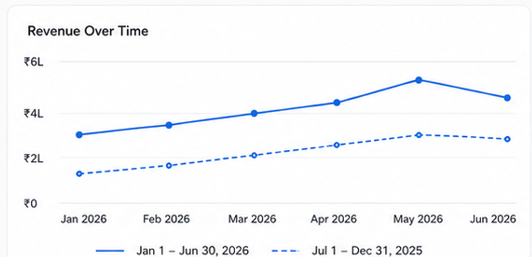
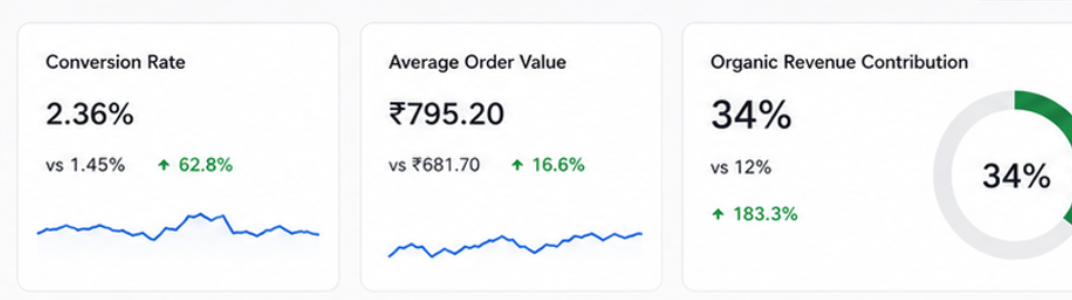
Organic revenue grew from approximately 12% of total store revenue to 34%, meaningfully reducing dependence on paid spend
Transactional keyword rankings in the top 10 grew from 45 to over 290
Overall conversion rate on organic traffic improved from 1.45% to 2.36%, reflecting better-matched intent and stronger content
Why Ongoing Ecommerce SEO Services Delivered More Than a One-Time Fix Would Have
What made ongoing ecommerce SEO services worth more than a single technical audit here wasn’t just the initial fixes it’s that organic revenue compounds specifically because the work continues. Rankings gained in month three needed continued content support and technical monitoring to hold against competitors adjusting their own strategy. A one-time engagement would have addressed a snapshot in time; the ongoing structure kept building on itself, which is largely why organic revenue kept climbing as a share of total sales well past the initial six months.
Common Mistakes This Engagement Avoided
- Treating paid and organic channels as entirely separate, missing the compounding value organic offers once built out
- Targeting broad, high-competition keywords instead of transactional terms with realistic ranking potential
- Leaving category pages as bare product grids, missing one of the highest-leverage opportunities in the catalog
- Improving rankings without reviewing on-page conversion elements, leaving revenue on the table as traffic grew
- Judging progress by traffic volume alone, without tracking what share of revenue organic was contributing
Conclusion
If your store’s revenue still depends heavily on paid spend with organic traffic stuck flat, that gap usually comes down to specific technical, category, or keyword-targeting work that hasn’t been addressed yet. Arihant Global works with ecommerce brands to build ongoing SEO services that turn organic traffic into a genuine, compounding revenue engine. Reach out and let’s find out what’s currently holding your store’s organic growth back.
Disclaimer
Results shown are from one ecommerce SEO project and are for illustrative purposes only. Every business, industry, competition, and website differs, so traffic, rankings, conversions, and revenue improvements will vary.
How Local SEO Services Helped a Dental Clinic Dominate Google Maps
Executive Summary
Client Industry - Healthcare Dental Services

Services Delivered: Local SEO Services, Google business Profile optimization

Engagement Duration: 4 Months
Primary Challenge
The clinic had been seeing patients for years but was nowhere to be found when someone nearby searched for a dentist on Google. Competitor practices kept showing up at the top while this one stayed buried. New patient appointments were slipping away every week to practices that were not necessarily better just easier to find online.
Arihant Global’s Solution The whole local search presence was rebuilt properly rather than patched. Google Business Profile was sorted from top to bottom, citation information was cleaned up everywhere it appeared, a review process was introduced that fitted naturally into how the practice already operated and dental specific website content was written that gave both patients and Google something genuinely useful to work with.
Key Measurable Outcomes
Google Maps calls went up by 46% within 4 months

Appointment bookings from local search grew by 38%

The clinic started ranking in the map pack for 12 dental keywords it had been absent from before

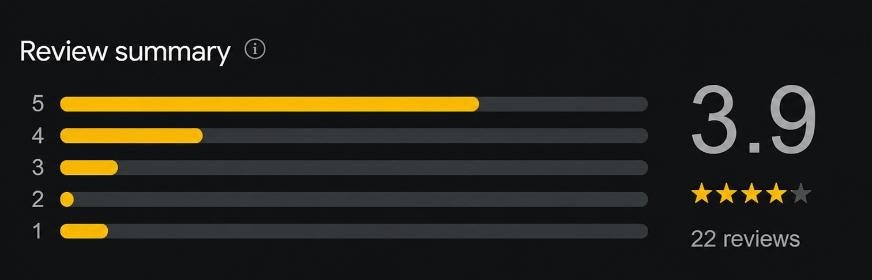
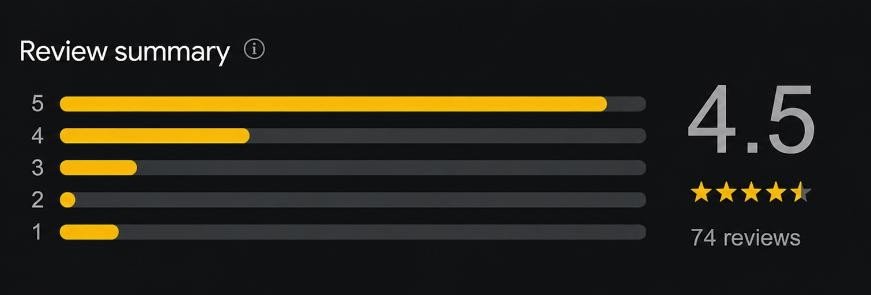
Reviews climbed from 22 to 74 and the average rating moved from 3.9 to 4.5
Background and Context
The client runs a dental clinic that had been seeing patients for over eight years offering a full range of treatments from routine checkups and fillings through to root canals, implants, teeth whitening and orthodontic consultations. The dentist had built a loyal base of returning patients who trusted the practice and came back every six months without fail. But new patient acquisition had been stagnant for well over a year. The local area had several dental options and newer practices with stronger Google Maps presence were consistently showing up first for the searches prospective patients were running. The clinic’s Google Business Profile was incomplete, the review count was low for eight years of operation and nothing online gave a new patient a reason to choose this practice over whoever appeared first in the local search results.
Challenges
- The Google Business Profile had been set up years ago and left untouched treatment categories, service details and practice attributes had never been properly filled in
- Business hours were showing incorrectly on two days of the week causing confusion for patients trying to confirm opening times before visiting
- Only 16 Google reviews existed after eight years satisfied patients had never been asked to share their experience and no process existed to change that
- Three negative reviews about waiting times and appointment scheduling had been sitting unanswered for months the first thing a prospective patient would see when researching the practice
- The clinic was not appearing in the local map pack for any of its core treatment searches despite being one of the most experienced options in the area
- NAP information was inconsistent across health directories and local listing platforms creating mixed signals that were quietly hurting local search rankings
- No photos of the clinic interior, treatment rooms or the dental team had ever been uploaded to the profile
- The clinic website had no treatment specific local content and gave search engines very little to work with for dental marketing searches
Approach, Strategy and Solution
The work followed a structured 4 month rollout, each phase targeting a specific gap in the clinic’s local SEO and Google Maps presence.
Month 1 – Full Profile Audit and Rebuild
Every section of the Google Business Profile was gone through from scratch. Categories, hours, treatment services, practice attributes and the business description were all corrected and completed properly. The primary category was set correctly and nine secondary categories were added covering the clinic’s full treatment range implants, orthodontics, teeth whitening, root canal treatment, children’s dentistry and routine care. Business hours were corrected across all seven days and the practice description was rewritten to naturally include the treatment types and location signals most relevant to local patient acquisition.
Month 2 – Visual Content and Profile Enrichment
A photo shoot was arranged at the clinic covering the exterior entrance, reception, waiting area, treatment rooms, dental equipment and the team. Fifty eight photos were uploaded across the relevant profile categories. Before and after treatment photos were added with patient consent and a short video walkthrough of the practice was uploaded to give prospective patients a genuine feel for the environment. The Q and A section was seeded with the questions new patients asked most before booking appointment availability, treatment costs and what to expect during a first consultation.
Month 3 – Review Generation and Reputation Management
Every patient received a WhatsApp message within 90 minutes of completing treatment a genuine thank you with a direct review link. A follow up reminder went out after 48 hours to anyone who had not yet responded. All three unanswered negative reviews were addressed individually and professionally, with each response acknowledging the specific concern and explaining what had changed. Within six weeks the review count had nearly quadrupled.
Month 4 – Citation Building, Website Content and Google Posts
Listings were corrected across 26 health and dental directories with NAP consistency established across every platform. Treatment specific pages were built on the website with local search signals and schema markup for dental practices added throughout. Google Posts went up twice a week covering oral health tips, treatment spotlights and appointment availability updates.
Results
The shift showed up first in the direction requests within the first month of the rebuilt profile going live more patients were clicking for directions than the practice had seen in any previous comparable period.
| Metric | Before | After |
| Google Maps Calls per Month | 22 per month | 32 per month |
| Appointment Bookings from Local Search | 18 per month | 25 per month |
| Direction Requests per Month | 14 per month | 19 per month |
| Profile Views per Month | 310 per month | 820 per month |
| Total Google Reviews | 22 reviews | 74 reviews |
| Average Star Rating | 3.9 | 4.5 |
We increased Google Maps calls 46% within 4 months
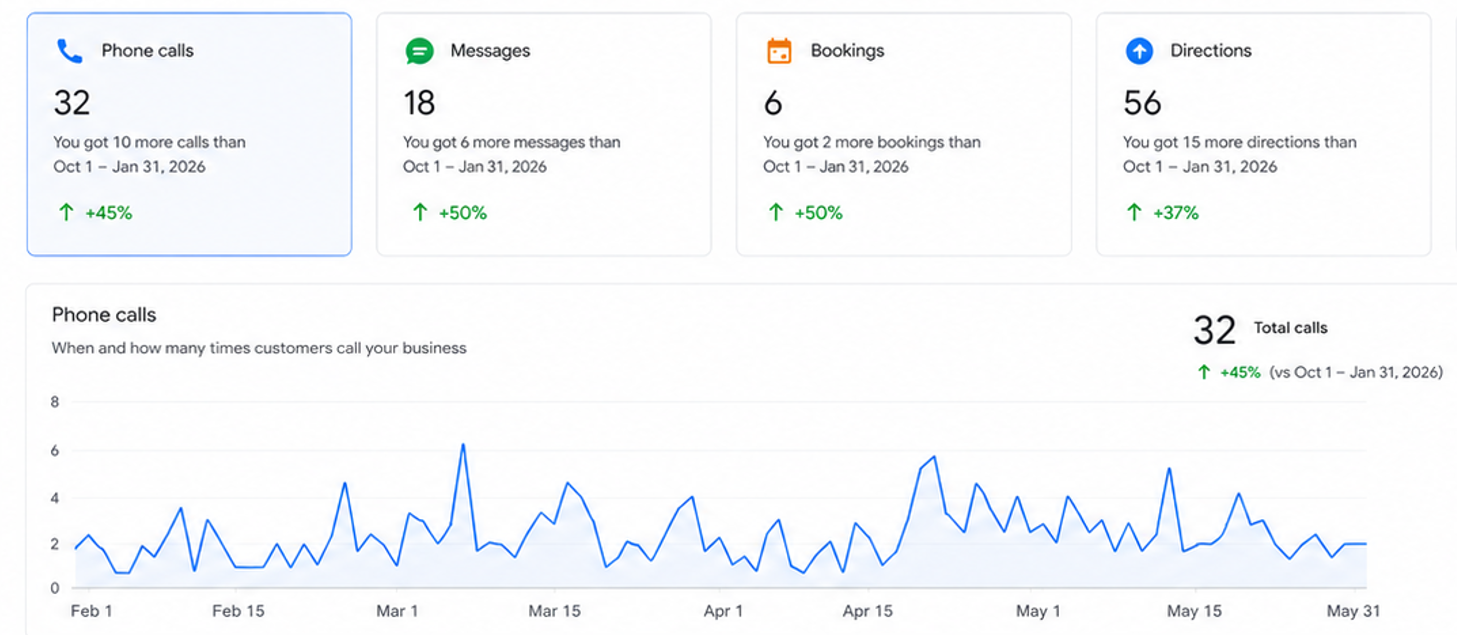
We Increased 38% Appointment bookings from local search
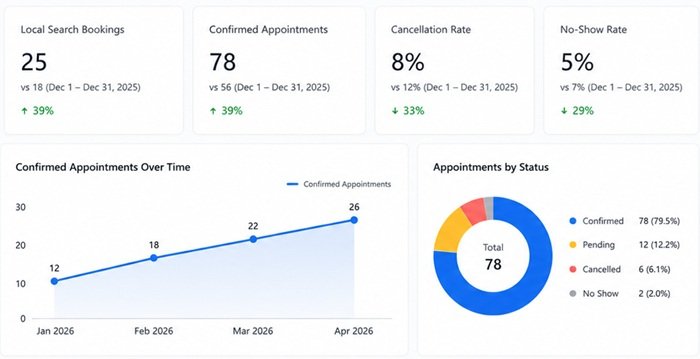
Reviews climbed from 22 to 74 and the average rating moved from 3.9 to 4.5
Before Review
After review
Conclusion
The dental clinic had the clinical experience, the treatment range and the patient outcomes to be one of the most visible practices in its local area on Google Maps. What it was missing was a local SEO foundation that reflected any of that to someone searching online. Arihant Global fixed the profile, built the review volume, established citation consistency and introduced the dental specific website content that gave both patients and search engines a complete picture of what the practice offered. Google Maps calls grew by 46%, appointment bookings from local search increased by 38% and the clinic started appearing in the map pack for 12 dental keywords it had been invisible for despite eight years of operation. If your dental practice is losing new patients to competitors who simply show up better on Google Maps, that is exactly what Arihant Global fixes.
Patients in your area are searching Google Maps for a dentist right now. If your practice is not showing up in the top three results, those appointments are going to whoever is. Get a free local SEO audit from Arihant Global and find out exactly what it would take to get your dental clinic ranking where it belongs and your appointment book filling up from local search.
Why Businesses Choose Arihant Global
Dental clinics come to Arihant Global for local SEO services because new patient acquisition in dentistry starts with Google Maps and what that profile communicates before a patient ever calls. We build complete local search presence strategies accurate and fully optimized Google Business Profile, treatment specific website content, review generation processes that keep fresh patient feedback coming in and citation consistency across every platform that matters. Every part of what we do is tied to getting more appointment bookings from local search consistently.
Disclaimer
Results reflect outcomes achieved for a specific client based on their market and location. Individual results may vary depending on competition level, existing profile status and implementation timeline.

How Finance SEO Services Increased Qualified Loan Enquiries

Executive Summary
You know that feeling when the traffic numbers look fine on paper, but the phone still isn’t ringing? That’s roughly where this client was when they first reached out. A mid-sized lending and financial advisory company, decent-looking analytics dashboard, almost nobody actually applying for a loan. People would land on the site and leave within seconds, like they’d walked into the wrong store.
We took this on through a Finance SEO Services engagement, and honestly, the first thing we told them was: forget chasing more traffic for now. What mattered was getting the right people to show up people close to actually borrowing, not just poking around comparing rates out of curiosity. A few months later, that shift had paid off in a pretty visible way.
Results Snapshot
138% Increase in qualified loan enquiries

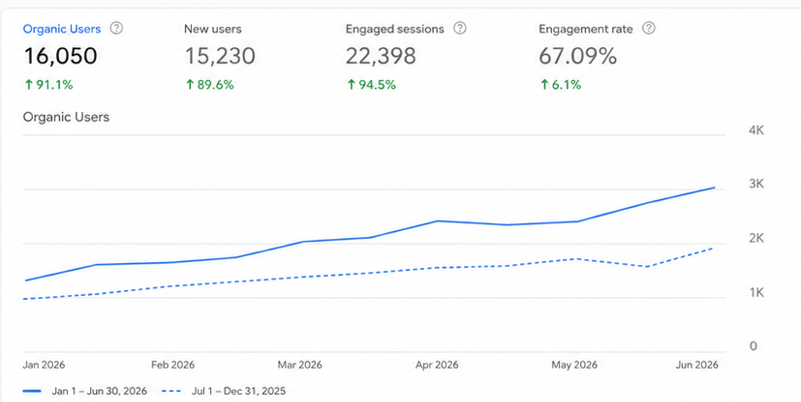
91% Growth in organic traffic

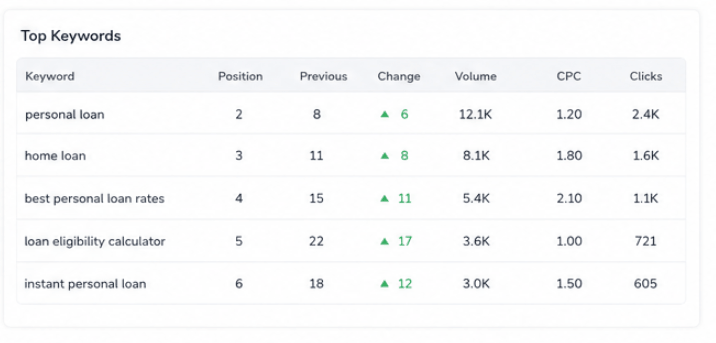
4.2x More keywords ranking on page 1

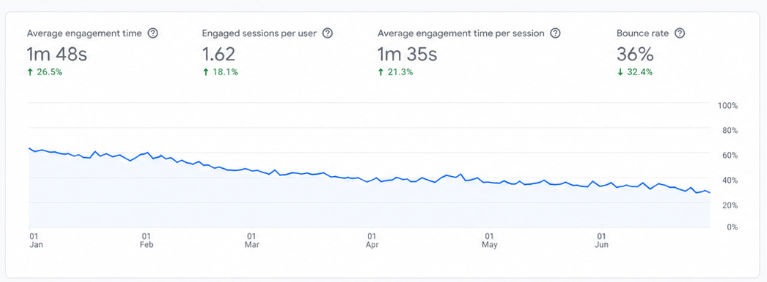
47% Drop in bounce rate on loan pages
Background and Context
The client runs personal loans, business loans, and mortgage refinancing. Not exactly an easy category to break into organically big banks and loan comparison sites have had a stranglehold on the good search terms for years, and there was no way this budget could out-bid them on ads. Search for “personal loan for self-employed” or “best business loan interest rates,” and this company simply wasn’t there. They ranked for their own brand name and not much else.
What makes lending trickier than most industries is trust. Nobody hands over their financial details to a website they don’t believe in. So this project was never just about rankings. it was about getting someone to feel comfortable enough, at the exact moment they land on a page, to actually fill out a form.
The Challenges
A few things jumped out right away once we dug in. The content read like it had been written by a compliance department, not for an actual human trying to figure out if they qualify. The loan application itself was buried three or four clicks deep, so even visitors who made it that far had to work for it. Mobile speed was sluggish, which mattered a lot since most people were browsing on their phones. There was no structured data telling Google what any of these pages were even about. And the domain just hadn’t built up the kind of authority that search engines reward in financial SEO.
Nothing here was a five-minute fix. But once we laid it all out, it explained pretty clearly why traffic wasn’t converting into anything.
Approach and Strategy
Phase 1: Figuring Out What Borrowers Actually Type Into Google (Days 1–15)
We started with Search intent, not keywords in the abstract sense. Not “business loan” as a broad term, but the longer, more specific searches people run right before they apply eligibility questions, document checklists, rate comparisons by loan type. That became the foundation for everything else. We weren’t interested in ranking for terms that look impressive in a report if they never led anywhere.
Phase 2: Rewriting the Content So People Actually Trust It (Days 16–35)
In finance, content either builds confidence or it kills the deal there’s not much in between. We rebuilt the core pages and added new ones: loan comparison guides, eligibility explainers, mortgage SEO content, plain-English breakdowns of things like credit score requirements. The point was to actually answer the question someone had in their head, instead of talking around it with vague financial language. A lot of banking SEO gets this wrong, either too salesy or too dry to be useful to anyone. We aimed for something that felt more like a knowledgeable friend explaining things than a brochure.
Phase 3: Fixing the Stuff Slowing Everything Down (Days 25–45)
While the content work was happening, we cleaned up mobile load times, compressed bloated images, trimmed unnecessary scripts, and added schema markup so search engines could actually understand what each loan page was offering. We also rebuilt the internal linking so someone reading “how to improve your loan eligibility” could get to the application form in one click instead of hunting for it.
Phase 4: Earning the Kind of Authority Financial Search Actually Rewards (Days 40–60)
Trust signals carry a lot of weight in this space, so we ran a focused digital PR push getting the client mentioned and linked from finance blogs, business publications, and local news coverage of lending trends. Honestly, this is the step a lot of financial services SEO work skips, because it’s slower and takes more relationship-building than just cranking out blog posts. But it’s usually where the real authority gains come from.
Phase 5: Making the Application Itself Easier (Days 55–75)
Great content and better rankings don’t mean much if the form itself scares people off. We simplified it, reworked the calls-to-action, and added trust elements right where hesitant visitors tend to drop off testimonials, licensing information, security badges. Small things, but they add up when someone’s deciding whether to trust you with their finances.
Results
We increased 138% qualified loan enquiries
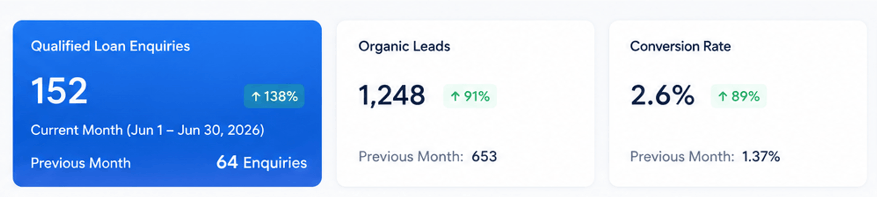
We Increased 91% Growth in organic traffic

We ranked 4.2x keywords on first page
We reduced 47% Drop in bounce rate on loan pages
What stood out to us more than the traffic growth, honestly, was the quality of the enquiries coming in. People started mentioning specific loan amounts and timelines right in their form submissions a pretty clear sign they’d already read enough on the site to know exactly what they wanted before reaching out.
Conclusion
Here’s the thing about lending nobody applies for a loan on a whim. They research, they compare, they hesitate, and eventually they pick who to trust. Our job was making sure that when someone finally reached that decision point, this client’s site was the one that had answered their questions clearly, loaded fast, and didn’t make them hunt for the application form. That mix of intent-driven keywords, content people actually believe, and a smoother path to applying is what turned organic search from a line item nobody paid attention to into a genuine source of business.
Want your financial SEO to bring in actual borrowers instead of just browsers?
Talk to Arihant Global about a Finance SEO Services strategy built around how people really search, compare, and decide.
Why Businesses Choose Arihant Global
Financial SEO just isn’t like SEO for a restaurant or a retail brand. There’s more hesitation involved, more scrutiny, and a lot more competition fighting over the same handful of keywords. Arihant Global builds strategies specifically for lenders, advisors, and financial platforms, treating real leads as the goal rather than chasing vanity numbers. From fixing what’s technically broken to writing content people actually trust, we care about results you can see in your enquiry inbox, not just your rank tracker.
Disclaimer
Results reflect this client’s specific market and circumstances. SEO outcomes vary based on competition, website history, budget, and execution, and past performance doesn’t guarantee similar results for other businesses.

Social Media Marketing: Growing a Fashion Brand Through Content That Actually Sold Something

A fashion label with three years of consistent posting came to us stuck at a plateau nobody could quite explain. Follower growth had slowed to almost nothing, engagement was fine but flat, and worse, their own team had started running out of ideas for what to post next. Everything felt like it had already been done.
Client: Withheld at client's request

Sector: Fashion (D2C, Contemporary Womenswear)

Engagement: 6 months Service: Social Media Marketing (Instagram-led, Pinterest secondary)
Key Measurable Outcomes
Background & Context
The brand made contemporary womenswear, sold direct through their website, and had built a following of around 52,000 on Instagram doing what most fashion brands do, product shots, the occasional reel, styling carousels timed to new drops. It worked well enough for the first two years. By year three, growth had flattened and the content calendar had started repeating itself without anyone quite noticing until we pointed it out.
Their marketing coordinator described it honestly in our first call: she felt like she was making the same five posts on rotation, just with different clothes in them. Nothing was actively failing, the numbers just weren’t moving anymore, and there was no real sense of why one post did better than another beyond guessing.
Challenges
The content had no real variety in format or purpose. Nearly everything was a product photo or a styling carousel, which meant every post was essentially asking for the same thing, attention on a product, with no content built to just be genuinely interesting or useful on its own. Accounts that only ever sell eventually stop getting engagement, because there’s no reason to stick around between purchases.
There was also no behind-the-scenes or process content at all, nothing about how a piece got made, who was making it, what the studio actually looked like. For a brand built partly on craft and detail, that felt like a real gap, the kind of content that tends to build the loyalty that turns a follower into a repeat customer.
Posting was consistent in frequency but not in strategy, no clear sense of which content type was meant to bring in new followers versus which was meant to move an existing follower toward buying something. Everything got treated the same regardless of purpose.
And Pinterest, despite being genuinely well suited to fashion discovery, had been abandoned almost entirely, a handful of pins from over a year ago and nothing since, even though it tends to send meaningfully high-intent traffic when it’s actually maintained.
Approach, Strategy & Solution
We restructured the content mix around distinct jobs instead of one repeating format. A portion of the calendar stayed product-focused, since that content still mattered, but we introduced regular process and studio content, fabric sourcing, sample fittings, the actual making of a piece, which gave the account texture it hadn’t had before and consistently outperformed expectations on saves specifically.
We also brought in a styling-tips format distinct from the product carousels, content that was useful even to someone not currently shopping, three ways to wear one piece, seasonal transition styling, that kind of thing. This became one of the more reliably shared formats, which mattered since shares reach people who don’t already follow the brand.
Pinterest got rebuilt from close to zero, with a consistent pinning schedule tied to new drops and styling content repurposed from Instagram, optimized for the kind of search terms people actually use there rather than just re-uploading Instagram posts as-is.
We also put a lightweight content-to-conversion structure in place, tagging products consistently across every relevant post and tracking which content types were actually driving clicks through to the site, not just engagement within the app, so the team could see for the first time which formats were doing more than just performing well in likes.
Results
Six months, spanning one full seasonal collection cycle. The process and styling content took about a month to find its footing since the team was building an entirely new production habit, then became a steady part of the mix from there.
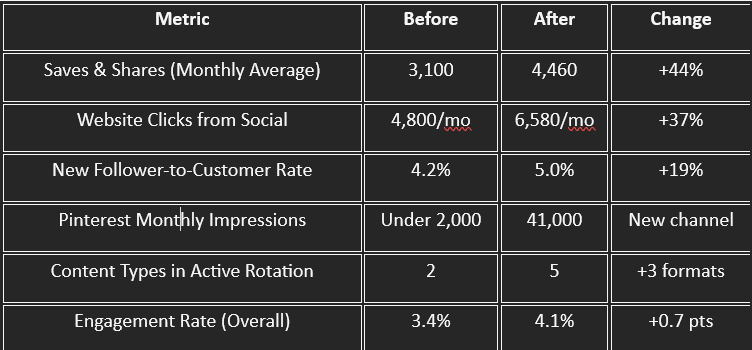
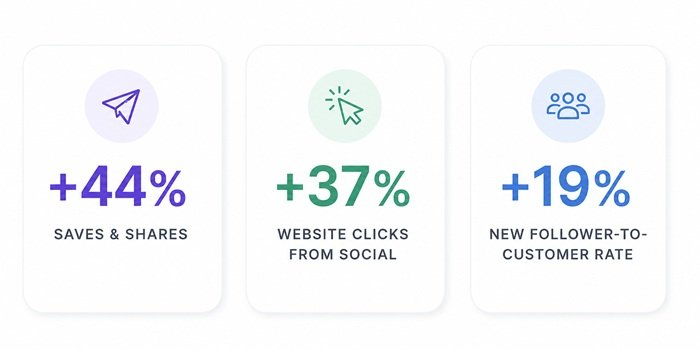
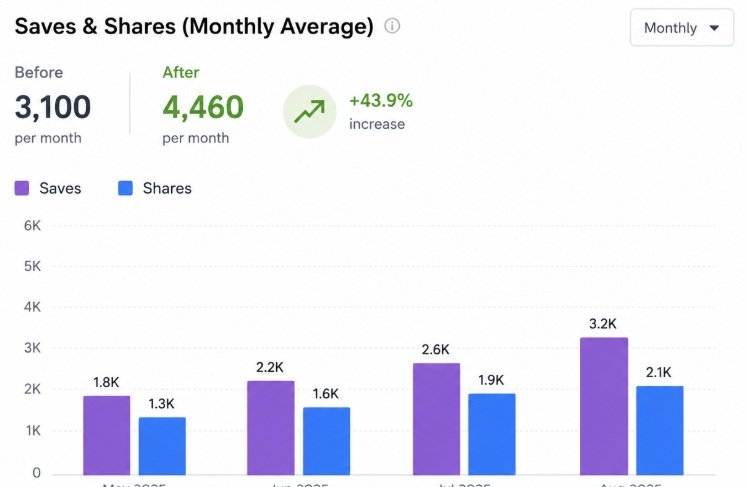
We Increased 43.9% Growth in Monthly Saves & Shares
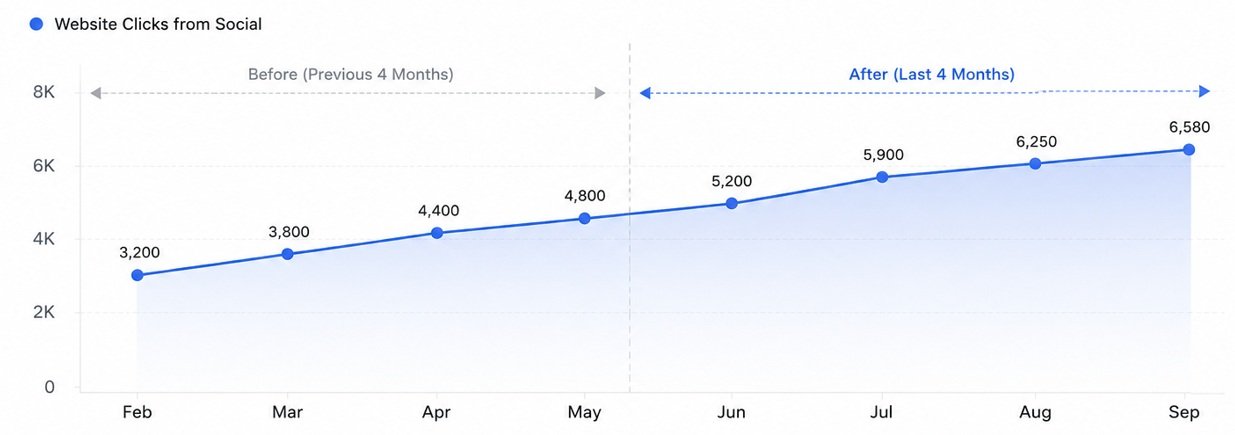
37% Increase in Website Traffic from Social Media
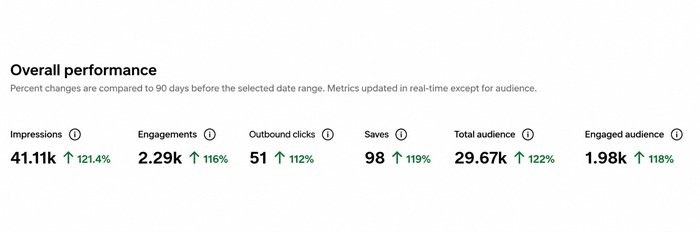
Pinterest Generated 41,000+ Monthly Impressions as a New Acquisition Channel
The founder mentioned that a process video showing how one of their signature prints was hand-finished ended up being shared far more than any product post they’d run that year, and that customers had started referencing it in DMs, asking about the print specifically, weeks after it went up.
Conclusion
The brand wasn’t losing relevance, they’d just narrowed their own content down to one repeating job, sell the product, and stopped there. Adding formats that gave people a reason to stick around between purchases, and that were actually pleasant to watch or read rather than just another product shot, brought the account back to life without changing what the brand fundamentally was.
Curious What This Would Look Like for Your Brand?
We’ll look at your current content mix for free, no changes made, just an honest read on whether your account is only ever asking for a sale, or giving people a reason to stay.
Ask us for a free social media audit →
Why Fashion Brands End Up Working With Us
Arihant global build content around distinct jobs, discovery, loyalty, conversion, instead of one repeating format stretched across everything. Process and craft content gets real space, not just product shots on rotation. We track clicks and conversions from social, not just likes that don’t lead anywhere. And we’d rather diversify what’s working than keep polishing the same five posts hoping they perform differently.
Disclaimer
The performance metrics presented are campaign-specific and intended for informational purposes only. Actual results may differ based on strategy, industry trends, customer demand, and ongoing optimization efforts.

Digital Marketing Services Improved Lead Quality for a Fintech Company

Executive Summary
Client Industry - Financial Technology Digital Lending and Payment Solutions
Primary Challenge
The fintech company was generating a reasonable volume of leads through its existing digital marketing efforts but the quality was the consistent problem. The sales team was spending most of their time on leads that were not remotely close to converting and the cost of acquiring a genuinely qualified prospect kept going up with no clear plan to bring it down.
Arihant Global’s Solution Developed a full funnel digital marketing strategy covering paid search, content marketing and marketing automation, rebuilt the conversion funnel around qualified lead signals, introduced CRM integration to track leads through the entire customer journey and implemented a lead nurturing sequence that moved prospects from initial interest to sales readiness before they ever reached the sales team.
Key Measurable Outcomes
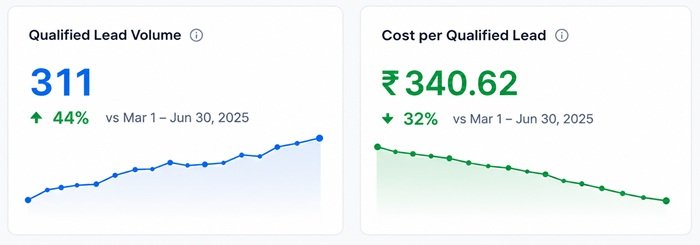
Qualified lead volume increased by 44% within 4 months

Cost per qualified lead reduced by 32%

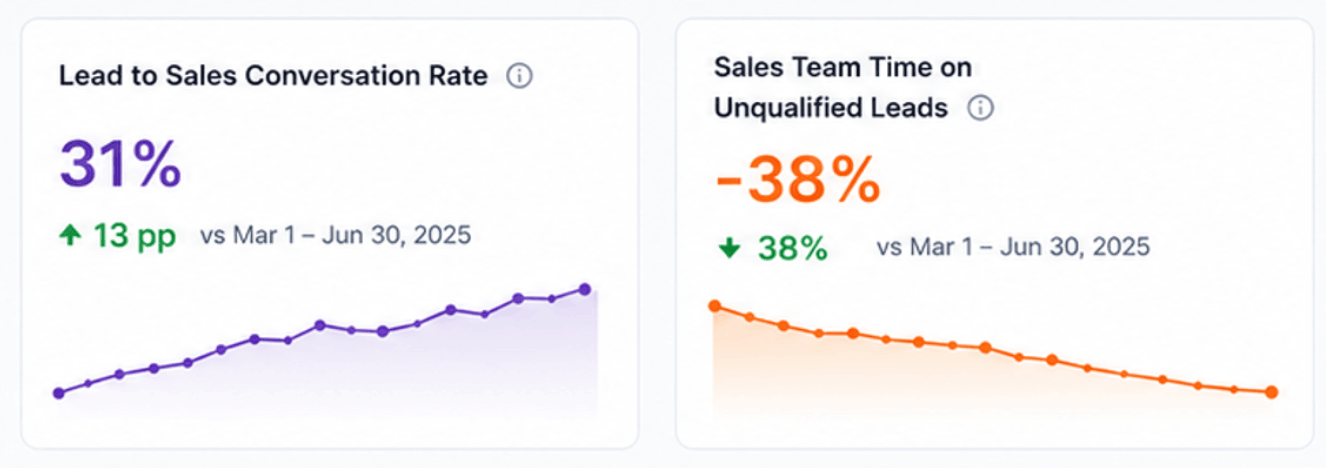
Lead to sales conversation conversion rate improved from 18% to 31%

Marketing automation reduced sales team time on unqualified leads by 38%
Background and Context
The client is a fintech company that had been operating for just over four years offering digital lending solutions and payment products to small and medium businesses. The founding team had deep product knowledge and a sales team that closed well once they were in front of the right prospect. Digital marketing had been running in some form since the early days a mix of Google Ads, some LinkedIn activity and occasional content but it had never been built around a coherent strategy. Leads came in through various channels with no clear picture of which ones were actually producing sales ready prospects. The sales team picked up whatever came in and worked through it but the ratio of time spent to deals closed had been getting worse for months. Management wanted better leads, not necessarily more of them.
Challenges
- Digital marketing activity was scattered across channels with no unified strategy or shared conversion goal connecting them
- Lead forms were collecting basic contact details but nothing that helped the sales team quickly assess whether a prospect was worth pursuing
- No lead nurturing existed anyone who showed interest but was not immediately ready to buy was never followed up with in any structured way
- CRM integration was incomplete which meant leads from different channels were landing in different places and the sales team had no single view of where a prospect had come from or what they had engaged with
- Google Ads campaigns were targeting broad financial services keywords that attracted researchers and students alongside genuine business decision makers
- Content existed on the website but was not structured around the customer journey there was no logical progression from awareness to consideration to decision
- Marketing attribution was patchy at best management could not reliably connect any specific marketing activity to a closed deal
Approach, Strategy and Solution
The work followed a structured 4 month rollout, each phase addressing a specific gap in the fintech company’s digital marketing and lead quality problem.
Month 1 – Audit, Strategy and CRM Integration
Every active digital marketing channel was audited Google Ads search term reports, website content, lead form structure, CRM setup and whatever attribution data existed. The picture that came back was messy but clear too many channels operating independently, no shared definition of what a qualified lead actually looked like and a CRM that was receiving data from some channels but not others. A unified qualification framework was defined based on the characteristics of the company’s best existing customers business size, revenue range, product need and decision making timeline. CRM integration was rebuilt to pull leads from every channel into a single pipeline with source attribution tracked from first touch.
Month 2 – Paid Search Rebuild and Lead Form Optimization
Google Ads campaigns were rebuilt around the search terms that genuine business decision makers were running rather than broad financial services queries. Negative keyword lists were extended significantly to cut out researchers, students and irrelevant traffic. Lead forms were restructured to include qualifying questions around business type, monthly transaction volume and current pain point enough information for the sales team to immediately assess seriousness without making the form long enough to put real prospects off completing it.
Month 3 – Content Strategy and Lead Nurturing
A content structure was built around the three stages of the fintech buyer journey awareness content addressing the business pain points the product solved, consideration content comparing solution approaches and decision stage content covering product specifics, integration details and customer outcomes. A lead nurturing email sequence was built for prospects who had shown interest but were not yet sales ready a five touch sequence over fourteen days that moved them through the consideration and decision stages before handing them to sales.
Month 4 – Automation, Optimization and Performance Review
Marketing automation was configured to score leads based on behaviour pages visited, content downloaded, emails opened and form interactions all contributed to a lead score that triggered different follow up actions. High scoring leads were routed directly to the sales team with a full activity summary. Lower scoring leads stayed in the nurturing sequence until they hit the threshold. Four months of attribution data was reviewed and budget was reallocated toward the channels and content pieces that were producing the highest quality leads at the lowest cost.
Results
The shift showed up first in what the sales team was spending their time on within six weeks of the new qualification framework going live the ratio of useful conversations to dead end follow ups had changed noticeably.
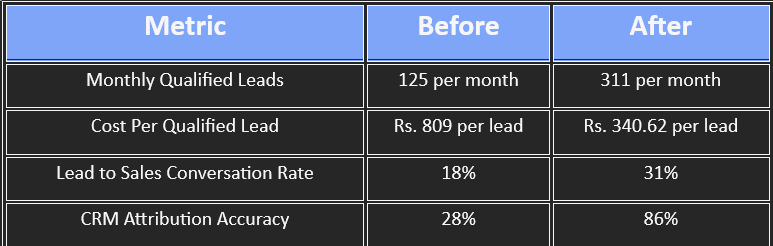
We increased monthly qualified leads volume and decreased CPL
We increased Coversiona rate 18% to 31%
Conclusion
The fintech company did not have a lead volume problem it had a lead quality problem and a marketing structure that was making it worse every month. Arihant Global rebuilt the digital marketing approach around what a qualified prospect actually looked like, connected the channels that had been operating independently and introduced the nurturing and automation that moved serious prospects to the sales team ready to have a real conversation. Qualified leads grew by 44%, cost per qualified lead dropped by 32% and the sales team went from spending most of their time on dead ends to spending it on conversations that were actually worth having. If your fintech business is generating leads that your sales team cannot close, the problem is upstream and that is exactly where Arihant Global starts.
If your sales team is spending more time filtering out bad leads than closing good ones, the marketing funnel needs to change. Share your current lead generation setup with Arihant Global and we will show you exactly where qualified prospects are being lost and what a properly built fintech marketing strategy would look like for your product and sales cycle.
Why Businesses Choose Arihant Global
Fintech companies come to Arihant Global for digital marketing services because in financial services, lead quality matters far more than lead volume. A sales team chasing unqualified prospects is an expensive problem that compounds every month. We build digital marketing strategies around the specific characteristics of a client’s best customers the right channels, the right qualification criteria, the right nurturing sequences and the CRM integration that gives the sales team a clear picture of every prospect before they pick up the phone.
Disclaimer
Results reflect outcomes achieved for a specific client based on their market and product conditions. Individual results may vary depending on industry, sales cycle length and implementation timeline.
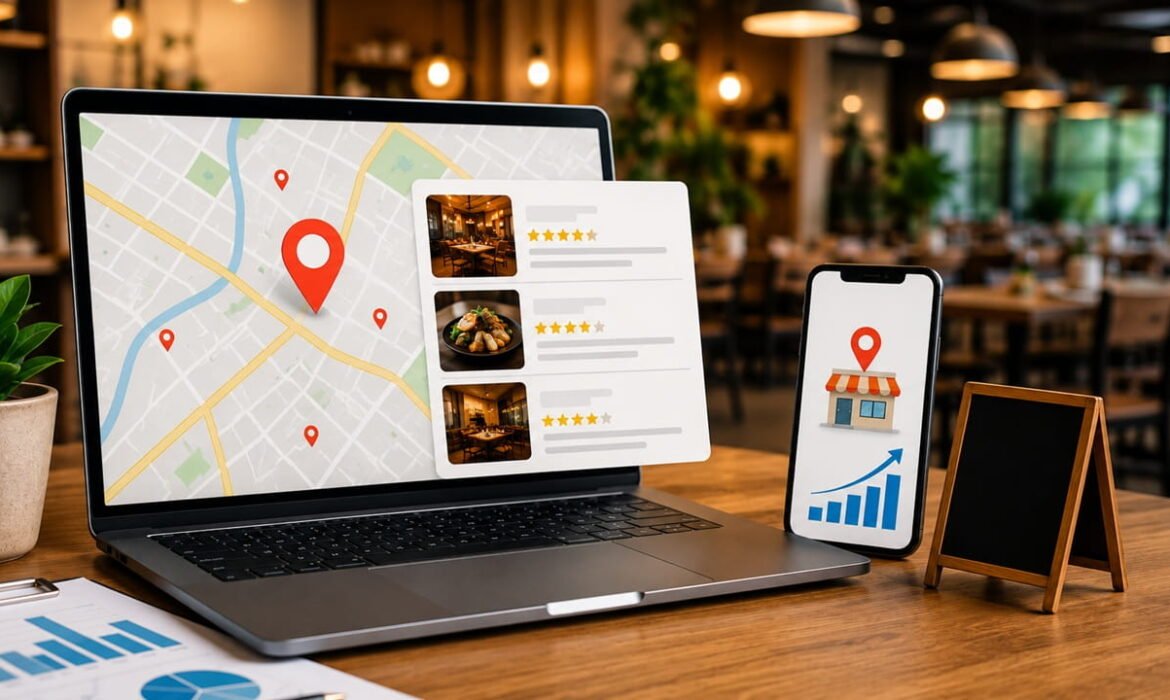
How Local SEO Services Helped a Restaurant Rank in Google’s Local 3-Pack Within 90 Days
Client Industry - Food and Beverage Restaurant and Dining
Primary Challenge
The restaurant had been feeding loyal customers for years but anyone who did not already know it existed was never going to find it on Google. Newer places with a fraction of the history were showing up at the top of Maps while this one sat invisible and weekday tables stayed empty because of it.
Arihant Global’s Solution Went through everything from the ground up the Google Business Profile, how the restaurant appeared across food and local directories, what the website was saying to search engines and what competitors were doing that this restaurant was not. Fixed what was broken, built what was missing and put a system in place to keep it working.
Key Measurable Outcomes
Ranked in the Google local 3-pack for 8 target keywords within 90 days

Google Maps calls went up by 42% in 3 months

Direction requests from the profile grew by 36%

Review count went from 22 to 74 and the average rating climbed from 3.8 to 4.5
Background and Context
Six years in business. A dining room that filled up on weekends. Regulars who came back every week and brought people with them. By any measure the restaurant had earned its place in the local market. But none of that showed up online. Someone new to the area searching for somewhere to eat nearby would never have known it existed the Google Business Profile was half empty, the review count was embarrassingly low for a six year old business and the local 3-pack was occupied entirely by competitors. Weekday covers were the problem nobody had a good answer for, and the owner had a feeling that being invisible on Google had something to do with it.
Challenges
- The Google Business Profile had almost nothing on it no menu, no food photos, no interior shots and whole sections that had never been filled in
- The opening hours listed on the profile were wrong the restaurant was showing as closed during lunch service on several days, which meant customers calling to check were getting no answer and assuming it was shut
- Twenty two reviews after six years said everything about how little attention had been paid to the profile and there was no process whatsoever for asking happy customers to leave one
- A handful of negative reviews about wait times had been sitting there unanswered for months anyone looking the restaurant up before visiting saw complaints with no response
- Despite being one of the more established dining options in the area, the restaurant was not showing up in the local 3-pack for a single relevant search
- The phone number, address and name were appearing differently across Zomato, Justdial and other directories something that quietly hurts local search rankings without most business owners ever realizing it
- Not a single Google Post had ever gone up and the profile looked like nobody had touched it in years
- The website had no content that told Google where the restaurant was, what area it served or what kind of dining experience it offered
Approach, Strategy and Solution
The work followed a structured 90 day rollout, each phase addressing a specific gap in the restaurant’s local search presence.
Days 1 to 20 Full Audit and Profile Rebuild
Every section of the Google Business Profile was reviewed and corrected. Business name, address, phone number, website, hours, primary and secondary categories, cuisine types, dining attributes and the business description were all rebuilt from scratch. Primary category was set to the most search relevant option and secondary categories were added for specific cuisine types and dining occasions. Business hours were corrected across all seven days including separate hours for lunch and dinner service. The restaurant’s menu was uploaded in full with pricing and item descriptions added for every section.
Days 21 to 45 Visual Content and Profile Enrichment
A photo shoot was arranged at the restaurant covering the exterior signage, dining room ambience, food presentation across the most popular dishes, the bar area and the kitchen team. Sixty plus photos were uploaded across the relevant categories. Short video clips of signature dishes being plated and the dining room during service were added to give the profile a sense of energy and atmosphere. The services and highlights sections were fully completed with dine-in, takeaway, reservation and parking availability details all accurately filled in.
Days 46 to 70 Review Generation and Reputation Management
A practical review generation process was introduced a QR code placed on every table linking directly to the Google review page, a follow up WhatsApp message sent to customers who had provided contact details during reservation and a brief prompt from floor staff at the end of a positive dining experience. Every existing review was responded to positive ones with genuine acknowledgement and negative ones with professional, constructive responses that addressed the specific concern raised. The unanswered complaints about service wait times were addressed directly and the responses showed that the feedback had been taken seriously.
Days 71 to 90 Local Citation Building and Google Posts
The restaurant’s listing was audited and corrected across 25 plus food, local business and general directories Zomato, Justdial, Sulekha and Google Maps being the priority platforms. NAP consistency was established across every listing. A Google Posts schedule was introduced with posts covering weekly specials, seasonal menu additions, dining occasion promotions and behind the scenes content from the kitchen. The website also received location specific content updates a properly written location page and area based keywords added to the homepage and menu page to strengthen local search signals.
Results
The shift showed up first in the profile view numbers within the first month of the rebuilt profile going live, impressions and search appearances started climbing in a way the restaurant had never seen before.
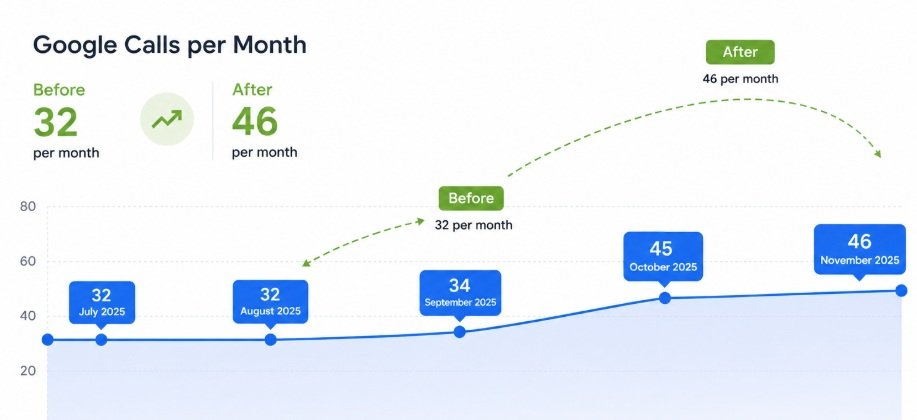
Google Maps calls went up by 42% in 3 months
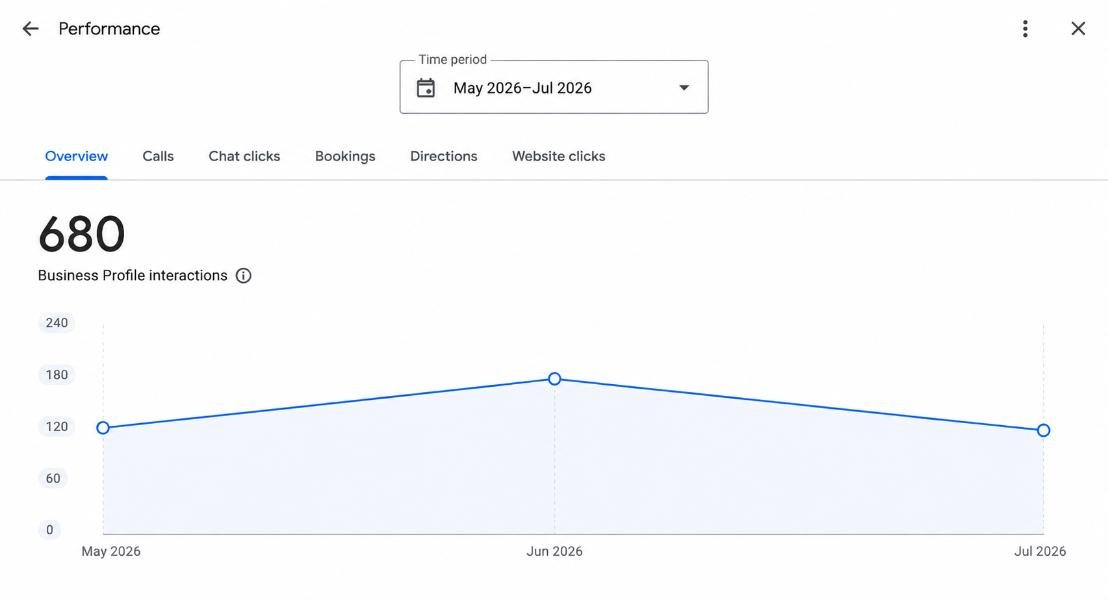
we Increased Profile Views from 420/m to 680/m
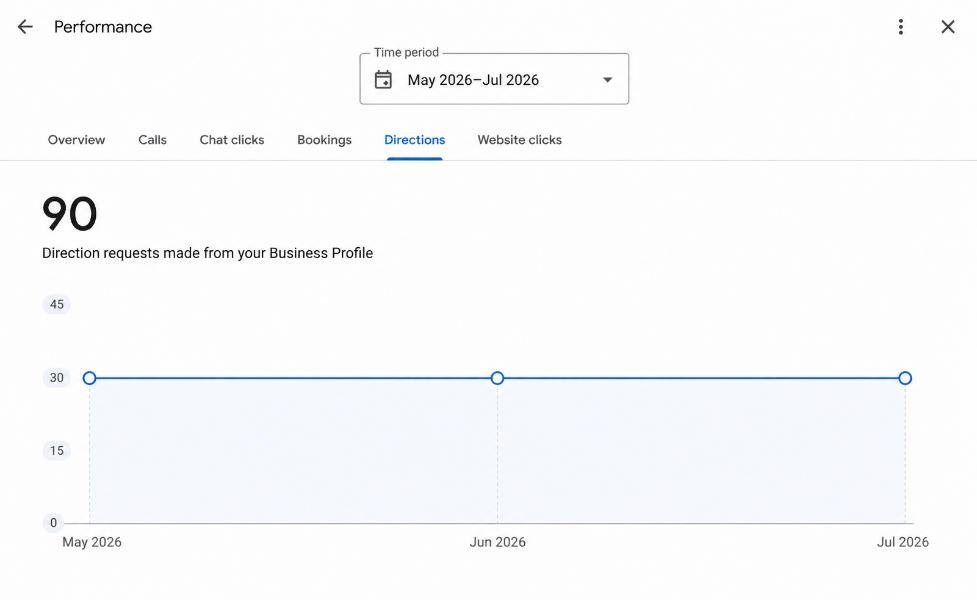
Direction requests from the profile grew by 36%
Review and rating before
Review and rating After result
Why Businesses Choose Arihant Global
Restaurants and food businesses come to Arihant Global for local SEO because they understand that Google Maps is where dining decisions get made not on the restaurant’s own website and not through a brochure. We do not offer a one time profile update and move on. We build a complete local presence strategy covering accurate and complete profile information, strong visual content that gives customers a real sense of what to expect, a review generation process that keeps fresh feedback coming in consistently and ongoing posting activity that signals to Google that the business is active, relevant and worth showing to hungry customers searching nearby. The results above came from a restaurant that had been operating for six years and was still invisible on Maps and they are the kind of results that keep building month after month once the local SEO foundation is properly in place.
Right now someone nearby is searching Google Maps for a restaurant serving exactly what you offer. If your business is not in the top 3 results, that customer is walking into a competitor instead. Book a free local SEO audit with Arihant Global and find out exactly what it would take to get your restaurant ranking where it belongs within 90 days.
Disclaimer
This case study is based on a real client engagement. Client details have been anonymized for confidentiality. Results reflect this specific project and may vary depending on location, competition, implementation, and business goals.

How Google Ads Services Reduce Cost Per Lead by 42% for a B2B Online Education Platform

Industry: Online Education - B2B Professional Upskilling

Services Delivered: Google Ads Management · Search Campaign Restructure · Landing Page Audit · Conversion Tracking Setup

Engagement Duration: 4 Months

The Client
The client is a B2B online education platform offering professional certification programs in data analytics, project management, and digital marketing. The platform sells directly to working professionals and to HR teams at mid-size companies looking to upskill employees. Founded in 2019, the company had grown primarily through referrals and organic search in its first two years, before beginning to invest seriously in paid acquisition.
By the time the engagement with Arihant Global began, the platform was spending approximately ₹3.8 lakh per month on Google Ads services with a dedicated internal marketing manager overseeing the account. The campaigns were generating leads but the cost per lead had climbed steadily over eight months, the sales team was flagging that lead quality had declined, and the CPL of ₹1,840 made the unit economics of paid acquisition marginal at best.
The Challenge
Rising CPL with No Clear Cause
The internal team had made multiple attempts to reduce cost per lead pausing underperforming ad groups, adjusting bids, switching from manual CPC to Target CPA. None of it made a sustained difference. What was missing was a structural diagnosis. The problem was not the bidding strategy; it was the account architecture beneath it.
Broad Match Spend Without Negative Keyword Control
A full search term report audit covering the previous 90 days revealed that approximately 31% of total ad spend over that period had matched against queries with no commercial intent. A professional certification platform was paying for clicks on queries like ‘free data analytics tutorial YouTube’, ‘what is project management Wikipedia‘, and ‘digital marketing salary freshers’. Broad match keywords with no negative keyword infrastructure had been accumulating this spend for months with nobody reviewing the search term reports at sufficient frequency.
Landing Pages That Did Not Match Ad Intent
Three separate ad groups were driving traffic to the platform’s homepage rather than to course-specific or program-specific landing pages. A user clicking an ad for ‘PMP certification course online India’ was landing on a general homepage and being asked to navigate from there to the relevant program. The message match gap was significant, and the conversion rate data confirmed it. homepage-destination campaigns were converting at 0.9%, while the one ad group already pointing to a dedicated program page was converting at 3.1%.
Conversion Tracking Gaps
The account was tracking a single conversion event a contact form submission. Phone call conversions, demo booking completions, and WhatsApp enquiry button clicks were not tracked. This meant the bidding algorithm was optimizing toward one conversion type while the sales team received leads from three other sources that were invisible to the campaign’s performance data.
The Approach
Phase 1 Month 1 — Audit and Structural Rebuild
The first month was spent entirely on diagnosis and restructuring before touching budgets or bids. Search term reports from 90 days were reviewed line by line. A negative keyword list of 340 terms was built and applied across all campaigns immediately. this alone reduced irrelevant click spend by 38% within the first 30 days. Campaigns were restructured into tighter, intent-specific groups: brand terms, competitor terms, specific certification program terms, and generic professional development terms each ran as separate campaigns with their own budgets and bid strategies.
Phase 2 Months 2–3 — Landing Pages and Conversion Architecture
Dedicated landing pages were briefed and built for the three highest-spend program categories. Each page led with program-specific benefits, included a visible fee and duration breakdown that the homepage lacked, and had a single above-the-fold CTA (a free demo class booking form). Conversion tracking was expanded to cover four events form submissions, demo bookings, phone call clicks, and WhatsApp button clicks. With the full conversion picture now visible, Smart Bidding was reintroduced on the two campaigns with sufficient volume this time with real data to work from.
Phase 3 Month 4 — Bid Strategy Refinement and Scaling
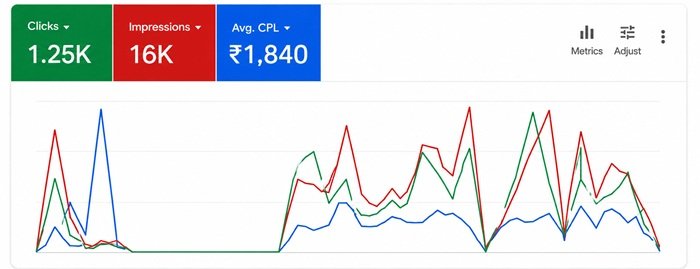
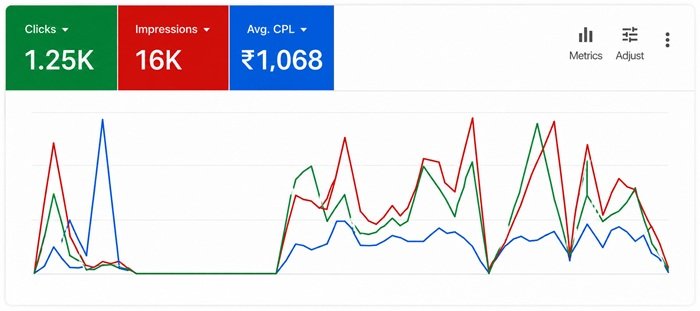
With CPL now tracking at ₹1,180 by week 10 and conversion rate improved to 4.8% across search campaigns, budget was incrementally increased on the two highest-performing program campaigns. Ad copy was A/B tested on the certification and analytics campaigns with a focus on outcome-specific messaging ads emphasizing salary growth and employer recognition outperformed feature-led copy (which had been the default) by 31% on CTR. A monthly search term review cadence was formalized as a non-negotiable recurring task.
The Results
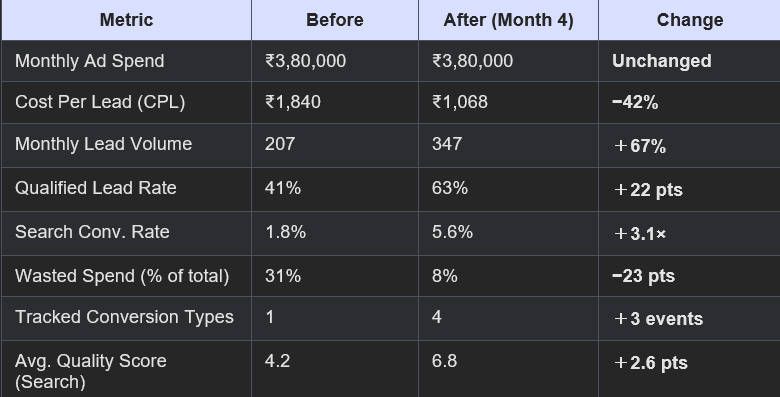
BEFORE COST PER LEAD AFTER COST PER LEAD
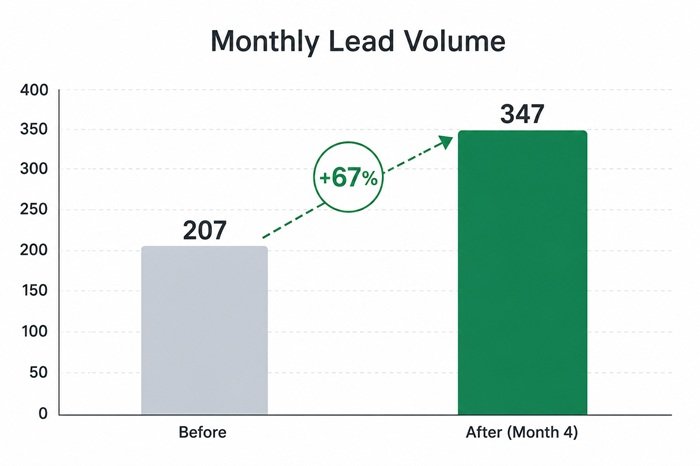
WE INCREASED Monthly Lead Volume BY +67%
3.1X CONVERSION RATE INCRESED THROUGH GOOGLE ADS
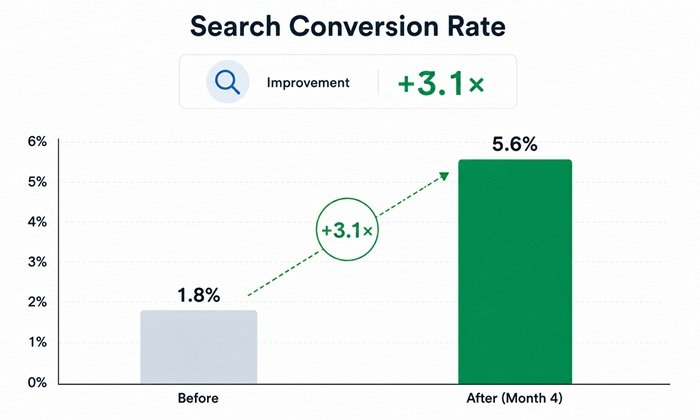
“The leads coming in after the restructure were different. Sales was spending less time disqualifying and more time closing. The CPL number tells one part of the story. the quality improvement tells the rest.” Founder, B2B Online Education Platform
Key Takeaways
- Negative keyword architecture: Eliminating irrelevant search term spend is the fastest CPL reduction lever in most mismanaged accounts no creative, no landing page, no bidding change is as immediate.
- Message match matters more than budget: Three ad groups were losing money daily due to homepage destination. A dedicated landing page for each program category was the single highest-leverage change.
- Conversion tracking completeness: An account optimizing on one of four actual conversion types is running on partial information. Smart Bidding with incomplete tracking is worse than manual CPC. it optimizes toward the wrong signal.
Conclusion
Reducing cost per lead wasn’t about cutting the budget. it was about making every click more relevant. By rebuilding campaign structure, improving landing pages, and tracking the right conversions, Arihant Global helped this B2B education platform generate better-quality leads while maintaining the same ad spend. Looking to improve your Google Ads performance? Partner with Arihant Global for data-driven campaigns that deliver measurable business growth.
Disclaimer
This case study represents results achieved for one client under specific business conditions. Performance depends on budget, competition, industry, audience behaviour, and implementation. Individual outcomes may vary.
How Performance Marketing Services Delivered 214% ROI Increase for a D2C Skincare Brand
Industry: D2C Skincare and Personal Care

Services Delivered: Meta Ads Management · Google Shopping · Full-Funnel Campaign Architecture · Creative Strategy · Attribution Setup

Engagement Duration: 3 Months
The Client
The client is a D2C skincare brand selling a range of 14 face care and body care products directly through their website and on Nykaa and Amazon. Founded by a cosmetic chemist and a marketing professional in 2021, the brand had built a genuine product quality reputation and a loyal customer base through organic Instagram content in its first 18 months.
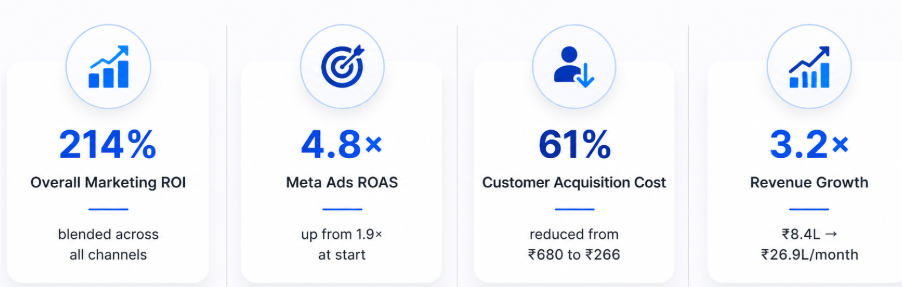
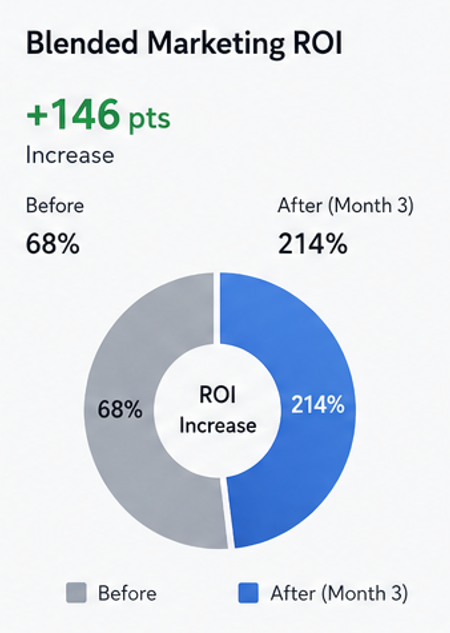
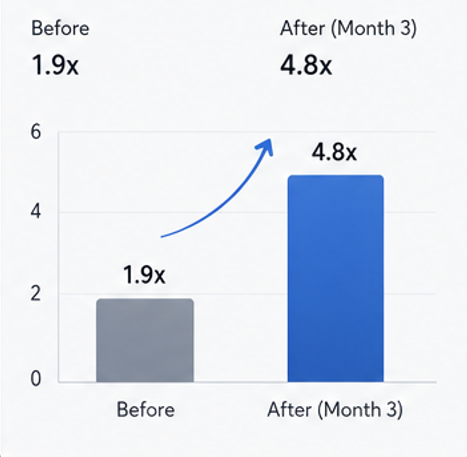
By mid-2023, organic growth had plateaued and the founders had begun investing in paid advertising primarily Meta Ads to drive new customer acquisition. After seven months of managing campaigns internally, their Meta ROAS had settled at a stubborn 1.9× and their blended Performance marketing ROI was estimated at 68%. They knew the product could scale; they were not confident they had the paid media infrastructure to make it happen.
The Challenge
A Single Bottom-Funnel Campaign Carrying All Paid Spend
The brand’s entire Meta Ads budget was concentrated in two conversion campaigns both targeting Purchase events and both running nearly identical broad targeting with no audience segmentation. There was no top-of-funnel awareness investment, no mid-funnel consideration layer, and no retargeting campaigns for the significant volume of website visitors and Instagram engagers who had not yet purchased. New cold audiences were being asked to convert on first contact a creative and funnel mismatch that consistently produces poor ROAS at meaningful scale.
Creative Fatigue That Nobody Had Noticed
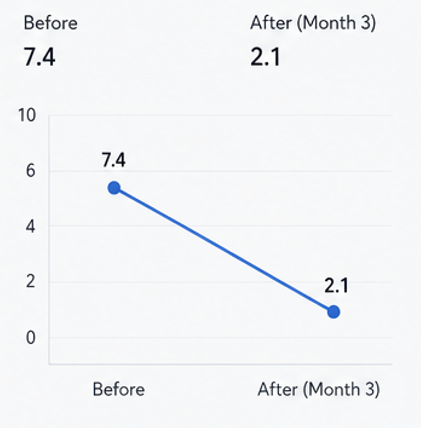
The same three creative assets had been running in Meta campaigns for 19 weeks without rotation. Meta’s delivery data showed that frequency on the primary conversion campaign had reached 7.4 across a 30-day window the average user in the target audience had seen the same ad more than seven times. Creative fatigue at this level does not just reduce ROAS; it actively trains the algorithm to serve ads to less and less engaged users as it exhausts the responsive segment.
Google Shopping Was Absent
The brand had a Google Merchant Centre account that had been set up at launch but never properly configured. The product feed had 14 products listed, all with generic titles (the product name only, no descriptive keywords), no GTINs, and placeholder images that did not meet Google’s image quality requirements. The account had been disapproved for 6 of 14 products at some point and the disapprovals had never been addressed. The brand was entirely absent from Google Shopping the highest purchase-intent paid channel for skincare products while competitors were consistently appearing for every relevant query.
No Attribution Model Below Last Click
All performance reporting was based on platform-reported conversions Meta’s own attribution window and Google’s last-click model. With both channels running simultaneously but with no cross-channel attribution, the founders had no accurate picture of which channel was contributing to which purchase, whether customers were seeing Meta ads and then converting via Google, or how to allocate budget between channels based on real business outcomes.
The Approach
Phase 1 Month 1 Attribution Fix and Google Shopping Launch
The first priority was building a measurement foundation before spending another rupee on campaigns without reliable data. GA4 was audited and reconfigured with purchase and add-to-cart events properly tagged. Meta’s Conversions API was implemented server-side to recover conversions being lost to iOS tracking restrictions this immediately increased Meta’s reported conversion volume by 22% without changing actual sales, revealing that the previous ROAS of 1.9× had been understated. Google Shopping was rebuilt from scratch: product titles were rewritten to keyword-lead format, GTINs were sourced and added for all 14 products, images were replaced with clean white-background hero shots, and the 6 disapproved products were fixed and resubmitted. Google Shopping campaigns were launched in week three with a ₹30,000 test budget.
Phase 2 Month 2 Full-Funnel Meta Architecture and Creative Reset
The existing Meta conversion campaigns were restructured into a three-stage funnel. Top of funnel: a video view and engagement campaign reaching a broad lookalike audience of the brand’s best customers budget 20% of total Meta spend. Middle of funnel: a traffic and engagement campaign retargeting users who had watched 50%+ of the awareness video or visited the website in the past 30 days budget 15% of total Meta spend.
Bottom of funnel: two conversion campaigns, one for cold prospecting (Advantage+ Shopping) and one for warm retargeting with dynamic product ads budget 65% of total Meta spend. An urgent creative brief was issued: 8 new assets across three formats (UGC-style testimonial video, ingredient explainer Reels, and a before/after static carousel) were produced and rotated in within 10 days.
Phase 3 Month 3 Scaling and Budget Reallocation
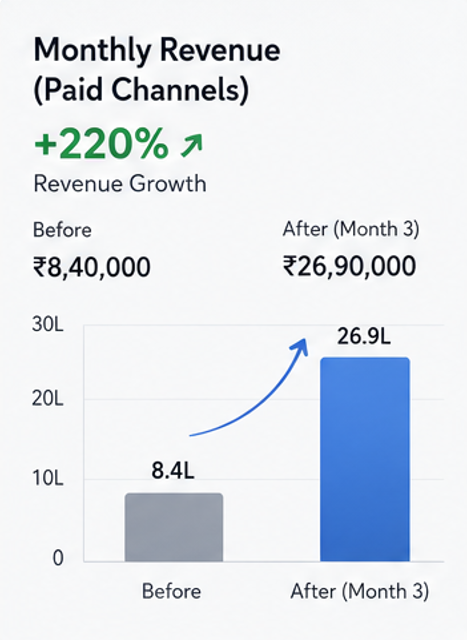
By week 10, Meta ROAS was tracking at 3.9× blended and Google Shopping ROAS was at 5.1× ahead of Meta on a per-channel basis because Shopping captures users further down the purchase funnel. Total monthly revenue had moved from ₹8.4 lakh to ₹19.2 lakh by end of month two. In month three, the Google Shopping budget was increased from ₹30,000 to ₹85,000 based on demonstrated ROAS. A Performance Max campaign was tested with the product feed as the primary asset. The top-of-funnel Meta investment from month two began showing measurable impact on branded search volume a 34% increase in branded Google searches was attributed to the awareness campaign reach.
The Results
| Metric | Before | After (Month 3) | Change |
| Monthly Revenue (Paid Channels) | ₹8,40,000 | ₹26,90,000 | +220% |
| Blended Marketing ROI | 68% | 214% | +146 pts |
| Meta Ads ROAS | 1.9× | 4.8× | +2.9× |
| Google Shopping ROAS | Not running | 5.1× | New channel |
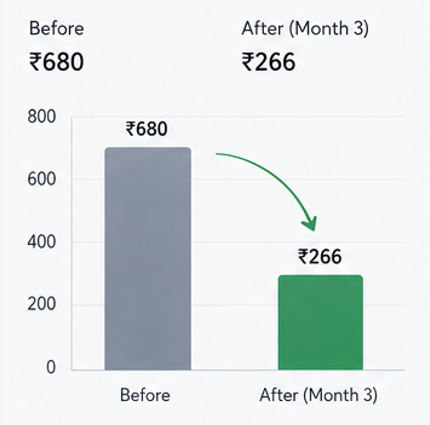
| Customer Acquisition Cost | ₹680 | ₹266 | −61% |
| Meta Frequency (30-day) | 7.4 | 2.1 | −72% |
| Creative Assets Active | 3 | 11 | +8 assets |
| Conv. API Recovery Gain | — | +22% | More accurate data |
We increased Monthly Revenue by 220%
2.9x Increment in Meta Ads ROAS Meta Frequency reduced
We reduced Customer Acquisition Cost -61%
Conclusion
Sustainable growth happens when every marketing channel works together. By combining Meta Ads, Google Shopping, accurate attribution, and full-funnel campaign optimization, Arihant Global transformed paid marketing into a scalable revenue engine. If you want higher ROI, lower acquisition costs, and profitable growth, partner with Arihant Global for performance marketing strategies built around measurable business results.
Disclaimer
Results are based on one client’s campaign performance and specific market conditions. Outcomes differ based on product category, competition, advertising budget, creative quality, and customer demand.