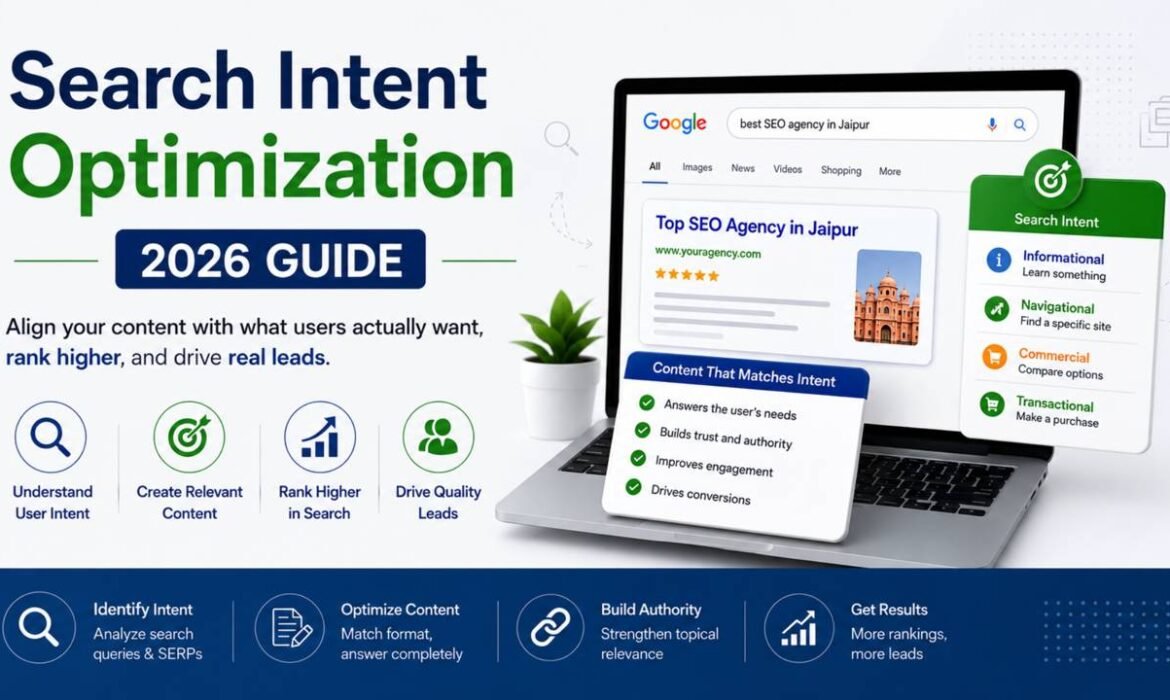
Learn How To Align Your Content With Intent And What Users Actually Want, Rank Higher And Drive Real Traffic & leads.
The Hidden Reason Your Traffic Isn’t Converting
Your analytics dashboard shows a massive traffic spike. Naturally, you think it’s a huge win. But then you look at your sales CRM or your WhatsApp inquiry list. Nothing. Zero new leads.
Why does more traffic so rarely equal more sales?
The issue usually hides in plain sight. Most businesses still publish content just to rank for specific words. They ignore what the person typing those words actually wants to do. This is where search intent optimization changes everything.
We aren’t in the keyword-obsessed era anymore. If you rank a generic blog post for a search term where the user actually wanted to buy a product, they will leave your site in seconds. Mastering semantic search and aligning with your buyer’s actual goals is mandatory today. Proper user intent optimization stops this immediate page abandonment. Ultimately, Search intent in SEO is the actual bridge between a random click and a paying client.
What is Search Intent Optimization?
Search intent optimization is the process of aligning your content with the user’s goal behind a search query to improve relevance, engagement, and rankings.
At its core, search intent SEO means matching your webpage content to that exact goal. Doing this improves your relevance, keeps people on your site longer, and pushes your rankings up.
When you give search engines what their users want, you win. There are four main types of search intent. Here is how they look in the real world, along with practical search intent examples:
- Informational Search intent: They want to learn. Example: “How to use WhatsApp API.” They need a tutorial, not a sales pitch.
- Navigational Search intent: They want a specific website. Example: “Arihant Global client login.” *
- Commercial Search intent: They are doing research before buying. Example: “Best CPaaS providers in India.” They want honest reviews and comparisons.
- Transactional Search intent: They have their credit card ready. Example: “Hire SEO agency in Jaipur.” They need pricing details and a contact form.
Why Search Intent Matters More Than Keywords in 2026
Five years ago, you could stuff a web page with a target phrase and hit page one. Today, that strategy will tank your site. Modern AI search systems read entirely for human context.
When looking at search intent vs keywords, think of keywords as the raw input. The intent is the actual human problem.
If someone searches “fix low sales on Shopify,” Google ranking factors dictate that the top result shouldn’t just repeat that phrase fifty times. The winning page must genuinely solve the e-commerce conversion problem. Because algorithms match concepts to solutions rather than just identical words, keyword stuffing fails completely. It ignores the reader’s real goal.
How to Identify Search Intent (Step-by-Step)
You shouldn’t guess what your audience wants. The data is already out there. If you want to know how to identify search intent, here is the exact keyword intent analysis framework we use for our clients.
Step 1: Check the SERPs. Type your target phrase into Google and look at the top five results. Are they list articles, product pages, or deep-dive guides? These SERP intent signals literally show you the format Google prefers.
Step 2: Match that format. If the top spots are all YouTube videos and step-by-step blogs, don’t try to force a standard “About Us” service page into the mix. It won’t work.
Step 3: Spot the modifiers. Proper search query analysis becomes easy when you look at the extra words. Words like “buy,” “price,” or “near me” mean the user wants to spend money. Words like “how,” “what,” or “ideas” mean they just want information.
How to Optimize Content for Search Intent
Once you know what the searcher wants, you have to deliver it the second your page loads. Consider this your execution checklist and search intent optimization guide:
- Match the layout: To properly optimize for search intent, adapt your page structure. If the intent is commercial research, build a clean comparison table. If it’s transactional, use a high-speed landing page with obvious call-to-action buttons.
- Set expectations immediately: Your main headline (H1) needs to confirm the user is in the right place within three seconds. This content alignment keeps bounce rates low.
- Answer the whole question: Don’t just stop at the main topic. Look at the “People Also Ask” box on Google and answer those related questions. Creating deeply helpful, intent-driven content is what secures top rankings long-term.
Search Intent for Local SEO (The Jaipur Example)
Local search behavior is highly protective of time and budget. Understanding search intent for local SEO is exactly how small brands beat massive national competitors.
Let’s look at a real-world local SEO strategy Jaipur example. If a founder searches “SEO agency Jaipur,” their intent is heavily transactional. They want to hire a team. Your landing page better show local case studies, an office address, and a quick way to book a call.
But if they search “best SEO agency Jaipur,” their mindset shifts to commercial. They want a list to compare options before picking up the phone. Leveraging intent-based SEO for businesses means creating specific, different assets for every stage of that local buying journey.
The Mistakes Costing You Money
We audit digital campaigns across India every single week. The most expensive error we see is targeting the wrong search intent.
In recent SEO audits for several Jaipur-based businesses, we found that over 70% of their pages stuck on page 2 were failing because of an intent mismatch—not a lack of backlinks.
For instance, a dental clinic will try to rank their “Book a Root Canal” page for the search term “why do my teeth hurt.” The user just wants medical advice right now. Hitting them with a surgery booking form is jarring and makes them bounce.
Advanced Strategy: Combining Intent + Entity SEO
If you want to dominate search results for the next few years, you must look beyond basic intent. The modern standard requires combining human goals with entity-based SEO in jaipur.
Search engines read pages a lot like an industry expert would. Knowledge graph SEO ensures Google understands exactly how different concepts on your site connect to one another. Combined with natural language processing in SEO, the algorithm can now fully grasp the depth of your expertise.
When a CEO searches “best CPaaS provider in India,” Google doesn’t just match text. It uses contextual search to find trusted entities connected to telecom APIs, SaaS infrastructure, and enterprise messaging. When your website clearly maps out these connections, your brand becomes the definitive recognized expert.
Connecting the Dots
Great content doesn’t work in a vacuum. A single intent-optimized blog post needs to connect to the rest of your site logically.
This is exactly how to build topical authority in SEO. By grouping related articles together, you prove to the search algorithms that you know your industry inside and out.
For regional brands trying to capture market share, mastering an entity-based SEO strategy in Jaipur is how you start dominating standard search results and localized AI summaries.
FAQ – Search Intent Optimization
What is search intent optimization in SEO?
Search intent optimization is the process of creating content that matches the exact goal behind a user's search query. It helps improve rankings, engagement, and conversions by aligning webpages with what users actually want, whether they are searching for information, comparing options, or ready to make a purchase.
Why is search intent important for SEO in 2026?
Search intent is critical in 2026 because Google and AI-driven search systems prioritize user satisfaction over keyword repetition. Websites that solve user problems, answer questions clearly, and match search behavior are more likely to rank higher, reduce bounce rates, and generate qualified leads from organic traffic.
What are the four types of search intent?
The four main types of search intent are informational, navigational, commercial, and transactional. Informational users want answers, navigational users seek specific websites, commercial users compare products or services, and transactional users are ready to take action, purchase, contact a business, or book a service.
How can I identify search intent?
You can identify search intent by analyzing Google search results, reviewing SERP features, studying keyword modifiers, and understanding what content formats rank on page one. Terms like buy, price, or near me usually indicate transactional intent, while how or guide signals informational intent.
What is the difference between keywords and search intent?
Keywords are the words users type into search engines, while search intent represents the actual purpose behind those searches. Two people may use similar keywords but expect different results. Understanding intent helps businesses create content that satisfies user needs instead of simply targeting search phrases.
How does search intent improve conversions?
Search intent improves conversions by ensuring visitors land on content that directly matches their needs and expectations. When users quickly find relevant information, pricing, comparisons, or solutions, they stay engaged longer, trust the website more, and are more likely to complete actions such as purchases or inquiries.
Final Thoughts: Turn Your Content Into a Revenue Engine
Getting traffic is nice, but capturing leads pays the bills. Your SEO strategy can no longer rely on basic keyword matching.
When you fully integrate search intent optimization into your marketing, you stop wasting money on random, bouncing clicks. You build a resilient system that meets your buyers exactly where they are in their decision process. The shift toward intent-based SEO is permanent.
If your website traffic isn’t turning into actual sales, your content probably doesn’t match what your users want. Get In touch with Our team at Arihant Global that spends every day helping businesses fix this exact problem—turning weak pages into predictable, high-converting digital assets.
Disclaimer
This blog is for informational purposes only. SEO results are not guaranteed and may vary depending on competition, strategy, website quality, and implementation. Search engine algorithms change frequently, and outcomes can differ for each business. Readers should use this information as guidance, not a promise of rankings or results.