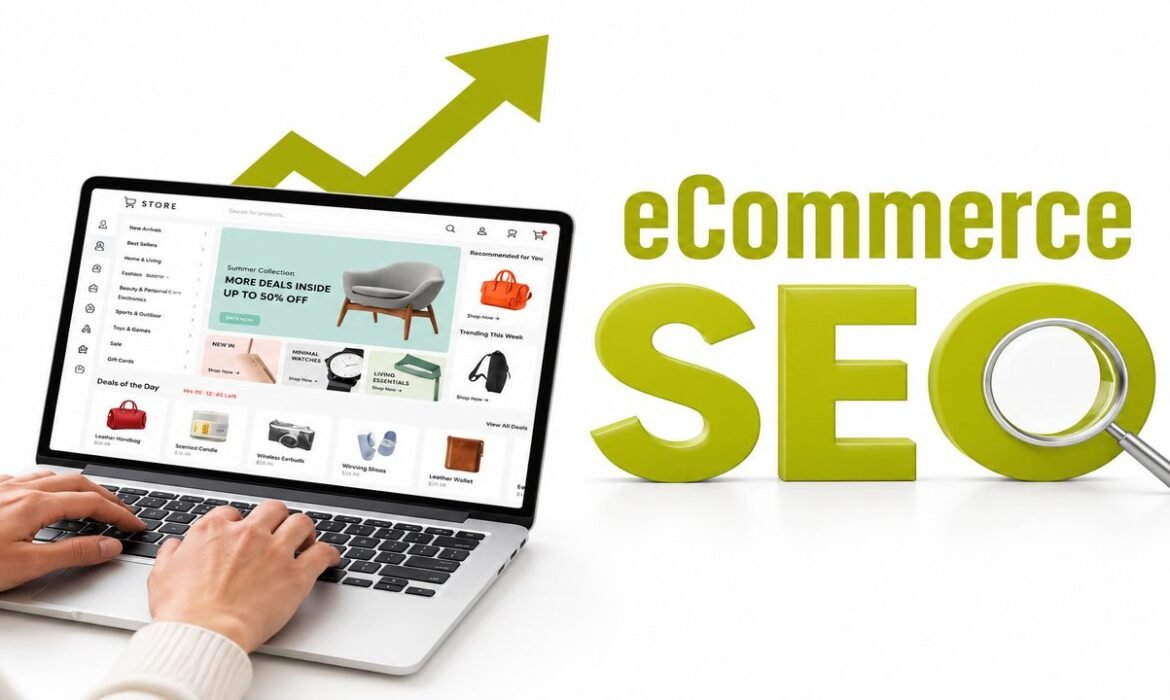
Rising acquisition costs. Falling ROAS. The rise of AI-driven search. The case for organic has never been stronger.
| There’s a particular kind of pain that ecommerce founders don’t talk about openly: the moment they realise their paid ad budget has quietly become a life-support machine. Switch it off, and revenue flatlines. Keep it running, and the margins keep compressing. That’s the trap a lot of stores find themselves in heading into 2026 and Ecommerce SEO Services is the most direct way out. |
This isn’t an argument against paid advertising. Ads still have a role. But the calculus has shifted in ways that are hard to ignore. Customer acquisition costs across Meta and Google Ads have climbed steadily for years. ROAS that looked healthy in 2021 looks thin today. Meanwhile, brands that invested seriously in organic traffic for ecommerce are compounding they’ve built something that doesn’t charge them a toll every time a customer arrives.
The other thing that’s changed is search itself. Google’s AI Overviews, semantic indexing, and passage retrieval have reshaped how product and category content gets surfaced. Stores that understand this shift are positioning themselves at the intersection of traditional SEO and AI search optimization a place that’s increasingly hard to reach without a coherent content strategy.
This piece is for ecommerce store owners, DTC founders, and marketing teams trying to make sense of where to put their next investment. Not to discredit paid media but to give a clear-eyed look at why SEO for ecommerce websites deserves a bigger seat at the table right now.
Why Paid Advertising Is Becoming More Expensive
The economics of paid acquisition have been under pressure for a while, but what’s happening in 2026 feels like a structural shift rather than a cyclical dip. A few things are converging at once.
Customer acquisition costs have risen sharply across most ecommerce verticals. Advertising auction dynamics mean that as more brands pile into the same platforms particularly Meta and Google the cost per click climbs regardless of creative quality. You’re competing against every other advertiser targeting a similar audience, and that competition doesn’t ease up just because your product is better.
KEY STATS: THE PAID Advertising REALITY IN 2026
- Average CPCs on Meta Ads have risen by over 60% since 2021 across major ecommerce categories.
- Many ecommerce brands now require a 3:1 or higher CAC-to-LTV ratio just to break even on the first order.
- Nearly 40% of consumers report regularly ignoring paid search ads up from under 30% in 2020.
- Post-iOS privacy changes have degraded attribution accuracy, meaning many reported ROAS figures are inflated.
How Ecommerce SEO Services Builds Sustainable Organic Growth
The core logic of Ecommerce SEO Services is simple, even if the execution isn’t. You invest in building search visibility for the terms and questions your customers are already using. That visibility doesn’t disappear when your budget resets at the start of the month. It stays and typically grows.
What makes this particularly powerful for ecommerce brands is the nature of transactional search intent. Someone searching “buy ceramic coffee mugs online” or “best natural skincare products” isn’t in research mode. They’re ready to buy. Capturing that traffic through organic ranking delivers customers who’ve already done their consideration work often at a higher conversion rate than equivalent paid traffic.
| “A well-optimized category page is essentially a permanent sales asset. It doesn’t ask for a daily budget. It doesn’t fatigue. And unlike a product listing ad, it can tell a story.” |
The Compounding Dynamic That Paid Media Cannot Replicate
Organic traffic for ecommerce compounds. A new blog post or a newly optimized category page starts with limited visibility. Over weeks and months, as the page earns links, engagement, and behavioural signals, its ranking position improves. A page at position eight today might be at position three in six months with no additional spend.
This compounding effect also applies at the domain level. As your store builds topical authority the depth of coverage around your niche Google’s systems treat your entire site as a more credible source. That authority benefits newer pages faster, reduces the time to rank, and creates a flywheel effect that widens the gap between you and competitors who haven’t invested in SEO.
| Concept: Topical Authority |
| Topical authority is what happens when your site consistently demonstrates deep, relevant expertise across a subject. |
| For an ecommerce store, that means covering the full spectrum of your product category from informational content (how-to guides, buying guides, comparisons) to transactional pages (product and category pages) in a way that forms a coherent, interlinked knowledge structure. |
| Search systems use this breadth and depth as a proxy for genuine expertise. |
Why Google’s AI Search Systems Favour SEO-Optimized Stores
The search ecosystem has changed more in the past 18 months than in the previous decade combined. AI Overviews now appear at the top of many commercial and informational queries, summarizing and synthesizing results before the user even scrolls to organic listings. This isn’t a threat to SEO but it does change the rules of what effective SEO looks like.
Ecommerce stores appearing inside AI Overview citation blocks share a clear pattern: they’ve invested in structured data, semantic content depth, and clear entity relationships. They’ve told search systems not just what their products are, but what category they belong to, how they compare to alternatives, who they’re for, and why they’re credible. That’s Entity SEO and it’s what AI retrieval systems are looking for.
What Structured Data Actually Does for Ecommerce
Product schema markup is the most direct lever available to ecommerce stores for AI and rich result visibility. When implemented correctly, it communicates product attributes price, availability, rating, review count, SKU in a machine-readable format that AI systems can parse and include in generated responses. Google doesn’t have to guess what your page is about. You’ve told it explicitly.
AI SEARCH Optimization: WHAT’S ACTUALLY CHANGING
- Passage retrieval means Google can now extract and surface specific paragraphs from your pages, even if the full page doesn’t rank first.
- A well-written product description or buying guide section can appear as an AI Overview citation even when the page sits at position six or seven organically.
- Writing in clear, standalone answer blocks rather than dense narrative paragraphs dramatically improves your content’s retrieval probability.
- Search intent Optimization is the underlying metric: AI systems surface results that reliably answer the question well and match search intent.
Ecommerce SEO vs Paid Ads: Which Delivers Better Long-Term ROI?
This is the comparison every ecommerce founder eventually wants to see laid out plainly. The honest answer is, it depends on your time horizon. And that’s where the conversation usually reveals something important about how a business is being run.
|
Dimension |
Ecommerce SEO | Paid Advertising |
| Time to meaningful traffic | 3–6 months, then compounds |
Immediate on budget activation |
|
Traffic when budget stops |
Continues – organic rankings persist |
Stops immediately |
|
Scalability curve |
Non-linear – authority compounds |
Linear – each £/$ delivers similar returns |
|
Long-term CAC |
Decreases as authority grows |
Tends to increase with auction competition |
|
Brand trust signals |
High – organic results carry credibility |
Lower – users know it’s advertising |
|
Dependency risk |
Low – not subject to platform policy |
High – policy changes can erase performance |
|
Conversion quality |
Often higher – intent pre-qualified | Variable – depends on targeting precision |
|
Content asset value |
Grows – pages, authority, links accumulate |
No residual value when spend ends |
Shopify SEO: Building Organic Authority on the World’s Most Popular Ecommerce Platform
Shopify powers over 4.5 million online stores globally, and for good reason it’s fast to set up, reliable, and deeply integrated with the ecommerce ecosystem. But Shopify has some structural Shopify SEO characteristics that brands need to understand clearly before building an organic strategy on top of it.
SHOPIFY SEO: PRIORITY SHOPIFY SEO OPTIMIZATION AREAS
1. Collection page content:
Add 150–300 words of semantic, buyer-intent-focused copy above the product grid on every major collection page.
2. Meta-field-powered product schema Markup:
Use Shopify’s meta-field to populate structured data material, size, colour attributes for richer AI and Google Shopping signals.
3. Canonical URL discipline:
Ensure internal links route to /products/ URLs, not collection-scoped product URLs, to consolidate ranking authority.
4. Blog as a topical authority engine:
Shopify’s native blog is underused by most stores. Build content clusters around your core product categories and link them to relevant collection pages.
5. Theme performance:
Many Shopify themes carry heavy JavaScript that degrades Core Web Vitals. Audit LCP and INP scores regularly especially on mobile.
6. App bloat management:
Third-party Shopify apps often inject render-blocking scripts. Audit your installed apps against actual page speed impact quarterly.
Amazon SEO Services: The Parallel Search Ecosystem That Ecommerce Brands Cannot Ignore
Amazon is not Google. But in the context of product discovery, it functions as one of the world’s most powerful search engines one that processes more product-intent queries than any other platform. For brands selling on Amazon alongside their own store, Amazon SEO Services is a distinct discipline with its own algorithm, its own keyword dynamics, and its own ranking signals.
AMAZON SEO: CORE RANKING FACTORS
1. Keyword relevance
Backend search terms, title, bullet points, and product description all feed Amazon’s keyword index. Use all available backend keyword character limits.
2. Conversion rate
Amazon tracks the ratio of sessions to orders. A high-converting listing with strong imagery and social proof ranks above a keyword-rich listing that doesn’t convert.
3. Sales velocity
Recent sales history is a significant ranking signal. New product launches often require an initial sales stimulus (through ads or promotions) to build organic ranking momentum.
4. Review volume and rating
Products with more reviews and higher average ratings rank higher for competitive terms. Systematic review acquisition strategies are essential for new listings.
5. Fulfilment method
FBA (Fulfilment by Amazon) listings have an implicit advantage for Prime eligibility and Buy Box acquisition, both of which influence click-through and conversion rates.
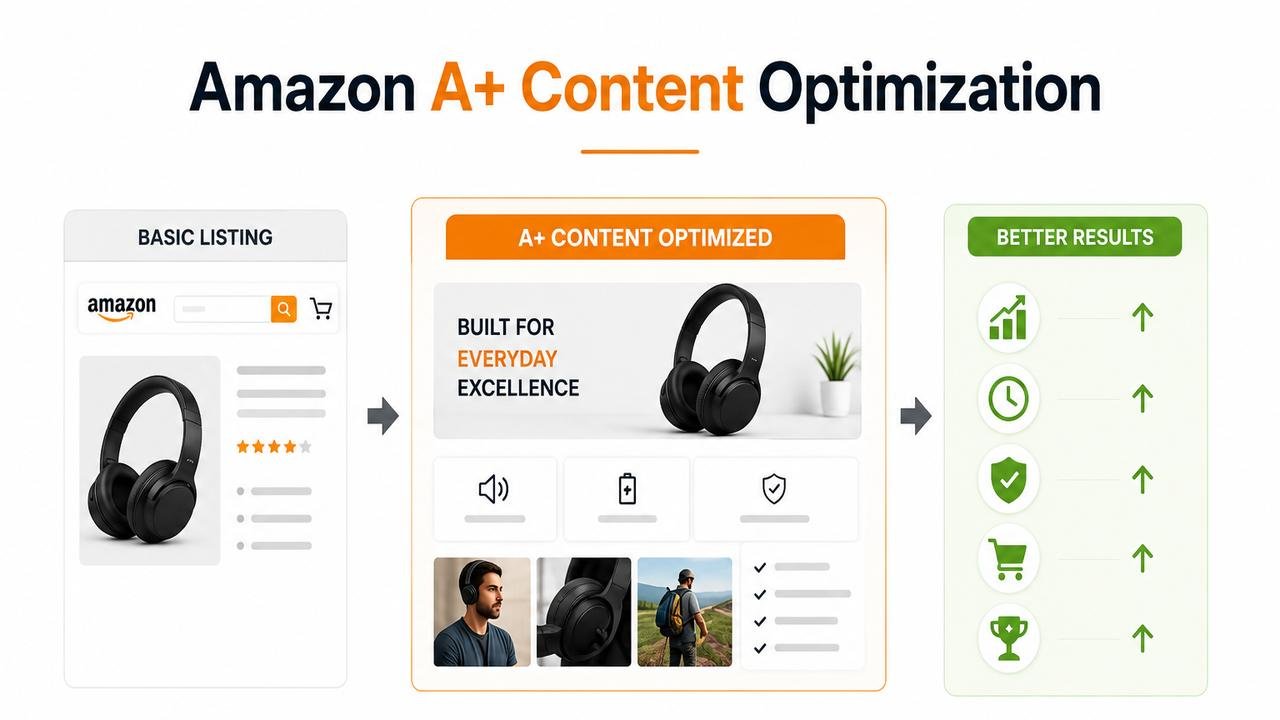
6. Amazon A+ Content optimization
Enhanced Brand Content ( Amazon A+ Content optimization) doesn’t directly boost rankings but increases conversion rates, which feeds back into ranking performance indirectly.
Amazon SEO Mistakes That Brands Consistently Make
- Stuffing backend keywords with irrelevant terms that reduce relevance signals rather than expanding reach.
- Ignoring conversion rate as a ranking lever and focusing exclusively on keyword placement.
- Treating A+ Content as decoration rather than as a conversion optimization asset.
- Neglecting the Q&A section, which Amazon’s algorithm indexes and which influences buyer confidence.
- Failing to maintain consistent pricing and inventory, which affects Buy Box eligibility and ranking stability.
How Ecommerce Brands Can Build Search Authority in 2026
The ecommerce stores compounding through organic search right now built their foundation through specific, repeatable practices. Here’s what that looks like in practice.
Build Semantic Content Clusters, Not Isolated Pages
The most effective Ecommerce content strategy in 2026 is built around topic clusters groups of interlinked content that collectively cover a subject from every relevant angle
EEAT Is Now a Commercial Differentiator
Experience, Expertise, Authoritativeness, and Trustworthiness Google’s EEAT framework was initially applied primarily to health, finance, and legal content. In 2026, these signals matter across all ecommerce content. The question Google’s quality evaluators are effectively asking is: would a real expert have written this?
Strategic Recommendations by Priority
- Semantic content clusters with strong internal linking connecting informational and transactional content.
- Product and category schema on every transactional page the fastest path to AI Overview eligibility.
- Core Web Vitals: LCP, CLS, and INP must meet Google’s thresholds on both mobile and desktop.
- EEAT signals: author bios, editorial standards, transparent policies, and verified brand presence.
- Content freshness: update high-value pages regularly with new reviews, updated pricing, and refreshed copy.
- AI-retrieval formatting: write key sections as standalone answer blocks with clear H3s and direct answers.
FAQ – Ecommerce SEO Services
1. What are ecommerce SEO services?
Ecommerce SEO services cover the technical, content, and structural work involved in helping an online store rank higher in organic search optimizing product pages, category pages, site architecture, Product schema markup, and content so the store becomes more visible to shoppers without relying on paid ads for every visit.
2. How much do ecommerce SEO services cost in India?
Pricing varies widely based on store size, competition, and scope of work. Most ecommerce SEO services in India range from project-based audits to ongoing monthly retainers, with cost typically scaling alongside the number of product and category pages, technical complexity, and the level of content and link-building work required.
3. How long do ecommerce SEO services take to show results?
Most ecommerce stores begin seeing meaningful traffic movement within three to six months, with rankings continuing to compound well beyond that point. Unlike paid ads, the timeline isn't instant but the visibility built doesn't disappear when a budget runs out.
4. Do ecommerce SEO services include Shopify SEO?
Yes, most comprehensive ecommerce SEO services include platform-specific work for Shopify stores covering collection page optimization, meta-field-powered product , catgory schema, canonical URL structure, theme performance, and Core Web Vitals, which differ from optimization work on a custom-built ecommerce site.
5. How do ecommerce SEO services help with Google AI Overviews?
Getting cited inside Google AI Overviews depends heavily on structured data, clear answer-formatted content, and semantic depth around a product category. Ecommerce SEO services that implement product schema, write standalone answer blocks, and build genuine topical authority give a store a meaningfully higher chance of appearing in AI-generated summaries rather than being skipped entirely.
The Strategic Direction Most Ecommerce Brands Are Missing
The shift toward Ecommerce SEO Services as the primary growth channel isn’t a trend it’s a structural adjustment to where search behaviour, AI systems, and advertising economics have converged. Brands that recognize this early have a genuine window of competitive advantage. The organic equity they build now will be significantly harder to replicate by competitors who stay ad-dependent for another two or three years.
Still funding growth with an ad budget that disappears the moment you switch it off?
Arihant Global helps ecommerce brands build the organic SEO foundation that compounds across your website, Shopify store, and Amazon listings.
📞 0141-2942622
Disclaimer
The Ecommerce SEO strategies and case studies shared reflect Arihant Global’s 2026 industry experience. Because search algorithms and paid auction costs evolve rapidly, these insights are strictly for informational purposes. Past performance and individual case studies do not guarantee identical future revenue or rankings for your specific store. Results always vary based on your exact market, budget, and execution.