
A fashion label with three years of consistent posting came to us stuck at a plateau nobody could quite explain. Follower growth had slowed to almost nothing, engagement was fine but flat, and worse, their own team had started running out of ideas for what to post next. Everything felt like it had already been done.
Client: Withheld at client's request

Sector: Fashion (D2C, Contemporary Womenswear)

Engagement: 6 months Service: Social Media Marketing (Instagram-led, Pinterest secondary)
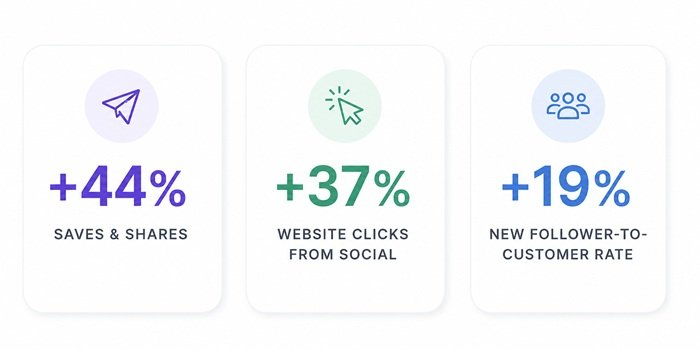
Key Measurable Outcomes
Background & Context
The brand made contemporary womenswear, sold direct through their website, and had built a following of around 52,000 on Instagram doing what most fashion brands do, product shots, the occasional reel, styling carousels timed to new drops. It worked well enough for the first two years. By year three, growth had flattened and the content calendar had started repeating itself without anyone quite noticing until we pointed it out.
Their marketing coordinator described it honestly in our first call: she felt like she was making the same five posts on rotation, just with different clothes in them. Nothing was actively failing, the numbers just weren’t moving anymore, and there was no real sense of why one post did better than another beyond guessing.
Challenges
The content had no real variety in format or purpose. Nearly everything was a product photo or a styling carousel, which meant every post was essentially asking for the same thing, attention on a product, with no content built to just be genuinely interesting or useful on its own. Accounts that only ever sell eventually stop getting engagement, because there’s no reason to stick around between purchases.
There was also no behind-the-scenes or process content at all, nothing about how a piece got made, who was making it, what the studio actually looked like. For a brand built partly on craft and detail, that felt like a real gap, the kind of content that tends to build the loyalty that turns a follower into a repeat customer.
Posting was consistent in frequency but not in strategy, no clear sense of which content type was meant to bring in new followers versus which was meant to move an existing follower toward buying something. Everything got treated the same regardless of purpose.
And Pinterest, despite being genuinely well suited to fashion discovery, had been abandoned almost entirely, a handful of pins from over a year ago and nothing since, even though it tends to send meaningfully high-intent traffic when it’s actually maintained.
Approach, Strategy & Solution
We restructured the content mix around distinct jobs instead of one repeating format. A portion of the calendar stayed product-focused, since that content still mattered, but we introduced regular process and studio content, fabric sourcing, sample fittings, the actual making of a piece, which gave the account texture it hadn’t had before and consistently outperformed expectations on saves specifically.
We also brought in a styling-tips format distinct from the product carousels, content that was useful even to someone not currently shopping, three ways to wear one piece, seasonal transition styling, that kind of thing. This became one of the more reliably shared formats, which mattered since shares reach people who don’t already follow the brand.
Pinterest got rebuilt from close to zero, with a consistent pinning schedule tied to new drops and styling content repurposed from Instagram, optimized for the kind of search terms people actually use there rather than just re-uploading Instagram posts as-is.
We also put a lightweight content-to-conversion structure in place, tagging products consistently across every relevant post and tracking which content types were actually driving clicks through to the site, not just engagement within the app, so the team could see for the first time which formats were doing more than just performing well in likes.
Results
Six months, spanning one full seasonal collection cycle. The process and styling content took about a month to find its footing since the team was building an entirely new production habit, then became a steady part of the mix from there.
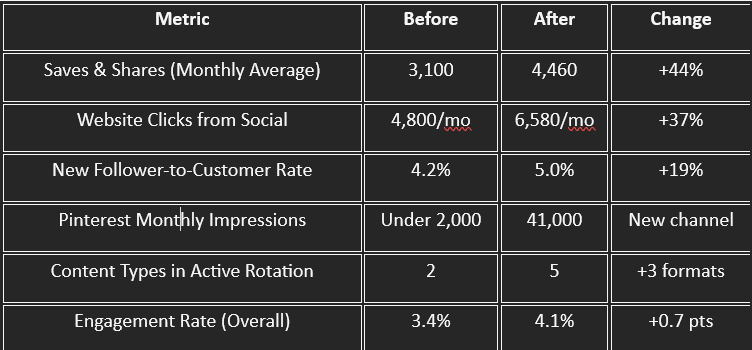
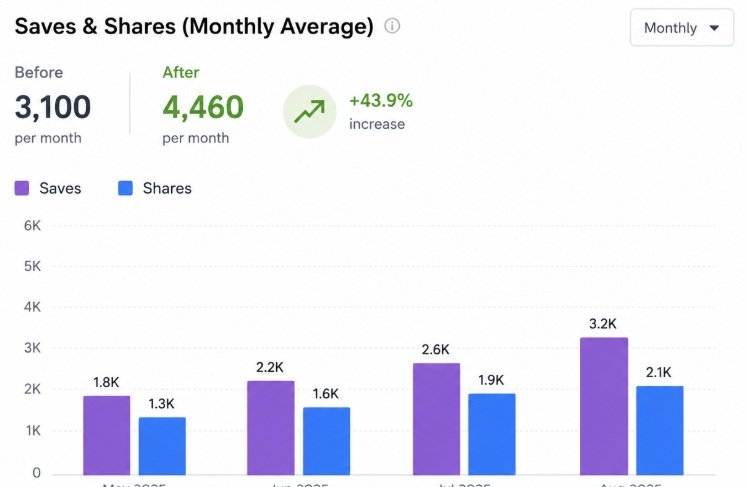
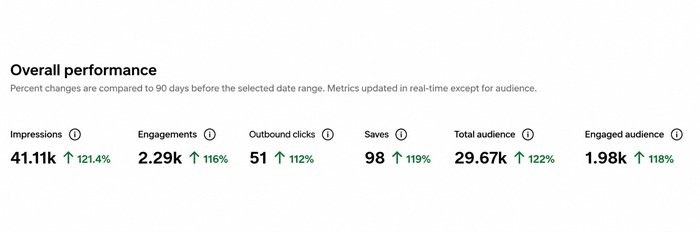
We Increased 43.9% Growth in Monthly Saves & Shares
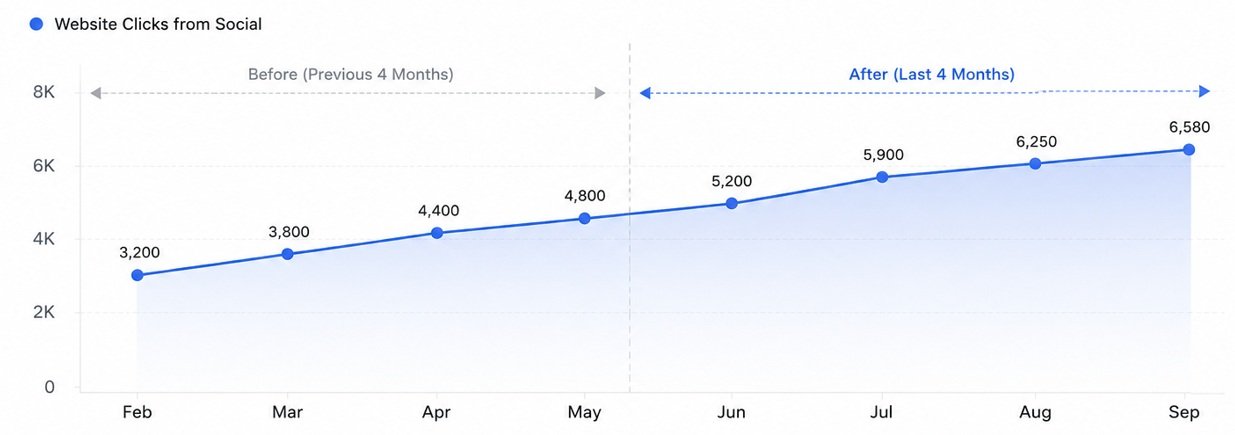
37% Increase in Website Traffic from Social Media
Pinterest Generated 41,000+ Monthly Impressions as a New Acquisition Channel
The founder mentioned that a process video showing how one of their signature prints was hand-finished ended up being shared far more than any product post they’d run that year, and that customers had started referencing it in DMs, asking about the print specifically, weeks after it went up.
Conclusion
The brand wasn’t losing relevance, they’d just narrowed their own content down to one repeating job, sell the product, and stopped there. Adding formats that gave people a reason to stick around between purchases, and that were actually pleasant to watch or read rather than just another product shot, brought the account back to life without changing what the brand fundamentally was.
Curious What This Would Look Like for Your Brand?
We’ll look at your current content mix for free, no changes made, just an honest read on whether your account is only ever asking for a sale, or giving people a reason to stay.
Ask us for a free social media audit →
Why Fashion Brands End Up Working With Us
Arihant global build content around distinct jobs, discovery, loyalty, conversion, instead of one repeating format stretched across everything. Process and craft content gets real space, not just product shots on rotation. We track clicks and conversions from social, not just likes that don’t lead anywhere. And we’d rather diversify what’s working than keep polishing the same five posts hoping they perform differently.
Disclaimer
The performance metrics presented are campaign-specific and intended for informational purposes only. Actual results may differ based on strategy, industry trends, customer demand, and ongoing optimization efforts.