Why Ecommerce SEO Services Matters More Than Paid Ads in 2026
Rising acquisition costs. Falling ROAS. The rise of AI-driven search. The case for organic has never been stronger.
| There’s a particular kind of pain that ecommerce founders don’t talk about openly: the moment they realise their paid ad budget has quietly become a life-support machine. Switch it off, and revenue flatlines. Keep it running, and the margins keep compressing. That’s the trap a lot of stores find themselves in heading into 2026 and Ecommerce SEO Services is the most direct way out. |
This isn’t an argument against paid advertising. Ads still have a role. But the calculus has shifted in ways that are hard to ignore. Customer acquisition costs across Meta and Google Ads have climbed steadily for years. ROAS that looked healthy in 2021 looks thin today. Meanwhile, brands that invested seriously in organic traffic for ecommerce are compounding they’ve built something that doesn’t charge them a toll every time a customer arrives.
The other thing that’s changed is search itself. Google’s AI Overviews, semantic indexing, and passage retrieval have reshaped how product and category content gets surfaced. Stores that understand this shift are positioning themselves at the intersection of traditional SEO and AI search optimization a place that’s increasingly hard to reach without a coherent content strategy.
This piece is for ecommerce store owners, DTC founders, and marketing teams trying to make sense of where to put their next investment. Not to discredit paid media but to give a clear-eyed look at why SEO for ecommerce websites deserves a bigger seat at the table right now.
Why Paid Advertising Is Becoming More Expensive
The economics of paid acquisition have been under pressure for a while, but what’s happening in 2026 feels like a structural shift rather than a cyclical dip. A few things are converging at once.
Customer acquisition costs have risen sharply across most ecommerce verticals. Advertising auction dynamics mean that as more brands pile into the same platforms particularly Meta and Google the cost per click climbs regardless of creative quality. You’re competing against every other advertiser targeting a similar audience, and that competition doesn’t ease up just because your product is better.
KEY STATS: THE PAID Advertising REALITY IN 2026
- Average CPCs on Meta Ads have risen by over 60% since 2021 across major ecommerce categories.
- Many ecommerce brands now require a 3:1 or higher CAC-to-LTV ratio just to break even on the first order.
- Nearly 40% of consumers report regularly ignoring paid search ads up from under 30% in 2020.
- Post-iOS privacy changes have degraded attribution accuracy, meaning many reported ROAS figures are inflated.
How Ecommerce SEO Services Builds Sustainable Organic Growth
The core logic of Ecommerce SEO Services is simple, even if the execution isn’t. You invest in building search visibility for the terms and questions your customers are already using. That visibility doesn’t disappear when your budget resets at the start of the month. It stays and typically grows.
What makes this particularly powerful for ecommerce brands is the nature of transactional search intent. Someone searching “buy ceramic coffee mugs online” or “best natural skincare products” isn’t in research mode. They’re ready to buy. Capturing that traffic through organic ranking delivers customers who’ve already done their consideration work often at a higher conversion rate than equivalent paid traffic.
| “A well-optimized category page is essentially a permanent sales asset. It doesn’t ask for a daily budget. It doesn’t fatigue. And unlike a product listing ad, it can tell a story.” |
The Compounding Dynamic That Paid Media Cannot Replicate
Organic traffic for ecommerce compounds. A new blog post or a newly optimized category page starts with limited visibility. Over weeks and months, as the page earns links, engagement, and behavioural signals, its ranking position improves. A page at position eight today might be at position three in six months with no additional spend.
This compounding effect also applies at the domain level. As your store builds topical authority the depth of coverage around your niche Google’s systems treat your entire site as a more credible source. That authority benefits newer pages faster, reduces the time to rank, and creates a flywheel effect that widens the gap between you and competitors who haven’t invested in SEO.
| Concept: Topical Authority |
| Topical authority is what happens when your site consistently demonstrates deep, relevant expertise across a subject. |
| For an ecommerce store, that means covering the full spectrum of your product category from informational content (how-to guides, buying guides, comparisons) to transactional pages (product and category pages) in a way that forms a coherent, interlinked knowledge structure. |
| Search systems use this breadth and depth as a proxy for genuine expertise. |
Why Google’s AI Search Systems Favour SEO-Optimized Stores
The search ecosystem has changed more in the past 18 months than in the previous decade combined. AI Overviews now appear at the top of many commercial and informational queries, summarizing and synthesizing results before the user even scrolls to organic listings. This isn’t a threat to SEO but it does change the rules of what effective SEO looks like.
Ecommerce stores appearing inside AI Overview citation blocks share a clear pattern: they’ve invested in structured data, semantic content depth, and clear entity relationships. They’ve told search systems not just what their products are, but what category they belong to, how they compare to alternatives, who they’re for, and why they’re credible. That’s Entity SEO and it’s what AI retrieval systems are looking for.
What Structured Data Actually Does for Ecommerce
Product schema markup is the most direct lever available to ecommerce stores for AI and rich result visibility. When implemented correctly, it communicates product attributes price, availability, rating, review count, SKU in a machine-readable format that AI systems can parse and include in generated responses. Google doesn’t have to guess what your page is about. You’ve told it explicitly.
AI SEARCH Optimization: WHAT’S ACTUALLY CHANGING
- Passage retrieval means Google can now extract and surface specific paragraphs from your pages, even if the full page doesn’t rank first.
- A well-written product description or buying guide section can appear as an AI Overview citation even when the page sits at position six or seven organically.
- Writing in clear, standalone answer blocks rather than dense narrative paragraphs dramatically improves your content’s retrieval probability.
- Search intent Optimization is the underlying metric: AI systems surface results that reliably answer the question well and match search intent.
Ecommerce SEO vs Paid Ads: Which Delivers Better Long-Term ROI?
This is the comparison every ecommerce founder eventually wants to see laid out plainly. The honest answer is, it depends on your time horizon. And that’s where the conversation usually reveals something important about how a business is being run.
|
Dimension |
Ecommerce SEO | Paid Advertising |
| Time to meaningful traffic | 3–6 months, then compounds |
Immediate on budget activation |
|
Traffic when budget stops |
Continues – organic rankings persist |
Stops immediately |
|
Scalability curve |
Non-linear – authority compounds |
Linear – each £/$ delivers similar returns |
|
Long-term CAC |
Decreases as authority grows |
Tends to increase with auction competition |
|
Brand trust signals |
High – organic results carry credibility |
Lower – users know it’s advertising |
|
Dependency risk |
Low – not subject to platform policy |
High – policy changes can erase performance |
|
Conversion quality |
Often higher – intent pre-qualified | Variable – depends on targeting precision |
|
Content asset value |
Grows – pages, authority, links accumulate |
No residual value when spend ends |
Shopify SEO: Building Organic Authority on the World’s Most Popular Ecommerce Platform
Shopify powers over 4.5 million online stores globally, and for good reason it’s fast to set up, reliable, and deeply integrated with the ecommerce ecosystem. But Shopify has some structural Shopify SEO characteristics that brands need to understand clearly before building an organic strategy on top of it.
SHOPIFY SEO: PRIORITY SHOPIFY SEO OPTIMIZATION AREAS
1. Collection page content:
Add 150–300 words of semantic, buyer-intent-focused copy above the product grid on every major collection page.
2. Meta-field-powered product schema Markup:
Use Shopify’s meta-field to populate structured data material, size, colour attributes for richer AI and Google Shopping signals.
3. Canonical URL discipline:
Ensure internal links route to /products/ URLs, not collection-scoped product URLs, to consolidate ranking authority.
4. Blog as a topical authority engine:
Shopify’s native blog is underused by most stores. Build content clusters around your core product categories and link them to relevant collection pages.
5. Theme performance:
Many Shopify themes carry heavy JavaScript that degrades Core Web Vitals. Audit LCP and INP scores regularly especially on mobile.
6. App bloat management:
Third-party Shopify apps often inject render-blocking scripts. Audit your installed apps against actual page speed impact quarterly.
Amazon SEO Services: The Parallel Search Ecosystem That Ecommerce Brands Cannot Ignore
Amazon is not Google. But in the context of product discovery, it functions as one of the world’s most powerful search engines one that processes more product-intent queries than any other platform. For brands selling on Amazon alongside their own store, Amazon SEO Services is a distinct discipline with its own algorithm, its own keyword dynamics, and its own ranking signals.
AMAZON SEO: CORE RANKING FACTORS
1. Keyword relevance
Backend search terms, title, bullet points, and product description all feed Amazon’s keyword index. Use all available backend keyword character limits.
2. Conversion rate
Amazon tracks the ratio of sessions to orders. A high-converting listing with strong imagery and social proof ranks above a keyword-rich listing that doesn’t convert.
3. Sales velocity
Recent sales history is a significant ranking signal. New product launches often require an initial sales stimulus (through ads or promotions) to build organic ranking momentum.
4. Review volume and rating
Products with more reviews and higher average ratings rank higher for competitive terms. Systematic review acquisition strategies are essential for new listings.
5. Fulfilment method
FBA (Fulfilment by Amazon) listings have an implicit advantage for Prime eligibility and Buy Box acquisition, both of which influence click-through and conversion rates.
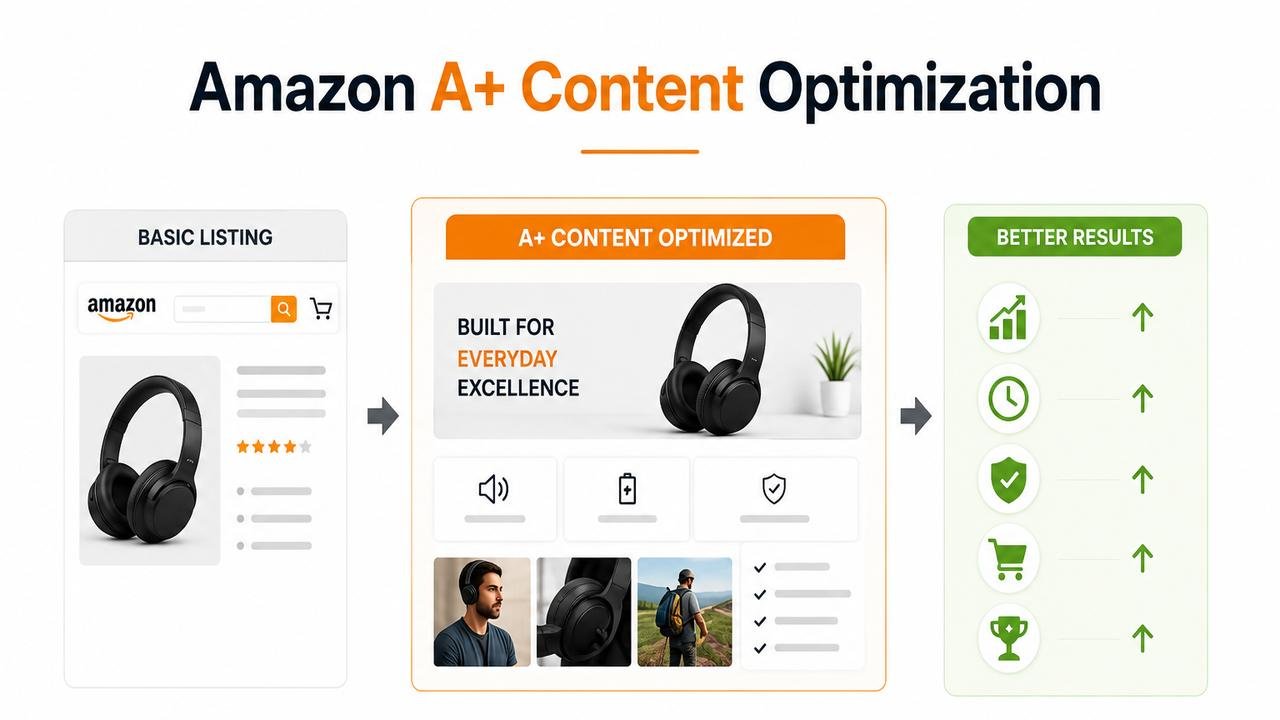
6. Amazon A+ Content optimization
Enhanced Brand Content ( Amazon A+ Content optimization) doesn’t directly boost rankings but increases conversion rates, which feeds back into ranking performance indirectly.
Amazon SEO Mistakes That Brands Consistently Make
- Stuffing backend keywords with irrelevant terms that reduce relevance signals rather than expanding reach.
- Ignoring conversion rate as a ranking lever and focusing exclusively on keyword placement.
- Treating A+ Content as decoration rather than as a conversion optimization asset.
- Neglecting the Q&A section, which Amazon’s algorithm indexes and which influences buyer confidence.
- Failing to maintain consistent pricing and inventory, which affects Buy Box eligibility and ranking stability.
How Ecommerce Brands Can Build Search Authority in 2026
The ecommerce stores compounding through organic search right now built their foundation through specific, repeatable practices. Here’s what that looks like in practice.
Build Semantic Content Clusters, Not Isolated Pages
The most effective Ecommerce content strategy in 2026 is built around topic clusters groups of interlinked content that collectively cover a subject from every relevant angle
EEAT Is Now a Commercial Differentiator
Experience, Expertise, Authoritativeness, and Trustworthiness Google’s EEAT framework was initially applied primarily to health, finance, and legal content. In 2026, these signals matter across all ecommerce content. The question Google’s quality evaluators are effectively asking is: would a real expert have written this?
Strategic Recommendations by Priority
- Semantic content clusters with strong internal linking connecting informational and transactional content.
- Product and category schema on every transactional page the fastest path to AI Overview eligibility.
- Core Web Vitals: LCP, CLS, and INP must meet Google’s thresholds on both mobile and desktop.
- EEAT signals: author bios, editorial standards, transparent policies, and verified brand presence.
- Content freshness: update high-value pages regularly with new reviews, updated pricing, and refreshed copy.
- AI-retrieval formatting: write key sections as standalone answer blocks with clear H3s and direct answers.
FAQ – Ecommerce SEO Services
1. What are ecommerce SEO services?
Ecommerce SEO services cover the technical, content, and structural work involved in helping an online store rank higher in organic search optimizing product pages, category pages, site architecture, Product schema markup, and content so the store becomes more visible to shoppers without relying on paid ads for every visit.
2. How much do ecommerce SEO services cost in India?
Pricing varies widely based on store size, competition, and scope of work. Most ecommerce SEO services in India range from project-based audits to ongoing monthly retainers, with cost typically scaling alongside the number of product and category pages, technical complexity, and the level of content and link-building work required.
3. How long do ecommerce SEO services take to show results?
Most ecommerce stores begin seeing meaningful traffic movement within three to six months, with rankings continuing to compound well beyond that point. Unlike paid ads, the timeline isn't instant but the visibility built doesn't disappear when a budget runs out.
4. Do ecommerce SEO services include Shopify SEO?
Yes, most comprehensive ecommerce SEO services include platform-specific work for Shopify stores covering collection page optimization, meta-field-powered product , catgory schema, canonical URL structure, theme performance, and Core Web Vitals, which differ from optimization work on a custom-built ecommerce site.
5. How do ecommerce SEO services help with Google AI Overviews?
Getting cited inside Google AI Overviews depends heavily on structured data, clear answer-formatted content, and semantic depth around a product category. Ecommerce SEO services that implement product schema, write standalone answer blocks, and build genuine topical authority give a store a meaningfully higher chance of appearing in AI-generated summaries rather than being skipped entirely.
The Strategic Direction Most Ecommerce Brands Are Missing
The shift toward Ecommerce SEO Services as the primary growth channel isn’t a trend it’s a structural adjustment to where search behaviour, AI systems, and advertising economics have converged. Brands that recognize this early have a genuine window of competitive advantage. The organic equity they build now will be significantly harder to replicate by competitors who stay ad-dependent for another two or three years.
Still funding growth with an ad budget that disappears the moment you switch it off?
Arihant Global helps ecommerce brands build the organic SEO foundation that compounds across your website, Shopify store, and Amazon listings.
📞 0141-2942622
Disclaimer
The Ecommerce SEO strategies and case studies shared reflect Arihant Global’s 2026 industry experience. Because search algorithms and paid auction costs evolve rapidly, these insights are strictly for informational purposes. Past performance and individual case studies do not guarantee identical future revenue or rankings for your specific store. Results always vary based on your exact market, budget, and execution.
Amazon SEO Services India: Complete Seller Growth Strategy for 2026
How Modern Amazon Sellers Reduce PPC Dependency, Improve Organic Rankings, and Build Profitable Marketplace Visibility in 2026
Look at your last Amazon payout report. If your top-line revenue is stalling while your advertising spend keeps creeping up every single month, you are caught in the exact same trap as thousands of other sellers right now.
By mid-2026, the Amazon India marketplace has become ruthlessly competitive. You can no longer hack your way to the top of the search results with a few clever keywords and aggressive bids. Relying purely on PPC to keep your sales velocity alive is a guaranteed way to destroy your profit margins.
If you are evaluating Amazon SEO services India to fix this, you need to look past the agencies offering basic title tweaks and backend keyword stuffing. The game has completely changed.
Real marketplace visibility today requires a surgical approach to conversion rate optimization, understanding buyer psychology, and feeding the search algorithm exactly what it wants. Shoppers are impatient. If your product page doesn’t instantly prove its value, build trust, and wipe out any hesitation, that buyer is bouncing to your competitor within three seconds.
Let’s break down what it actually takes to rank, convert, and protect your digital shelf.
What Amazon SEO Actually Means Right Now
What is Amazon SEO?
Amazon SEO is the process of Amazon Product listing Optimization, conversion signals, and marketplace relevance factors to improve organic visibility within Amazon search results.
People get this confused with Google all the time. Google wants to answer questions. Amazon just wants to sell products. That’s the entire business model.
Every single ranking factor on Amazon ultimately boils down to revenue per search. When a customer types “stainless steel water bottle 1 litre” into the search bar, the algorithm immediately ranks the results based on which product is statistically most likely to get bought.
Ranking without conversion is a myth. If you manage to manipulate your way to page one but your product doesn’t convert as well as the ones next to it, Amazon will drop your listing back to page four by tomorrow. They are not going to waste prime real estate on a product that doesn’t close the deal.
How the A10 Algorithm Actually Works
We spend hours auditing Seller Central accounts, and the biggest misconception we see is sellers still treating search like it’s 2018. The shift to the A10 Algorithm forced a massive pivot for professional Amazon product SEO services.
Yes, putting the right words in the right places still matters. But A10 cares way more about behavioral metrics and your reputation as a seller.
Here is what actually moves the needle today:
- Organic Sales Velocity: Sales you generate without paying for a click are pure gold. The algorithm heavily rewards products that sell naturally.
- External Traffic: This is huge. Amazon loves it when you bring outside buyers into their ecosystem. If you run Instagram ads or email campaigns that drive traffic directly to your Amazon listing, the algorithm flags your product as having high external demand and pushes you up the ranks.
- Seller Authority: Your return rates, customer feedback, and overall account health score in Seller Central dictate your ceiling. A bad return rate acts like a shadow ban on your organic visibility.
- Fulfillment Speed: Prime is non-negotiable. Using Fulfillment by Amazon (FBA) or Seller Flex to get that Prime badge is an absolute requirement for serious Amazon marketplace SEO. Indian buyers simply won’t wait five days for shipping anymore.
Why Your AMAZON Listings Are Bleeding Money
Pull up your best-selling product on your phone right now. Look at it honestly.
Buyers don’t read. They scan.
The most common mistake sellers make is the “wall of text.” They cram every single semantic keyword variation they can think of into a massive paragraph. It looks terrible. When a mobile shopper lands on a cluttered, visually exhausting page, they immediately hit the back button. That bounce absolutely tanks your conversion rate and tells Amazon your product isn’t relevant.
Broken catalog structures are another massive issue. If your parent-child variations are messy, or your structured product data is missing behind the scenes, you are practically hiding your catalog from Amazon’s filtering tools. Building high-converting product page means finding that perfect balance between putting keywords where the machine can see them, and writing copy that a human actually wants to read.
The Playbook for Amazon Listing Optimization Services
A real Amazon Listing Optimization Services requires tearing your product pages down to the studs and rebuilding them based on how people actually shop.
1. Title Construction That Gets Clicks
Your title has a split personality. It needs to feed the algorithm exact match keywords, but it also has to convince a human to click.
A tight, effective structure usually looks like this:
Brand Name + Core Keyword + Defining Feature + Material/Attribute + Size/Color.
Stop repeating words. Keep it clear. On mobile, titles get cut off around 70 characters. If the buyer can’t figure out exactly what you are selling in those first few words, they will scroll right past you.
2. Bullet Points That Actually Sell
Nobody cares about your technical specifications as much as you do. Shift your focus to outcomes and benefits.
Your bullets need a hierarchy. Make them easy to digest:
- Bullet 1: The absolute biggest benefit and your main keyword.
- Bullet 2: Quality, material, and why it lasts.
- Bullet 3: How to use it or what it’s compatible with.
- Bullet 4: Sizing, exact dimensions, or technical facts to prevent returns.
- Bullet 5: Warranty details or brand guarantees that remove buying friction.
3. Amazon A+ Content Optimization is Not Optional
If you have Amazon Brand Registry and you aren’t using Amazon A+ Content strategy, you are leaving money on the table.
Here is the secret about Amazon A+ Content Optimization:
Amazon’s native search doesn’t index the text in those modules. But Google does. Even better, swapping out a boring text description for high-quality, visual modules drastically increases the amount of time a shopper spends on your page. Amazon A+ Content Optimization builds trust, answers questions visually, and directly impacts your unit session percentage.
Winning the Mobile-First e-commerce
More than half of all purchases on Amazon India happen on a smartphone.
Think about how you shop on your phone. You swipe through the images. If the images don’t answer your questions, you leave. You rarely scroll down to read the bullet points.
Your Amazon product image is your real sales copy. Any E-commerce seo company india worth hiring will tell you that Amazon infographics image are mandatory. You need images with text callouts pointing to key features. You need lifestyle photos showing the product being used by real people. You desperately need scale images putting the product next to a common object because buyers misjudging the size of an item is the number one cause of returns.
The Invisible Engine: Backend Search Terms
Backend search terms are the hidden gears of product indexing. The customer never sees them, but the algorithm relies on them heavily.
This is exactly where you put all the messy stuff:
common misspellings, colloquial Indian phrases, regional synonyms, and secondary keywords that sounded way too clunky to put in your public title.
There are strict rules here. Don’t repeat words you already used in your title or bullets; Amazon is smart enough to cross-reference. Don’t use commas. Separate your words with a simple space. Keep it strictly under the 250-byte limit. And never, ever put a competitor’s brand name in your backend terms. Amazon’s system catches it instantly, and they will suppress your listing.
Why PPC and SEO Are the Same Strategy
You can’t treat organic product discoverability and paid ads as two different departments. They feed each other. A professional Amazon SEO agency setup bridges the gap between the two.
You create Google PPC ads strategy to force your product to the top of the page. That visibility generates initial sales velocity. That sales velocity proves to the organic algorithm that your product is a winner, which slowly pushes your natural ranking higher.
It’s a flywheel. More importantly, Sponsored Products campaigns are the best market research tools on earth. By downloading your Search Term Reports, you can see exactly which weird, long-tail phrases people are actually typing in before they buy. You take those exact phrases and bake them back into your Amazon store optimization strategy.
External Traffic and Marketplace Authority
Driving your own traffic is the ultimate hack for building marketplace authority right now.
Brands that are dominating their categories are running Facebook, Instagram, or Amazon Google Ads directly to their Amazon storefronts. If you manage a Shopify store and an Amazon presence simultaneously, balancing that traffic is a delicate act. But pushing targeted promotional traffic to your Amazon listing during a new launch spikes your conversion rate. It tells the A10 algorithm that your product is trending outside of Amazon, which triggers massive organic ranking boosts.
Just make sure your listing is retail-ready before you spend a single rupee on external ads. If you don’t have at least 15 solid reviews, great images, and Prime shipping enabled, you are just paying to send people to a page where they won’t buy.
Operational Mistakes That Destroy Search Rankings
Sometimes, bad Amazon search ranking optimization has nothing to do with keywords. It’s an operational failure.
- Going Out of Stock: Inventory performance is an SEO ranking factor. Period. If you stock out, your ranking drops like a stone. When you finally get inventory back, Amazon doesn’t just hand you your old rank back. You have to fight for it all over again.
- Bad Pricing Strategy: If your product is priced 40% higher than identical competitors, and your images don’t clearly prove why it’s worth the premium, your conversion rate will tank. The algorithm will notice, and your organic rank will disappear.
- Wrong Categories: Sellers often try to list their product in a less competitive, but slightly incorrect, sub-category to get a “Best Seller” badge. Amazon strictly enforces category relevance now. If you are in the wrong neighbour-hood, they will limit your search visibility.
What Professional Amazon SEO Services INDIA Actually Improve
When you sit down to evaluate an agency or a consultant, ignore vanity metrics. Look at what actually drives the business forward. A legitimate Amazon E-commerce seo services in india focuses on moving these specific needles:
- Click-Through Rate (CTR): Are more people clicking your product in the search results? This is fixed through better main images and cleaner titles.
- Unit Session Percentage: This is just Amazon’s term for conversion rate. It goes up when your Amazon A+ content optimization, bullet optimization, and review velocity are dialed in.
- Total ACoS (TACoS): As your organic rankings finally start to climb, your heavy reliance on paid ads drops. Your TACoS shrinks and your actual take-home profitability increases.
- Digital Shelf Share: Are you dominating page one for the terms that actually matter to your bottom line?
When is it Time to Hire an Amazon SEO Agency?
Scaling a catalog by yourself is fine when you have five products. Once you cross 50 SKUs, it becomes a logistical nightmare.
You should start looking for Amazon seller growth services when your PPC ACoS is bleeding your margins dry and you desperately need organic sales to balance the spreadsheet. It’s also time to outsource if you are expanding into Amazon India from a platform like Flipkart, or coming in from an international market, and you need highly localized keyword strategies.
If you know you have an incredible product, but you simply don’t have the time to sit in Seller Central all day managing backend byte limits and troubleshooting suppressed listings, let an expert handle it.
Frequently Asked Questions – Amazon SEO Services INDIA
1. What exactly are Amazon SEO Services?
Amazon SEO Services cover the technical and strategic work of getting a product to rank higher in Amazon's search results without paying for every click. That means optimizing titles, bullet points, images, backend search terms, A+ Content, and the conversion elements that signal to Amazon's algorithm that shoppers actually want your product. Done well, it shifts a seller's sales mix away from constant ad spend and toward organic, repeatable visibility.
2. Why does Amazon SEO actually matter for sellers in India right now?
Because almost every category on Amazon India has gotten crowded. A few years ago, decent photos and a reasonable price were enough to get noticed. That's no longer true. Sellers who invest in proper SEO consistently out-rank competitors who are simply outspending them on ads. they show up higher, attract shoppers who are already close to buying, convert better, and build a sales base that doesn't disappear the moment the ad budget runs out.
3. How does Amazon's A10 algorithm actually decide what ranks?
A10 isn't a single switch, it's weighing several things at once: how relevant your keywords are, how consistently your product sells organically, your conversion rate, how engaged customers are with your listing, your standing as a seller, how well you manage inventory, your reviews, and increasingly, traffic you bring in from outside Amazon. The pattern Amazon is really rewarding is simple products that keep selling and keep customers happy keep climbing.
4. How long before Amazon SEO actually shows results?
Listing changes get indexed fast usually within 24 to 72 hours, so you'll see your edits reflected almost immediately. But indexing isn't the same as ranking. Real movement in search position, traffic, and sales generally takes 30 to 90 days, and where you land in that range depends on how competitive your category is, how difficult your target keywords are, and how strong your listing was to begin with.
5. What does Amazon Listing Optimization actually involve?
It's the full overhaul of everything a shopper and Amazon's algorithm both evaluate product titles, bullet points, descriptions, backend keywords, images, A+ Content, and product attributes. The objective is twofold: get found by the right search queries, and once found, convert that visibility into an actual click and purchase. Optimisation without conversion focus is half the job.
6. Does A+ Content actually move the needle on rankings?
Not directly, Amazon doesn't index most A+ Content text for search ranking purposes, so don't expect keyword stuffing in your A+ modules to boost your position. What it does do is keep shoppers engaged longer, build trust through better visual storytelling, and lift conversion rates. And since conversion rate is one of the signals A10 does weigh heavily, A+ Content earns its ranking benefit indirectly through better-performing listings rather than through search indexing.
Conclusion
Succeeding on the most aggressive retail platform in the world requires entirely shifting your perspective. You have to stop treating Amazon like a keyword database and start treating it like a conversion engine. The brands that will survive and dominate their categories over the next few years understand that the search algorithm only exists to serve products that people actually want to buy.
Partnering with a team like Arihant Global for expert Amazon SEO Services India isn’t just about getting your products found anymore. It’s about building a bulletproof, high-converting catalog that protects your margins from out-of-control advertising costs.
Disclaimer
Amazon Seller Central, FBA, Sponsored Products, and related terms are trademarks of Amazon. This content is for informational purposes only. Results may vary based on competition, pricing, inventory, and marketplace conditions. Arihant Global is independent and not affiliated with or endorsed by Amazon.
Content Marketing Services India: How Strategic Content Drives Traffic, Leads, and Growth in 2026
Most Indian Businesses Are Creating Content. Almost None of Them Have a Strategy.
Most businesses in India publish a blog post, share it twice on LinkedIn, and wait for traffic that never arrives. That is not a strategy. That is hope dressed up as marketing. The businesses actually growing through organic search in 2026 have stopped guessing and started treating content as a system researched, structured, and measured against business outcomes, not vanity metrics.
Content Marketing Services India have moved well past blog writing for the sake of having a blog. A genuine Content Marketing company India builds connected content ecosystems that compound in value every month they remain live, unlike paid advertising that stops the moment budget runs out. This is why business owners are shifting budget toward Content Writing Agency in 2026. it is the rare channel where today’s investment is still working eighteen months from now.
This guide walks through exactly how strategic Content Marketing Services drive measurable traffic, qualified leads, and sustainable business growth.
01 | Why Content Marketing Services India Deliver What Paid Ads Cannot
The Benefits of Business Content Marketing That Compounds Over Time
The fundamental commercial argument for investing in Professional Content Marketing Company is compounding return. A well-Optimized blog article published today continues attracting search traffic eighteen months from now. A pillar page built around topical authority keeps earning backlinks and ranking positions long after the campaign that funded it has ended. Paid ads stop the moment the budget does.
That compounding dynamic is why serious businesses prioritize business content marketing as a foundational channel. A properly designed content marketing strategy delivers across four areas that separate brands genuinely investing in professional content from those simply filling a calendar.
Search Visibility That Is Actually Earned
Organic traffic from well-structured content does not just appear in blue links anymore. A strategically built content program earns positions in featured snippets, People Also Ask results, Google AI Overviews, and zero-click knowledge panels. Each represents a distinct visibility layer beyond the traditional ten blue links and each requires content built to a specific structural standard most Indian businesses have not yet implemented.
Trust and Brand Authority Before the Sales Conversation
The modern Indian buyer in B2B categories especially completes between 60% and 80% of their research before speaking to a sales team. That research happens on Google, LinkedIn, YouTube, and increasingly inside AI platforms like ChatGPT and Google Gemini. A business whose educational content appears consistently across these platforms enters every sales conversation with an authority advantage no advertising spend can manufacture.
Lead Generation Through Content Marketing: Qualified, Not Just Numerous
Content that matches search intent at different buyer journey stages does something broad awareness campaigns cannot. it generates marketing qualified leads. A prospective buyer who finds your detailed comparison guide, reads your case study, and downloads your strategic framework has demonstrated intent and formed a considered opinion before submitting a form. That lead converts at a structurally higher rate.
Internal Linking and Topical Coverage That Lifts Entire Domains
A coherent content architecture pillar pages, topic clusters, and strategically placed internal linking does not just help individual articles rank. It distributes page authority across the domain, signals topical authority to Google’s indexing systems, and creates a semantic ecosystem that consistently outperforms isolated strong pages. This domain-level benefit is invisible to businesses publishing without architecture, and it is among the strongest arguments for engaging a structured Content Marketing Agency India.
| Real Result — Jaipur Manufacturing Client A Jaipur-based industrial equipment manufacturer had zero blog traffic and relied entirely on trade shows for leads. After 8 months of structured content marketing, organic traffic grew to 4,200 monthly visitors and content-sourced leads accounted for 38% of total sales pipeline, at a fraction of the cost of trade show attendance. |
02 | SEO Content Marketing Services: The Technical Foundation That Makes Content Rank
How Search Intent, Organic Traffic, and Search Visibility Come Together
Content quality is a prerequisite. But content without a documented content marketing strategy covering search intent, structured data, and on-page signals will rarely rank regardless of how well it is written. SEO Content Marketing Services address both layers: the editorial quality that earns reader trust and the technical architecture that earns search visibility.
The two most important technical disciplines in 2026 SEO content are search intent alignment and semantic entity coverage.
Search Intent Alignment
Google’s ranking systems classify every query by Optimized Search intent:
- informational Search Intent
- navigational Search Intent
- commercial investigation Search Intent
- transactional Search Intent
Content that mismatches its format to the Search intent will consistently underperform regardless of keyword usage or backlink profile. A transactional page built like an educational article loses to a competitor who correctly identified what the searcher needed.
Professional content teams map intent before writing a single word. Format, depth, heading structure, content type article, guide, comparison, tool and call-to-action placement all follow from intent classification, not intuition.
Semantic Entity Coverage and Topic Clusters
Google’s Knowledge Graph evaluates content not just for keyword presence but for entity completeness. A well-Optimized article on SEO Content Marketing Services addresses all related entities, concepts, and co-occurring topics a genuine expert would naturally include – search rankings, content distribution, buyer journey mapping, and conversion Optimization signals.
Building topic clusters a central pillar page supported by semantically related articles, all internally linked with precision is the architecture that turns domain authority into topical authority. It is also what AI systems like Google SGE use to select which domains to cite. Domains with comprehensive cluster coverage get cited. Isolated pages, however strong, do not.
On-Page Signals That Compound Rankings
Title tag construction, meta description Optimization, header hierarchy, schema.org markup, image alt attributes, internal anchor text, and passage-level answer clarity are ranking signals not decorative details. SEO Content writing Services that integrate these into the editorial workflow not as afterthoughts but as part of the brief consistently produce content that ranks faster, ranks higher, and holds its position longer.
03 | Content Marketing ROI: What Measurable Returns Actually Look Like
Customer Acquisition, Conversion Optimization, and Lead Nurturing Strategy
The criticism levelled at content marketing is that it is difficult to measure. That holds when content is deployed without attribution tracking, conversion goals, or a connected funnel. Deployed correctly, Content Marketing ROI is among the most transparent in the entire digital marketing mix. Here is what measurable return looks like across three commercial outcomes.
Customer Acquisition Through Organic Search
A structured content Writing generates compounding organic traffic visitors arriving through queries that match defined commercial intent signals. When that traffic lands on content built around a clear conversion pathway a relevant lead magnet, a well-placed form, a contextual call-to-action the cost per acquisition through organic content is typically a fraction of the equivalent paid lead.
The customer acquisition strategy inside a professional Content Marketing Services works on a simple principle. attract the right audience at the right buyer journey stage, build trust through educational content, and convert at peak intent. Unlike paid acquisition, this system does not require continuous budget injection to sustain results.
Conversion Optimization Through the Content Marketing Funnel
The content marketing funnel is not a single touchpoint. Awareness content educational articles, thought leadership, YouTube explainers creates brand familiarity. Consideration content comparisons, guides, case studies engages buyers actively researching options. Decision content testimonials, ROI calculators, implementation frameworks converts buyers ready to act.
A business that only produces awareness content generates traffic with no conversion architecture. One with only decision content misses the 70% still in research mode. The full funnel mapped precisely to buyer stage is what turns content investment into a scalable acquisition channel.
Lead Nurturing Strategy and Marketing Qualified Leads
Not every visitor converts on first contact. Lead nurturing through email marketing, LinkedIn sequences, retargeting, and content personalization keeps a brand in a prospect’s consideration set between first visit and final decision.
Content is uniquely suited to this because it provides value at every touchpoint without making a sales pitch. A prospect who receives three genuinely useful pieces of content before their second sales conversation arrives with more trust, shorter sales cycle, and higher close probability. Marketing Qualified Leads generated through content nurture consistently outperform those from cold outreach.
04 | What a Professional Content Marketing Services Program Includes
Content Writing Services India, B2B Content Marketing, and Website Content Writing
The scope of Content writing Services India extends well beyond blog writing integrating multiple content disciplines across the full buyer journey and distribution channels.
Content Strategy and Editorial Architecture
Before a single word is written, a credible Content Marketing Company India builds the strategic foundation: keyword and intent research, competitive content gap analysis, topic cluster mapping, pillar page structure, and a 90-day editorial calendar aligned to commercial objectives. A documented content marketing strategy at this stage is the difference between content that compounds and content that collects dust. Most internal content efforts fail here strategy is skipped in favour of immediate publication, and the resulting content has no coherent architecture to build from.
SEO Blog Writing Services and Pillar Content
Regular, intent-Optimized blog content remains the engine of organic traffic growth. SEO Blog Writing Services that integrate search intent mapping, semantic entity SEO coverage, internal linking architecture, and E-E-A-T signals into every article produce content that ranks, earns AI citations, and builds topical authority over time. Evergreen content articles that remain relevant and attract traffic years after publication is the gold standard of a mature content program.
Website Content Writing Services
Service pages, landing pages, about pages, and product descriptions are often the highest-converting content on any website and the most neglected. A professional Content Marketing Company India that applies search intent rigour and conversion Optimization thinking to commercial pages lifts organic rankings for transactional queries while simultaneously improving on-page conversion rates.
B2B Content Marketing Services and Thought Leadership
For businesses serving other businesses, B2B Content Marketing Services require a distinct approach. The buyer committee is larger, the sales cycle is longer, and content must satisfy multiple stakeholders simultaneously technical evaluators, commercial decision-makers, and senior leadership. Long-form guides, data-backed reports, LinkedIn thought leadership, and case studies structured around business outcomes are the formats that perform. Content Marketing Experts India who understand this distinction produce fundamentally different work from those applying B2C frameworks to B2B categories.
Content Distribution Across Google, Meta, LinkedIn, and YouTube
Creating content is half the equation. Distribution organic social media Content marketing via LinkedIn and Meta Platforms, YouTube channel management, email marketing sequences, and Google Discover Optimization is the amplification layer determining whether good content reaches its intended audience. Any complete content marketing engagement includes the distribution strategy, not just the production work.
05 | Future of Content Marketing: Topical Authority, AI Search, and Marketing Automation
What Inbound Marketing Looks Like in the Age of AI
The disciplines that determined content marketing success three years ago remain relevant. Those that will determine success in 2026 have shifted, and most Indian businesses are behind on all of them.
Topical Authority as the Primary Ranking Signal
Google’s algorithm has matured to a point where topical authority is the single most reliable predictor of sustained organic ranking. A clearly defined content marketing strategy that builds comprehensive, semantically rich coverage across every dimension of a subject rather than targeting isolated high-volume keywords creates a domain Google’s systems recognize as a trusted category authority.
Businesses investing in deep, interconnected content will consistently outrank competitors producing sporadic, disconnected content even when those competitors have stronger individual pages or higher domain authority.
AI Search Optimization and GEO
Content Marketing Services India that do not address AI search Optimization are already operating with an incomplete strategy. Google AI Overviews, Perplexity AI, Chat GPT Search, and Google Gemini now serve synthesized, cited answers for a growing share of commercial queries. Getting cited requires content structured with specific retrieval signals: direct passage-level answers, schema markup, verified factual claims, and E-E-A-T architecture that AI systems recognize as authoritative.
Generative Engine Optimization (GEO) addresses this systematically. A Top Digital Marketing Company Like Arihant Global building GEO-ready content now establishes AI citation visibility ahead of competitors who have not yet recognized the shift.
Marketing Automation and Content Personalization
Marketing automation integrating content delivery with CRM data, behavioural triggers, and lead scoring allows content program to deliver the right content to the right person at the right buyer journey stage without manual intervention. When a prospect reads a comparison article, downloads a guide, and opens a follow-up email within a connected automation sequence, conversion probability at the decision stage rises substantially. Content Marketing Experts India building these integrated systems are compressing sales cycles and improving lead quality simultaneously.
Frequently Asked Questions – Content Marketing Services India
Q1. How much do content marketing services cost in India?
Professional content marketing services in India typically start from ₹15,000–₹25,000 per month for foundational packages covering 4–6 articles, basic SEO optimisation, and monthly reporting. Comprehensive packages including pillar content and topic cluster development typically range from ₹35,000–₹75,000 per month. Enterprise B2B content marketing services are scoped individually based on volume and complexity.
Q2. How long does content marketing take to generate leads?
Most businesses see measurable organic traffic growth within 60–90 days of consistent publishing. Lead generation through content marketing typically becomes meaningful at the 4–6 month mark, once a sufficient body of interlinked content has built topical authority. By month 12, content marketing commonly accounts for 30–50% of total qualified leads for businesses that maintain consistent publishing.
Q3. What is the difference between content marketing and content writing?
Content writing is the production of individual pieces of text. Content marketing is the strategic system around that writing audience research, search intent mapping, topic cluster architecture, distribution, and performance measurement tied to business outcomes. A business can hire content writing services and still see no results if there is no strategy connecting each piece to a specific stage of the buyer journey.
Q4. Does content marketing work for B2B businesses in India?
B2B content marketing services are often more effective than B2C content marketing because B2B buyers conduct extensive independent research before ever speaking with a sales team. In-depth guides, comparison content, and case studies that demonstrate genuine expertise consistently outperform generic marketing content for B2B audiences, where trust and credibility are the primary purchase drivers.
Strategic Content Is the Growth Asset Most Indian Businesses Have Not Built Yet
The businesses dominating organic search, AI citation visibility, and qualified lead generation in the next three years are not necessarily the ones with the largest budgets. They are the ones building coherent, intent-driven, semantically rich content program right now while most competitors still publish without strategy.
Content Marketing Services India has reached the point where a well-executed program is the most durable growth asset a business can build online. It earns traffic without paying per click. It builds brand authority without advertising. It generates leads that convert at higher rates because the buyer arrives informed and already trusting the brand.
The window for building topical authority before competitors do is real and it narrows every month. A Content Marketing Company India that combines strategic depth, editorial rigour, and full-stack SEO and AI Optimization builds something competitors cannot easily displace once it is established.
Ready to turn your content into a growth system?
Talk to the Arihant Global team and find out exactly what a structured content marketing strategy could deliver for your business.
Disclaimer
The insights shared in this article are based on industry experience and current market trends. Actual results may vary depending on your business goals, competition, and execution.
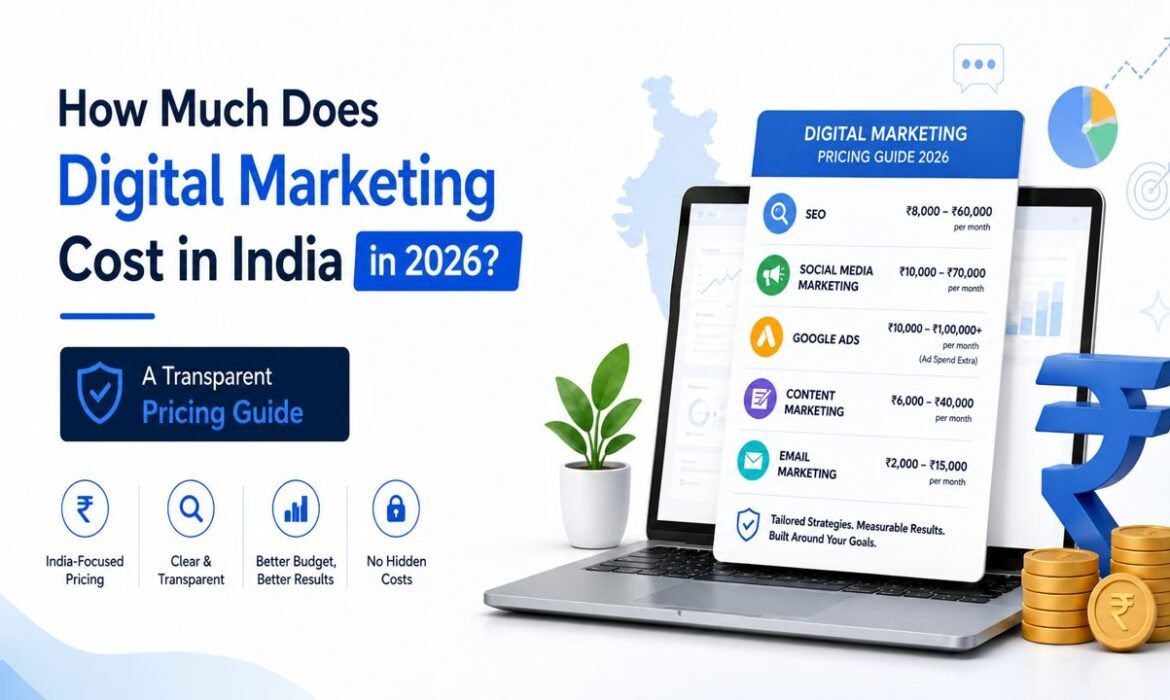
How Much Does Digital Marketing Cost in India in 2026? A Transparent Pricing Guide
Strategic Digital Marketing Investments Begin With Pricing Transparency, Performance Benchmarks, and Clear Objectives.
Digital marketing is no longer optional, it is the primary engine of business growth in India. Whether you are a local bakery in Jaipur, a healthcare clinic in Pune, or an e-commerce brand scaling pan-India, understanding the real digital marketing Cost is the first step toward making smarter investment decisions.
Yet, most businesses struggle with the same questions:
- How much should we spend?
- What services do we actually need?
- Are we getting our money’s worth?
This guide answers all of that with real 2026 pricing data of digital marketing cost in india, honest benchmarks, and clear frameworks. so you can plan your digital marketing budget with confidence.
At Arihant Global, we have worked with 2000+ businesses across industries, giving us a grounded view of what actually moves the needle and what is simply wasted spend.
| Digital marketing cost in India typically range from ₹10,000 to ₹2,00,000+ per month depending on business size, industry competition, services required, and growth objectives. SEO starts at ₹10,000–30,000/month, Google Ads management from ₹15,000–40,000/month, social media marketing from ₹12,000–60,000/month, and comprehensive full-service packages from ₹50,000–1,50,000/month. |
Why Digital Marketing Services Cost Vary Across Businesses
Before diving into numbers, it is important to understand why there is no fixed Digital marketing pricing in India. Five key variables drive the cost for any business.
1. Industry Competition
Highly competitive sectors like real estate, healthcare, education, and e-commerce require more aggressive strategies and higher budgets. A real estate company competing for keywords like ‘flats in Mumbai’ will spend significantly more than a local handicraft shop targeting ‘handmade pottery Jaipur’.
2. Business Size & Revenue
A startup looking to establish initial brand presence has very different requirements from an SME trying to scale from ₹1 crore to ₹10 crore in revenue. Larger businesses require more content, more channels, more campaigns, and consequently, higher monthly budgets.
3. Marketing Goals
Are you building brand awareness, generating leads, or driving immediate sales?
Each goal requires a different channel mix. Brand awareness favour social media and content. Lead generation calls for SEO and Google Ads. Direct sales need conversion-optimized landing pages and retargeting campaigns.
4. Geographic Reach
Targeting a single city costs far less than a pan-India or international campaign. Local SEO for ‘dentist in Indore’ is a fraction of the effort required to rank nationally for ‘best dental clinic India’.
5. Agency Expertise & Location
A boutique agency in a Tier-2 city may charge ₹15,000–30,000/month; a full-service digital marketing agency with a proven track record may charge ₹60,000–2,00,000/month. The difference lies in strategy depth, team quality, technology stack, and reporting transparency.
Average Digital Marketing Cost in India (2026)
The table below provides a snapshot across the most common digital marketing services in india. Detailed breakdowns follow in subsequent sections.
Search Engine Optimization Cost (SEO)
SEO is the long game it’s what gets you showing up on Google without paying for every click.
Typical SEO Pricing
|
Business Type |
Monthly Cost |
|
Local Business |
₹10,000 – ₹25,000 |
|
Small Business |
₹20,000 – ₹50,000 |
|
Medium Business |
₹50,000 – ₹1,00,000 |
| Enterprise |
₹1,00,000+ |
What SEO Usually Includes
- Keyword research
- Technical SEO
- On-page optimization
- Content recommendations
- Link building
- Monthly reporting
- Local SEO optimization
One thing to set expectations on SEO doesn’t work overnight. Most businesses start seeing real movement around the 4–6 month mark. Anyone promising faster results should probably be questioned.
Google Ads Management Cost (PPC Advertising)
If SEO is the slow burn, Google Ads is the tap you turn on when you need leads now.
Typical Management Fees
|
Monthly Ad Spend |
Management Cost |
|
₹20,000 – ₹50,000 |
₹8,000 – ₹15,000 |
|
₹50,000 – ₹1,00,000 |
₹15,000 – ₹30,000 |
| ₹1,00,000+ |
10%–20% of Ad Spend |
Additional Budget Required
Keep in mind these are just the Google Ads management Cost. You’re also spending separately on:
- Actual Google advertising costs
- Landing page work
- Creative design (if needed)
Google Ads works well when you need immediate traction and have a clear offer to promote.
Social Media Marketing cost
Social media marketing has become the storefront window for most consumer-facing businesses. If someone’s heard your name, there’s a good chance they’ll check your Instagram or Facebook before they do anything else.
Typical Monthly Pricing
|
Package Type |
Monthly Cost |
| Basic |
₹10,000 – ₹20,000 |
|
Standard |
₹20,000 – ₹50,000 |
| Advanced |
₹50,000 – ₹1,00,000+ |
Services Included
- Content creation
- Graphic design
- Content calendar planning
- Posting and scheduling
- Community management
- Hashtag research
- Monthly performance reports
Businesses that sell to younger audiences especially can’t afford to treat social media as an afterthought anymore.
Content Marketing Cost
Good content Marketing does a lot of quiet, unglamorous work it builds trust, improves your SEO, and keeps people on your website longer.
Typical Pricing
|
Content Type |
Cost |
|
Blog Article |
₹1,500 – ₹8,000 |
|
SEO Blog |
₹2,500 – ₹10,000 |
| Website Content |
₹5,000 – ₹50,000+ |
| Case Studies |
₹5,000 – ₹20,000 |
| Email Campaigns |
₹2,000 – ₹15,000 |
Strong content compounds over time. A well-written blog post from six months ago can still be bringing in traffic today.
Website Development and Maintenance Cost
Everything else you do in digital marketing eventually points back to your website. If that experience falls flat, you’ve wasted a lot of effort getting people there.
Website Development Costs
|
Website Type |
Cost |
|
Basic Business Website |
₹15,000 – ₹50,000 |
|
Professional Corporate Website |
₹50,000 – ₹2,00,000 |
|
E-commerce Website |
₹75,000 – ₹5,00,000+ |
| Custom Website |
₹1,00,000+ |
Website Maintenance Cost
Monthly Website Management generally costs:
- ₹2,000 – ₹15,000 per month
Depending on updates, security monitoring, hosting, and technical support requirements.
Video Marketing cost
Video isn’t going anywhere if anything, it’s taken over. Short-form content especially has completely changed how brands connect with audiences.
Average Pricing
|
Video Type |
Cost |
|
Short Reels |
₹1,000 – ₹5,000 |
|
Corporate Videos |
₹15,000 – ₹1,00,000+ |
|
Product Videos |
₹5,000 – ₹50,000 |
| YouTube Content Production |
₹10,000 – ₹1,00,000+ |
Businesses that lean into video tend to see noticeably better engagement it’s harder to ignore a face talking to you than a graphic.
Complete Digital Marketing Packages
Most businesses find it makes more sense and more money to bundle Digital Marketing services together rather than piecing things together separately.
Starter Package
Suitable for local businesses and startups.
Cost: ₹15,000 – ₹30,000 per month
Includes:
- Basic SEO
- Social media management
- Monthly reporting
Growth Package
Suitable for growing businesses.
Cost: ₹30,000 – ₹75,000 per month
Includes:
- SEO
- Social media marketing
- Content creation
- Lead generation campaigns
- Performance tracking
Advanced Package
Suitable for established businesses.
Cost: ₹75,000 – ₹2,00,000+ per month
Includes:
- Comprehensive SEO
- Google Ads management
- Social media marketing
- Content marketing
- Conversion optimization
- Marketing automation
- Detailed analytics
| Not sure which package suits your business?
Get a free, no-obligation digital marketing audit from Arihant Global experts. |
What Determines the Return on Your Investment?
Going with the cheapest option rarely ends up being the cheapest decision. Here’s what actually matters when evaluating an Digital Marketing Company:
Experience
An experienced team doesn’t just execute tasks they know when something isn’t working and can pivot before you’ve burned through your budget.
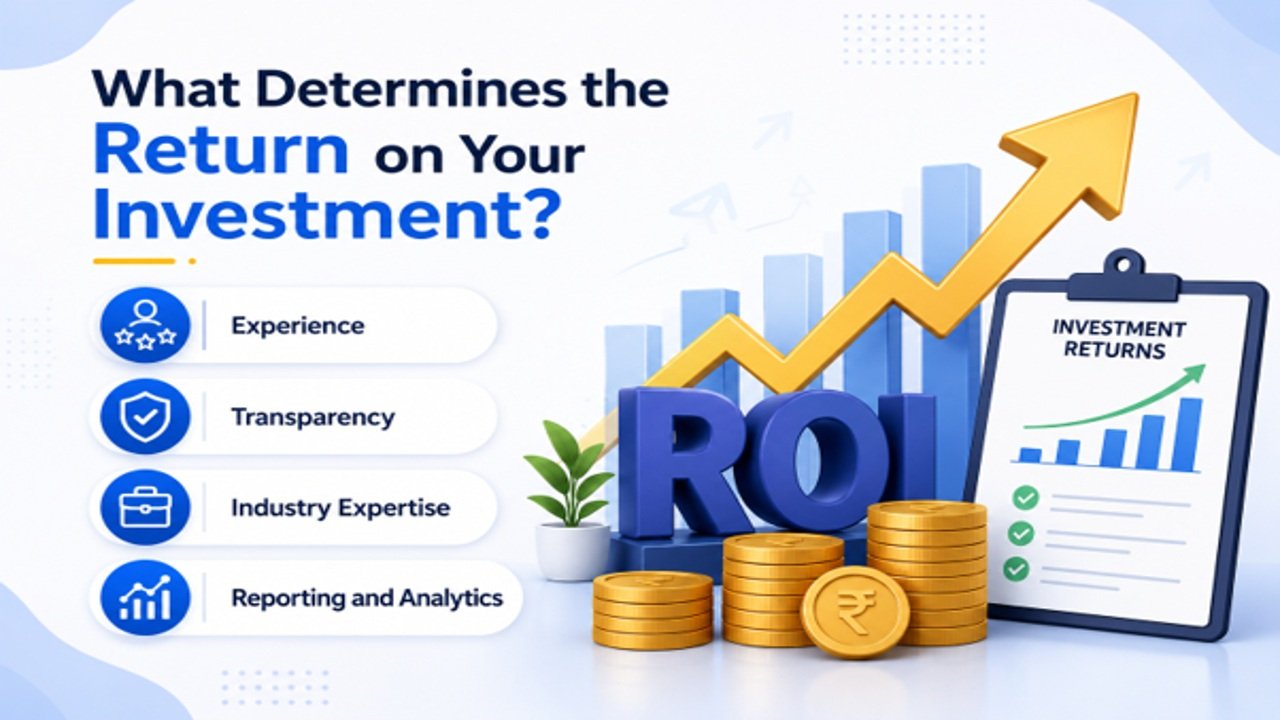
Transparency
A trustworthy Online Marketing agency will tell you upfront what they’re doing, why, what results to expect, and when. If they’re vague about any of that, be careful.
Industry Expertise
A Digital Marketing agency that’s already worked in your space understands your customers, your competitors, and the nuances that make campaigns actually perform.
Reporting and Analytics
You should never have to guess whether your marketing is working. Clear reports on leads generated, spend, and ROI should be standard not a bonus.
Common Mistakes Businesses Make When Choosing a Digital Marketing Company
Choosing Based Only on Price
Bargain-basement pricing usually comes with bargain-basement effort. Poor content, weak strategies, and disappearing acts when results don’t show up.
Expecting Instant Results
Paid ads can move fast. SEO and content take time. Understand what you’re investing in before you decide how to measure success.
Ignoring Strategy
Posting consistently on social media is not a strategy. It’s activity. Real growth comes from knowing why you’re doing what you’re doing and measuring whether it’s working.
Not Tracking ROI
If you don’t know whether your marketing is generating returns, you’re essentially flying blind. Tracking should be non-negotiable from day one.
Pausing Campaigns at the First Sign of Results
Many businesses pause their SEO or ads the moment they see traction, believing the results will hold. SEO rankings erode without maintenance. Ads stop generating leads the moment you pause. Consistency is the compound interest of digital marketing.
How to Choose the Right Digital Marketing Agency in India
With thousands of agencies claiming to be the ‘best digital marketing company in India,’ vetting them correctly is critical. Here is a practical framework:
Evaluate Their Own Digital Presence
If a digital marketing agency does not rank well on Google, does not have a strong social media presence, and has a poorly built website why would you trust them to build yours? Practice what they preach is the most reliable filter.
Check for Transparent Pricing
Legitimate agencies are upfront about their pricing structure, what is included in management fees, and what is billed separately (ad spend, third-party tools, content creation). Hidden fees and unclear contracts are red flags.
Ask for Case Studies and Reporting Samples
Any agency worth hiring can produce documented results: percentage increases in organic traffic, lead volumes, ROAS improvements, and keyword ranking gains. Ask for anonymized case studies relevant to your industry.
Verify Industry Expertise
A team that has worked in healthcare digital marketing will understand HIPAA-adjacent sensitivities, medical keyword intent, and patient acquisition funnels better than a generalist agency. Industry-specific experience translates directly into better campaign performance.
Assess Communication & Reporting Cadence
You should receive monthly or weekly reports with clear metrics: organic sessions, keyword rankings, cost per lead, ROAS, and conversion rates. If an agency cannot explain their reporting or resists sharing raw data, that is a serious concern.
FAQ – Digital Marketing Cost In India
1. How much does digital marketing cost per month in India?
Digital marketing costs in India range from ₹10,000 per month for basic local SEO to ₹2,00,000+ per month for full-service enterprise campaigns. Most SMEs invest ₹30,000–80,000 per month across a combination of SEO, Google Ads, and social media.
2. How much does SEO cost in India in 2026?
SEO services in India typically cost ₹10,000–20,000/month for starter packages, ₹25,000–50,000/month for growth-stage businesses, and ₹60,000–1,00,000+/month for competitive industries requiring aggressive link building and content strategies.
3. What is the cost of Google Ads management in India?
Agency management fees for Google Ads in India range from ₹10,000–25,000/month for small accounts to ₹60,000–1,50,000/month for large enterprise accounts. This is separate from your ad spend, which is paid directly to Google.
4. How much should a startup spend on digital marketing?
A startup in India should allocate a minimum of ₹15,000–40,000 per month for digital marketing to see meaningful traction within 6 months. Focus initially on SEO and content to build organic visibility, supplemented with targeted social media ads for lead generation.
5. How do I know if my digital marketing agency is delivering value?
Key metrics to track: organic traffic growth (SEO), cost per lead and ROAS (Google Ads), engagement rate and follower growth (social media), and keyword ranking improvements. Any legitimate agency will provide monthly reports showing progress against these metrics.
6. What is included in a digital marketing package?
A comprehensive digital marketing package from a full-service agency like Arihant Global typically includes: SEO (keyword research, on-page, technical, link building), Google Ads management, social media management (content creation, scheduling, community management), content writing, monthly analytics reports, and strategy calls.
Conclusion
Digital marketing cost in India in 2026 can anywhere from ₹10,000 a month for something basic to several lakhs for a full-scale growth operation. That range exists for a reason because what you need, and what you get, varies enormously.
The goal shouldn’t be finding the lowest price. It should be finding a partner who actually understands your business, communicates honestly, and delivers results you can see.
When it’s done right, digital marketing cost stops feeling like an expense and starts looking a lot like your best investment.
Ready to Grow Your Business Online?
Arihant Global helps businesses across India build powerful digital marketing strategies that generate leads, increase visibility, and drive measurable growth.
Contact Arihant Global today for a customized digital marketing consultation and discover the ideal marketing budget for your business in 2026 and beyond.
Disclaimer
The information provided in this article is based on industry research and Arihant Global’s experience serving businesses across India. Actual digital marketing cost and results may vary based on individual business needs and market dynamics.
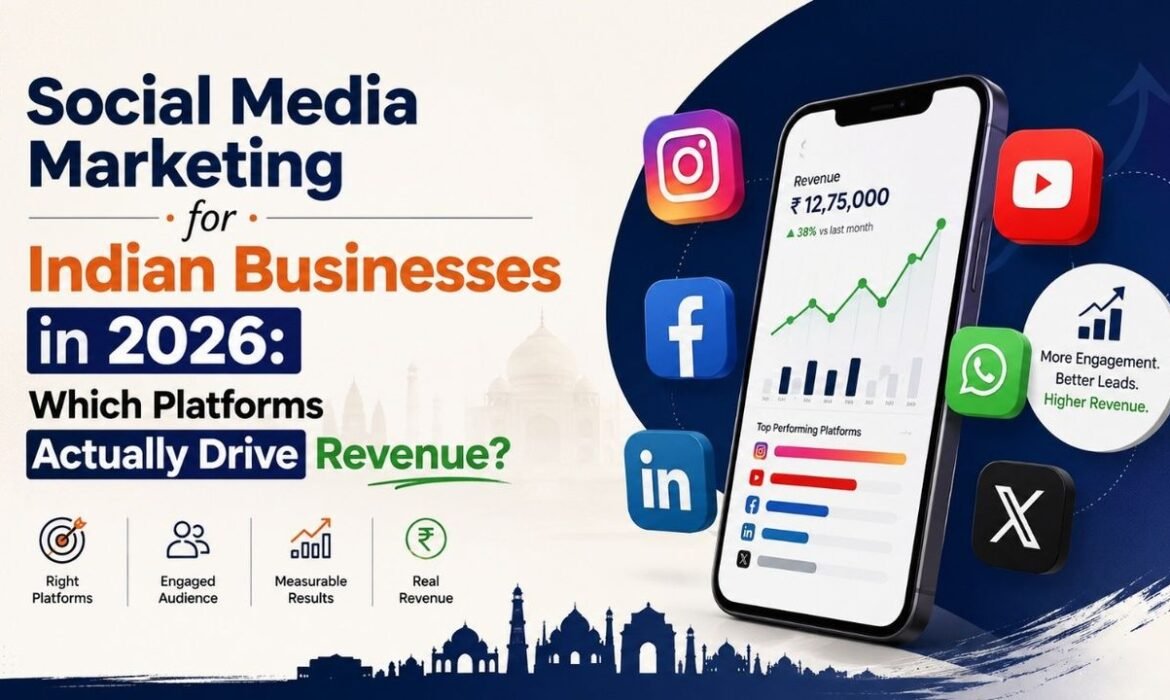
Social Media Marketing for Indian Businesses in 2026: Which Platforms Actually Drive Revenue?
“The businesses winning on social media in India in 2026 are not posting more. they choose fewer platforms, went deeper, and made every rupee accountable to revenue, not reach.”
There is a business in your market doing half the work you are on social media and generating three times the leads. It is not luck and it is not a bigger budget. It is a single decision they made that most businesses are still avoiding. they stopped trying to be everywhere, and they went deep on the platforms where their buyers actually live.
If you are posting daily across five platforms, getting modest engagement, and wondering why social media is not translating into customers, this is the guide you should have read six months ago. Social media marketing in India in 2026 is not a branding exercise. The businesses winning right now are treating it as a direct revenue channel – with the same accountability they apply to their sales floor.
The question is not whether your business needs social media. It does. The question is which platforms deserve your time and budget, what each one can realistically deliver, and how to build a social media marketing strategy that connects directly to business growth – not just to follower counts that never call you back.
Social Media Marketing in India Is No Longer About Reach. It Is About Revenue.
Until recently, social media success was measured in the language of visibility- impressions, follower growth, reach, engagement rate. Marketing teams optimized for those numbers. And then the revenue conversation came – and most businesses found the numbers on the dashboard did not correspond to anything in the bank account.
The shift that serious Indian businesses have made is recognizing social media as a full-funnel revenue channel. That means every platform decision, every content piece, and every campaign is evaluated not by how many people saw it, but by what it produced enquiries, qualified leads, appointments booked, purchases made, customer acquisition costs reduced.
What AI Is Doing to Social Media Marketing Strategy
The second major shift in 2026 is AI social media marketing. AI tools are now embedded at every level of the marketing stack – from content creation and audience targeting to bid optimization and campaign personalization. Meta’s AI-powered ad system adjusts creative, audience, and placement in real time based on conversion signals. LinkedIn’s AI recommendations surface your content to decision-makers based on intent signals you cannot manually target. YouTube’s algorithm has become sophisticated enough to match your content to viewers at the precise stage of their research journey.
Indian businesses that are building AI marketing strategy into their social media operations – using AI for content personalization, predictive audience segmentation, and automated lead nurturing are seeing measurable improvements in social media ROI without proportional increases in spend. Those still running manual campaigns with static creative are falling further behind every month.
Social Media Lead Generation Has Become a Science
Lead generation on social media used to mean running a form ad and hoping for the best. In 2026 it is a multi-step system. precision targeting to reach buyers in the right intent state, creative designed to stop the scroll and communicate a specific value proposition, a landing page that continues the narrative from the ad, a follow-up sequence that converts the lead into a conversation within minutes, and an attribution model that tells you exactly which platform, ad, and creative produced the customer.
The businesses generating consistent high-quality leads from social media have built all five components. The businesses frustrated by poor social media results are usually missing two or three of them.
The Five Platforms That Drive Revenue for Indian Businesses – Honest, Platform-by-Platform
01
|
Facebook Marketing
Best for: B2C local businesses, real estate, education, healthcare, ecommerce Revenue driver: Intent-based targeting captures buyers actively researching. Facebook lead ads generate qualified enquiries at significantly lower CPL than most other channels for local and regional businesses. |
| 02 | Instagram Marketing
Best for: Fashion, lifestyle, D2C brands, restaurants, travel, personal brands Revenue driver: Reels organic reach remains the highest of any platform for new audience discovery. Purchase decisions happen on-app – the path from discovery to conversion is shorter than on any other social platform. |
| 03 | LinkedIn Marketing
Best for: IT services, consulting, manufacturing, B2B services, professional training Revenue driver: Decision-makers are actively using LinkedIn for vendor research. Deal sizes are larger, sales cycles longer, but customer lifetime value is substantially higher. One LinkedIn relationship can generate more revenue than 100 Instagram followers. |
| 04 | YouTube Marketing
Best for: Technology brands, educational institutions, healthcare, financial services Revenue driver: YouTube content compounds over time. A well-optimized video published today generates leads for two to three years. Most competitors underinvest in YouTube – which is exactly why the businesses that commit to it tend to dominate their niche. |
| 05 | Facebook & Instagram Combined
Best for: eCommerce, retail, FMCG, D2C brands Revenue driver: Meta Ads running across both platforms simultaneously reduces CPL by 20-40% through AI-optimized cross-placement. The AI social media marketing layer in Meta’s backend shifts budget to whichever placement is converting best in real time. |
| 06 | X Marketing
Best for: Technology and financial brands ,News organisations and public-facing businesses X Marketing isn’t a direct sales machine for most businesses, and that’s fine. Its value lies in credibility, industry visibility, and staying part of conversations that influence buying decisions over time. |
How to Build a Social Media Marketing Strategy That Generates Revenue – Not Just Engagement
Most social media marketing strategy fail at the same point. they are built around content rather than customer journeys. Here is the framework that separates businesses generating measurable social media ROI from those stuck in the content treadmill.
Step 1 – Define the Revenue Outcome Before You Create a Single Post
Every social media campaign needs a business objective that can be expressed in numbers – leads generated, cost per lead, sales attributed, customer acquisition cost. If you cannot state the revenue objective before the campaign launches, the campaign has no accountability layer – and no accountability means no optimization means no improvement.
For most Indian SMEs and MSMEs, the right starting objectives are: reduce cost per lead by X%, generate Y qualified enquiries per month, achieve Z ROAS on paid social. These numbers change how you make every subsequent decision – which platforms you prioritize, what creative you produce, which audiences you target, and what you do when results plateau.
Step 2 – Choose Depth Over Breadth
The fastest path to social media marketing results for Indian businesses in 2026 is choosing two platforms, going deep, and ignoring the rest until those two are producing consistent returns. Two platforms done with genuine strategic depth consistently outperform six platforms done at surface level. The businesses that spread across everything – posting sporadically, with no coherent creative or targeting strategy – produce random results. The businesses that commit to two platforms and optimize relentlessly produce compounding returns.
Step 3 – Build the Full Funnel, Not Just the Top
Awareness content without a conversion path is charity work. Every piece of social media content should have a next step – a link to a landing page that continues the conversation, a lead form embedded in the ad, a WhatsApp conversation trigger, a consultation booking mechanism. Social media marketing strategy that stops at the content layer and expects organic enquiries to self-generate is missing the conversion architecture that actually produces customers.
The full social media marketing funnel for an Indian business looks like this:
- Awareness layer: Content that reaches new audiences and communicates your differentiation – Reels, LinkedIn thought leadership, YouTube educational content.
- Consideration layer: Retargeting ads that re-engage people who have seen your brand – case studies, testimonials, before-and-after proof of outcomes.
- Conversion layer: Direct response ads with clear CTAs, landing pages optimized for a single action, and immediate follow-up via WhatsApp or automated email sequence.
- Retention layer: Social media content designed for existing customers – loyalty offers, exclusive content, referral campaigns that generate word-of-mouth at scale.
Step 4 – Integrate AI Marketing Strategy Into Your Campaign Operations
AI social media marketing in 2026 is not a feature – it is the operating system. Meta’s Advantage+ uses machine learning to automatically find the audiences most likely to convert, test creative variations, and allocate budget to the highest-performing combinations without manual intervention. LinkedIn’s AI-powered Campaign Manager predicts lead quality scores before you spend. YouTube’s content recommendations use viewer intent signals that no manual keyword strategy can replicate.
Building AI marketing strategy into your social media operations means letting these systems do what they are better at than any human – real-time optimization across millions of data points. while your team focuses on what machines cannot do: creative strategy, brand voice, customer understanding, and business judgment.
| Real Revenue Result – Arihant Global Client
A Jaipur-based real estate developer running social media campaigns without a strategy was spending ₹45,000/month on Meta Ads and generating 60 leads at ₹750 CPL – of which fewer than 10% converted to site visits. After implementing a full-funnel social media strategy with AI-optimized targeting, audience segmentation, and WhatsApp Business API follow-up automation: CPL dropped to ₹380, lead quality improved (28% site visit rate), and monthly revenue from social media leads increased 340% with the same ad spend. |
Why Most Social Media Marketing Strategy Fail – And How to Fix Each One
These are not hypothetical mistakes. These are the patterns that show up repeatedly when businesses bring their social media accounts to Arihant Global after months or years of underwhelming results.
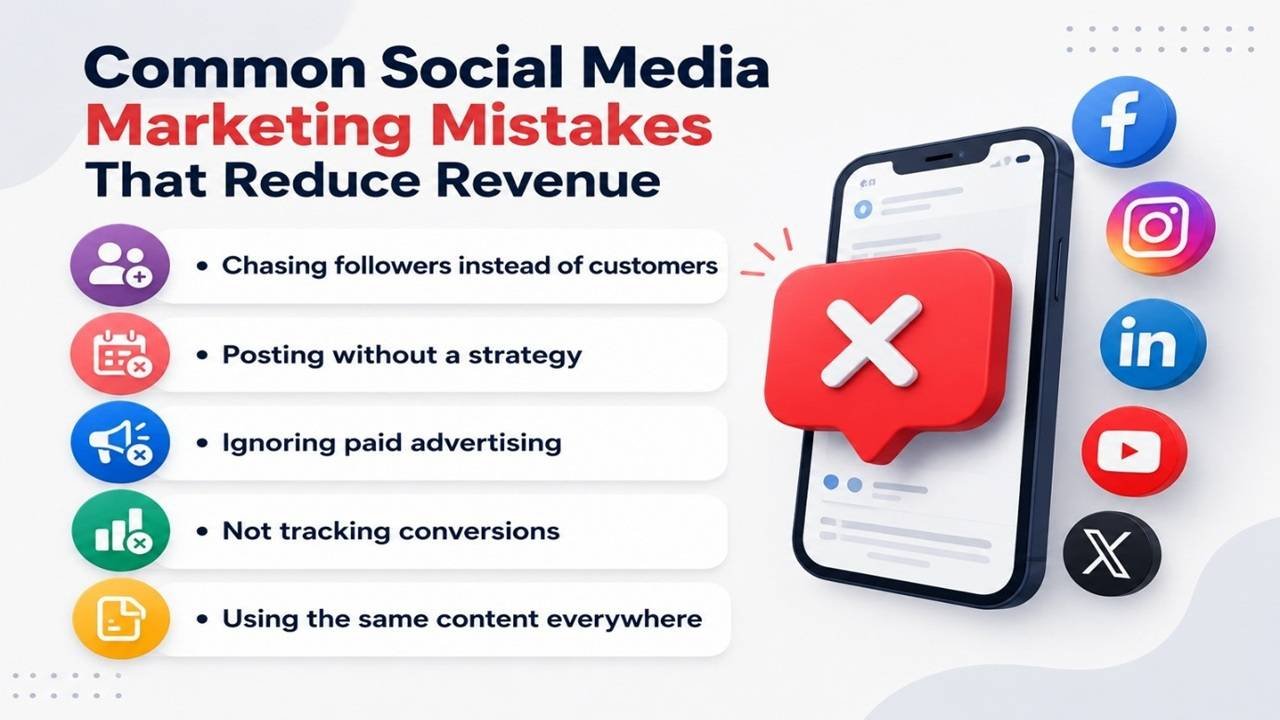
- Optimizing for engagement instead of revenue: Likes, shares, and comments are easy to generate with content that has nothing to do with your services. A viral meme produces no leads. The metric that matters is cost per qualified lead – not engagement rate.
- Ignoring the landing page: An excellent ad sending traffic to your homepage will fail every time. The landing page must continue the specific conversation started by the ad, present one clear call to action, and be optimized for conversion – not information delivery.
- Not tracking attribution: If you cannot trace which social media campaign, which platform, which ad, and which audience produced each customer, you are making budget decisions based on assumption rather than data. Proper UTM tagging, Google Analytics 4, and Meta Pixel setup are non-negotiable.
- Running the same creative for more than three weeks: Ad fatigue is measurable – when your frequency exceeds 3.5 on Meta, click-through rates drop and CPL rises sharply. Rotating creative every two to three weeks is a basic maintenance task that most businesses neglect until campaign performance collapses.
- Treating social media as separate from SEO and email: Social media drives the fastest results when integrated with SEO (social signals amplify content authority), email marketing (social audiences become email lists), and WhatsApp automation (social leads are followed up within minutes). Siloed social media produces siloed results.
Questions Indian Business Owners Ask About Social Media Marketing – Direct Answers
How much should an Indian business spend on social media marketing Services?
For a small to mid-size Indian business starting with paid social, a realistic starting budget is ₹15,000 to ₹30,000 per month for ad spend across one or two platforms – enough to generate statistically meaningful data on what converts for your specific audience. Total social media marketing investment including strategy, content creation, and management typically ranges from ₹25,000 to ₹80,000 per month at mid-tier. The right number is not the smallest possible – it is the minimum required to compete meaningfully in your market.
Which social media platform gives the best ROI for Indian businesses?
Facebook and Instagram combined through Meta Ads consistently deliver the best CPL for B2C businesses. LinkedIn delivers the best ROI for B2B and high-ticket services despite higher CPL, because average deal size and lifetime customer value are substantially greater. YouTube produces the best long-term ROI due to compounding traffic but requires the most patience – results typically emerge at the 6-12 month mark. The correct answer for your business depends on your average deal value, sales cycle length, and target customer profile.
What is AI social media marketing and does my business need it?
AI social media marketing refers to using artificial intelligence tools to automate and optimize social media campaign decisions that previously required manual human judgment: audience targeting, creative testing, bid optimization, content personalization, and lead scoring. In 2026, AI marketing strategy is not a premium add-on – Meta’s core ad delivery system is AI-powered by default. The question is whether you are intentionally building your campaigns to leverage the AI layer (Advantage+ campaigns, broad audience signals, varied creative sets) or fighting against it with over-restricted manual targeting. Businesses that work with the AI achieve substantially better performance.
How do I generate leads from social media for a B2B business in India?
B2B social media lead generation in India in 2026 works most effectively through a combination of LinkedIn thought leadership content (building credibility with decision-makers), LinkedIn Lead Gen Forms (removing friction from the enquiry process), remarketing on Facebook and Instagram to LinkedIn audiences (extending reach at lower cost), and YouTube case study content (providing the proof that B2B buyers need before shortlisting). The critical element is the nurture sequence after lead capture B2B leads from social media rarely convert immediately – a structured email and WhatsApp follow-up series over 2-4 weeks is what separates businesses that convert social leads from those that waste them.
Why Arihant Global Delivers Social Media Marketing Results – Verified
Arihant Global Services India Pvt. Ltd. (AGSIPL) has been delivering social media marketing services for Indian businesses since 2013. ISO 9001:2015 certified for quality management. ISO 27001:2022 certified for information security. MSME registered. 500+ brands served. 20+ national and state industry awards including the Rajasthan Best Brand Leadership Award and India 5000 Best CEO Award.
As a full-service digital marketing company in India, Arihant Global integrates AI social media marketing services with SEO, performance marketing, Google Ads, WhatsApp Business API, and content marketing. creating multi-channel campaigns where every element shares attribution data and optimizes toward the same revenue outcome. Social media campaigns do not run in isolation from the rest of the marketing stack. They compound it.
| Credential | What It Means | |
| ISO 9001:2015 | Campaign quality management certified by independent audit | |
| ISO 27001:2022 | Your campaign data secured to enterprise standard | |
| 12+ Years, Est. 2012 | Experienced every platform shift and algorithm change | |
| 500+ Brands Served | Track record across 15+ industries with documented results | |
| 20+ Industry Awards | Third-party recognition of campaign performance and quality | |
Frequently Asked Questions – Social Media Marketing for Indian Businesses
Q1. What is social media marketing and how does it help Indian businesses grow?
Social media marketing is the strategic use of social platforms - Facebook, Instagram, LinkedIn, YouTube, and others - to build brand awareness, generate leads, drive website traffic, and convert followers into paying customers. For Indian businesses, social media is one of the most cost-efficient customer acquisition channels available - with 600 million+ users and advanced targeting that allows you to reach specific audiences by location, interest, behaviour, income level, and intent signals that indicate purchase readiness.
Q2. Which social media platform is best for lead generation in India?
For B2C businesses - real estate, education, healthcare, local services - Facebook and Instagram combined via Meta Ads consistently delivers the best cost per lead. For B2B businesses targeting decision-makers, LinkedIn is the highest-quality lead source despite higher CPL. For brand authority and long-term discovery, YouTube generates compounding traffic that produces leads two to three years after a video is published. Most serious Indian businesses run a combination of Meta Ads for volume and either LinkedIn or YouTube for authority, depending on their sales model.
Q3. How is social media marketing different from traditional digital advertising?
Traditional digital advertising - Google Ads, display advertising - targets people based on what they are actively searching for. Social media marketing targets people based on who they are: their demographics, interests, behaviours, life events, and relationships. This allows social media to reach buyers before they know they need you, building brand awareness and intent during the research phase that precedes an active Google search. The two channels work best together - social media creates the awareness, Google Ads captures the intent.
Q4. What results can I realistically expect from social media marketing in 3 months?
Within 30 days: Campaign structure live, creative tested, audience data beginning to accumulate, first leads from paid campaigns. Within 60 days: Cost per lead declining as AI optimization improves targeting, organic content audience growing, first attributable sales from social media. Within 90 days: CPL at or near target, predictable lead volume, content generating consistent engagement, retargeting audiences warm and converting. At 6 months Social media producing 30-50% of total leads, brand awareness measurably higher in target market, social media ROI clearly attributable.
Social Media Marketing in 2026 Rewards Depth, Strategy, and Accountability
The businesses making social media work in India in 2026 are not the ones posting the most. They are the ones who have decided which platforms their buyers use, built a strategy that connects social content to revenue outcomes, and put an accountability framework in place that measures what actually matters.
For most Indian businesses – whether you are a startup, an MSME, or an established brand – the highest-return move is to stop treating social media as a content obligation and start treating it as a revenue operation. That means choosing the right platforms for your specific audience, integrating AI social media marketing tools into your campaign operations, building the full funnel from awareness to conversion to retention, and measuring every step with proper attribution.
Social media marketing is not a slow burn. Businesses that build it correctly see tangible lead generation improvements within 60 days, measurable social media ROI within 90, and compounding brand awareness and customer acquisition growth that makes the entire marketing stack more efficient within 12 months.
| Ready to Build a Revenue-Driven Social Media Strategy?
Arihant Global’s social media marketing team works with Indian businesses across every sector from startups and MSMEs to established enterprises. We build social media marketing strategies around leads, revenue, and customer acquisition – not vanity metrics. Get a free social media audit from Arihant Global. arihantglobal.net | 0141-2942622 | Jaipur, Rajasthan, India. |
Disclaimer
The results, statistics, and client outcomes referenced in this article are based on real campaigns managed by Arihant Global. Marketing performance varies by business category, market conditions, ad spend, audience size, and campaign execution quality. These figures are illustrative of what is achievable with a structured strategy. they are not a guarantee of identical results for every business. Arihant Global recommends a diagnostic audit before projecting outcomes specific to your brand.
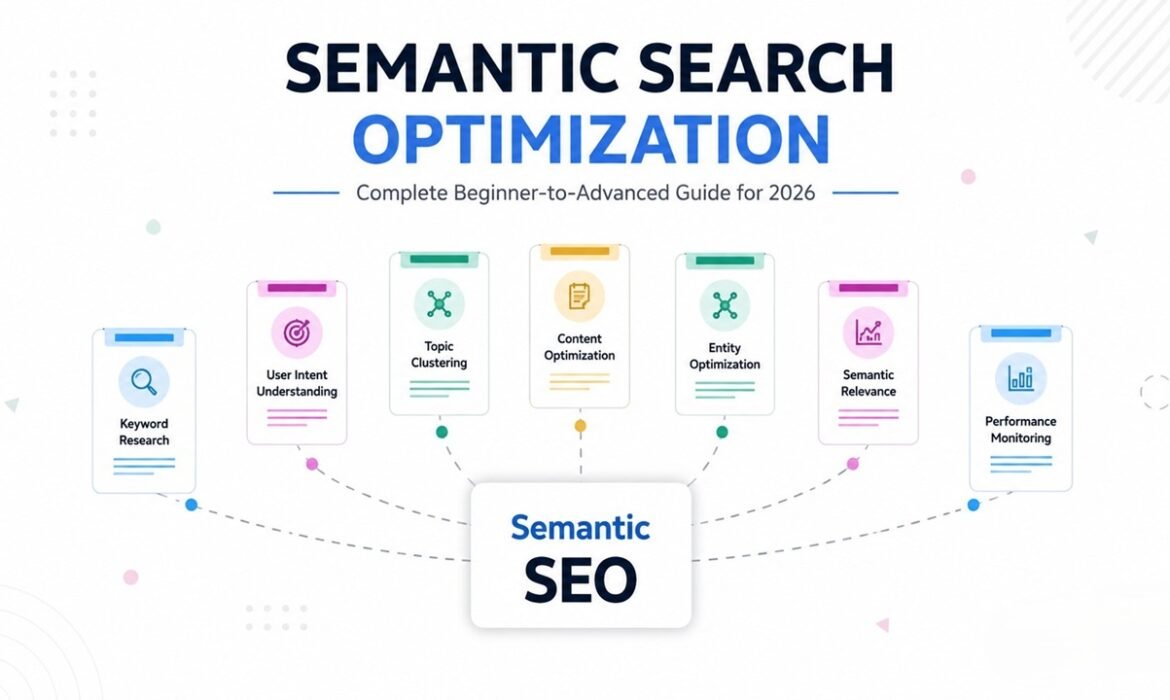
What Is Semantic Search Optimization? Complete Beginner to Advanced Guide for 2026
Here’s a reality many SEO teams are quietly confronting right now:
Content that follows every “traditional” best practice optimized title tags, proper keyword density, decent backlinks is losing ground to pages from smaller sites with less authority. Not because those smaller sites got lucky. Because they built content the way modern search systems actually want to read it.
That shift has a name: Semantic Search Optimization.
And if you’re still optimizing for isolated keywords rather than topics, entities, and search intent relationships, you’re competing with a 2019 playbook against 2026 search infrastructure.
This guide breaks down what semantic search optimization actually means, how it works inside modern search systems, and what real implementation looks like including the mistakes that show up repeatedly in audits.
What Is Semantic Search Optimization?
Semantic search optimization is the practice of structuring content. so search engines understand the meaning, context, and relationships within your topic not just the presence of specific keywords.
Traditional SEO asked: Does this page contain the right keywords?
Semantic SEO asks: Does this page comprehensively understand its topic, serve the user’s intent, and connect logically to related entities and concepts?
The distinction matters enormously.
Google search infrastructure has evolved from a system matching text patterns to one that interprets language, maps entities, evaluates topical depth, and increasingly powers AI Overviews by retrieving content that demonstrates genuine understanding – not just surface-level keyword inclusion.
How Google Actually Reads Content Now
A decade ago, ranking was heavily mechanical. Keywords in the right places, backlinks pointing in, you moved up.
Modern search systems use natural language processing (NLP) and machine learning models to evaluate content the same way a knowledgeable human would – assessing whether a page genuinely covers a topic or simply mentions it.
Google’s systems now evaluate:
- Entity relationships – Does your content connect people, places, concepts, and things in ways that make semantic sense?
- Topical completeness – Does the page address the topic’s sub-questions, related concepts, and contextual nuances?
- Search intent alignment – Does the content format, depth, and structure actually match what users need at this moment?
- Contextual relevance – Does this page belong in a content ecosystem that’s authoritative on this topic?
The practical consequence: a 2,000-word article stuffed with a primary keyword will consistently lose to a focused, well-structured 1,200-word article that answers the topic comprehensively and connects naturally to related content.
Semantic SEO vs. Traditional SEO
| Traditional SEO | Semantic Search SEO |
| Keyword density | Topic coverage and depth |
| Backlink volume | Topical authority signals |
| Exact-match phrases | Semantic relationships and entities |
| Page-level optimization | Content ecosystem architecture |
| Keyword clustering | Intent-based topic clusters |
The difference isn’t theoretical – it shows up in ranking patterns.
Sites with weaker domain authority routinely outrank stronger sites because their Content Ecosystem covers topics with semantic completeness. Their internal linking reflects logical topical relationships. Their entities are properly defined. Their content clusters map to real user intent journeys.
Strong authority with weak semantic architecture loses to weaker authority with strong semantic architecture. This is one of the most consistently observable patterns in modern SEO audit.
The Role of Entity in Semantic SEO
Entity SEO is one of the most underutilized areas in content strategy – and one of the most consequential.
An entity SEO is anything Google can uniquely identify:
a person, organization, product, concept, or place. Google Knowledge Graph maps relationships between entities. When your content clearly establishes and connects entities, it communicates topical authority in a fundamentally different way than keywords do.
In practice, this is where sites miss badly.
Common Entity SEO mistakes found repeatedly in audits:
- Author pages missing entirely. This is especially damaging for YMYL or technical content. If Google cannot identify a credible entity behind the content, entity trust collapse and so does ranking potential for anything requiring expertise signals.
- Organization schema absent or incomplete. Sites publish hundreds of articles without ever clearly defining who publishes them, what their domain is, or where they operate from.
- Concepts mentioned but never explained. A page about machine learning that references “transformer models” without contextual explanation treats the entity as decoration, not meaning.
Entity optimization means establishing these relationships explicitly – through structured data, internal linking, author attribution, About pages, and content that discusses entities in meaningful relationship to each other, not just as isolated mentions.
Topic Clusters and Topical Authority in SEO
Topical authority is how well your site demonstrates expertise across an entire subject domain – not just a single page.
Google Search systems evaluate topical authority by assessing:
- How completely your content covers a subject area
- How logically your content connects across pages
- Whether your content addresses the full spectrum of intent around a topic
A topic cluster model structures this deliberately. One comprehensive pillar page covers the core topic. Supporting cluster content goes deeper on each sub-topic. Internal links map the relationships explicitly.
The mistake most sites make: building content in isolation.
Individual pages rank for individual keywords, but they’re not designed as part of a coherent content architecture. Google’s systems see a collection of disconnected articles rather than a site that actually understands its domain.
Insight from audits: SaaS companies frequently have 80+ blog posts covering adjacent topics with no pillar structure, no meaningful internal linking, and significant content cannibalization – multiple pages competing for the same intent without the semantic differentiation that would allow each to rank clearly.
Many businesses are still publishing content using a 2019 SEO playbook while search systems are increasingly evaluating expertise through semantic relationships and retrieval quality. The gap between those two realities is widening – and it shows in traffic data every month.
How AI Overviews Use Semantic Relevance
AI Overviews have added a new dimension to AI search optimization that many teams are still calibrating.
Google AI Overview system doesn’t retrieve content based on keyword matching. It retrieves based on semantic relevance and retrieval quality – pulling from pages that clearly address a specific aspect of a query with accurate, well-structured information.
To appear in AI Overviews and perform in Generative Engine Optimization (GEO) environments, content needs to support modern AI search optimization strategies by:
- Answer specific questions directly – not bury answers under long introductions
- Use clear, structured prose – not keyword-stuffed paragraphs that confuse intent
- Demonstrate factual precision – AI retrieval systems surface content that can be cited accurately
- Establish entity context – so the system understands who is making the claim and why it’s credible
Conversational search optimization plays a significant role here too. AI-driven queries are increasingly phrased as full questions or multi-part requests. Content that mirrors natural language patterns – not just keyword fragments – retrieves consistently better in these systems.
How to Implement Semantic Search SEO
This is where strategy meets execution. Here’s what implementation actually looks like at the operational level.
1. Conduct Semantic Keyword Research
Go beyond search volume. Map topics by Search intent relationships – what questions users ask before, during, and after your core topic. Group these by intent layer, not just keyword similarity. The goal is a map of how users think about a subject, not just which phrases they type.
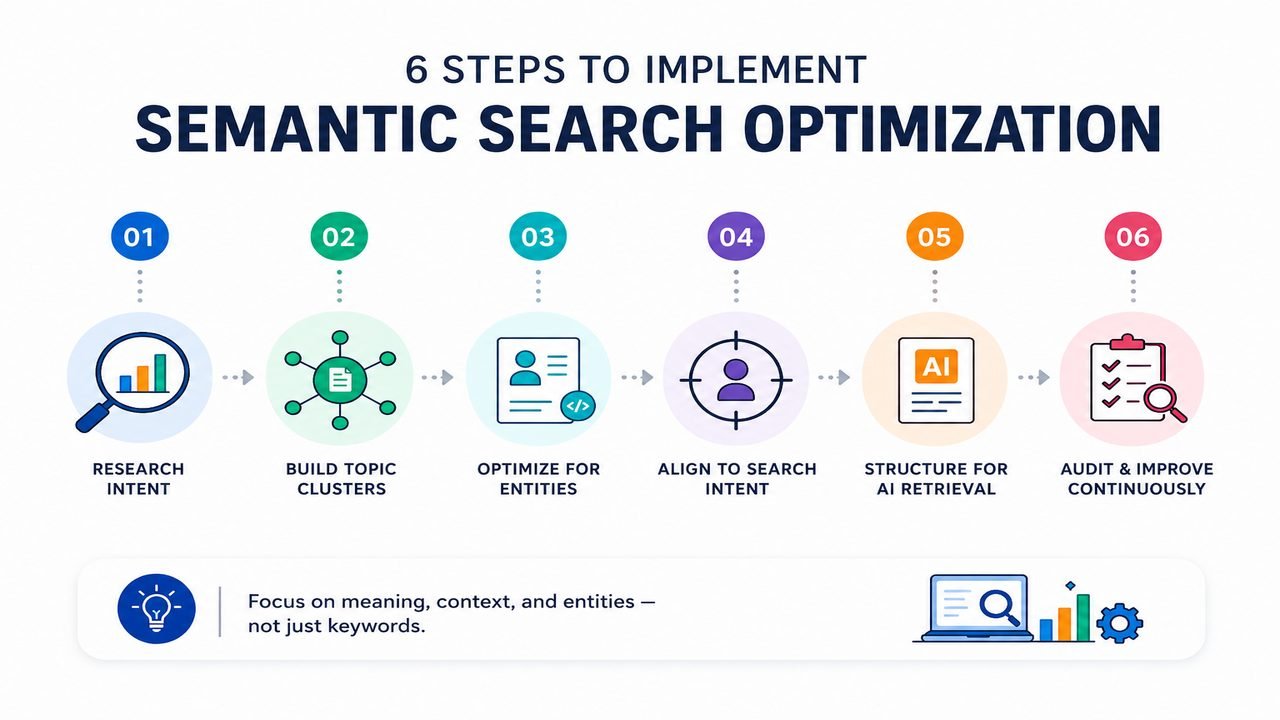
A complete semantic SEO framework focused on entities, intent, topic clusters, and AI-ready content optimization.
2. Build Topic Cluster Architecture
Identify your core pillar topics first. Create cluster content that covers sub-topics systematically. Build internal links that reflect semantic relationships – not just convenient cross-links, but logical pathways between related concepts and intent stages.
3. Optimize for Entity Clarity
Define your entities explicitly. Implement schema markup for Organization, Person, Article, and FAQ where appropriate. Ensure author entities are clearly established across the site – not just as names, but as profiles with credentials, authorship records, and topical associations.
4. Align Content to Search Intent
Map every content piece to a specific intent layer – definition, comparison, how-to, strategic insight. Content that tries to serve too many intents at once serves none of them cleanly. That’s a ranking ceiling you won’t break through with more words.
5. Structure for AI Retrieval
Use headers that directly frame answers. Write clear, self-contained paragraphs. Eliminate padding. Content that AI systems can retrieve and cite accurately performs better in AI search Overviews and traditional rankings – these goals aren’t in conflict.
6. Audit for Semantic Gaps
Look at your existing content ecosystem before publishing anything new.
- Where are the topic gaps?
- Which sub-topics have no coverage?
- Where is content competing against itself for the same intent?
These gaps are almost always faster leverage points than new content.
What Most Sites Get Wrong
After reviewing dozens of content audits, the same failures surface consistently:
- Publishing without pillar structure – resulting in cannibalization and weak topical authority signals
- Ignoring entity setup – publishing expert content without clearly defining the experts behind it
- Chasing keywords instead of intent – optimizing for phrases that don’t match what users actually need at that moment in their journey
- Building content in silos – each post isolated, not part of a connected content system
- Over-optimizing for exact phrases – which now signals content designed for algorithms rather than for readers
The underlying issue in most cases: teams are executing content tactics without content architecture. Semantic SEO is fundamentally architectural before it’s tactical. You can’t keyword-research your way out of a structural problem.
Frequently Asked Questions About Semantic Search Optimization
1. What is semantic search optimization?
Semantic search optimization is the process of structuring content around meaning, intent, entities, and contextual relationships instead of relying only on exact-match keywords. It helps search engines understand topics more deeply, improving rankings, topical authority, AI visibility, and user relevance in modern search systems.
2. How is semantic SEO different from traditional SEO?
Traditional SEO focuses heavily on keyword placement, backlinks, and page-level optimization. Semantic SEO focuses on topic depth, entity relationships, search intent alignment, contextual relevance, and content architecture. Modern search engines now evaluate whether content genuinely understands a subject rather than simply repeating keywords.
3. Why is semantic search optimization important in 2026?
Search engines now use AI-driven retrieval systems, natural language processing, and entity-based understanding to rank content. In 2026, websites that build topical authority, semantic relationships, and intent-focused content structures consistently outperform sites using outdated keyword-first SEO strategies.
4. What is topical authority in SEO?
Topical authority is a search engine’s confidence that your website demonstrates deep expertise across an entire subject area. It is built by covering related sub-topics comprehensively, creating strong topic clusters, using semantic internal linking, and publishing content that satisfies multiple layers of user intent.
What are entities in semantic SEO?
Entities are identifiable concepts such as people, brands, products, locations, or ideas that search engines can recognize independently of keywords. Google uses entities through the Knowledge Graph to understand relationships between topics and determine whether your content demonstrates credible expertise.
6. How does AI search optimization work?
AI search optimization focuses on creating content that retrieval systems can understand, verify, summarize, and cite accurately. This includes semantic structure, concise explanations, entity clarity, search intent alignment, schema markup, and logically connected topical content.
7. What role does search intent play in semantic SEO?
Search intent determines what users actually want when they search. Semantic SEO aligns content with informational, commercial, navigational, or transactional intent rather than optimizing only for keywords. Content that matches intent clearly performs better in both rankings and user engagement.
The Competitive Window Is Still Open – But Not Forever
The businesses adapting to semantic search SEO now are building authority systems their competitors will struggle to replicate later.
Topical authority compounds. A well-structured content ecosystem built today generates compounding signal – making future content easier to rank, future entity relationships easier to establish, future AI retrieval more consistent.
The longer organizations delay restructuring their content ecosystems, the harder that gap becomes to close. Competitors who started six months ago already have structural advantages in topical depth that won’t disappear when you publish one well-optimized post.
Semantic search optimization isn’t a trend to monitor. It’s the operating system modern search runs on. Building content that fits that system – with real topical depth, clear entity relationships, and intent-aligned architecture – is what separates sites that grow in 2026 from those quietly losing ground without fully understanding why.
Conclusion
Modern Search Rankings Are Built on Meaning – Not Just Keywords
In 2026, Google evaluates content through semantic relationships, topical authority, entity trust, and AI retrieval quality not keyword repetition alone. Websites with weak semantic architecture often lose rankings despite strong technical SEO.
SEO Expert Team At Arihant Global helps businesses build entity-driven SEO ecosystems optimized for AI Overviews, GEO visibility, conversational search, and long-term organic growth through structured, intent-focused content strategies.
Disclaimer
This article reflects the strategic SEO, semantic search, and AI visibility methodologies used by Arihant Global based on industry research, real-world audits, and evolving Google search systems. Ranking outcomes may vary depending on competition, implementation quality, domain authority, and future algorithm updates.
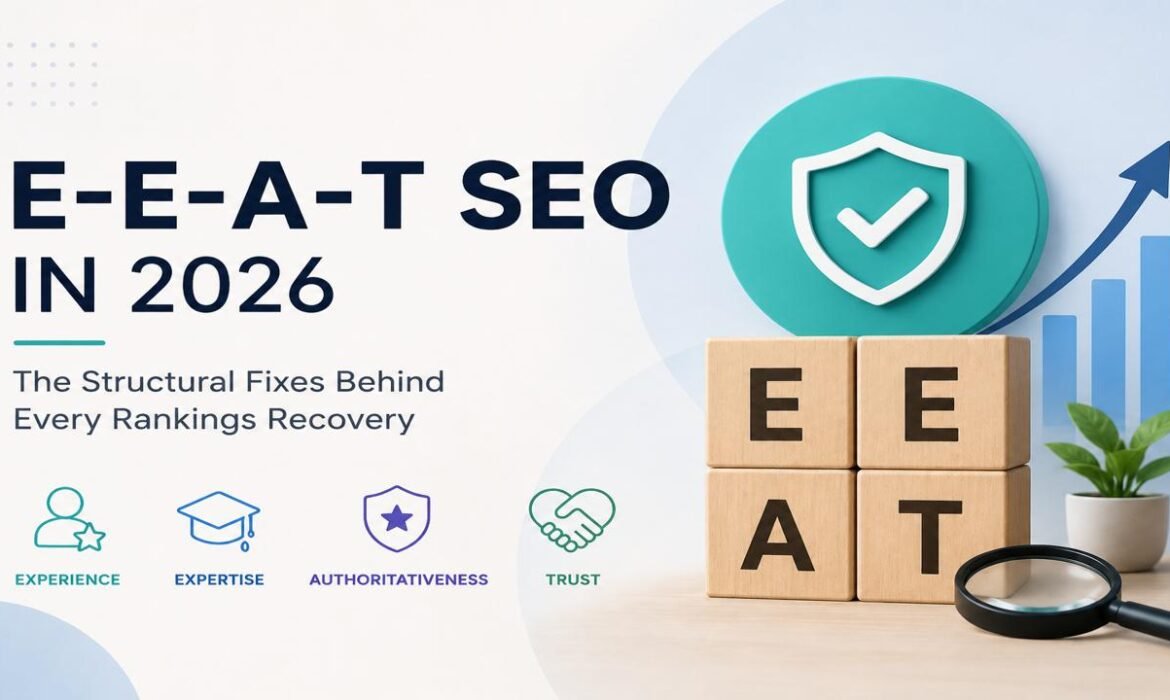
E-E-A-T SEO in 2026: The Structural Fixes Behind Every Rankings Recovery
E-E-A-T SEO is the practice of structuring content, author credentials, and site architecture so Google’s quality evaluation systems can algorithmically verify that your domain is a credible, real-world authority for a specific topic. It is evaluated through entity signals, structured data, author authentication, and behavioral quality indicators not keyword optimization alone.
A manufacturing exporter in Jaipur came to us ranked nowhere despite clean Core Web Vitals, calibrated keywords, and a 3,000-word product guide. A seven-year-old forum thread held the top spot. The technical SEO was fine.
The problem was simpler and harder to fix:
Google had no verifiable record that their business, their authors, or their claimed expertise existed as entities in the google Knowledge Graph.
That gap is E-E-A-T SEO and it is the primary ranking failure for most legitimate businesses competing in 2026. According to Google’s Search Quality Rater Guidelines, pages are evaluated not just on content quality but on whether the entity behind the content is verifiable and trustworthy. This article explains what that means structurally, and exactly how to fix it.
What E-E-A-T SEO Actually Measures
E-E-A-T SEO is Google’s four-signal verification framework – Experience, Expertise, Authoritativeness, and Trustworthiness used to determine whether a domain is a credible source for a specific query. It is evaluated through entity salience, structured data integrity, author credential verification, and behavioural quality signals. It is not a metric visible in Search Console.
The Experience pillar was added in December 2022 confirmed in Google’s official Search Central update documentation for one specific reason: large language models had made it trivial to produce grammatically correct, topically coherent text with zero real-world exposure to the subject. Experience cannot be replicated at scale, which is why it now carries disproportionate ranking weight in competitive verticals.
Google’s core question before any ranking decision:
Can it algorithmically verify this is a real, credible entity in this specific topic space?
Most technically optimized sites fail that test and never know it.
|
Pillar |
What Google Looks For |
Implementation Signal |
|
Experience |
Operational specificity, timestamps, falsifiable outcomes |
Named methodology + measurable result + timeframe in body copy |
|
Expertise |
Semantic entity co-occurrence density, strategic tradeoffs | Cluster of domain terms in logical proximity not keyword repetition |
| Authoritativeness | Google Knowledge Graph entity footprint, citation context | Brand entity anchored to topic space + external citations pointing inward |
| Trustworthiness | structured data implementation integrity, NAP consistency, author schema |
Person schema + Organization schema + verified author bylines |
Why the Helpful Content System Penalizes Technically Good Pages
| Google’s Helpful Content system applies a domain-level demotion to sites where a significant proportion of content fails to deliver information gain over existing top-10 results. This sitewide classifier suppresses even technically optimized pages across the entire domain not just the weak articles that triggered it. |
The classifier does not evaluate pages one by one. it evaluates the domain. Eighteen weak articles can suppress six genuinely strong ones on the same site.
We audited a digital marketing blog in late 2024: 18 of their 34 articles covered topics their competitors had already addressed with no new angles, no proprietary data, no operational specifics. Their six strong articles were being suppressed. After a 90-day information-gain upgrade sprint, target pages moved from positions 14–22 into the top seven.
| The Information Gain Test – Run Before Publishing Anything |
| Open the current top-3 results for your target query. Read their conclusions. If your article reaches the same conclusions using the same logic, it will rank below them permanently. The algorithm classifies it as redundant, not competitive. |
Decoding the Four Pillars: What Algorithmic Implementation Looks Like
Each E-E-A-T pillar maps to specific crawlable proxy signals. Experience is inferred from operational specificity and falsifiable claims. Expertise from semantic entity co-occurrence density. Authoritativeness from Google Knowledge Graph entity footprint and citation context. Trustworthiness from structured data integrity, HTTPS status, NAP consistency, and author schema deployment. |
1. Experience: The Signal Machines Cannot Replicate
Compare these two sentences describing the same outcome. The difference between them is the difference between ranking and not ranking:
| Weak – No Experience Signal | Strong – EEAT-Optimized |
| Restructuring audience segmentation can significantly reduce cost-per-lead for real estate advertisers. | When we restructured audience segmentation for a Jaipur residential developer’s Meta Ads account in Q3 2024 splitting cold audiences by project type rather than generic location radius CPL dropped from ₹2,340 to ₹1,340 over 28 days on a ₹60,000 monthly budget. |
The second sentence contains an operational timestamp, a named methodology, a sector-specific currency constraint, and a falsifiable outcome. No tool generates that combination. Every article needs at least two such experience-driven SEO signals – not hypothetical illustrations, but actual operational specifics from your practice.
2. Expertise: Semantic SEO Depth Over Surface Coverage
Keyword proximity and semantic depth are not the same thing. You can mention ‘ROAS attribution’ fifteen times and still register as a surface-level aggregator if the surrounding content lacks the strategic tradeoffs, failure-mode analysis, and advanced troubleshooting logic that a real practitioner produces.
Google’s NLP layer infers expertise from conceptual density entities like ROAS, first-party data, attribution windows, incrementality testing, and blended CAC clustered in logical proximity to the core topic. Thin co-occurrence signals an aggregator. Dense, logically connected co-occurrence signals a subject authority. Moz research on topical authority confirms that semantic SEO coverage depth consistently outperforms keyword repetition in competitive verticals.
3. Authoritativeness: Entity Footprint Before Keyword Gap Analysis
Every E-E-A-T engagement at ARIHANT GLOBAL starts with an entity SEO footprint audit not a keyword gap report. If Google has not anchored your brand entity to your claimed topic space in the Google Knowledge Graph, on-page optimization alone will not move rankings.
A B2B accounting software company we worked with had their entity anchored almost entirely to ‘GST compliance’ despite strong product capability in payroll and audit. Their payroll feature pages ranked nowhere. Until we built that topical cluster pillar page, four sub-topics, structured interlinks. those pages remained invisible regardless of technical SEO quality.
4. Trustworthiness: The Gatekeeper That Voids Every Other Signal
Trust is a gatekeeper. Algorithmic failures here suppress the domain regardless of how strong the other three pillars are. The most common trust failures found in audits:
- Anonymous authorship: Publishing under ‘Admin’ removes the author entity entirely. Fix: verified author pages with Person schema, real LinkedIn profiles linked, byline on every article.
- NAP inconsistency: Mismatched business name, address, or phone across Google Business Profile, website, and directory listings creates entity disambiguation failures the Google Knowledge Graph cannot resolve.
- Missing structured data on trust pages: About and Contact pages carry disproportionate trust weight. Organization and Local Business schema feed crawlable facts directly to the quality evaluation system.
- Outdated content: Published claims contradicted by newer pages on the same domain generate negative trust signals a credibility liability penalized at the domain level.
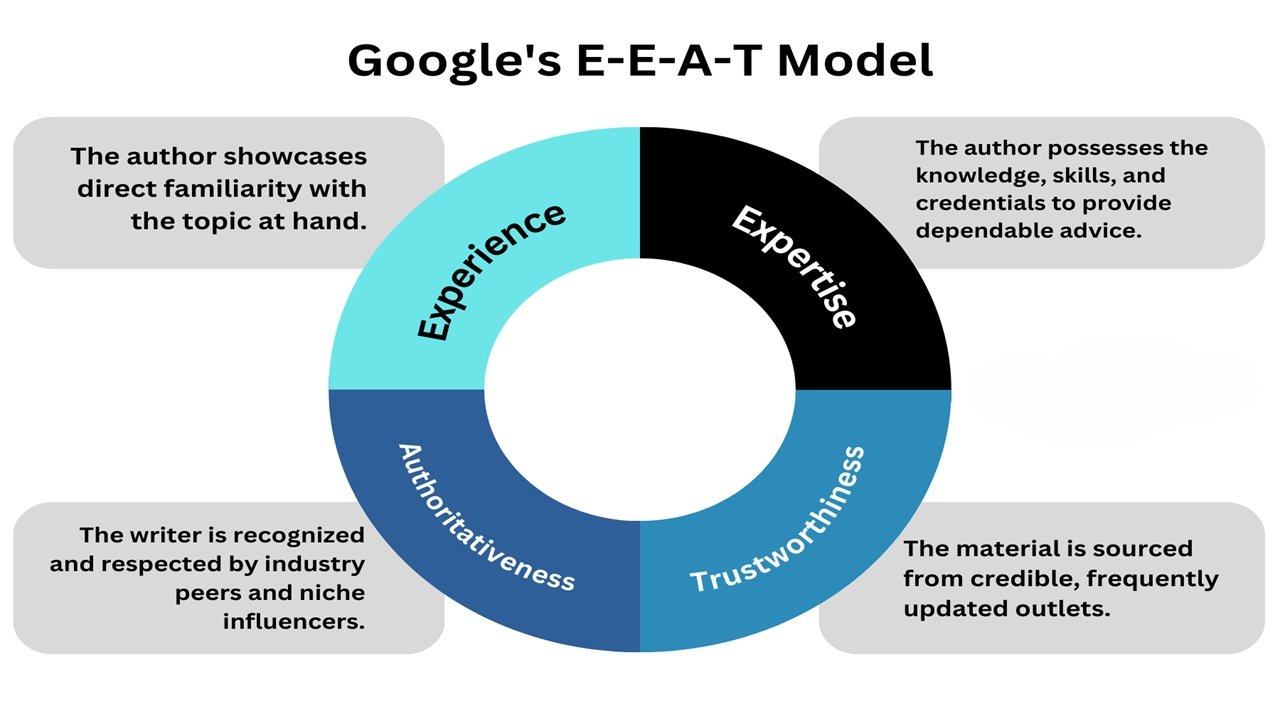
Generative Engine Optimization: How E-E-A-T Governs AI Overview Citation in 2026
| Generative Engine Optimization (GEO) is the architectural practice of structuring content so that AI-powered retrieval systems. Google AI Overviews, Perplexity, Chat GPT can extract, verify, and cite it as a trusted source. E-E-A-T signal strength is the primary filter for AI citation eligibility because these systems draw from the same quality-rated content pool the organic algorithm already trusts. |
In 2026, AI Overviews appear on an estimated 40–50% of informational queries, according to Search Engine Land’s 2025 SERP feature analysis. This makes GEO optimization a primary traffic consideration, not a secondary one. AI Overviews are built on content Google already trusts for organic rankings and the citation selection process favour verified entities, semantic co-occurrence density, and factual specificity.
The Content Formats AI Systems Extract Most Reliably
| Content Format | AIO Citation Likelihood | Why It Works |
| 40–50 word declarative definition | Very High | Direct extraction match for informational queries |
| Numbered step-by-step process | High | Structured format AI systems parse easily |
| Named framework with methodology | High | Unique entity citable and verifiable |
| Before/after comparison with data | Medium-High | Falsifiable claim preferred over assertions |
| Generic assertions without data | Very Low | Cannot be verified — filtered by extraction layer |
The GEO Implementation Checklist
- Place a 40–50 word declarative definition directly below each major H2 heading in the indicative mood, not a question format.
- Use falsifiable, measurable claims wherever possible. ‘CPL dropped from ₹2,340 to ₹1,340 over 28 days’ gets cited. ‘CPL improved significantly’ does not.
- Structure each section as: answer first, explanation second – the inverted pyramid ensures the extractable claim appears before qualifying context.
- Name your frameworks and methodologies – a named process (‘Audience Segmentation by Project Type’) is a citable entity; a generic description is not.
- Avoid vague assertions – the extraction layer filters them. Every claim that cannot be verified algorithmically reduces your AIO citation probability.
The Five-Fix Implementation Blueprint
| Effective E-E-A-T implementation requires five prioritized infrastructure changes: author entity authentication, semantic cluster architecture, information-gain content engineering, structured data on trust pages, and technical signal validation. Domains with existing authority signals typically see measurable ranking movement within 60–90 days. New domains require 4–6 months minimum for entity anchoring to register. |
| Step | Fix | Why It Comes First |
| 1 | HTTPS + Core Web Vitals | Trust gatekeeper no credit is given until this baseline clears |
| 2 | NAP inconsistency | Entity disambiguation failure blocks all downstream signals |
| 3 | Structured data on trust pages | About + Contact schema feeds verifiable facts to quality evaluators |
| 4 | Author entity authentication | Person schema + byline establishes the content creator as real |
| 5 | Content information-gain upgrades | Only effective after all gatekeeper signals are resolved |
1. Author Entity Authentication
Build verified author web pages with real photographs, confirmed LinkedIn URLs, domain-specific credential bios, and Person schema. The name string in schema must match bylines exactly mismatches create disambiguation failures that suppress author authority across every article the person has written.
2. Semantic SEO Cluster Architecture
Every pillar page needs 4–8 interlinked sub-topic pages with descriptive anchor text. ‘First-party data attribution methodology’ as anchor text compounds topical authority at the link level. ‘Click here’ wastes the co-occurrence signal entirely.
3. Information Gain Engineering
Each article must surface something the current top-3 results do not a named proprietary framework, verifiable client outcome data with methodology and timeline, a strategic tradeoff analysis, or a sector-specific constraint only a practitioner would know.
4. Structured Data on Trust Pages
Deploy Organization schema on the homepage and Local Business schema on the contact page. NAP data character-for-character identical to your Google Business Profile. These are the pages quality evaluators check first to verify a business is real. Per Google’s structured data documentation, schema markup on trust pages is a direct feed to the quality evaluation pipeline.
5. Technical Trust Validation
Audit Core Web Vitals (LCP below 2.5s, CLS below 0.1), HTTPS integrity, schema errors via Rich Results Test, NAP consistency across every directory. For Jaipur-based businesses specifically, Justdial and India Mart carry real co-citation weight in the geographic entity graph treating them as optional is a consistent mistake we see in local brands competing against national aggregators. Also include Sulekha, Trade India, and Yellow Pages India for complete local entity coverage.
Local E-E-A-T SEO: The Geographic Entity Layer
Local E-E-A-T SEO requires resolving an additional geographic entity layer that national brands do not face. NAP consistency, Google Business Profile optimization, and Local Business schema must all be resolved before topical authority signals carry full weight in local search.
|
India-Specific Citation Sources for Local Entity Authority |
|
For Jaipur and India-based businesses, the following directories carry co-citation weight in the geographic entity graph. Consistency across all of them is required not optional: |
|
• Justdial – highest local search co-citation weight for Indian SMBs |
|
• India Mart – critical for B2B manufacturing and export businesses |
|
• Sulekha – strong weight for service businesses in Tier-1 and Tier-2 cities |
|
• Trade India – relevant for export and wholesale sectors |
|
• Yellow Pages India – broad co-citation coverage, lower weight but additive |
Key Takeaways
- E-E-A-T is not a metric, it is a structural architecture problem that requires entity authentication, semantic cluster building, and trust signal deployment.
- The Helpful Content classifier operates at the domain level weak articles suppress strong ones. Information gain is a prerequisite for every piece published.
- The remediation sequence is fixed: trust failures first, content upgrades last. Reversing that order produces no measurable result.
- GEO optimization structuring content for AI Overview citation is the 2026 extension of EEAT strategy and requires declarative, falsifiable, entity-anchored content.
- For Jaipur-based and Indian businesses, geographic entity resolution through local citation consistency is an additional mandatory layer that national competitors do not face.
Frequently Asked Questions: E-E-A-T SEO 2026
1. When a domain has both trust failures and expertise deficits, which gets fixed first?
Trust failures take priority always. A domain with trust penalties receives zero credit for improved content until the gatekeeper signals are resolved. The correct sequence is:
(1) HTTPS and Core Web Vitals,
(2) NAP inconsistency,
(3) structured data on trust pages,
(4) author entity authentication, then
(5) content information-gain upgrades.
We confirmed this with a healthcare client in 2023 eight upgraded articles produced zero ranking movement until a broken Organization schema misidentifying their business category for 14 months was corrected.
2. How do you measure E-E-A-T improvement without a direct Search Console metric?
Track the percentage of target content pages appearing in Google's AI Overview results month-over-month. AI Overview inclusion is the most visible downstream evidence of strong E-E-A-T seo. these systems select for verified, entity-anchored, trust-signalled content. A rising AI Overview capture rate is the clearest available proxy for improving E-E-A-T health across the domain.
3. Does E-E-A-T seo work differently for local businesses in Jaipur?
Yes. Local E-E-A-T SEO requires resolving a geographic entity layer that national brands do not face. NAP consistency, Google Business Profile alignment, and Local Business schema must all be resolved before topical authority signals carry full weight in local search. For Jaipur-based businesses, Justdial and India Mart carry real co-citation weight in the geographic entity graph. treating them as optional is a consistent mistake we see in local brands competing against national aggregators.
4. Does E-E-A-T affect new websites, or only established domains?
E-E-A-T applies to all domains, but the timeline differs significantly. New domains require 4–6 months minimum for entity anchoring to register in the Knowledge Graph, even with correct implementation from day one. For new sites, the priority is establishing the brand entity clearly from launch: verified author pages, Organization schema, and Google Business Profile optimization before any content publishing begins.
5. How long does it take to see ranking improvements after fixing E-E-A-T signals?
Domains with existing authority signals typically see measurable ranking movement within 60–90 days of resolving trust failures and deploying structured data. Content information-gain improvements take longer 3–5 months for competitive queries. The fastest improvements consistently come from fixing structured data on trust pages, which can trigger re-evaluation within one to two crawl cycles.
The Bottom Line
There is no growth hack for Google E-E-A-T. You cannot fake years of operational experience with a clever prompt.
Real SEO in 2026 requires taking your business’s inherent, offline expertise and structuring it into a format that machine learning models can easily parse, trust, and retrieve.
If you are tired of watching competitors with inferior products outrank you, your semantic structure is likely broken.
Get Your E-E-A-T Audit
Connect with the SEO expert team at ARIHANT GLOBAL to audit your entity footprint and build the semantic SEO architecture your operational expertise actually deserves.
Disclaimer
This content is published by ARIHANT GLOBAL for educational and informational purposes only. SEO rankings, E-E-A-T signals, AI Overview visibility, and search performance vary by industry, competition, Google algorithm updates, and implementation quality.
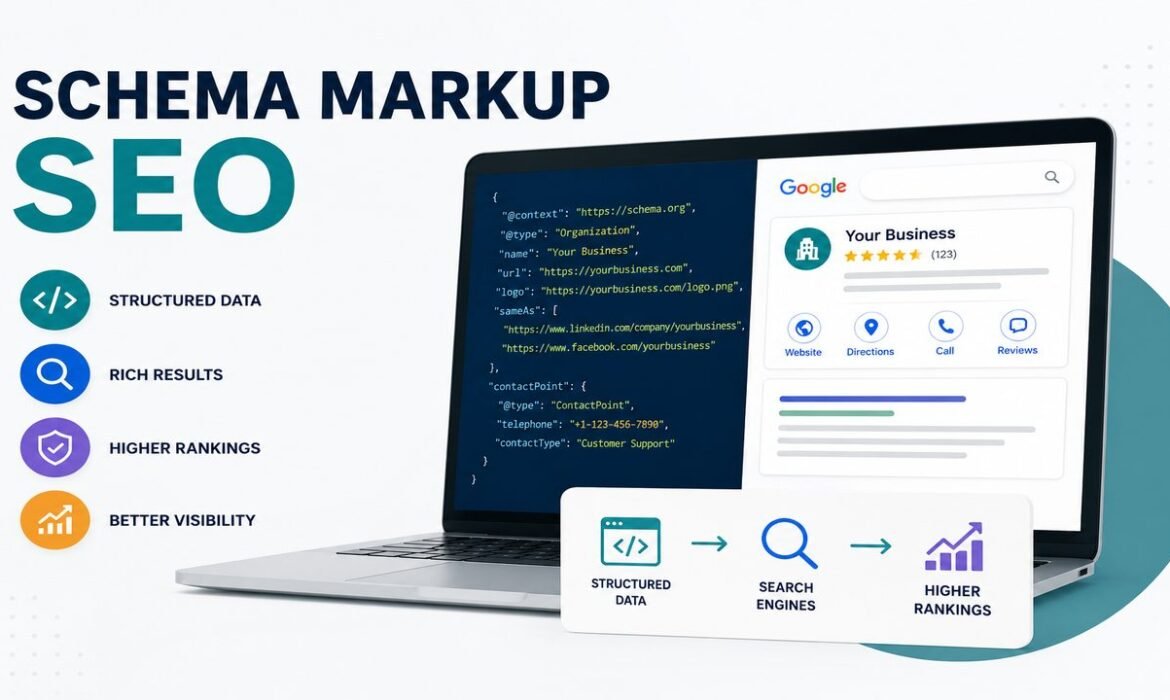
Schema Markup SEO IN 2026: How Structured Data Improves Rankings
There’s a Quiet gap widening between Businesses that show up in Search and Businesses that Don’t and it has very little to do with how much content they publish. It comes down to something more foundational. Whether Google actually understands what your content is about.
Most site owners spend months refining their writing, building backlinks, and chasing keyword positions. And yet they’ve never told Google one simple thing that what their pages actually mean. Not just the words on them the meaning behind those words. The entities, the relationships, the context that separates a trusted source from a random page that happens to rank.
That’s the real job of schema markup SEO. And in 2026, getting this right is no longer optional if you’re serious about search.
What Schema Markup SEO Actually Does And Why Most People Misunderstand It
Let’s get one thing straight from the start. Schema markup doesn’t work like a ranking button. You don’t add it and watch your positions jump overnight. That’s not what it’s for.
What it does is remove ambiguity and in search, ambiguity is expensive.
Every time Google crawls a page, it’s trying to answer a question:
What exactly is this?
Is this an article, a product, a service, a local business, an event, a person?
Without structured data, Google has to guess based on your content. It’s gotten remarkably good at guessing. But a guess is still a guess and when your competitor has given Google a clear, confirmed answer about their page while yours still requires interpretation, who do you think gets the benefit of the doubt?
JSON-LD structured data is how you stop leaving that to chance. You embed machine-readable signals directly in your page’s code. You tell Google precisely what your content is, who created it, what it’s about, and how it relates to other entities it already knows. No guesswork. No inference. Just clarity.
And clarity, in modern search, compounds into rankings, rich results, and trust.
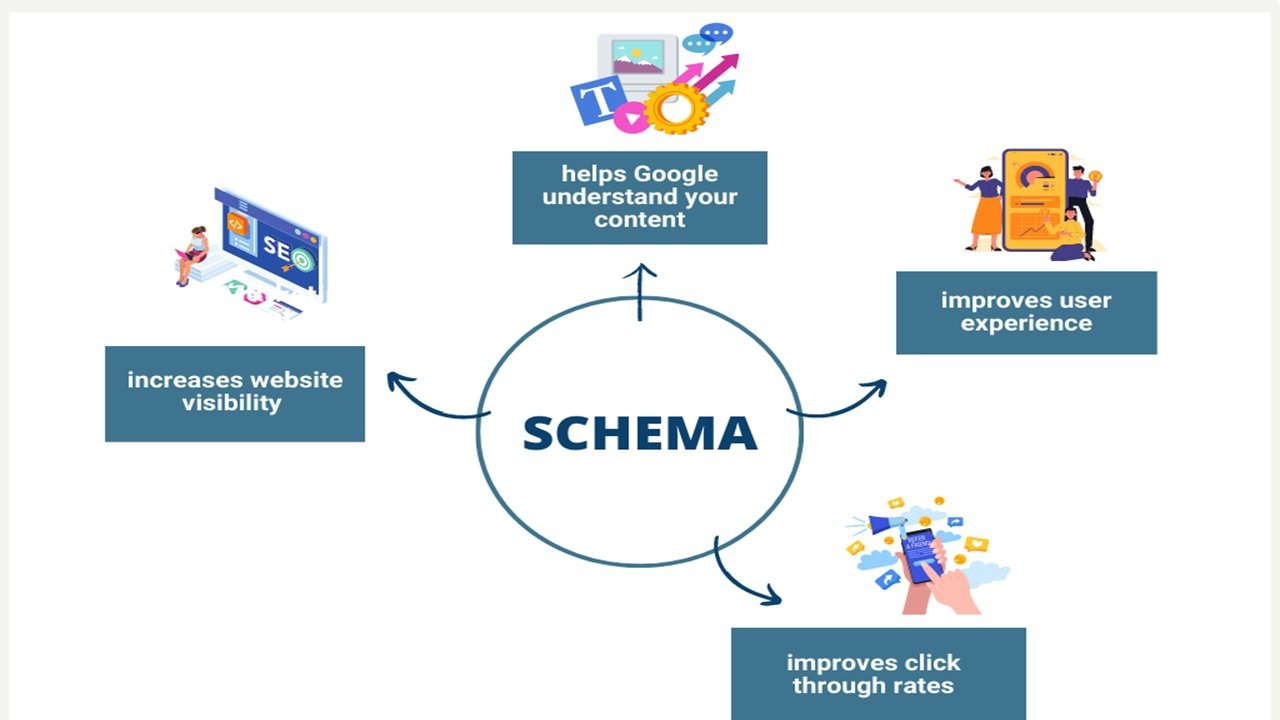
The Real Reason Google Cares About Structured Data in 2026
Search has fundamentally changed. Five years ago you could rank well by optimizing pages around keywords. Today that’s a starting point, not a strategy.
Google now processes queries through a semantic understanding system one that maps relationships between topics, entities, and intent rather than just scanning for keyword matches. When someone searches “best digital marketing agency in India,” Google isn’t looking for a page with those exact words. It’s looking for an entity a verifiable organization with a location, a track record, a presence across multiple trusted sources and it’s asking which result most credibly is that entity.
This is where structured content markup becomes a business-critical tool, not a technical afterthought.
Organization schema markup tells Google exactly who you are your name, your location, your contact information, your social profiles, your logo. Person schema links your authors to verifiable professional identities. Local Business schema markup plants you firmly on the knowledge graph with a geographic footprint Google can confirm and cross-reference.
Once your site registers as a known, trusted entity not just a collection of pages something changes. You start appearing in searches you didn’t specifically target. Your branded results get richer. Your topical associations deepen. The whole domain gains credibility, not just individual pages.
This is the shift from keyword optimization to entity SEO. And structured data is the mechanism that makes it happen.
How Schema Markup Directly Strengthens Google E-E-A-T
Google E-E-A-T framework Experience, Expertise, Authoritativeness, Trustworthiness has moved from a quality guideline into something with real ranking teeth. Especially in industries where Google considers the stakes high: finance, health, legal, and anything involving major purchasing decisions.
Here’s the uncomfortable truth about E-E-A-T: Good writing alone doesn’t establish it. Google needs signals it can verify, not just read.
That’s where Article schema combined with Person author schema markup earns its keep. When your content is linked to a named author entity one with same As references to their LinkedIn profile, published work, or professional bio. Google can evaluate the person behind the content, not just the content itself. It can cross-reference that author against other trusted sources and decide whether this is someone whose expertise it should surface to users.
At Arihant Global, this is taken seriously across every piece of content published. Author entities are built out properly, linked to verifiable profiles, and kept current because the team understands that E-E-A-T isn’t a content quality issue. It’s a structural one. You have to give Google the signals it needs to verify your expertise, or it defaults to uncertainty.
Sites that treat authorship as optional metadata are leaving one of the strongest trust signals in technical SEO completely unused.
AI Search Overview, Generative Search, and Why Structured Data Is Now a Retrieval Tool
Here’s where things get really consequential for businesses in 2026.
AI Overviews now appear at the top of search results for a significant and growing portion of queries. These aren’t just featured snippets with a new coat of paint. They’re generated summaries that pull from multiple sources and they cite those sources visibly. Being cited in an AI Overview is effectively a zero-click brand impression that reaches the searcher before any organic result does.
The question is: what makes Google’s AI system select one source over another for citation?
The answer involves several factors, but structured data sits high on the list. AI retrieval systems favor content that can be interpreted quickly, accurately, and with confidence. When your page has clean JSON-LD schema that identifies what it is, who wrote it, what question it answers, and what entity it represents that page becomes significantly more retrievable than an unstructured equivalent, even if the prose quality is similar.
FAQ Page schema is particularly powerful here. Format each answer as a complete, self-contained response to a specific question and you’ve essentially pre-packaged your content for AI extraction. How To schema works the same way for instructional content. These aren’t just formatting choices. They’re retrieval signals for answer engines and generative search systems that are rewriting how traffic flows online.
Generative engine optimization GEO is the discipline built around this reality. Getting it right starts with structured data.
The Schema Types Worth Your Time Right Now
Not every schema type carries equal weight. After working across different site types and industries, these are the implementations that consistently produce measurable outcomes:
1.. Article + Author (Person) Schema
is the most neglected combination in content SEO. Linking each article to a verified author entity with proper credentials and external references does more for E-E-A-T than most on-page optimizations combined.
2. FAQ Page Schema Markup
remains one of the highest-value markup types available. It targets featured snippets, AI Overview citations, and voice search answers simultaneously. Write your FAQ answers as standalone, direct responses not click-bait teasers.
3. Organization Schema Markup
is the anchor of your entire structured data strategy. Every business site needs it. Get it completely right name, URL, logo, social profiles, contact details, same As links and it lifts the trust signals on every page on your domain.
4. Product + Review Schema Markup
is non-negotiable for E-commerce. Star ratings and pricing in the SERP aren’t cosmetic. They’re conversion signals that appear before the user ever clicks.
5. Bread crumb List Schema
is low effort, high return. It reinforces your site’s content architecture, helps Google understand your page hierarchy, and makes your URLs look cleaner and more navigable in search results.
6. How To Schema
is underused outside of DIY and recipe content. Any page that walks a user through a process step-by-step should be marked up. It’s one of the most AI Overview-friendly formats available.
Getting This Right: What the Implementation Actually Looks Like
The biggest barrier to structured data work is the false belief that it’s complicated. It isn’t if you approach it with the right foundation.
JSON-LD is the only format worth using. It sits in your page’s <head> tag, completely separate from your visible content. You can update, add, or remove it without touching a single line of your HTML. Google explicitly recommends it, and for good reason it’s clean, flexible, and far easier to maintain than Microdata or RDFa, which belong to an older era of technical SEO.
For WordPress builds, Rank Math handles most standard schema types well out of the box. For custom or headless architectures, writing JSON-LD manually gives you precise control especially over entity relationships, same As references, and nested schemas that plugins typically oversimplify.
Validation is not optional. Run every schema implementation through Google’s Rich Results Test before the page goes live. Errors in structured data don’t just limit your rich result eligibility. they can generate conflicting signals that actively damage Google’s confidence in how your page should be classified. Two minutes of validation prevents that entirely.
The discipline that separates serious SEO teams from casual practitioners is treating schema as part of the publishing workflow, not a retroactive cleanup project. At Arihant Global, no page goes live without validated schema already in place.
it’s built into the process at the content architecture stage, not bolted on afterward. That consistency across hundreds of pages is what builds the kind of structured data foundation that compounds in search over time.
The Bottom Line for Businesses That Want to Win in Search
Here’s the thing that gets lost in all the technical discussion around schema markup SEO. this is ultimately a business issue, not just an SEO one.
Every missed rich result is a missed click. Every page Google can’t confidently classify is a page that competes at a disadvantage. Every author whose expertise isn’t verified through structured signals is an author whose content Google treats with lower confidence. And every business that hasn’t registered itself as a trusted entity in the Google knowledge graph is a business that’s invisible to a growing share of AI-driven search.
The good news is that most businesses haven’t done this work properly. Which means getting it right now still represents a genuine competitive advantage one that shows up in rankings, in SERP real estate, and in AI search visibility at the same time.
Start with Organization schema. Link your authors. Mark up your FAQs. Validate every implementation before it goes live. And treat structured data as the permanent foundation. it is not a project you revisit once a year.
The businesses that understand search in 2026 aren’t just publishing content. They’re making sure Google can read it.
Is Google misreading your website? Modern SEO Expert Team At Arihant Global will find out

Most sites are missing the structured data signals that drive rich results and AI Overview citations. Arihant Global audit shows you exactly what's broken, what's missing, and what to fix first.
Frequently Asked Questions About Schema Markup
1. Does schema markup directly improve search rankings?
Not in the way a backlink does but the downstream effects are real. Clearer Google understanding leads to better content classification, richer SERP display, stronger entity associations, and higher likelihood of appearing in AI-generated answers. The ranking impact is indirect but consistent.
2. What is the best schema format to use?
JSON-LD, without question. It’s Google’s recommended format, the cleanest to implement, and the easiest to maintain. Microdata and RDFa are technically supported but there’s no practical reason to use them for new builds.
3. How does structured data help with AI search visibility?
AI retrieval systems extract answers from pages they can read clearly. Structured markup tells those systems exactly what your content is, who it came from, and what question it answers. which directly increases the probability of being cited in AI Overviews and answer engine responses.
4. How often does schema need to be updated?
Whenever the underlying content changes. A product price shift, a new author, a changed business address all of it should be reflected in your markup promptly. Stale schema creates a mismatch between your content and your signals, and Google notices.
Disclaimer:
This analysis by Arihant Global is based on publicly observable SEO signals, semantic relevance patterns, content architecture, and search visibility data. Search rankings are influenced by multiple dynamic factors, including Google algorithm updates, competition, technical performance, user engagement, and evolving search behavior.
15 SEO Mistakes Killing Your Rankings in 2026 And How to Actually Fix Them
|
Here’s the uncomfortable truth: most SEO advice circulating right now is dangerously outdated. The tactics that moved the needle in 2022 are not just irrelevant in 2026. they’re actively hurting sites that still rely on them. This guide breaks down the most damaging 15 SEO mistakes we’re seeing right now, why they’re happening, and what the fix actually looks like in practice. |
Error 1 – Publishing Content Without Matching Search Intent
This is the single biggest ranking killer right now, and it’s more nuanced than most people realize. Search intent optimization isn’t just ‘is this informational search intent or transactional search intent?’ Google has gotten remarkably precise about what stage of a decision someone is in, what format they expect, and what a satisfying result actually looks like for that specific query.
A page targeting ‘best project management tools’ needs to behave like a comparison review. Not a definition. Not a promotional landing page. When your content format doesn’t match the dominant intent pattern in the top 10 results, you’re fighting an uphill battle that no Amount of backlinks will fully overcome.
✓ THE FIXBefore writing a single word, study the top 10 SERP results for your target keyword. Look at content type (guide, list, review), content format (how-to, FAQ-heavy, data-driven), and content angle (beginner vs. advanced, recent vs. evergreen). Mirror what’s working, then out-execute on depth and originality. |
Error 2 – Treating E-E-A-T as a Checkbox Instead of a Foundation
Most people know about E-E-A-T. Far fewer actually implement it properly. The ‘Experience’ component the first E is where most sites fall flat. Google added it specifically to reward expert-driven content written by people who have genuinely done the thing they’re writing about.
Slapping an author bio at the bottom of a post isn’t E-E-A-T. Real E-E-A-T looks like, screenshots from your own testing, data from your own campaigns, case studies with specific numbers, and opinions that could only come from someone who’s been in the trenches. That’s what separates content that holds rankings from content that temporarily ranks and then quietly slides.
✓ THE FIXAudit your top 10 pages. For each one, ask: what proof is here that a real expert wrote this? Add author pages with verifiable credentials, include first-hand examples and outcomes, link to supporting sources, and ensure your site has basic trust signals like HTTPS, contact information, and transparent editorial standards. |
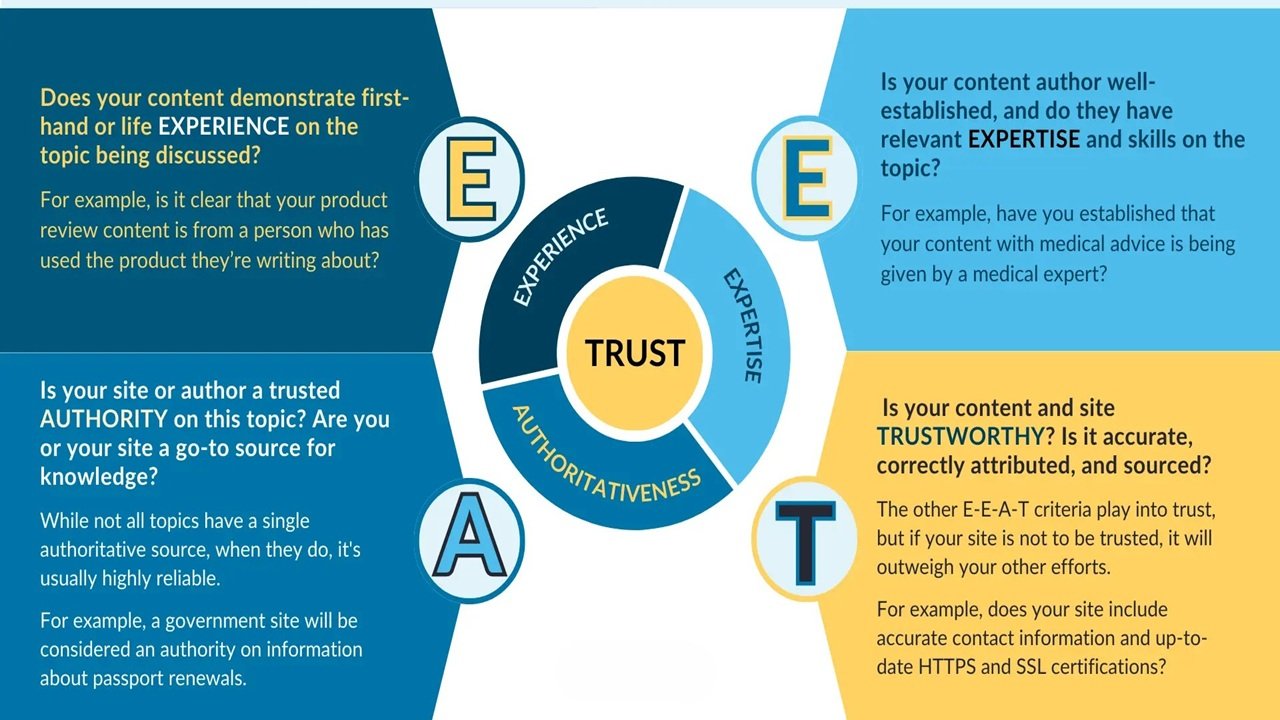
Error 3 – Still Keyword Stuffing When Semantic SEO Is What Ranks
Google’s understanding of language has changed completely. Repeating a keyword 15 times does nothing and often triggers over-optimization penalties. What actually signals relevance in 2026 is topical depth. covering the entities, sub-concepts, related questions, and contextual language that belongs around your main topic.
Think about how Google reads content the way a subject matter expert would. A true expert writing about ‘core web vitals‘ would naturally mention LCP, INP, CLS, rendering, hydration, and real user monitoring not just the phrase ‘core web vitals‘ repeated endlessly. That contextual richness is what Semantic SEO is about.
✓ THE FIXMap out the Semantic SEO field around your topic before writing. Identify the key entities, related subtopics, questions people have at each stage of understanding, and the vocabulary domain experts use. Structure your content to cover all of it naturally not as a checklist, but as a genuinely thorough explanation. |
Error 4 – Ignoring AI Search Optimization
AI Search Overviews, Perplexity, Chat GPT with browse enabled, Gemini these are now real traffic sources, and they pull content very differently than traditional blue-link search. They reward concise, direct, well-structured answers from sources they already trust. If your content buries the answer three paragraphs deep in a slow-loading webpage with no schema markup, you’re invisible to these systems.
2026 REALITY CHECKApproximately 40% of queries now trigger an AI Overview. Five or more AI platforms are actively pulling web content. Structured, answer-first content earns citation rates roughly 3 times higher than unstructured prose. |
✓ THE FIXLead every section with a direct answer then expand. Use FAQ blocks with clear question-and-answer structure. Add proper schema markup. Write data-backed statements that AI engines can confidently cite. Think of GEO (Generative Engine Optimization) as a layer that runs alongside traditional SEO, not a replacement for it. |
Error 5 – Trying to Rank With Isolated Articles
A single well-written article used to be enough to claim a keyword. That era is over. Google now rewards sites that demonstrate broad, deep, consistent expertise across an entire topic not just one piece of it. A site with 30 interconnected articles about SEO will routinely outrank a site with one ‘ultimate guide’ that covers the same keyword.
This is what topical authority SEO means in practice. It’s not just about writing volume, it’s about covering a topic from enough angles that Google recognizes your site as a genuine authority in that space.
✓ THE FIXBuild a content cluster around every core topic you want to own. Start with a pillar page that covers the broad topic, then create supporting articles for each major subtopic. Connect them with contextual internal links. For an SEO site, that pillar could be ‘SEO strategy’ with spokes covering crawlability, schema, Core Web Vitals, internal linking, and AI optimization separately. |
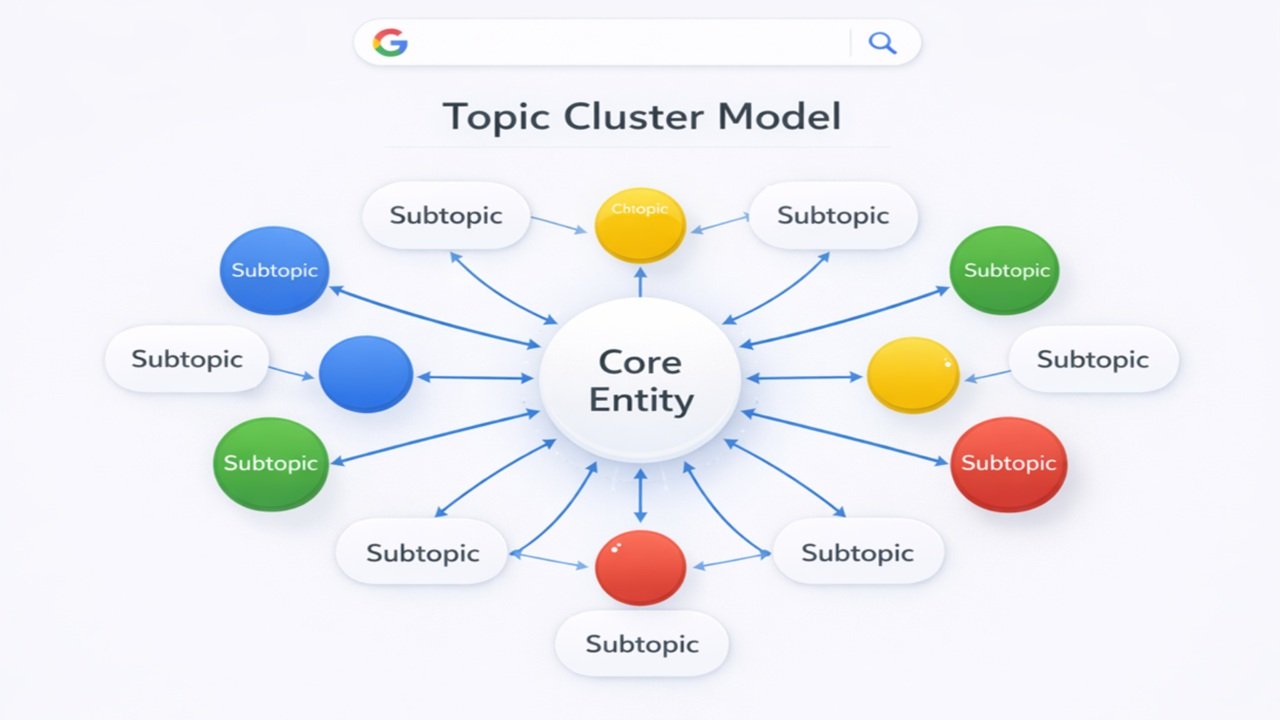
Error 6 – Letting Technical SEO Debt Accumulate
A beautiful, well-written Webpage that Google can’t properly crawl, render, or index will rank nowhere. Technical SEO is the foundation everything else sits on and it’s one of the most neglected areas, especially on growing sites where new content is published faster than anyone audits what’s underneath.
Duplicate content without canonical tags, orphaned pages, JavaScript-heavy architectures that block rendering, crawl depth beyond four clicks from the homepage. these issues compound over time and silently drain the authority of your entire site.
✓ THE FIXRun a proper technical audit quarterly, not just once at launch. Check your XML sitemap is current and clean, that your robots.txt isn’t accidentally blocking important pages, that duplicate URLs have canonical tags, and that your crawl depth is manageable. If your site runs heavy JavaScript, test rendering in Google Search Console’s URL inspection tool regularly. |
Error 7 – Ignoring Core Web Vitals in 2026
Core Web Vitals have been a ranking factor for a few years now, but the standards have tightened and the measurement has gotten more precise. The shift from FID to INP (Interaction to Next Paint) was significant INP is a much stricter measure of page responsiveness, and many sites that passed under the old metrics are now failing.
2026 TARGETSLCP under 2.5 seconds • INP under 200ms • CLS under 0.1. These aren’t aspirational benchmarks — sites that consistently fall outside these ranges face measurable ranking disadvantages in competitive niches. |
✓ THE FIXUse Google’s PageSpeed Insights on your actual top-performing pages — not just the homepage. Prioritize LCP by preloading your hero image and avoiding render-blocking resources. Tackle CLS by setting explicit width and height on all images and embeds. For INP, reduce JavaScript execution time on interaction events. |
Error 8 – Treating Internal Links as an Afterthought
Internal linking is probably the most underutilized lever in Search engine optimization. Most sites either ignore it entirely or add links randomly at the end of a post. Neither approach is effective. Google follows internal links to understand which pages you consider most important, how topics relate to each other, and how to distribute authority across your site.
Orphan pages those with no internal links pointing to them are essentially invisible to both Google and your readers, no matter how good the content is.
✓ THE FIXEvery new piece of content you publish should link to at least 3 to 5 relevant existing pages. Every existing page should receive at least one new contextual internal link from a related post. Use descriptive anchor text that describes the destination page’s content not generic phrases like ‘click here.’ Audit for orphan pages every six months and connect them. |
Error 9 – Not Understanding How Entity-Based SEO Works
Google doesn’t just rank keywords anymore. it ranks entities and their relationships. Your brand, your authors, the topics you cover, the people you cite all of these are entities in Google Knowledge Graph. The more clearly you establish what your site is about at an entity level, the more confidently Google can rank you for relevant searches.
This is why consistent topical coverage matters so much. It’s not just about content volume, it’s about entity association. A site that writes consistently about ‘technical SEO’ becomes the entity associated with that concept in Google’s model of the web.
✓ THE FIXUse schema markup to clearly define your organization, authors, and content types. Ensure your author pages have verifiable external presence (LinkedIn, industry publications, etc.). Write consistently within your niche — entity authority comes from depth and consistency, not occasional broad coverage. |
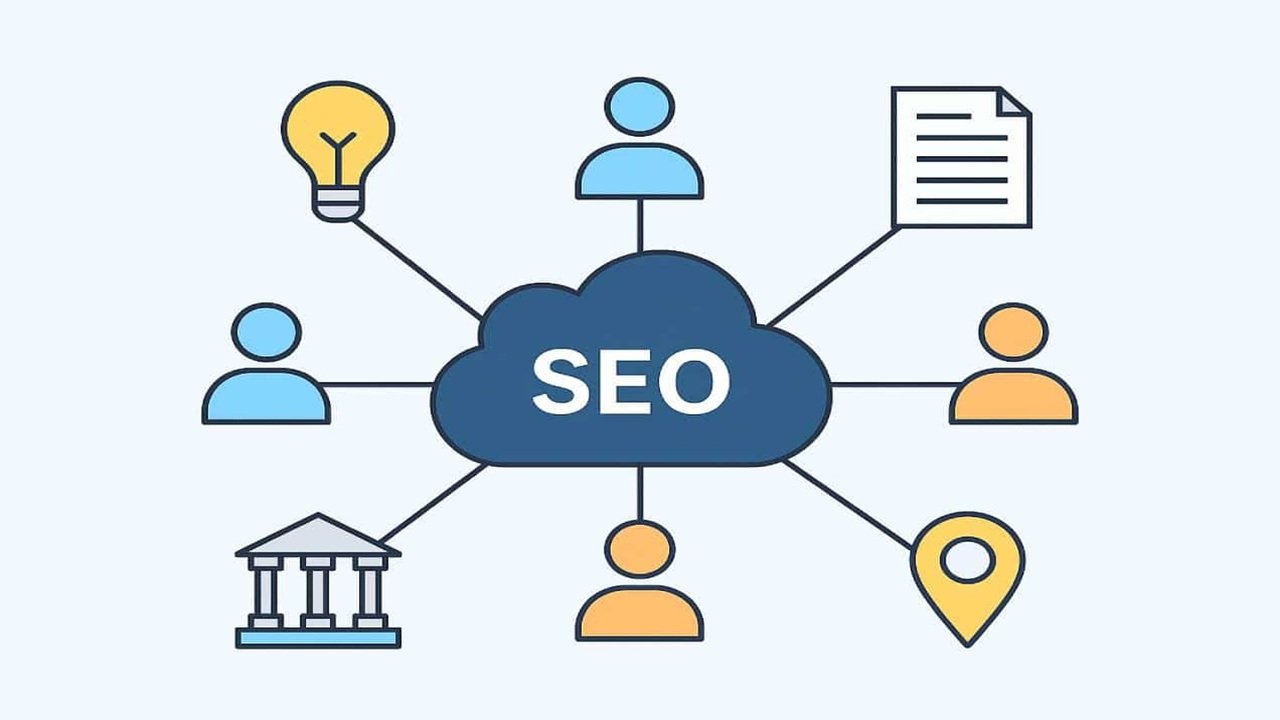
Error 10 – Confusing Length With Depth
A 4,000-word article that says the same thing 12 different ways is not a high-quality piece of content it’s a padded one. Google has gotten remarkably good at distinguishing genuinely helpful, information-dense content from long content that’s trying to fake depth through repetition and filler.
Winning content in 2026 earns its length. It includes real examples with specific outcomes, data with proper attribution, tables that organize genuinely complex information, and insights that you can only get from actual expertise or direct experience.
✓ THE FIXBefore publishing, apply the ‘so what’ test to every paragraph. If a section doesn’t add a genuinely new piece of information or perspective, cut it. Add what’s missing: expert commentary from real practitioners, original data, specific numbered examples, and visuals that illuminate rather than decorate. |
Error 11 – Publishing Raw AI Output Without Human Expertise
Google’s position on AI content is frequently misquoted. They don’t penalize AI-assisted content. They penalize low-quality content and a lot of AI-first content happens to be exactly that generic, surface-level, factually shaky, and indistinguishable from a thousand other articles on the same topic.
The sites winning with AI-assisted content treat AI as a research assistant or first-draft tool never as the final author. The human layer is what adds the experience, the judgment, the real-world nuance, and the E-E-A-T signals that make content worth ranking.
✓ THE FIXUse AI to draft structure, generate FAQ ideas, and surface related subtopics. Then rewrite extensively with your own expertise, add your own examples and data, check every factual claim, and apply a full semantic and E-E-A-T layer before publishing. The workflow is : AI Draft → Human Expertise → Semantic Enrichment → E-E-A-T Optimization. |
Error 12 – Over-Optimizing On-Page SEO Elements
There’s a version of on-page SEO that helps and a version that hurts. Stuffing your primary keyword into the title, H1, first paragraph, every H2, the meta description, and the image alt text is no longer best practice. it’s a signal of over-optimization that can actively suppress rankings.
Natural language optimization in 2026 means your title tag should be compelling first, keyword-integrated second. Your H2s should describe what the section actually covers, not serve as keyword containers. Entity placement matters more than keyword density.
✓ THE FIXWrite your title for a human reader who’s scanning a results page. Include your primary keyword naturally usually once, near the front. Use H2s to structure genuine subtopics. Use semantic variants, synonyms, and related entities throughout the body. Let the content feel like it was written by someone who knows the topic deeply. |
Error 13 – Publishing Titles That Nobody Clicks
Your title tag is doing two jobs simultaneously satisfying Google’s relevance model and convincing a real human to click. Most SEO content is optimized for only the first job. The result is titles that rank but don’t get clicked and consistently low CTR is a signal that feeds back negatively into rankings over time.
A title like ‘SEO Guide 2026‘ is forgettable. A title like ’15 SEO Mistakes Killing Your Rankings in 2026 — And How to Fix Them’ creates curiosity, signals specificity, promises a payoff, and implies the reader has something to lose by not clicking. That difference in CTR compounds dramatically at scale.
✓ THE FIXStudy your Search Console CTR data and identify your lowest-performing titles relative to position. Rewrite them with specific numbers, a clear benefit, or a tension that creates curiosity. Test year-tagged freshness indicators, problem-framing angles, and power words that imply urgency or insider knowledge. |
Error 14 – Skipping Schema Markup Entirely
Schema markup isn’t just about rich snippets in the traditional SERP sense anymore. In 2026, schema is also how AI-powered search engines parse and categorize your content, it’s entity communication at a machine-readable level. Sites without proper schema are significantly harder for AI systems to classify and cite accurately.
At minimum, every content site should have Article, Author, Organization, Bread-crumb List, and FAQ schema markup implemented correctly across their content types. More specific schema like How To, Review, or Product adds another layer of visibility for relevant content.
✓ THE FIXStart with the foundational types Organization and Author at the site level, Article on every blog post. Add FAQ schema to any content that includes a question-and-answer section. Validate everything with Google’s Rich Results Test before deploying. |
Error 15 – Treating Search Engine Optimization as a Single-Channel Strategy
The final and arguably most strategic mistake is optimizing only for the Google blue-link SERP. In 2026, organic search visibility is distributed across Google AI Overviews, Perplexity citations, Chat GPT Browse responses, YouTube search, Reddit’s growing search presence, Bing, and more. Sites that only think about traditional keyword rankings are leaving significant traffic and brand authority on the table.
Building brand entity recognition the kind that makes Google and AI engines trust and cite you proactively requires consistent presence across multiple platforms, not just a high-ranking blog.
✓ THE FIXMap your content strategy to multiple surfaces. Repurpose strong written content into YouTube explainers, Reddit contributions, and structured FAQ content optimized for AI citation. Build your brand entity through consistent niche coverage, PR mentions, and authoritative external links. Think ‘search visibility’ more broadly than any single platform’s algorithm. |
||
THE 2026 SEO RANKING FORMULASEO Success = E-E-A-T + Semantic SEO Depth + Technical Foundation + UX Signals + Entity Authority + AI Search Optimization |
||
Frequently Asked Questions – SEO
1. What are the biggest SEO mistakes in 2026?
Honestly? Still doing what worked in 2019. People obsess over keywords but publish content that says nothing new. Thin pages, zero internal links, slow load times Google's tired of it. Rankings drop and nobody knows why. The sites winning right now actually cover topics properly and write for humans first.
2. How does semantic SEO work?
You stop thinking in keywords and start thinking in topics. If someone searches about coffee brewing, they probably also want to know about grind size, water temperature, ratios. Cover the whole subject naturally and Google figures out your page belongs in more searches than just the one phrase you targeted.
3. What is entity SEO?
Google basically has a giant web of who's who and what's what. Your brand, your authors, your niche — all of it gets connected. The more consistently you talk about your subject and the clearer your credibility signals are, the more Google starts treating your site like it actually belongs there.
4. How to optimize content for AI search?
Answer the question fast, in plain language. Don't make people scroll through your life story before getting to the point. AI tools grab content they can actually understand and verify quickly. Short paragraphs, clear headings, real facts. If your page reads like a textbook intro, it probably won't get cited.
5. What are Core Web Vitals?
Three things Google watches how fast your page loads, whether buttons actually respond when clicked, and if your layout jumps around while loading. Most people ignore these until rankings drop. Fix your hosting, compress images, cut bloated scripts. A fast stable page just works better for everyone using it.
Conclusion
Search Engine Optimization in 2026 is driven by semantic SEO relevance, real expertise, technical performance, AI search optimization, and strong user experience signals not outdated keyword tricks. Websites that align with search intent , topical authority SEO, and Semantic optimize for both Google and AI-driven search platforms will dominate rankings.
If your business needs future-ready SEO Company in Jaipur built for sustainable growth, Arihant Global can help you build stronger organic visibility and long-term Ranking.
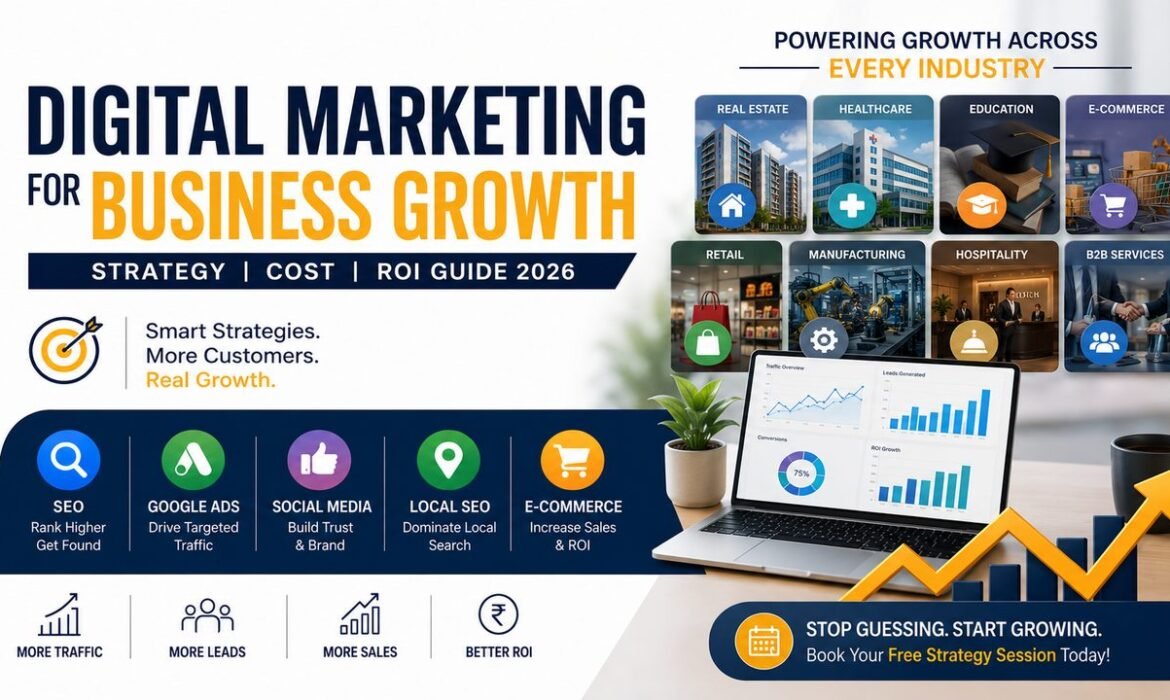
Digital Marketing for Business Growth in India: Strategy, Cost & ROI Guide 2026
“From Clicks to Customers: A Practical Growth Blueprint for Indian Businesses in 2026”
Most Indian businesses don’t have a customer problem. They have a visibility problem. they’re invisible at the exact moment a buyer opens Google and searches for exactly what they sell.
At Arihant Global, we work directly with founders across Jaipur, Delhi, Banglore and Ahmedabad every week and the frustration is consistent. money is being spent online, but the phone isn’t ringing. Traffic comes in, but sales don’t follow. That gap between digital activity and actual revenue is what this guide closes.
A serious digital marketing for business growth India is not about posting daily on Instagram or running random ads. It’s about building a predictable revenue engine — one that works even when you’re not watching it. Here is exactly what works in 2026.
What Is a Digital Marketing for Business Growth in India?
A digital marketing for business growth india is a structured, Multi-channel Marketing that moves a complete stranger through awareness, consideration, and purchase — using platforms like
Google Search, Meta Ads, Instagram, and WhatsApp API — while measuring the cost of every step.
The key word is structured. Disconnected tactics some SEO here, random Facebook posts there, a Google Ad with no matching landing page are not a strategy. They are a budget drain. A real digital growth strategy for companies defines three things precisely:
- which platforms capture your buyer’s attention,
- what message converts that attention into a lead,
- what each customer actually costs to acquire.
The 3-Stage Digital Growth Framework
Every profitable online business growth India strategy follows the same architecture.
Stage 1 — Awareness (Top Funnel):
SEO and social media ensure you appear when buyers start searching for a solution. This is your organic traffic growth strategy working 24 hours a day at a declining cost per visitor.
Stage 2 — Conversion (Middle Funnel):
Google Ads and Conversion Rate Optimization (CRO) turn that attention into qualified leads. This is where your performance marketing strategy India lives — measured entirely by Cost Per Lead (CPL) and Return on Ad Spend (ROAS).
Stage 3 — Retention (Bottom Funnel):
WhatsApp Business API and email marketing automation keep buyers engaged after the first purchase, extending Customer Lifetime Value (CLV) at a fraction of the original acquisition cost.
When these three stages are connected and measured, your multi-channel marketing approach drives consistent revenue and your cost per customer drops every month.
Digital Marketing Strategy for Business Growth In India
1. SEO Strategy for Business Growth in India
Search Engine Optimization is your permanent digital real estate. Unlike paid ads that stop the moment the budget runs dry, a properly built SEO strategy compounds month over month.
Ranking on page 1 of Google in 2026 requires topical authority SEO — covering your subject more completely and credibly than every competitor in your niche. Google’s ranking factors now reward Intent Based semantic SEO (meaning-based content) and entity-based SEO over simple keyword repetition.
A strong business growth through SEO strategy covers three layers:
- technical SEO (Core Web Vitals, crawlability, schema markup),
- on-page optimization (high-intent keywords, NLP-friendly content, user intent optimization),
- off-page authority (backlinks from relevant Indian industry sources and local citations).
Realistic timeline: Expect ranking movement between months 3 and 6. Consistent, high-quality lead generation typically stabilizes by month 8. Any agency promising page-1 results in two weeks is lying.
2. Paid Ads Strategy: Google Ads vs Meta Ads
When you need revenue this week, paid ads Marketing are the lever you pull but without discipline, Google and Meta will burn your budget on irrelevant clicks.
Google Ads Strategy India :-
Google Ads captures existing demand. The buyer is already searching. A properly structured campaign with exact-match keywords, intent-matched landing pages, and a clean negative keyword list can dramatically Reduce Cost Per Click.
Proof: A Jaipur-based service business reduced their cost per lead from ₹780 to ₹310 within 45 days by restructuring ad groups and building dedicated landing pages for each service.
Meta Ads :-
create new demand. The buyer wasn’t thinking about your product — until your ad stopped the scroll. Meta works best for visual product categories, local brand awareness, and retargeting cart abandoners.
The Decision rule: Google captures today’s buyers. Meta builds tomorrow’s pipeline. Most growing Indian businesses need both running simultaneously and SEO running underneath to lower long-term acquisition costs.
3. Social Media Marketing Strategy: The Reality Check
Followers are not revenue. A 50,000-follower account means nothing if those people never open their wallets.
A genuine social media marketing strategy starts with one question:
Does my audience trust me enough to buy from me?
Your brand awareness strategy on Instagram should show behind-the scenes work. Real client results with specific numbers, and quick useful tips that prove expertise before anyone pays you a rupee.
Social media is the trust checkpoint buyers do before calling. If your profile looks inactive or generic, you’ve already lost half those leads before they ever contact you.
4. Local SEO Strategy for Indian Businesses
If you run a clinic, retail store, or local service company, Google Maps is your single highest-ROI lead generator. When a user searches “near me,” they’re typically ready to contact a business within 24 hours.
Your local SEO Service rests on four pillars:
- Google Business Profile optimization (accurate categories, geotagged photos, weekly posts),
- Consistent review velocity (new reviews every week — not a burst from two years ago),
- NAP consistency across Just Dial, India MART, and Sulekha,
- Geo-tagged visual content
As AI-driven local search becomes the default through Google Search Generative Experience. Businesses with complete, optimized google business profiles will capture a disproportionate share of zero-click search visibility. Arihant Global’s Google My Business Optimization Jaipur Strategy have consistently delivered first-position map pack results across healthcare, education, and professional services.
5. E-Commerce Marketing Strategy for Indian Brands
Traffic means nothing if the cart stays empty. A Result-Driven E-commerce marketing Company connects the ad click directly to a frictionless checkout then recovers the 60–80% of buyers who abandon before completing purchase.
The proven e-commerce growth India playbook:
Meta prospecting and Google Shopping for traffic → dedicated product landing pages for conversion → WhatsApp API abandoned cart sequences (50–60% open rates in India) → post-purchase email flows to drive repeat orders and maximize CLV.
An E-commerce Marketing ROI strategy doesn’t measure impressions. It measures purchases completed within 30 days of the first ad click.
Conversion Rate Optimization: Your Fastest Growth Lever
Getting 10,000 visitors is pointless if your site is slow, confusing, or lacks a clear next step. Conversion rate optimization is the process of removing friction between intent and action — and it’s where the fastest, cheapest growth usually hides.
Common high-impact CRO strategy fixes for Indian businesses: moving the phone number above the fold on mobile, replacing “Contact Us” with a specific CTA like “Book a Free Audit,” compressing images to cut load time below 2 seconds, and adding a WhatsApp chat widget to capture visitors who won’t fill forms.
Industry-Specific Digital Marketing Approaches
- Real estate: Google high-intent search traffic + Meta video ads to drive site visits.
- Healthcare digital marketing: local SEO is non-negotiable — patients search during symptoms.
- B2B digital marketing India: industrial SEO and LinkedIn dominate, with WhatsApp for nurturing postcontact.
- Education marketing strategy: retargeted ads, testimonial-heavy landing pages, and webinar registrations across the extended admissions journey.
Copy-paste marketing drains budgets. Every vertical requires a different approach.
Digital Marketing Cost in India (2026 Benchmarks)
| Service | Monthly Cost | What You Get |
| Local SEO | ₹15,000 – ₹25,000 | GBP optimization, citations, map pack ranking |
| National SEO | ₹25,000 – ₹60,000+ | Topical authority, backlinks, technical SEO |
| Google Ads Management | ₹15,000 flat or 15–20% of spend | Strategy, copy, landing page coordination |
|
Full Multi-Channel Retainer |
₹35,000 – ₹1,00,000+ | SEO + Paid + Social + CRO + Reporting |
Tip : If an agency quotes ₹5,000 for “everything,” they’re either outsourcing your work to juniors or running tactics that will eventually penalize your domain.
How to Measure Digital Marketing ROI in India
Track three numbers nothing else matters more:
- ROAS: Did ₹1 in ads produce ₹4 in revenue? Healthy benchmarks: 3x for real estate, 5–8x for e-commerce.
- CPA (Cost Per Acquisition): What did one paying customer cost? Must stay below average transaction value.
- CLV (Customer Lifetime Value): A customer worth ₹50,000 over five years justifies a ₹3,000 acquisition cost. One worth ₹5,000 doesn’t.
When ROAS, CPA, and CLV are tracked together, digital marketing ROI India decisions become straightforward and budget moves to whatever channel has the best unit economics.
Why Digital Marketing Is Not Working for Your Business
Three causes appear in almost every failing campaign I’ve audited:
- Wrong targeting — broad match keywords attracting irrelevant searches, budget spent on information-seekers instead of buyers
- Weak landing pages — the ad promises a specific solution, the link goes to a generic homepage, the visitor leaves in under 10 seconds
- Zero follow-up speed — the lead was generated, then sat in a spreadsheet for 24 hours while a competitor called first
Fixing these three things, in order, resolves most digital marketing failures faster than any budget increase.
How to Choose a Digital Marketing Agency in India
Require transparent reporting showing CPA, ROAS, and lead quality not just clicks and reach. Confirm an in-house team exists, not a reseller operation. Ask for references from your specific industry. Walk away from any digital marketing agency India that guarantees #1 rankings in days, charges suspiciously below market rate, or reports only vanity metrics.
A professional Digital marketing Company acts as your external Chief Marketing Officer accountable to your revenue, not your follower count.
Frequently Asked Questions
How long does digital marketing take to show results?
Google Ads generates leads within 48– 72 hours of a proper launch. SEO takes 3–6 months to rank and stabilizes into consistent lead flow by month 8.
Which channel gives the best ROI in India?
SEO delivers the best long-term ROI as cost per lead decreases over time. Google Ads delivers the fastest — but cost stays fixed without active optimization. Businesses running both build the most resilient revenue model.
How do I reduce my Google Ads cost per lead?
Switch from broad match to exact/phrase match, build dedicated landing pages for each ad group, and add a thorough negative keyword list.
These three changes typically cut CPL by 30–60% within 45 days.
How do I improve my Google Business Profile ranking?
New reviews every week (not a burst from years ago), complete profile sections, geotagged photos uploaded regularly, and a 24-hour response rate to all reviews.
Final Thoughts
Real business growth through digital marketing doesn’t happen by accident. It happens when the right buyer finds you at the right moment, trusts you enough to make contact, and gets followed up with before a competitor does.
If your digital spending isn’t converting to sales, the market isn’t the problem the system is. Build the structured digital revenue engine that consistently growing Indian businesses are already running.
Stop guessing with your budget. Book your free Digital Marketing audit with Arihant Global today and find exactly where your current strategy is leaking revenue.
Disclaimer
This blog by Arihant Global is for educational and informational purposes only. Digital marketing results vary based on competition, industry, budget, and implementation quality. We do not guarantee specific rankings, leads, or revenue outcomes. Businesses should evaluate strategies based on their unique goals, market conditions, and operational requirements.