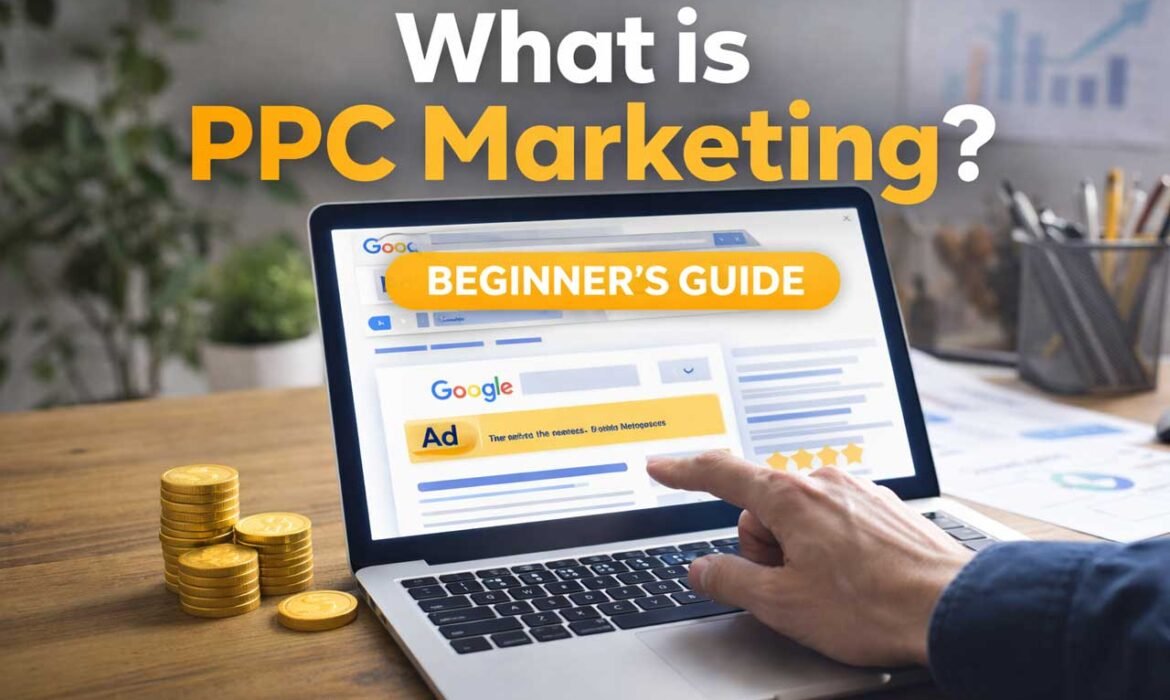
What is PPC marketing? Complete Pay-Per-Click Marketing Guide for Beginners
If you want traffic and leads without waiting months for SEO to kick in PPC marketing is usually the fastest way to get started. You’ve probably seen it already those top results on Google marked as “Ad.” Businesses pay to be there, but not blindly. When done right, those clicks turn into real customers.
So, what is PPC marketing, and how do you use it without wasting money?
Over the years, I’ve seen two types of campaigns. The first spends aggressively and gets average results. The second is more focused better keywords, tighter targeting, cleaner landing pages and often wins with a smaller budget.
At Arihant Global, the goal is simple – bring in clicks that matter, not just traffic numbers.
In this guide, I’ll walk you through how pay per click marketing works, where beginners usually slip up, and what actually makes campaigns perform.
What is PPC marketing?
PPC Marketing or pay-per-click, is an Paid Marketing in which an advertiser pays for each time an advertisement is clicked by the user. therefore, you are paying to advertise your product. It’s not just that you have an announcement out there. you are paying when a person shows interest in what you are promoting and takes action by clicking through to your site.
In short:
PPC is a method of advertising in which businesses pay an amount each time a user clicks on its advertisement to access their website or landing page.
PPC (pay-per-click) marketing explained
Let’s make it real.
Suppose you own a small service business. A potential customer looks up “best digital marketing company near me.” Your advertiser showed to the first result page, and therefore, you’re paying for that click. If the customer does not click on your advertisement, then you do not pay for that marketing expense.
That’s the fundamental concept of PPC.
You can use Google Ads PPC to match your advertisements with potential customers as they are searching for a particular product, based on their geographical position, and the contextual nature of your advertisement.
The biggest advantage to PPC is that you’re not interrupting the consumer. rather, you’ll be there waiting for them at the time that they are searching for your service.
Why PPC Matters for Businesses
PPC isn’t just about getting visibility. It’s about getting the right kind of visibility.
Here’s why it works:
- Immediate traffic – You don’t have to wait months to be seen
- High intent audience – People are already searching for solutions
- Flexible budget – Start small and scale when it works
- Clear performance tracking – Every click and conversion is measurable
- Quick adjustments – You can pause or improve campaigns anytime
In many cases, the business that targets better not the one that spends more gets better results.
How PPC Advertising Works (Step-by-Step)
Once you understand the process, everything becomes easier to manage.
1. Keyword Research
This is where everything starts.
You choose the keywords your potential customers are typing into search engines. The goal is to match real intent, not guess.
For example:
- “PPC for beginners”
- “Hire SEO expert near me”
From experience, more specific keywords often bring better results because they reflect clear intent.
2. Ad Creation
Your advertisements should create a relevant connection to the person reading your ad at the moment they read it. A good advertisement Matches your keyword, meets a specific need directly, has a clear call to action.
Consider it responding to the end-user’s question in one or two lines.
3. CPC Cost
You decide how much to spend for each click (CPC).
There is one thing that is often overlooked by most beginners. By increasing CPC amount, you are not increased in where your ad will potentially rank. Here is how to fix Higher CPC problem.
4. Ad Auction Basics
There is a hidden auction that takes place behind the scenes for Google Ads every time a search is completed.
Your ad position is determined by:
- Maximum bid amount
- Your ad’s relevancy
- Expected click rate
- Landing page Quality
This is why, over a well-optimized campaign, you can outbid other advertisers by more than double but still not rank higher.
5. Landing Page Matters More Than Most Think
This is where many campaigns quietly lose money.
I’ve seen ads bring in a lot of clicks, but conversions stayed low because the landing page didn’t match the user’s expectation. People clicked but didn’t stay.
A High-Converting Landing Page should:
- Match what the ad promised
- Load quickly on mobile
- Focus on one clear action
- Build trust immediately
Even small improvements here can make a noticeable difference. For example, improving a landing page conversion rate from 2% to 4% can double your results without increasing ad spend.
Types of PPC Ads
Different formats serve different goals.
1. Search Ads
- Text ads that appear on search results.
- Best when users are actively looking for something specific.
2. Display Ads
- Visual ads shown across websites.
- Useful for staying visible and reminding users about your brand.
3. Shopping Ads
- Product-based ads that show images, prices, and details.
- Ideal for e-commerce businesses targeting ready buyers.
4. Social Media Ads
- Ads on Meta platforms like Facebook or Instagram.
- These are effective when targeting users based on interests, behavior, and demographics.
PPC vs SEO: Which One Do You Prefer?
They Are for Distinct Objectives.
- SEO Generates Long-Term, Steady Traffic.
- PPC give Instant Exposure With Faster Testing.
PPC Is Recommended for Fast Results and SEO Is Recommended for Long-Term Growth.
Most Businesses Either Use PPC or SEO for Fast Results and Long-Term Growth.
Common Errors in PPC
Common Errors in PPC Are Commonly Seen When Launching New Campaigns.
A. Incorrect Keyword Targeting
Broad Keywords Can Generate Traffic, But Not Always Appropriate Visitors.
B. Landing Page Is Not Relevant
If You Click But Don’t Make a Purchase, You Have Wasted Your Marketing Budget
C. Lack of Tracking
Without Tracking Means You Will Not Know What is Successful
D. Budget Misuse
Immediately Spending Too Much Money May Result in not Having Money for Testing.
Expert Paid Marketing Tips for Better Results
Paid Marketing Tips are based on what actually works, not theory.
- Start with a smaller budget and test first
- Focus on high-intent keywords instead of broad ones
- Write ads that closely match user searches
- Use negative keywords to filter out irrelevant clicks
- Track conversions from the beginning
- Continuously improve your landing pages
One pattern stands out campaigns usually improve through small adjustments, not big changes. Consistency matters more than quick wins.
FAQs
1. What is PPC marketing in simple words?
It’s a form of advertising where you pay only when someone clicks on your ad.
2. Is PPC good for beginners?
Yes. Starting with a small budget and learning from real data makes it easier to improve over time.
3. How fast can PPC bring results?
Traffic can start as soon as your ads go live, often within hours.
4. What matters more in PPC—budget or strategy?
Strategy. A well-targeted campaign often performs better than a high-budget one with poor targeting.
5. Can PPC work for small businesses?
Yes, it’s one of the most effective ways for small businesses to generate leads quickly.
Conclusion
When done properly, PPC marketing allows you to connect with those already looking for what you provide. This is why it is such an effective advertising tool. It’s not simply about spending more money but instead looking to see how each component fits together. The combination of keywords, ads, landing pages and tracking will determine the success of a campaign.
Arihant Global has always been focused on creating campaigns that achieve results beyond the click-through rates (CTR) of individual ads. developing an understanding of how to better structure your PPC campaigns by doing so repetitively will allow you to take less risk with the purchase of PPC and create an effective way to generate revenue.
Follow a Practical approach with Arihant Global For Optimize your PPC ads and continually test your assumptions regarding what is relevant to your potential customers and you will achieve real results.
Disclaimer
This text is only for knowledge purpose and should not be considered as professional advice. We try to be as accurate as possible but Arihant Global does not warrant any results or completeness of the final product. You are using this information at your own risk. For personalized solutions, professional consultation, compliance guidance, do not hesitate to reach out to our expert team.