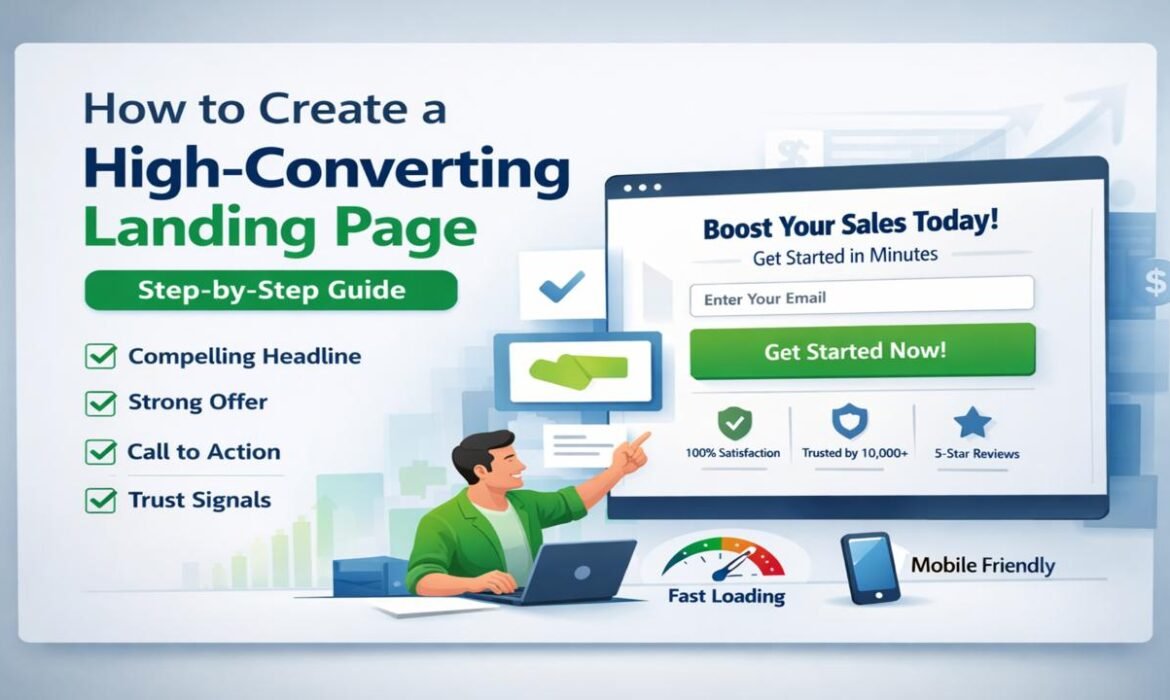
How to Create a High-Converting Landing Page (Step-by-Step Guide)
You have launched a marketing campaign, you are spending money on ads, and the traffic is finally coming to your website. But then, nothing happens. Visitors arrive, look around for a few seconds, and leave without signing up or buying anything. This is an incredibly frustrating scenario that many business owners face. The missing piece of the puzzle is almost always a dedicated, well-crafted landing page. Simply sending traffic to your homepage is a major mistake. you need a page that is laser-focused on one single goal.
At Arihant Global, we understand that a landing page optimization for service business or e-commerce store is the single most important factor in determining your campaign’s success. It acts like a digital “production line,” taking raw traffic and refining it into qualified leads or customers. The digital landscape has changed massively, and generic advice won’t work in 2026. This is why we have created this complete create a high-converting landing page guide. We will walk you through the essential steps, modern strategies, and technical requirements needed to turn your visitors into lasting success. What is a High-Converting Landing Page?
A landing page design is a web page that is designed with the sole purpose of inducing the visitor to take one particular action, whether it is signing up, buying, or booking. Unlike other web pages, A landing page is not filled with distractions but is entirely dedicated to conversion through:
- Clear and persuasive messaging
- Solid value proposition
- Persuasive design structure
- Smart call-to-action (CTA)
If the web page is not inducing the visitor to take one particular action, then it is not a landing page but simply a web page.
Why Landing Page Optimization Matters in 2026
The way people behave digitally has changed. People make decisions faster than they ever have before. Some reasons why landing page optimization is important:
- Shorter Attention Span: Users make decisions in a matter of seconds. If your landing page is not easy to understand in an instant, users will leave.
- Increasing Advertising Costs: As the CPC is increasing every day, it is imperative to optimize the conversion rates.
- Mobile First Experience: Most of your users are accessing your landing pages via mobile devices. Therefore, it is imperative to optimize the user experience for your mobile users.
- Trust-Based Decision Making: Users need to trust your brand before making any purchasing decisions.
- AEO & SGE: Answer Engine Optimization is changing the way we do SEO. Your landing pages need to answer user queries to get featured in AI-based search engine results.
Step-by-Step Guide to Create a High-Converting Landing Page
1. Define One Clear Goal
Every landing page should have only one specific goal.
Examples:
- Download a guide
- Book a consultation
- Start a free trial
- Purchase a product
Having many goals will only confuse visitors and reduce conversions.
2. Write a Benefit-Driven Headline
Your headline is what will make visitors stick around or leave.
It should answer:
- “What’s in it for me?”
Bad Headline:
- Welcome to Our Website
Good Headline:
- Increase Your Leads by 3X with Data-Driven Marketing Strategies.
Focus on benefits, not features.
3. Craft a Strong Value Proposition
Right below your headline, describe:
- What you are offering
- Who it is for
- Why it is valuable
4. Optimize the Above-the-Fold Section
This section will be the first thing visitors see. No need to scroll.
This section should contain:
- Headline
- Sub headline
- Primary CTA
- Trust indicators
If visitors don’t understand your offer, they won’t bother scrolling.
5. Design a Conversion-Focused CTA
CTA stands for “Call-to-Action.” It’s the most important part of your landing page.
- What does a great CTA look like?
- “Get My Free Guide”
- “Book Free Consultation”
- “Start Growing Today”
- What words NOT to use:
-
- “Submit”
-
- What colours should I use for my CTA?
- Make them contrasting
- Where should I place my CTA?
- Place them multiple times on your page
6. Use Clean and Focused Design
Your design should help visitors, not confuse them.
- What are the best practices for designing a landing page?
- What does a simple layout look like?
7. Add Trust Signals
One of the most significant factors in converting visitors is trust.
Add:
- client testimonials
- case studies with real results
- client logos
- certifications and badges Real evidence can build trust and confidence.
8. Optimize for Speed and Mobile
A slow website kills conversions.
Make sure:
- Load time under 3 seconds
- Mobile responsiveness
- Clickable and thumb-friendly buttons
Speed and responsiveness are non-negotiable in 2026.
9. Reduce Friction
The less friction in the process, optimize conversion rate.
Some tips:
- Keep forms super short (Name and Email is enough most of the time)
- Remove all unnecessary fields
- Remove all distractions
- Simplify navigation
The less effort required, the higher the conversion rate.
10. Implement A/B Testing
The top-performing landing page are never complete.
Some ideas:
- Headlines
- CTA text
- Button colors
- Form length
Proven Landing Page Best Practices
Here are some best practices for creating landing pages, which have been proven over time, and which you should always follow:
- Focus on one goal per page
- Messaging should always be clear and direct
- Visual hierarchy should always be employed
- Urgency should always be created with offers like limited-time offers and bonuses
- Genuine images should always be used instead of stock images
- Calls-to-Action should always be placed multiple times across the page
- A/B testing should always be employed
Small improvements can lead to big conversion improvements.
Common Landing Page Mistakes to Avoid
Avoid these common mistakes that can kill your conversions:
- Vague or lacking headline
- Too much text with no structure
- Multiple CTAs
- Lacking trust factors
- Site loads slowly
- Mobile experience is bad
Just correcting these mistakes can boost your landing page significantly.
Frequently Asked Questions
- What is a high-converting landing page?
It is a specific webpage intended to prompt a specific action through powerful messaging, design, and calls to action.
- What is a good conversion rate?
The standard is 2-10%, though some landing pages can achieve significantly higher.
- What are the key factors for an effective landing page?
- Headline
- Value Proposition
- Trust indicators
- Fast loading speed
- Mobile optimization
- CTA
- How important is page speed?
It is extremely important because landing pages that take longer than 3 seconds to load lose a huge percentage of visitors.
- Why should I focus on only one goal on my landing page?
It is because having multiple choices can confuse visitors, whereas having only one goal can increase clarity.
Conclusion
A landing page is not built around any specific trend. It’s built around strategy, simplicity, and psychology.
When you add up:
- Simple and straightforward communication
- CTA’s
- Trust indicators
- Speed and mobile-friendliness
What you get is a formula for success that works. If your existing landing pages aren’t delivering, then it’s time to think differently. Arihant Global helps clients create high-converting landing page that drive business results.
Ready to increase your conversions? Optimize your landing page now.
Disclaimer
The information provided in this article is purely for educational purposes. Though the strategies mentioned in this article have been proven effective in digital marketing and conversion rate optimization techniques, there is no guarantee of success depending on business type, audience, industry, etc. It is recommended that proper analysis be done or professionals consulted before applying any of these strategies. Arihant Global makes no guarantee of any success or results.
Why WordPress is Still the #1 CMS for Business Websites in 2026
Why WordPress is the #1 CMS for Business Websites in 2026
Choosing the perfect platform for your business website is not an easy task, especially with so many platforms available in the market, and you might end up with something that looks okay but is of no use to your business.
At Arihant Global, we have worked with a number of businesses that had this problem, where their website was up and running, but they were getting no leads, no Google rankings, and no flexibility from their website. And in most of these cases, it was not a lack of effort, but a lack of a good platform.
That is why WordPress still stands out in 2026.
It is still one of the best CMS for Business Websites available for businesses to get a website that works, rather than one that exists.
What is a CMS platform and Why It Matters
A Content Management System or CMS is simply a tool that lets you manage your website without needing to code everything from scratch.
For a business, that means:
- You can update content whenever you need
- You’re not dependent on a developer for small changes
- You have better control over how your website performs
The platform you choose can play a big part in making it easy to grow your online presence through a best website designing platform.
Why WordPress Works So Well for Business Websites
- It’s Easy to Work With
You don’t have to be a computer wizard to use WordPress. You can easily add pages, change content, or add a blog to your site. This is great if you need to get something up and running fast, without having to wait on a computer expert.
- It Adapts to Your Business
Every business is unique, and WordPress is a great tool to help you build a website that is unique to your needs. You might need a simple site to list your services, or something a little more complex, and with WordPress, you can make it whatever you want it to be.
- It Supports SEO from the Ground Up
If you aren’t showing up on a search engine, you might be missing out on a lot of potential customers.
With WordPress, you don’t have to worry about SEO, and you can make sure your page is optimized correctly. You can change titles, descriptions, and content without any hassle, and there are other tools to help you keep up with this.
Over time, this makes a big difference in how visible your business is.
- It Grows With You
What might be perfect for your business today might not be enough in a year or so. With WordPress, you don’t have to start over from scratch if you outgrow your current site. You can make your site bigger and better, and you might be able to add other useful tools to help you with your business.
This is best CMS website development platform because it saves you time and money in the future.
- It’s Cost-Effective
Compared to a custom-built website, WordPress is much more practical and useful. You don’t have to break the bank to get a WordPress site up and running, and you still get a great site out of it.
You aren’t stuck in a system where you have to upgrade constantly to get the features you want.
How WordPress Compares to Other Platforms
- WordPress vs Wix
Wix is easy to use, but as your business gets bigger, you might get frustrated with its limitations. WordPress provides more flexibility and room for growth.
- WordPress vs Shopify
Shopify is mainly for eCommerce use. If you need more features than that, WordPress is a better option.
- WordPress vs Custom Websites
Custom websites are powerful tools for any business, but using WordPress can get you similar results in a more efficient way.
How WordPress Helps You Get Leads
A good website doesn’t just attract visitors, it also attracts enquiries.
With WordPress, you can build pages that are optimized to convert visitors. This could be through the use of forms, landing pages, and calls to action. You also have the opportunity to create content that converts visitors over time.
We have seen many businesses improve their flow of leads by creating a better-structured WordPress website.
SEO Benefits That Make a Difference
With WordPress, you can easily implement by using best SEO services for business websites.
Some of the things that help you rank higher include:
- Design that’s mobile-friendly
- Pages that load quickly
- Ability to easily change content
- Internal linking that’s easy to see
When WordPress Makes Sense
WordPress is a great choice if you want a site that will grow with your business, care about showing up on Google, want flexibility in design and features, and plan to generate leads with your site. If you want a site that will help your business, rather than just exist on the internet, this is a great choice.
Common Mistakes to Watch Out For
While WordPress is a great platform, if you don’t use it well, you might still get subpar results.
Some of the mistakes you should avoid include:
- Too many unnecessary plugins
- Bad hosting
- Page speed issues
- Outdated sites
- Poor page structure
Fixing these mistakes is where you’ll see a big improvement.
Choosing the Right Team
The platform may be important, but your website’s construction also plays a role.
When selecting a wordpress website development company, be sure to work with a company that knows both the technical and business aspects.
Not only should your website be visually appealing, but it also needs to be functional.
Why Businesses Work with Arihant Global
At Arihant Global, the goal in creating a website is always to build a website that can help a business grow. Instead of designing a website, the approach is to determine what the business needs.
FAQs
Is WordPress still relevant in 2026?
Yes, it’s still very much in use and very relevant, especially when you consider its ability to adapt to your changing business needs.
Is WordPress good for SEO?
Yes, especially when done right.
Can WordPress handle large websites?
Yes, WordPress can grow with your business.
Is WordPress better than custom development?
In most instances, yes, especially when you consider cost and flexibility.
Final Thoughts
The fact that WordPress remains relevant in the industry speaks volumes. It’s a platform that provides businesses with what they need without making things overly complicated.
If your current website isn’t helping you move forward, then maybe it’s time to consider whether your platform or your approach to it might be holding you back.
Need Help with Your Website?
If you are about to launch a new website or enhance your existing website, it is essential to get the right guidance at the right time to save a lot of effort and time.
At Arihant Global, we help businesses launch a website that is designed with a purpose—built for performance and visibility.
Disclaimer
The information provided in this article is based on practical experience and industry best practices in WordPress website development and digital marketing. Results may vary depending on your business type, website goals, and implementation. The strategies and insights shared reflect the approaches followed by Arihant Global but do not guarantee specific outcomes. Readers are advised to consider their unique business requirements and consult with a professional before taking action.
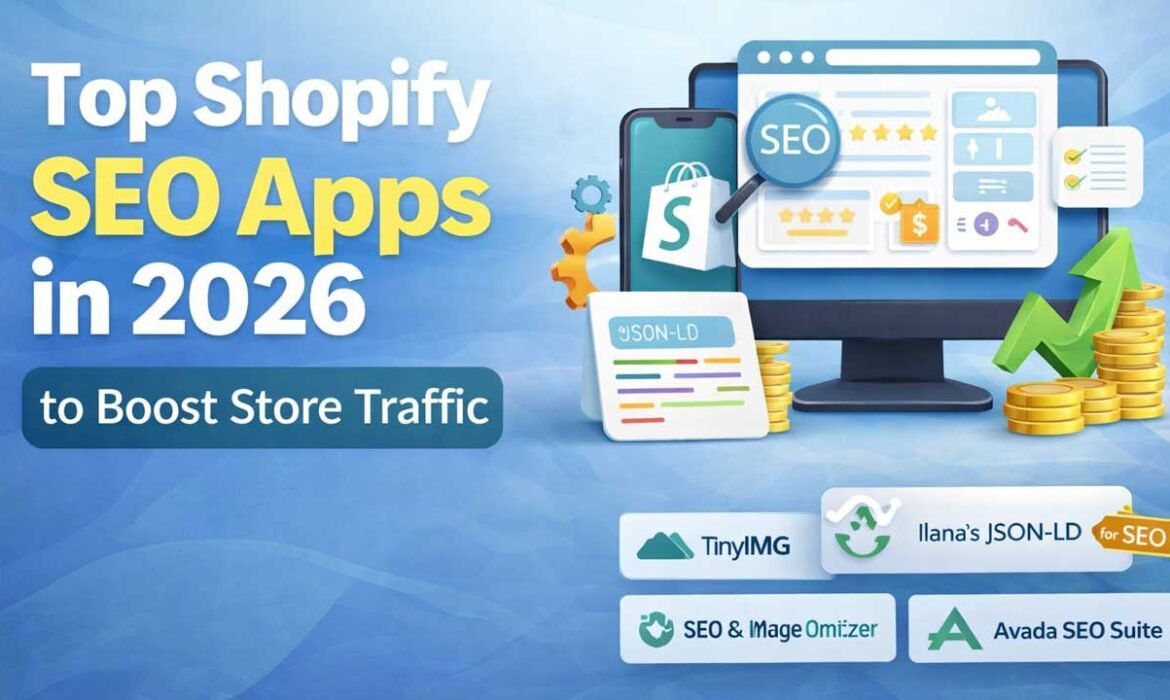
Top Shopify SEO Apps in 2026 to Boost Store Traffic
Top Shopify SEO Apps 2026: Boost Traffic & AI Rankings
Running a Shopify store in 2026 is exciting, but let’s face it, getting noticed can be really tough. You launch your beautiful shop, fill it with great products, and then… wait for the customers. Sadly, just building a store isn’t enough anymore. You need a clear ecommerce SEO strategy 2026. At Arihant Global, we help store owners like you figure this out. The world of online search has changed massively. It’s not just about matching keywords; it’s about Answer Engine Optimization (AEO)—helping AI bots find your unique content. To compete effectively, you need a smart plan. You need Shopify search engine optimization guide that combines foundational work with the powerful help of top Shopify SEO apps 2026.
Finding the best Shopify apps for store traffic 2026 is like hiring an automated assistant for your store. There are so many options, so we want to help you cut through the confusion. A single app rarely solves everything. You often need a well-chosen Shopify SEO suite for small business that handles different tasks efficiently. However, simply installing every app you find won’t help. A core part of our Shopify SEO services India at Arihant Global is first identifying the specific bottlenecks holding your specific store back. We focus on a complete solution, balancing powerful apps with expert strategy.
Understanding Foundational Shopify SEO (Before the Apps)
Many SEO for Shopify store beginners make the mistake of relying only on apps. An app is a tool, not a full solution. Before diving into the top Shopify SEO apps 2026, you must address your store’s foundational structure. Think of your store like a building. No matter how pretty the wallpaper (your apps), the whole thing will collapse if the foundation (your technical SEO) is weak. You need a repeatable production line approach, starting with the basics.
Your technical foundation is critical to how to rank Shopify store on Google. This means addressing the complex, hidden technical stuff.
Core Areas for Technical Shopify SEO:
- Shopify Site Structure Optimization: Your store must be logically organized. Collections and product pages should be easy for bots and humans to navigate. This is a foundational step in any multi-pronged well-executed SEO page 1 checklist.
- Edit Shopify Robots.txt File: This file tells Google and other bots which pages to visit (and which to avoid). A common technical issue is blocking important sections. This requires careful, professional liquid code SEO audit to manage correctly.
- Shopify XML Sitemap Submission: A sitemap is a clear map of your website. You must submit this to Google Search Console to ensure your products are found. Arihant Global often starts a project by fixing these hidden issues.
- Fix Duplicate Content on Shopify: This is a very frequent problem. It happens when multiple URLs lead to the same product page, confusing search engines. A solid plan always addresses this.
Top Shopify SEO Apps in 2026: Navigating the New Landscape
Navigating the New Landscape In 2026, the leading apps are doing more than just sprinkling in keywords. They’re leveraging AI and automation to tackle intricate tasks, getting your store ready for Answer Engine Optimization (AEO) and the evolving AI-driven search environment. If you want to boost organic traffic on Shopify, you need apps that recognize this fundamental shift. Let’s take a look at the key categories and the most reliable apps.
1. Performance & Core Web Vitals Optimization
The single biggest ranking factor in 2026 is speed. Shopify speed optimization apps 2026 are no longer optional. A fast-loading store directly impacts your Core Web Vitals for Shopify scores, which Google relies on heavily. It also significantly improves your Conversion Rate Optimization (CRO)—happy, fast visitors buy more.
A powerful contender in this space is TinyIMG SEO & Image Optimizer. It offers a complete solution by handling:
- Automatic Image Compression for Shopify: It drastically shrinks image file sizes without sacrificing quality.
- Alt Text for Shopify Product Images: It automates the creation of crucial alt text, which helps with both accessibility and image search.
- Broken Link Checker for Shopify Stores: It automatically scans for and fixes those frustrating 404 errors, improving user experience and bot crawlability.
Another excellent choice for a total speed boost is SearchPie AI SEO & Speed. This app is focused on meeting the strict requirements of Core Web Vitals for Shopify. It helps you achieve that coveted “pass” grade, leading to better Search Engine Results Page (SERP) visibility.
2. Mastering Structured Data and Rich Snippets
To stand out on the crowded Search Engine Results Page (SERP), you need more than just a link. You want star ratings, product prices, and stock availability to appear directly in the search results. This requires Shopify JSON-LD structured data apps. This tells Google, Bing, and other AI bots exactly what your page is about.
A trusted name in this category is Ilana’s JSON-LD for SEO. It provides a foundational, rock-solid schema markup that search engines demand. It doesn’t rely on messy app scripts that can slow down your site. At Arihant Global, we frequently suggest this app as a key component of a Shopify SEO toolkit for small businesses, and for good reason: it fosters authentic, enduring E-E-A-T for e-commerce sites.
3. Content and Metatag Automation with AI
Creating original product descriptions and meta titles for a large inventory is a real drain on time. This is precisely where contemporary Shopify AI SEO tools for e-commerce truly excel. These tools take on the bulk of content creation, a critical element of your Ecommerce SEO strategy for 2026.
Shopify Magic AI Features are built directly into the Shopify platform. This includes an:
- AI Meta Tag Generator for Shopify: Quickly generate optimized meta titles and descriptions for your product pages.
- Bulk Product Description AI Rewriter: Take basic manufacturer descriptions and quickly turn them into unique, SEO-friendly product descriptions for Shopify across your entire store.
For even more advanced features, you can look at the Avada SEO Suite or the newly updated Plug In SEO. We often use a detailed Plug In SEO review 2026 to help clients find the best content automation tool. These apps specialize in optimizing Shopify collection pages, which are frequently ignored but are critical for ranking. They also help with Shopify blog SEO best practices and implementing a clever internal linking strategy for Shopify to boost authority.
4. The 2026 Future: AEO and LLMs.txt
This is the most critical update for 2026. Search has evolved into “Answer Engines” (like ChatGPT, Gemini, and Google’s own AI Overview). To get your products recommended by these AI bots, you need a specialized file called llms.txt. A trustworthy app will now include an automated LLMs.txt generator for Shopify. This file tells large language models (LLMs) which pages are your “source of truth,” making it easier for AI to recommend your store. At Arihant Global, we focus heavily on preparing our clients for this future-ready AEO.
Conclusion: Your SEO Production Line is Key
Building a successful Shopify store in 2026 isn’t a mysterious process. It’s about setting up a reliable, high-quality production line. The foundation? A strong technical SEO base. This means a well-organized website and fixing any issues with your robots.txt file. Only then can you truly leverage the robust features of the leading Shopify SEO apps of 2026. While apps like TinyIMG SEO & Image Optimizer, Ilana’s JSON-LD for SEO, and Avada SEO Suite are excellent, they require the guidance of a skilled PPC Marketing or SEO professional to ensure long-term, optimal performance.
Navigating this intricate world can feel daunting. If you’re aiming to understand how to get your Shopify store to rank on Google, or if you’re striving for consistent Page 1 performance across technical SEO, content strategy, user experience, and backlinks, Arihant Global is ready to assist. We’re a reliable all over india, providing expert Shopify Development Agency and Content Marketing Services. Together, let’s turn your Shopify store into a powerful tool for attracting and winning over new clients. We can show you how to start with a simple video that really connects.
Sustained success in technical SEO, content, user experience, and backlinks isn’t a quick fix. Reach out to the digital growth specialists at Arihant Global now and secure your place on Google’s first page. Reclaim your budget with Arihant Global: reducing your cost per click and boosting your search rankings for lasting growth. Let’s build something remarkable together. Proudly Serving from Jaipur – Expanding Globally. Contact us today.
Disclaimer
The content on this website regarding SEO, digital marketing, and CPaaS solutions is for informational purposes only and does not constitute professional advice. Arihant Global makes no guarantees of specific results, sustained Page 1 success, or financial outcomes, as search engine algorithms and online advertising costs constantly change. Any use of this information is at your own risk, and Arihant Global is not liable for any losses or damages.
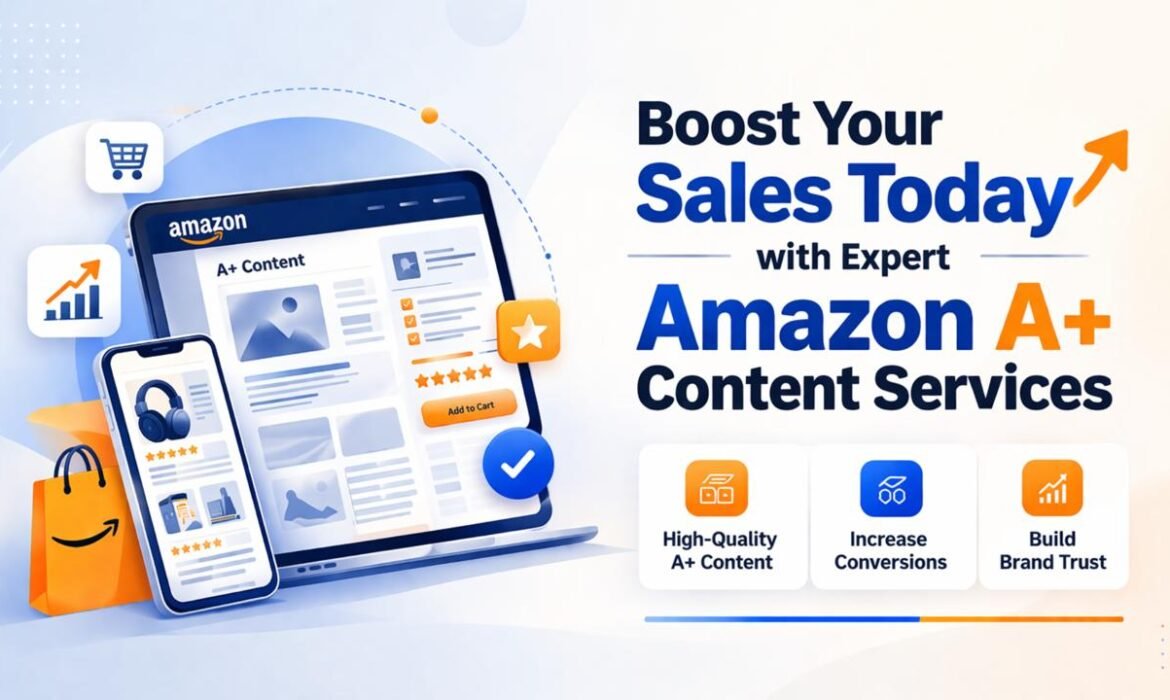
Boost Your Sales Today with Expert Amazon A+ Content Services
Most Amazon sellers face the problem of low conversions, even though they receive decent traffic on their product pages. The reason for this is quite simple: basic product pages don’t really help in creating engagement or establishing trust with the consumer. Today’s consumers are accustomed to a much higher level of content and a seamless buying experience, and this is where Amazon A+ Content Services really help a seller shine. We, at Arihant Global, help brands optimize their product pages for a much higher level of conversions by following a data-driven and creative approach.
What is Amazon A+ Content?
Amazon A+ Content services, also called Enhanced Brand Content services, enables sellers to enhance the content of their product listing using visual content. It is found in Amazon Seller Central and must be approved via Amazon Brand Registry.
A+ content replaces text-based content with the following features:
- High-quality banners and images
- Comparison charts
- Structured content
This is done to enhance the product detail page, making it more engaging and informative.
Benefits of Amazon A+ Content Services
Another common query is, does Amazon A+ content increase sales? And the answer is, yes, it does, but only when done correctly.
Benefits include:
- Increase in conversion rate through a better understanding of the product
- Increase in click-through rate with the use of appealing images
- Increase in customer engagement
- Increase in trust signals in ECommerce websites
It is also helpful in conversion rate optimization Amazon.
Amazon A+ Content Design Service
A professional Amazon A+ content design service will ensure that your content looks good and functions well.
It may involve:
- Well-designed Amazon product page layouts
- Infographics for Amazon product listings
- High-quality visual content for Amazon product listings
- Completely mobile-friendly product pages
A professional Amazon A+ content designer will ensure that your content integrates well with your brand and consumer expectations.
Amazon Listing Optimization Services
Along with the A+ content, the services of Amazon listing optimization ensure the entire listing performs well. This includes:
- Product description optimization
- Product images optimization
- Entire product listing optimization
The above can be achieved in the best possible manner by incorporating the services of [Product Listing Optimization].
A+ Content Creation for Amazon Sellers
Effective A+ content creation for Amazon sellers is not only about design, it’s actually a storytelling process.
It comprises:
- Strategic brand storytelling Amazon
- Easy-to-understand comparison charts Amazon
- Well-structured eCommerce product content design
Why Choose Our Amazon A+ Content Services India
Selecting a best Amazon A+ Content Agency India can make a huge difference. Here are some reasons why people opt for expert services:
- Skilled Amazon A+ Content Services India Team
- Experience with different types of products
- Offering services on an integrated eCommerce platform
- ISO 9001 & 27001 certified Agency
You can also improve performance with our Amazon SEO Services and eCommerce Marketing Solutions.
Pricing Insight
Many sellers seek affordable Amazon A+ content services that offer value for money.
Though the price of designing Amazon A+ content in India depends on the complexity of the job, the actual focus should be on ROI. A well-designed listing can:
- Increase conversions
- Improve engagement
- Drive long-term sales
Investing in quality content can help you achieve greater profitability.
Amazon A+ Content vs Basic Listing
Understanding Amazon A+ content vs basic listing helps you make better decisions.
| Feature | Basic Listing | A+ Content |
| Visual Appeal | Low | High |
| Engagement | Limited | Strong |
| Conversion Rate | Average | Improved |
| Brand Story | Minimal | Detailed |
A+ content clearly offers a more engaging and conversion-focused experience.
How to Create Amazon A+ Content
Wondering how to make Amazon A+ content? Here’s a quick run-down on the steps to follow:
- Register your brand with Amazon Brand Registry
- Access the A+ Content Manager in Amazon Seller Central
- Select the layout modules you want to use
- Add visuals, text, and comparison charts to your content
- Submit it for approval
Amazon A+ Content Examples for Sellers
For example, a brand might improve its listing with A+ content, which includes:
- Adding infographics and product highlights
- Improving visual hierarchy
- Adding comparison charts
The result would be an increase in engagement, along with a higher conversion rate. The above example illustrates the effectiveness of A+ content.
FAQs
- What is Amazon A+ Content Services?
Amazon A+ Content Services assist sellers in optimizing product content using images, layouts, and content to enhance conversion rates.
- Does Amazon A+ content really contribute to increased sales?
Yes, it does, as it boosts the conversion rate, which in turn increases sales over time.
- Who can use Amazon A+ Content?
Only sellers who have enrolled in the Amazon Brand Registry can access the features of Amazon A+ content using Amazon Seller Central.
- How much does Amazon A+ content cost in India?
It depends upon the complexity, but affordable Amazon A+ content services can be availed from agencies with good ROI.
- What is the difference between A+ content and a normal listing?
A+ content includes images and storytelling, whereas a normal listing includes text, leading to low engagement.
Conclusion
If you want to succeed on Amazon, your product page is no longer just for information but for persuasion. Arihant global Amazon A+ Content Services can assist you in creating a visually engaging and conversion-driven product listing that can generate trust and increase sales. For a successful business in a competitive marketplace, investing in A+ Content is a strategic move, and Arihant Global can help you achieve it.
Disclaimer
This is only for informational purposes, and the results may vary based on the product category, competition, and strategy. Arihant Global always suggests optimizing and testing the product to achieve the best results.
Reduce Cost Per Click in Google Ads: 10 Proven Ways to Fix High CPC Problem
Running Google Ads can be frustrating when you see your budget disappear quickly. The main culprit is often a surprisingly high average cost per click. You launch a campaign, hoping for cheap traffic, only to find you are paying far too much. Many small business owners face this exact challenge. They wonder, “Why is my CPC so high?”
It feels like you are fighting a losing battle against rising online advertising costs. But you don’t have to just accept these high costs. There are definite, proven ways to reduce cost per click in Google Ads. At Arihant Global, we help businesses master their PPC marketing to get more value for their money.
1. Improve Your Quality Score
The first step to reduce cost per click in Google Ads is improving your quality score Optimization. Google rewards ads that are useful and relevant.
Focus on:
- Keyword relevance
- Good ad copy
- Better landing pages
This is the foundation of google ads cost per click optimization.
2. Improve Your Ad Relevance
Ad Relevance is one of the biggest components of your Quality Score. Google looks at your keywords and your ad copy to see if they are a good match. If you are bidding on “blue running shoes” but your ad is about “sports equipment,” your relevance is low. This level of specificity is key to successful Google Ads cost per click optimization.
3. Enhance Your Landing Page Experience
Google also cares about what happens after a user clicks your ad. Your Landing Page Experience is a major factor in your Quality Score. If your page is slow or confusing, users will leave. A great landing page helps you reduce cost per click in Google Ads while increasing your chances of turning that visitor into a customer.
4. Use Negative Keywords to Stop Wasted Clicks
One of the easiest ways to waste money is by paying for clicks that will never convert. A Negative Keywords list is your secret weapon. It tells Google not to show your ad for specific terms, which helps fix high average cost per click issues by ensuring your budget is only spent on high-intent searches.
5. Target Long-Tail Keywords
High competition keywords are expensive. Instead, use Long-tail keywords for lower CPC.
These keywords:
- Have lower competition
- Bring better leads
- Help in fix high average cost per clic
These are unique terms used by people when they get closer to making a purchase. They are less costly even though their search volume is lower.
6. Boost Your Click-Through Rate (CTR)
A high Click-Through Rate (CTR) tells Google your ad is engaging. Because of this, ads with a higher CTR are rewarded with a better position and a lower CPC. It is a vital part of the Ad Rank formula.
7. Choose the Right Bidding Strategy
Your Bidding Strategy (Manual vs Automated) has a huge impact on your costs. For new campaigns, a Manual Bidding Strategy gives you total control to reduce cost per click in Google Ads. As you gain data, you can test automated options to see if they can effectively how to lower CPC in Google Ads.
8. Structure Campaigns Properly
A good campaign structure is very important in Google Ads management. Organize your campaigns like this:
- One theme per ad group
- Relevant keywords
- Matching ads
This improves your Search Engine Marketing (SEM) results.
9. Optimize Your Ads for Mobile Devices
If your ads are not optimized for mobile, you are missing out. A poor mobile experience leads to a lower Quality Score and a higher CPC. Google’s mobile-first approach means mobile performance is a key part of any modern Paid Search strategy.
10. Test and Refine Your Ad Copy
Finally, you must consistently test different ad variations. Running Search Ads effectively requires continuous improvement. Test different headlines to find ways to decrease CPC in search ads that your competitors have missed.
How Arihant Global Helps in CPC Optimization
At Arihant Global, we focus on real results.
We don’t just run ads. We improve them step by step.
Our process includes:
- Keyword research
- Ad optimization
- Landing page improvement
- Continuous tracking
This helps businesses reduce cost per click in Google Ads and improve overall performance.
Conclusion
Managing ads is not just about spending money. It is about making smart decisions. If you are facing the high CPC in Google Ads problem, the solution is not to increase your budget. The solution is to improve your strategy.
By applying the right steps like Quality Score optimization, better Ad Relevance, and a strong Landing Page Experience, you can easily reduce cost per click in Google Ads. Small improvements in your campaigns can bring big changes in performance.
Always remember, success in PPC marketing comes from testing, learning, and improving regularly. When you focus on the right Paid Search strategy, your online advertising costs stay under control and your results improve.
Still struggling with high CPC and low results?
Let Arihant Global help you fix it.
We specialize in:
- Google Ads management
- Search Engine Marketing (SEM)
- Complete google ads cost per click optimization
- Get expert support to reduce cost per click in Google Ads
- Improve your leads without increasing your budget
- Build a high-performing ad strategy that works
Contact Arihant Global today and take the first step towards smarter and more profitable advertising.
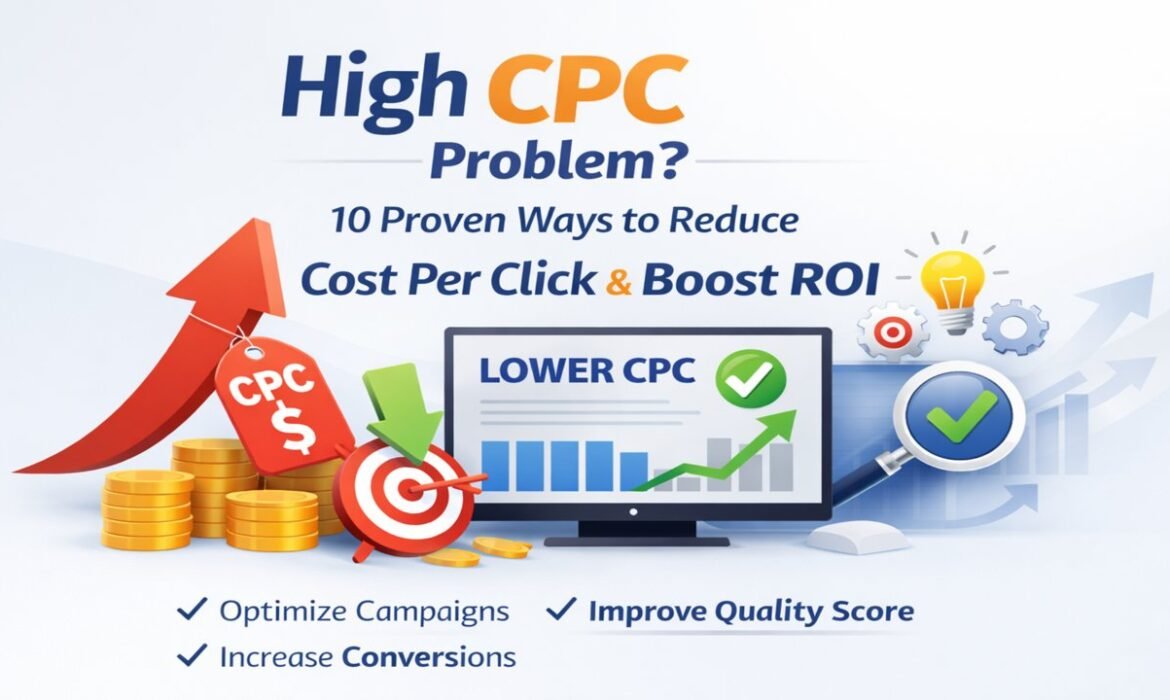
High CPC Problem? 10 Proven Ways to Reduce Cost Per Click & Boost ROI
However, when an increase in the budget does not lead to a proportional increase in results, the problem of a high cost per click arises.
- The basic problem is not the budget.
- The basic problem is optimization.
At Arihant Global, we have seen that most high CPC issues come from poor campaign structure rather than low spending.
This guide highlights the ways to reduce cost per click, optimize campaigns, and increase the number of leads for your business without increasing your budget.
Definition of Cost Per Click (CPC)
Cost per click is the cost of the clicks made on the advertisements. A lower CPC Google Ads means a lower cost of advertisements.
Indicators of Excessively High CPC
- High cost of advertisements and few leads
- High cost of leads
- Low ROI from the campaigns
- Clicks are not converting into leads
When these signs are present, the situation demands optimization.
What Causes High Cost-per-Click in Google Ads?
High cost-per-click in Google Ads is usually related to decreased targeting and relevance, as indicated by the following factors:
- Low Quality Score
- Poor ad relevance
- Poor landing page experience
- Low click-through rate (CTR)
- High competition for premium keywords
- Use of broad targeting parameters
Improving Quality Score can lead to a reduce Google Ads cost by up to 50%, as revealed by Google.
Ways to Reduce Your Cost Per Click in Google Ads
The following 10 high CPC solution reduce cost per click in Google Ads.
1. Improve Your Quality Score
You can improve your quality score by:
- Building your click-through rate
- Enhancing relevance for your ads
- Improving your landing page experience
Improvement to your quality score can provide great improvements to your cost per click.
2. Improved Ad Copy to Gain Click Through Rate
The following can improve your click-through rate:
- Implementation of numerical values
- Ad copy that is benefits-focused
- Ad copy that encourages urgency
Improvement to your click-through rate can provide great improvements to your cost per click.
3. Target Long-Tail Keywords
Using:
- Targeted specific keywords
- Keywords specific to locations
There is less competition for these and your conversion rate is likely to be higher.
4. Keyword Match Types that are Optimized
Use:
- Phrase matches
- Exact matches
This results in less cost and fewer irrelevant clicks.
5. Have Quick Win Negative Keywords
For example: Free Jobs Cheap
Evidence: Negative keywords reduce wastage in ad spend by 20-30% in campaigns. What approach do we take for high CPC and wastage of advertising budget?
We actually show you with a free audit where your advertising budget is leaking.
6. Improving the Landing Page Experience
Lifting the Landing Page Experience
Improvements in the Landing Page Experience will primarily aim at:
- Enhanced speed and/or load time
- Improved usability on mobile
- Improved call-to-action
Expected outcome: An upturn in conversion rates coupled with a lowering of CPC.
7. Smart Bidding Strategy
It all depends on your business objectives what kind of smart bidding strategy you want:
- Manual CPC bid strategy if you want more control
- Target CPA if you want lead generation
- Maximize conversions if you want to scale
Our suggestion: Try out different CPC optimization strategies and see which one suits your business most
8. Enhance Ad Relevance
You should make sure that the components of your ad are integrated:
- Keyword
- Ad
- Landing page
Expected result: Higher Quality Score and lower CPC.
9. Targeting
Enhance your ad targeting based on:
- Geographic locations
- High-intent users
- Retargeting users
Expected outcome: Optimal utilization of your ad budget.
10. Ongoing A/B Testing
Test and measure:
- Headlines
- Advertisement text
- Landing pages
Expected outcome: Improvements will continue to yield better savings.
Factors That Affect CPC
|
Factor |
Impact on CPC |
|
Quality Score |
High |
|
CTR |
High |
|
Landing Page |
Medium |
| Competition |
High |
Improving Quality Score to Reduce Cost Per Click (CPC)
Factors affecting Quality Score:
- Click-Through Rate (CTR)
- Ad Relevance
- Landing Page Experience
Improving Quality Score:
- Use of keywords in the headline copy
- Ad copy matching the website landing page content
- Optimization of landing page loading speed
Implication: These changes directly impact CPC.
Keyword Optimization for Reducing CPC
To develop a plan for keyword optimization for CPC reduction, we should focus on:
- Using long-tail keywords
- Using intent-based keywords
- Using high-converting keywords from search queries
We should avoid:
- Using generic keywords
- Generating traffic for irrelevant content
Implication: Keyword optimization is a crucial aspect of CPC optimization.
Search engine Optimization for Reducing CPC
For search engine optimization , we should focus on :
- Increasing landing page loading speed to less than three seconds
- Increasing high responsiveness for mobile devices
- Using a strong call-to-action
- Using trust symbols
Implication: SEO of landing pages is directly related to conversion rate optimization and CPC reduction.
Negative Keywords Strategy
Negative keywords reduce unnecessary CPC expenditure.
Examples:
- Free
- Jobs
- Course
Implication: Negative keywords help in targeted advertising and reduce Google Ads cost.
Biggest CPC Mistakes
The major missteps include:
- Overbroad keyword targeting
- Failure to utilize negative keywords
- Sending traffic to suboptimal landing pages
Correcting these missteps leads to significant CPC reductions.
Advanced Strategy Considerations (2026 Framework)
- AI Bidding Modalities
- Remarketing Campaigns
- Audience Segmentation
- Ad Extensions
- Weekly Optimization Cycles
Rationale: Top-performing google ads agency focus on continuous optimization.
Frequently Asked Questions
- How can CPC be reduced in Google Ads?
Improve Quality Score, optimize CTR, add negative keywords, and refine targeting. - What causes high CPC?
Low relevance, high competition, and poor targeting. - How can CPC be lowered without impacting traffic?
Use long-tail keywords and improve ad relevance. - Is Quality Score a factor for CPC?
Yes, it significantly reduces CPC. - What is the most powerful strategy for lowering Google Ads spend?
Optimize keywords, CTR, and bidding strategies.
Conclusion
By optimizing:
- Keywords
- Ads
- Audience targeting
- Landing pages
You can achieve:
- Lower CPC
- Higher conversion rates
- Improved ROI
At Arihant Global, we help businesses uncover unseen inefficiencies in their ad spend and transform high ad spend into growth.
👉 Get a FREE Google Ads Audit and discover:
- Where your ad budget is being wasted
- Hidden opportunities to reduce CPC instantly
- Data-driven strategies to increase conversions
Don’t spend more optimize smarter.
Disclaimer
The information provided in this blog is for educational and informational purposes only. While the strategies outlined are based on industry best practices and real-world experience, results may vary depending on factors such as industry competition, budget, targeting, and campaign structure. Google Ads performance is influenced by dynamic algorithms and market conditions, so no specific outcomes or cost reductions are guaranteed. For tailored advice and implementation, it is recommended to consult with a certified professional or a trusted partner like Arihant Global.
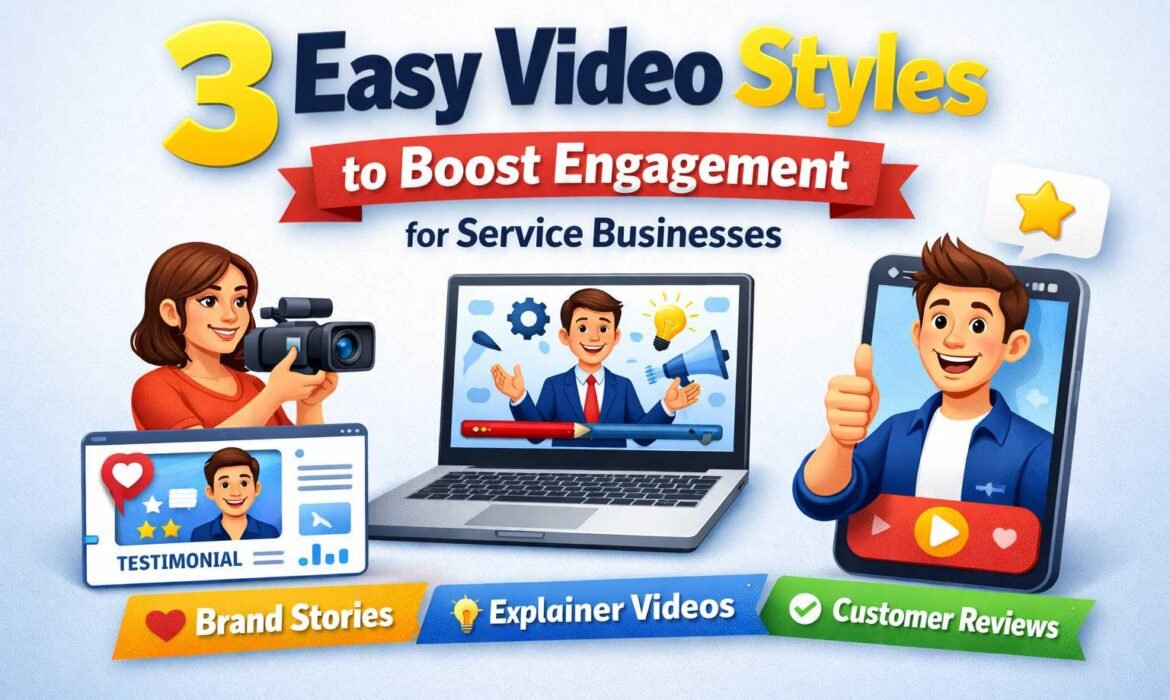
3 Easy Video Styles Service Businesses Can Use to Boost Engagement
Service businesses often struggle to stand out online. You try explaining what you do using just words. Sometimes, it feels like no one is listening. Capturing attention is harder than ever. Many customers want quick answers. They want something easy to understand. That’s why video styles to boost engagement are so vital. Text or images are okay. But they can’t always tell the whole story. A short video can explain a service. It can answer a burning question. It can show real results. Video just works in ways that text sometimes can’t.
Because of this, video marketing is no longer optional. It is an integral part of easy video marketing for service businesses. Videos help you show your expertise. They build credibility. Most importantly, they connect you with people. It feels more personal. The good news is, this doesn’t require fancy gear. You don’t need a huge studio. Simple, honest videos are often the most relatable. They feel more natural.
By choosing the right style, you can make a big impact. You can increase engagement. You can build deeper trust. You can make your services clear and understandable. This is where a smart digital marketing strategy begins. It’s a core part of effective content marketing and creating great business video content. At Arihant Global, we believe every service business can succeed with video. Let’s look at three easy styles you can start using today.
1. Brand Stories: Building a Connection that Lasts
First, let’s talk about a powerful type of business video content—the brand story. A brand story video is about sharing who you are. It’s not just listing your services. It’s about sharing your purpose. Why are you in business? How did your journey begin? Service businesses are built on trust. A brand story helps people feel your values. It lets them see the human side of your brand. It’s not a sales pitch; it’s a conversation.
Sharing your mission through video is a great way to start. Arihant Global knows that when people feel connected to your values, they are more likely to work with you. A great example of a brand story video could simply show you talking naturally. It feels natural and honest.
Your Brand Story Video Could Include:
- Your Origin Story: Talk about how you started. What was the inspiration? What challenges did you face? People love a good “origin story.” It makes you relatable.
- Your Mission and Values: Clearly state your purpose. Why do you do what you do? This creates mission-driven video content that resonates deeply.
- A Brief Introduction: Simply introduce yourself. Let people see your face and hear your voice. This small step can make a massive difference in building a personal connection.
Think of it this way. Before someone hires you to manage their money or repair their home, they want to know who you are. They want to know you care. A brand story answers those unasked questions. If you are struggling with how to write a brand story, don’t worry about perfection. The best way is to just be yourself. Just tell your truth. A simple, personal story is more powerful than any scripted sales pitch. When people feel that genuine connection, they don’t just see a service; they see a partner they can trust.
2. Animated Explainer Videos: Making the Complex Simple
Second, some services are just hard to explain. You try using a hundred words, but it’s still confusing. This is a very common challenge. This is where animated explainer videos can be a total game-changer. They simplify complex ideas. They make things easy and clear. It’s a fun and effective way to teach your audience. An animated video is perfect for a wide range of topics.
So, what is an animated explainer video exactly? It’s a short, engaging animation that tells a story. It breaks down a concept into simple, visual steps. If you look at some animated explainer video examples, you will see how effective they can be.
An Animated Video Can Be Used to Explain:
- A Detailed Service Process: Show each step. From the first phone call to the final result. This is a great example of a brand story video for clarifying your workflow.
- How a Multi-Step Campaign Works: Perfect for services like digital marketing. Simplifying complex services with animation makes them far less intimidating.
- A Specific Solution to a Client’s Problem: Show a common pain point. Then, show how your service is the perfect, easy solution.
These videos excel at how to explain a complex process in a video. You aren’t just telling someone how your intricate digital marketing strategy works. You are showing them with clear, engaging visuals. Arihant Global believes that when you make your services easy to understand, you remove the biggest barrier to a sale: confusion. Confusion is the enemy of conversions. An animated explainer is one of the types of business video content that can clear up any doubt. It takes a frustratingly complex idea and turns it into a simple, clear, and powerful message.
3. Customer Testimonial Videos: The Power of Social Proof
Third, let’s look at one of the single best video styles to boost engagement. It’s the customer testimonial video. Before people buy a service, they want one thing: reassurance. They want to hear from real people just like them. They want to know your service actually works. Arihant Global understands the importance of this trust. A customer testimonial is proof. It is powerful social proof.
Let your happy clients do the talking. Let them share their real experience. A short video testimonial is worth a thousand written reviews. It carries so much more weight.
A Great Testimonial Video Typically Covers Three Key Areas:
- The Problem: What frustration did the customer have before finding you? What was their real pain point? This makes the video relatable.
- The Solution: How did your service step in to help? What specific solution did you deliver? Keep this focused on the benefit.
- The Result: What improvements did the customer see? What positive change did they experience? This is the core of your proof.
These are types of business videos to increase traffic and, more importantly, to build rock-solid trust. A customer testimonial video works because it isn’t you boasting about your service. It’s a real person sharing their honest success story. This genuine connection is what makes them one of the best video ideas for small business owners. You don’t need a massive marketing budget. You just need to ask your happy customers. Most are more than happy to help. Their genuine words will do more to convince new clients than any advertisement you could ever create.
Tips for Creating Engaging Business Videos
Okay, you are ready to create your first video. But where do you start? Don’t worry. Easy video marketing for service businesses is absolutely within your reach. Creating good videos isn’t about expensive equipment. It’s about providing good information in an easy-to-understand way. It is a powerful digital marketing strategy. You just need a smartphone and a simple plan.
Here are some basic tips to make your videos effective for small businesses:
- Keep it Simple: This is the most important rule. Each video should have one clear, single idea. Focus on just that one point. This ensures it can be easily understood in a short period of time.
- Keep it Short: People’s attention spans are short. Very short. Videos that are short and to the point have more chances of being viewed and shared. It’s best to make your videos within a range of 30 seconds to two minutes. This applies to types of business videos to increase traffic.
- Use Real-Life Examples: Real is always better than scripted. Be authentic. Arihant Global has found that real-life examples can work wonders. Show your work. Share actual customer stories. It builds trust instantly.
- Have a Plan: Don’t just wing it. Even a small outline can make your video much better. It doesn’t have to be a full script. Just know what you want to say.
- Be Natural: Don’t worry about being a perfect speaker. Simple and honest videos can actually work better. They are more relatable.
- Promote Your Videos: Don’t just make them and forget them. Promote your videos! Share them on your website. Post them on all your social media channels. Upload them to video hosting sites like YouTube. Make them accessible to your potential customers. You have to actively show them what you’ve created. This is crucial for how to boost engagement with video.
At Arihant Global, we know that starting with video can feel a bit scary. But it doesn’t have to be. You just need to take that first small step. Video is not about being a movie star. It’s about being a helpful expert. It is one of the single best video ideas for small business owners to grow their reach and build trust in a powerful, personal way.
Let’s Connect: Growing Your Service Business Together
Feeling a bit overwhelmed by the possibilities of video marketing? Don’t worry. Easy video marketing for service businesses is something you can definitely master. At Arihant Global, we get it. We are experts in simplifying the complex. We specialize in easy video marketing for service businesses.
Whether you need help with a powerful brand story, an engaging animated explainer video, or building a library of trustworthy customer testimonials, we have you covered. We can even help you develop a complete, customized digital marketing strategy that includes all these types of business videos to increase traffic.
Video content is one of the best types of business video marketing. It can powerfully raise a service business’s online presence. Don’t let confusion or fear hold you back. Let’s chat about your unique business and your biggest growth goals. We can show you how to start with a single, simple video that makes a genuine connection.
Achieving sustained success with video marketing isn’t a single step. It requires a multi-pronged, well-executed digital marketing strategy to achieve sustained results. Let’s work together to turn your service business into a powerful tool for attracting and converting potential customers, using the incredible power of video to connect, educate, and build lasting trust. Contact Arihant Global today. We are ready to help your business grow and achieve the online visibility it truly deserves. Let’s make something amazing together.
How to Rank Your Website on Page 1 of Google: 5 SEO Essentials
Want to know the secret to getting Rank Your Website on Page 1 of Google? Well, it’s not about stuffing your website full of keywords. Today’s Google algorithm is way too smart for that. What it does care about is whether or not your website is actually helpful to people who visit it. In other words, if your website is actually helping people solve their problems or find what they need, Google will know it and reward you accordingly.
A lot of business owners think SEO is complicated or overwhelming, but the truth is, the basics are pretty simple. By focusing on the right areas, you can greatly increase your chances of getting your website on Google’s first page.
The five key things your website needs to get on Google’s first page
1. High-Quality and Relevant Content
Content is one of the most important ranking signals for search engines. Google’s job is to serve up the best possible results to people who are searching for things. And what are the best possible results? Websites with clear, informative, and relevant content.
Why high-quality content is important
When users find useful information on your website, they will spend more time on the website. This will make Google rank your website higher.
Why low-quality content is bad
If the content on your website is low quality or copied from another source, it will make Google rank your website lower.
How to create high-quality content
You should first understand your audience. This will help you create the right content for your audience. To understand your audience, you should consider the following:
- What are they trying to achieve?
- What information are they looking for on the internet?
- What are the questions they usually ask?
Once you understand your audience, create content that answers the questions they usually ask. Well-structured content will help you create high-quality content. You should add new information to the content to enhance the Experience, Expertise, Authoritativeness, and Trust (E-E-A-T) of your website.
2. Proper On-Page Optimization
On-page optimization is the process of optimizing the different elements within your website so that the search engines can understand your content. When the elements are well arranged, they can help Google understand the content of the page as well as the time when the content should appear on the search results.
Key elements of on-page SEO
- Title Tags
Title tags are one of the major factors that determine the ranking of a website. The title tag is the title displayed on the browser window as well as the title displayed on the search results page.
- Meta Descriptions
A meta description is a description of the content displayed on the search results page. The meta description is not a ranking factor, but it can affect the number of clicks on the website.
- Clean URL Structure
A clean URL is a URL that is easy to read and understand. Using a clean URL can improve the user experience as well as the search engines’ ability to understand the content of the page. For instance, yourwebsite.com/seo-services is much simpler than a complex URL containing many characters.
- Header Tags (H1–H6)
Header tags are used to improve the readability of the content. The H1 tag should be the title, while the H2 and H3 tags are used for breaking the content into sections.
- Keyword Placement
Use your primary keyword as well as related keywords within the content, meta description, as well as the title tag. However, do not overuse the keywords, as this can negatively impact the ranking of the website.
- Image Optimization
Large images can cause the website to slow down. Optimizing the images can improve the user experience as well as the ranking of the website.
3. A Mobile-Friendly Website
Currently, everyone is accustomed to accessing websites via their smartphones. Due to the changing behaviour of website visitors, Google now uses mobile-first indexing to rank websites.
If your website is not functioning well on smartphones, it can have a huge impact on your website’s visibility.
Why mobile optimization is important
A website that is not user-friendly on smartphones results in poor user experience. This can lead to people leaving your website quickly. This is referred to as a high bounce rate. A high bounce rate is an indication to Google that your website is not fully meeting the expectations of visitors.
How to create a mobile-friendly website
- Implement responsive design for your website.
- Optimize website speed for smartphones.
- Ensure that the text on your website can be read clearly without zooming.
- Implement buttons that are easy to click on smartphones.
- Perform regular tests on your website using Google’s mobile-friendly test tools.
A smooth experience for smartphone users can have a positive effect on Google’s trust for your website.
4. Strong Technical SEO Foundation
The quality of your content can be high but still fail to rank if the search engine is unable to crawl and interpret your website. Technical SEO makes sure that your website is structured in a way that can be easily crawled and interpreted by search engines.
Technical SEO Factors to Consider
- Website Speed
The speed at which your pages load is a key contributor to user experience. Most people tend to leave a website before the content loads. You can make your website faster by optimizing images and using caching techniques.
- XML Sitemap
The XML sitemap is a key technical SEO factor that makes sure that your website can be crawled and interpreted by search engines. You can submit your XML sitemap to Google Search Console to make your content get indexed faster.
- txt File
The file informs search engine spiders whether your content should be crawled and indexed by the search engine or not.
- SSL Security (HTTPS)
Having a secure website makes your users and search engines trust your content. Google recognizes HTTPS as a key ranking factor and a sign of a secure website.
- Structured Data (Schema Markup)
The structured data informs search engines about your content. The structured data can also help your content appear in a rich snippet.
5. High-Quality Backlinks
Backlinks are still a major contributor to off-page SEO. The definition of a backlink is a link from another site that points to your site, and Google considers them as a measure of trust. When many websites link to your site, Google considers your content valuable and trustworthy.
Why backlinks are important
Websites with good backlinks tend to rank higher because Google considers them more trustworthy. However, not all backlinks are equal. Getting a few backlinks from good websites can be more beneficial than getting many from bad websites.
How to get quality backlinks
Getting quality backlinks can be achieved by creating content that is valuable and informative. You can do the following:
- Write articles that are helpful to others
- Write guest articles for good websites
- Share valuable insights with others
- Promote your content on social media
Final Thoughts
To get ranked on the first page of Google, you don’t just use a single technique. You have to work hard on many aspects of SEO. To get ranked, you have to work hard on the following:
- Creating valuable content
- Creating good content
- Creating mobile-friendly websites
- Creating good website structures
- Creating good backlinks
If you are a business with valuable content, you are more likely to get ranked on Google.
Let’s Connect
If you want to improve your website’s visibility and rank higher on Google, our team is here to help. We specialize in SEO strategies that focus on sustainable growth, better search rankings, and increased organic traffic.
Whether you need help with content optimization, technical SEO, on-page improvements, or backlink strategies, we can create a customized plan for your business.
Contact us today to discuss how we can help your website grow and achieve better rankings on Google. Let’s work together to turn your website into a powerful tool for attracting and converting potential customers.

Meta Ads Location Fees 2026: How Will Impact Your Ad Spend
If your business runs Meta Ads targeting users in Europe or the United Kingdom, your billing statements are about to look a little different.
Meta has officially announced that starting May 1, 2026, they will begin applying new “Location Fees” to ad accounts. These fees are designed to cover the costs of Digital Service Taxes (DST) and other regulatory charges imposed by specific jurisdictions.
Here is a complete breakdown of what these fees are, how they are calculated, and what your marketing and finance teams need to do to prepare.
What Are Meta Location Fees?
Meta Ads Location Fees 2026 are additional, percentage-based surcharges applied to your ad spend.
The most critical thing to understand is that these fees are based on where your audience is located, not where your business is headquartered. If your business is based in the US or India, but you are serving ads to users in France, you will be subject to the French location fee for those specific ad impressions.
Which Countries Are Affected (and How Much)?
As of the May 2026 rollout, Meta has outlined the following location fees for ads delivered in these specific jurisdictions:
- Austria: 5%
- France: 3%
- Italy: 3%
- Spain: 3%
- Türkiye: 5%
- United Kingdom: 2%
(Note: Meta has stated that these jurisdictions and rates are subject to change over time as regulations evolve.)
How Will This Affect Your Billing and Budgets?
The good news for your ad performance is that Meta will not deduct these fees from your campaign budgets. Your ads will still deliver based on the daily or lifetime budgets you set.
The bad news for your wallet is that these fees are added on top of your ad spend after the ads are delivered. The Math (An Example): Let’s say you spend $100 delivering ads to users in Italy (which has a 3% location fee).
- Ad Delivery: $100
- Location Fee (3%): $3
- Total Meta Charge: $103
- Important: Any applicable taxes (like VAT) will then be calculated on top of that $103 total.
What formats do these apply to? These fees apply to all ad formats—including images, videos, WhatsApp click-to-message campaigns, and marketing messages that are invoiced together with your ads. (It does not apply to standard WhatsApp paid messaging outside of the ad ecosystem).
Why is Meta Doing This Now?
Historically, Meta has absorbed the costs of Digital Service Taxes (DSTs) levied by various international governments. However, as the regulatory landscape continues to shift, Meta is adopting a model already used by other major digital advertising platforms: passing the regional tax burden onto the advertisers targeting those specific regions.
When you receive your invoices after May 1, 2026, these charges will be itemized by jurisdiction (e.g., “Italy digital services”) so you have full transparency into what you are paying.
What Advertisers Need to Do Next
If you are running international campaigns, you cannot ignore this update. Here are your immediate action items:
- Re-evaluate Your CPA/ROAS Targets: A 2% to 5% increase in base ad costs in these regions means your Cost Per Acquisition (CPA) will inherently go up. You need to adjust your Return on Ad Spend (ROAS) targets to ensure these campaigns remain profitable.
- Audit Your Audience Targeting: Are you bleeding ad spend into these countries incidentally? If Austria or Türkiye aren’t core markets for you, it might be time to exclude them from your targeting to avoid the 5% surcharge.
- Alert Your Finance Team: Share this update with your accounting, procurement, and finance departments so they can adjust their budget forecasts and understand the new itemized lines on upcoming Meta invoices.
Need help navigating these new costs and optimizing your international ad campaigns? Reach out to our team today to ensure your paid media strategy remains efficient and profitable in 2026!
Disclaimer
Source & Purpose: The information provided in this article is sourced directly from a recent notification sent by Meta to advertisers. This blog post is intended strictly for educational purposes to help you understand how these upcoming “Location Fees” might impact your ad accounts.
Please note that this does not constitute official legal, financial, or tax advice. Because international tax regulations and Meta’s policies are subject to change, we always recommend consulting directly with your Meta representative, your internal finance team, or a tax professional before making any significant adjustments to your billing, budgets, or targeting strategies.
SEO Expert in Jaipur: How Businesses Rank #1 on Google in 2026
Being seen online is not just a good to have but a must for businesses in Jaipur, where the competition is fierce. A lot of local businesses are unable to rank on Google even though they have very good products or services. And that is exactly why you need a SEO Expert in Jaipur.
SEO Company like Arihant Global have been assisting Jaipur businesses to get through this digital maze, and with the help of accurate strategies, they have been able to increase their visibility, attract local customers, and achieve leads generation on a steady basis. Given that Google’s algorithms will be changing in 2026, it is more important than ever to have a thorough understanding of local SEO, technical optimizations, and content strategies. Businesses in Jaipur can use this guide as a resource to learn how to dominate Google search results. It contains actionable tips and examples based on reality.
What is an SEO Expert and Why Jaipur Businesses Need One
SEO Expert in Jaipur who aids local businesses in enhancing their positions in search engine results. In contrast to the general marketing strategies, an SEO expert develops strategies customized for the market of Jaipur, taking into account factors such as local search trends, customer behaviour, and competition.
Reasons why Jaipur businesses benefit:
- Gaining local visibility: Getting your business listed on Google Maps and showing up in local searches can help attract more people walking into your store.
- More sales: Well-planned SEO helps you connect with customers who are already looking for the kind of services you offer.
- Keeping ahead of the competition: In a busy market like Jaipur, local SEO can really help your business shine.
For example, a boutique in Jaipur significantly increased their number of visitors by 40% after hiring Arihant Global for a local SEO strategy with a focus on keyword optimization and Google My Business upgrades.
Key SEO Services Offered in Jaipur
A competent SEO Company in Jaipur offers a combination of services that are customized to meet the needs of local businesses:
- Keyword Research – Finding high-intent, local search keywords.
- On-Page SEO Jaipur – Enhancing titles, meta tags, content, and internal linking.
- Off-Page SEO – Acquiring high, quality backlinks and local directory citations.
- Technical SEO – Enhancing website speed, mobile, friendliness, adding schema markup, and allowing search engines to crawl easily.
- Local SEO Services – Managing Google My Business, local directories, and map listings optimally.
- Content Strategy – Developing blogs, guides, and landing pages that appeal to organic visitors.
Tip: Those companies that blend Affordable SEO services in Jaipur with regular content marketing usually achieve the quickest improvement in their rankings.
How Local SEO Helps Jaipur Businesses Rank Higher
Local SEO ensures your business appears when customers search for services nearby. For example:
- Google Maps visibility: Appearing in the “3-pack” increases credibility and foot traffic.
- Location-based keywords: Terms like “SEO Expert in Jaipur” or “Digital Marketing company in Jaipur” attract high-intent visitors.
- Reviews & ratings: Positive Google reviews signal trustworthiness to both users and search engines.
Example: A Jaipur cafe optimized its website and GMB listing using SEO Services in Jaipur, leading to a 50% increase in local search-driven orders.
On-Page, Off-Page & Technical SEO: What Matters in 2026
- On-Page SEO mainly concentrates on a website’s content titles meta tags, and internal linking.
- Off-Page SEO is concerned with building the website’s authority through backlinks, guest posts, and citations.
- Technical SEO will make sure your site is fast, mobile-friendly, and well-structured for search engines. 2026
Tip: To give the best results to users, Google now focuses on user experience and search intent. Thus, having a seamless and informative website is more crucial than ever.
Typical SEO Errors by Jaipur Businesses
Many businesses do not rank well because they Avoiding these mistakes will lead to quick and long, lasting ranking benefits.:
- Ignoring local SEO Jaipur opportunities
- Using generic keywords instead of high-intent, geo-targeted keywords
- Having poor website structure and slow page speeds
- Publishing low-quality or thin content
- Neglecting customer reviews and social signals
Avoiding these pitfalls ensures faster results with sustainable rankings.
Tips to Improve Google Rankings for Local Businesses
Step-by-step actionable tips:
- Making sure you update your Google My Business listing with precise information is key.
- Plan what keywords to use Jaipur so as to get hold of those search terms which indicate the intention of a customer.
- Get links from reliable sources such as directories and blogs logging in Jaipur.
- Besides improving website speed, also make your site mobile, friendly and allow user’s data to be protected via HTTPS connection.
- Keep changing content, blogs and FAQs in accordance with user intent.
- Ask your happy customers to post their Google reviews.
- Employ structured data to make your search result more eye, catching. It’s true that the use of these ideas may raise your Google ranking in Jaipur and make you more visible to locals a lot.
Tools & Techniques Top SEO Experts Use
The leading SEO professionals in Jaipur make use of:
- Google Search Console & Analytics – Measure performance and understand user behaviour.
- Ahrefs / SEMrush – Analyze competitors, keep track of keywords, conduct backlink audits.
- Screaming Frog / Site Audit Tools – Discover technical problems.
- Content Optimization Tools – Grammarly, Surfer SEO, Clear scope.
FAQs: SEO Expert in Jaipur
- How much does an SEO Expert in Jaipur charge?
Charges vary, but professional services typically start from ₹15,000/month depending on the project scope. - How long does it take to rank on Google?
Local SEO results can appear in 3–6 months, depending on competition and website quality. - Can small Jaipur businesses afford professional SEO services?
Yes, affordable packages exist, and even startups benefit from Local SEO Jaipur strategies. - Do I need a full-time SEO Consultant Jaipur?
Not always; many businesses use agencies or freelancers for project-based SEO. - Will SEO guarantee #1 ranking in Jaipur?
No one can guarantee #1, but expert strategies maximize visibility and lead generation.
Conclusion
Collaborating with SEO agency in Jaipur who carries a rich experience like Arihant Global, makes it possible for businesses to execute local SEO, technical fixes, as well as content strategies that effectively increase the rankings. Local SEO, technical optimization, and crafting of content are the three areas where a business specialist from a place can bring most substantial ranking improvements when done in conjunction with one another.
Keyword research, on-page/off-page optimization, and Google My Business are the main focus areas of Jaipur businesses that can ensure the sustainable growth of their organic traffic and conversions. Use these strategies and tips to boost your Google ranking Jaipur, draw high, intent local customers, and keep up with the 2026 competitive market.