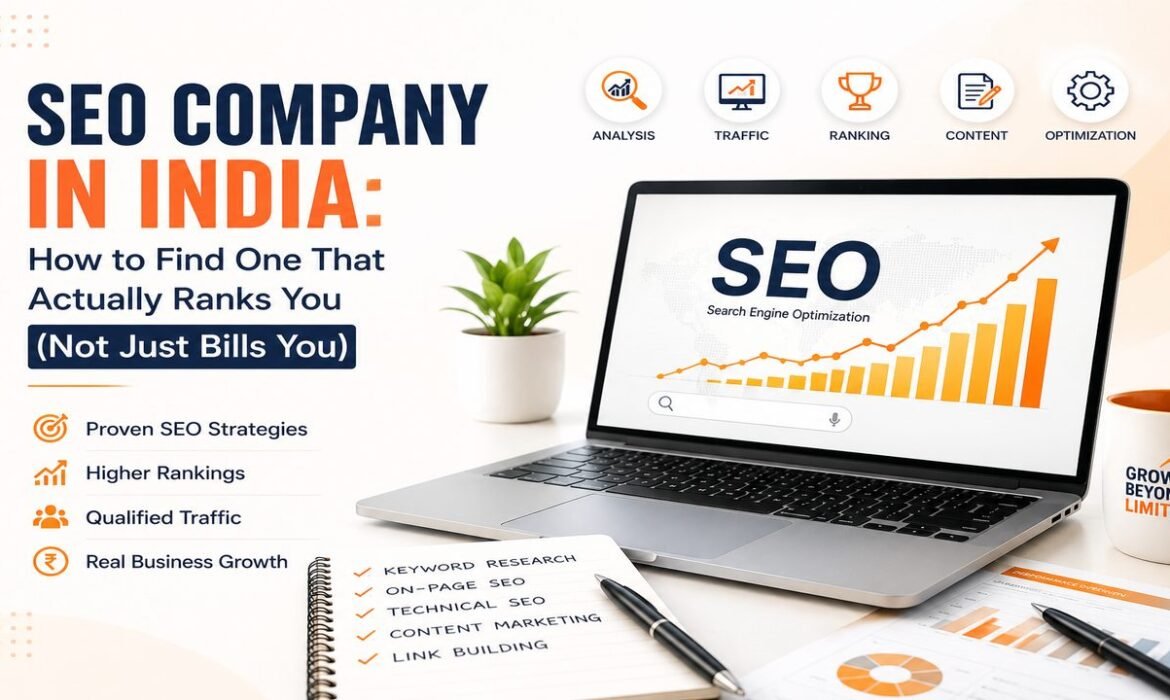
73% of Indian businesses cannot attribute a single lead to their SEO spend. This guide built on 2,000+ real mandates shows you exactly how to find an SEO company in India that ranks your business, not just reports on it.
Search engine optimization has a trust problem in India. The market is saturated with vendors who promise first-page rankings in two weeks, charge for activity rather than outcomes, and become very difficult to reach when the promised results don’t materialize. Business owners who have been through this cycle once tend to approach their second SEO engagement with a level of scepticism that is entirely justified.
This guide exists to close the information gap. It explains what professional SEO Company in India actually look like, what separates high-performing agencies from the hundreds of mediocre ones, and how to evaluate providers in a way that protects your budget before you sign anything.
Arihant Global has run SEO campaigns for over 2000+ businesses since 2013. Everything here is drawn from that experience not from generic advice about what SEO should theoretically do.
Why SEO Company in India Has Changed And Most Companies Haven’t
| Has SEO fundamentally changed in India?
Yes. Google’s Helpful Content System, Entity-based SEO, and AI Overviews have structurally changed what earns rankings in 2026. Keyword density, bulk backlinks, and thin content the tactics most SEO Agency in india still sell no longer produce competitive results. Topical authority, intent mapping, and E-E-A-T signals now determine who ranks. |
The SEO that most Indian agencies are still selling was designed for a Google that stopped existing around 2021. They are running a 2018 playbook in a 2026 search environment and charging you for the gap between what they know and what Google currently rewards.
Three structural shifts changed everything, and understanding them is the difference between choosing an SEO Company in india that compounds your growth and one that generates activity while your business stands still.
1. The Helpful Content System Is Domain-Wide, Not Page-Wide
Google’s Helpful Content System evaluates your entire domain. If your site has thin service pages stuffed with keywords, templated blog posts copying the same structure for every topic, or category pages with no unique value that signal suppresses your whole website. One weak content section drags down your best-performing pages. A real SEO expert in India in 2026 audits your entire content library, not just the pages you’re actively working on.
2. Entity-Based SEO Replaced Keyword Counting
Google no longer reads a page and counts how many times a keyword appears. It reads a page and determines whether the content genuinely covers a topic mapping entities (people, places, products, organizations, concepts) and evaluating whether the relationships between them are accurate, complete, and authoritative. A page about ‘industrial packaging suppliers India’ that doesn’t mention materials, buyer considerations, compliance standards, or industry classifications does not fully cover the entity regardless of how many times the keyword appears.
3. AI Overviews Now Sit Above Position One
For millions of Indian search queries in 2026, the first result is not a blue link it is a generative AI summary that Google synthesises from multiple sources. The content selected for AI Overviews shares specific characteristics: structured answers, clear factual claims, FAQ schema, and high E-E-A-T signals. If your content isn’t built for this layer, you are invisible in a rapidly growing portion of the search results page. Your competitor with a weaker backlink profile but better-structured content may appear above you every single day.
What Real SEO Company in India Deliver And What They Don’t
| What does a genuine SEO company in India actually deliver?
A genuine SEO company in india delivers four interconnected workstreams: technical SEO (crawl health, Core Web Vitals, schema), on-page optimization (intent-matched content architecture), link acquisition (editorial placements on relevant publications), and content strategy (topical authority mapping tied to buyer funnel stage). The keyword is ‘interconnected’ any agency delivering one in isolation produces partial, unstable results. |
1. Technical SEO – The Foundation Most Agencies Skip
Technical SEO is not a one-time setup task. It is an ongoing workstream because technical problems accumulate as websites grow new pages without canonical tags, JavaScript rendering that breaks crawl paths, third-party scripts degrading page speed, parameter-generated URLs multiplying duplicate content.
The single most common finding in Arihant Global’s site audits is crawl budget waste. Googlebot has a limited number of page requests per domain per day. If your site has thousands of filter combination URLs, empty search result pages, or outdated pagination Googlebot spends its allocation on those dead ends and never reaches your product or service pages. In competitive categories, this alone can explain why a well-written service page has never appeared on page one despite months of investment.
- Crawl budget management
- Core Web Vitals
- Indexation control
- Schema markup
2. On-Page SEO – Intent First, Keywords Second
Most Indian agencies approach on-page SEO backwards. They start with the keyword and write a page around it. The right approach starts with the searcher specifically, what they are trying to accomplish and builds the page structure to serve that intent completely.
A person searching ‘industrial packaging suppliers Delhi’ wants a shortlist to evaluate, pricing context, product range, and credibility signals. A page that opens with five paragraphs of industry history and buries the contact form at the bottom is not serving their intent regardless of keyword density. Title tags should earn the click, not just contain the keyword. H1 should confirm within three words that the searcher is in the right place. Content should be structured in the order the buyer needs information.
3. Link Building – Where the Gap Is Widest
Link building is where the distance between what agencies claim and what they actually deliver is largest in the Indian market. Directory submissions, guest posts on content farms, private blog networks these produce backlink counts that look reassuring in a report and rarely produce ranking movement. They carry ongoing penalty risk that can surface months or years later.
Real link building means earning references from websites that have genuine authority in your industry.
- For a B2B company: trade publications, procurement journals, industry associations.
- For healthcare: medical news outlets, clinical directories.
- For ecommerce: category publications, Indian consumer media.
A single relevant editorial reference from a credible publication carries more ranking signal than fifty directory links and unlike directory links, it generates referral traffic that converts.
4. AI Search Optimization and GEO
This is the layer most SEO providers in India have not yet built into their service offering and the one that will matter most over the next two years. Generative Engine Optimization involves structuring your content and brand authority so that AI-powered search surfaces Google AI Overviews, Perplexity AI, Chat GPT Search, and Google Gemini cite your website as a source in generated answers.
This requires comprehensive topical authority across your niche, structured data markup that AI crawlers can parse, a consistent entity presence in Google knowledge graphs, and E-E-A-T signals that AI retrieval systems use to evaluate source credibility. It is distinct from traditional SEO and it is growing in importance with every passing month.
The Arihant Global SEO Growth Framework – 4 Phase Execution Model
What does a structured SEO engagement look like from day one? The Arihant SEO Growth Framework runs in four phases:
Each phase has defined deliverables and measurable milestones reviewed with the client formally at the end of months one, three, and six. |
Every Arihant Global engagement follows a four-phase model built from 13+ years of managing Indian SEO campaigns across B2B, D2C, healthcare, ecommerce, and professional services. The framework is not a template the specific tactics within each phase are customized to your industry, your competitive set, and your revenue goals. The structure is fixed because the sequence matters. you cannot build authority on a technically broken site, and you cannot compound content on a foundation without a topical map.
|
Phase |
Focus | What Gets Done |
|
Phase 1. Weeks 1–4 |
Foundation |
Technical audit, crawl fix, Core Web Vitals, indexation control, GSC baseline, keyword intent map |
|
Phase 2. Weeks 5–8 |
Content architecture |
Topical authority map, pillar + cluster pages, FAQ schema, on-page optimization of priority pages |
|
Phase 3. Weeks 9–12 |
Authority signals |
Editorial link acquisition, digital PR outreach, local citation building, E-E-A-T layer implementation |
|
Phase 4. Month 3+ |
Compounding |
Content velocity increase, AI Overview optimization, geo-expansion pages, monthly revenue attribution review |
| Framework NOTE :- The compounding effect of this framework becomes measurable at month three and exponential at month twelve. SEO is not a cost it is a compounding asset. Each page that earns a ranking generates traffic without ongoing cost per click. The business that starts in month one is structurally ahead of the one that waits until ‘the time is right.’ |
AI Overview Optimization – The New Layer Most Indian Agencies Ignore
| How do you get your business cited in Google AI Overviews?
AI Overviews select content with four consistent characteristics: a direct answer in the first 40–60 words of the section, structured factual claims with cited data, FAQ Page schema markup, and strong E-E-A-T signals (named author, verified organization, external references). Content built to earn AI citations is structurally identical to content built for featured snippets the architecture works across both. |
Google AI Overviews now appear above position one for an estimated 30–40% of commercial investigation queries in India. For searches like ‘best SEO Agency in India,’ ‘how to choose a digital marketing agency India,’ and ‘SEO services India’ the buyer may read an AI-synthesized answer and never scroll to the organic results.
Being absent from AI Overviews is not a passive disadvantage. It is an active one your competitor’s brand and expertise is being presented to your prospective customer in a synthesized format before they see a single organic result. Only 22% of Indian B2B websites currently have the schema markup and content structure required to be considered for AI Overview selection. That means 78% of your potential competitors are already invisible at this layer.
What AI Overview-Ready Content Looks Like
- Opens each major section with a direct 40–60 word answer before expanding into detail mirrors how AI synthesizes responses
- Includes specific data points with attributable sources AI engines heavily favour factual, citable claims
- Uses clear, declarative sentences under 20 words on average AI extraction degrades with complex nested clauses
- Implements FAQ Page JSON-LD schema with standalone answers each FAQ answer should be citable in isolation
- Names the organization, its credentials, and its founding date entity disambiguation for Google’s Knowledge Graph
- Uses comparison tables and structured lists both have significantly higher AI extraction rates than prose paragraphs
Real SEO Agency in india vs Activity-Billing Agency Side-by-Side
This table maps the concrete differences between a genuine SEO agency in india and one that is optimized for client retention rather than client results. Use it in your next agency evaluation ask the specific question in each row and listen for which column the answer belongs to.
|
DIMENSION |
REAL SEO AGENCY |
ACTIVITY-BILLING AGENCY |
|
Onboarding |
Full technical + keyword audit in week 1 |
Proposal sent, work starts immediately |
|
Keyword strategy |
Mapped to buyer intent and revenue stage |
Highest volume terms regardless of intent |
|
Link building |
Relevant editorial placements, shown to you |
Bulk directory submissions, reported by count |
|
Reporting metrics |
Organic leads, CPL, revenue attribution |
Domain Authority, total backlinks, rankings |
|
Content approach |
Topical authority map, buyer-persona matched |
Generic blogs, same structure every topic |
|
Technical SEO |
Crawl audit, Core Web Vitals, schema, indexation |
Basic meta tags and alt text |
|
AI search readiness |
GEO, AEO, AI Overview structuring built-in |
No mention of AI search |
|
Account ownership |
All assets yours from day one in writing |
Vague on ownership when you ask |
|
Transparency |
Named team, open access to all accounts |
Senior pitch, junior execution, locked access |
Five Questions That Reveal What an SEO Company Is Actually Worth
Every SEO Company in India follows the same structure. Impressive deck. Client logos. A few case studies with headline numbers stripped of context. These five questions cut through the performance and force an honest conversation about what you will actually be buying.
- Question 1 – Show me organic traffic and lead data from a comparable client.?
- Question 2 – Who works on my account and what else do they manage.?
- Question 3 – What are your primary success metrics and how do they connect to revenue.?
- Question 4 – Walk me through your link building process and show me three recent placements.?
- Question 5 – When we end this relationship, what exactly do we own.?
What SEO Actually Costs in India in 2026 Honest Pricing Tiers
| What does SEO cost per month in India in 2026?
SME active campaigns: ₹40,000–₹80,000/month. Competitive national campaigns: ₹90,000–₹2,00,000/month. Enterprise or multi-location: ₹2,00,000+/month. Freelancer or micro-agency: ₹10,000–₹35,000/month (appropriate only for single-channel, near-zero-competition local work). The most expensive option is rarely the best. The cheapest almost always costs more in wasted spend and missed growth windows. |
- Freelancers and micro-agencies: Basic on-page work, minimal content, low-quality links. Suitable only for local businesses with near-zero online competition. Do not expect measurable results in any moderately competitive category at this level.
- Indian SME working range: Active technical SEO, regular intent-mapped content, managed link acquisition with transparent placement reporting. Monthly reporting includes organic traffic, position movement, and lead attribution.
- Competitive national campaigns: Multi-keyword cluster strategy, dedicated account team, digital PR link building, content at meaningful volume, regular senior strategy reviews. For businesses competing across multiple Indian cities or in high-competition categories.
- Enterprise and multi-location: Regional language SEO, international targeting, large-scale content programmes, complex technical SEO across thousands of pages. For businesses where digital marketing is a primary P&L lever.
One thing worth stating directly: SEO services India at ₹15,000 per month cannot produce the work that competitive rankings require. The technical auditing, content production, and link acquisition involved in ranking in a competitive category has a real labour cost floor. Below that floor, the package is designed to be sold not to deliver results. The right comparison metric is not the retainer fee. It is the cost per qualified lead each agency can realistically produce in your category.
Red Flags That Should End the Conversation
| What are the biggest red flags when evaluating an SEO company in India?
Four red flags end the conversation immediately: (1) Guaranteed page-one rankings no agency controls Google’s algorithm. (2) Link packages sold by unit count quantity guarantees mean quality is not guaranteed. (3) Reporting that shows no lead or revenue data activity without business outcomes is by design. (4) Vagueness on asset ownership if they won’t confirm in writing that your accounts belong to you, they are building dependency. |
- Guaranteed first-page rankings
- Backlink packages sold by unit count
- Reports with no lead or revenue data
- No clarity on asset ownership
E-E-A-T: The Standard That Determines Whether Google Trusts Your Business
| What is E-E-A-T and how does it affect SEO rankings in India?
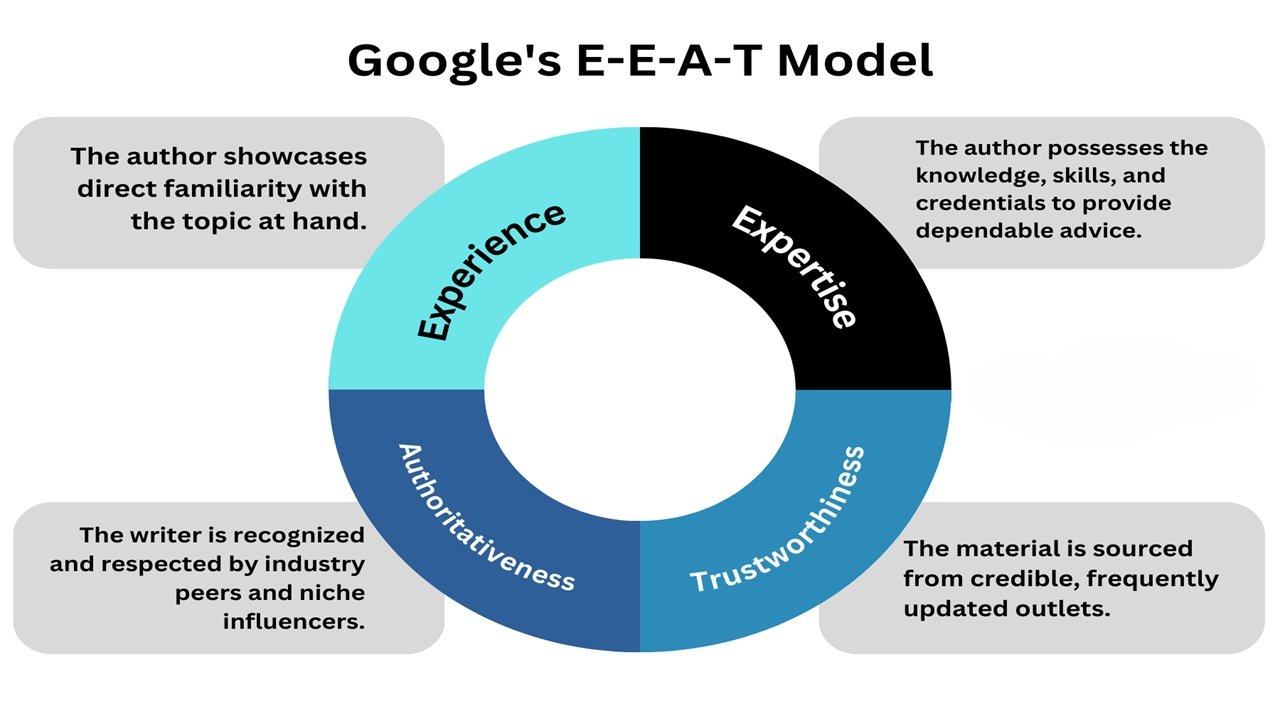
E-E-A-T stands for Experience, Expertise, Authoritativeness, and Trustworthiness the quality framework Google’s Search Quality Raters use to evaluate websites. It is not a technical ranking factor with a direct on/off switch. It is the cumulative signal that determines whether Google’s systems treat your site as a credible, rankable source. For Indian businesses, the most immediate E-E-A-T wins are: named authorship, Google Business Profile completeness, ISO or industry certifications visibly displayed, and consistent NAP data across the web. |
E-E-A-T SEO is where most Indian agencies nod their heads during the pitch and then do nothing concrete. It sounds like a strategic concept. In practice, it is a set of specific, implementable signals that either exist on your site or do not.
- Experience
- Expertise
- Authoritativeness
- Trustworthiness
Frequently Asked Questions – SEO Company In India
SME managed campaigns run ₹40,000–₹80,000/month. Competitive national campaigns cost ₹90,000–₹2,00,000/month. Enterprise starts above ₹2,00,000/month. Freelancers charge ₹10,000–₹35,000/month but rarely have the team depth for multi-channel campaigns. Project-based audits cost ₹15,000–₹75,000 depending on site size. Low-to-mid competition terms move within 60–90 days of consistent work. Mid-competition terms show meaningful ranking gains by months 3–6. High-competition national terms take 9–18 months of sustained effort. Any provider promising page-one results in under 30 days should name the specific terms and their current competition level. Fast-ranking promises almost always mean low-volume terms. On-page SEO is everything done on your website: content quality, title tags, heading structure, page speed, schema markup, internal linking. Off-page SEO is everything done outside your website that influences Google's perception of your authority primarily editorial backlinks from relevant publications, but also brand mentions, local citations, and review signals. Both are required for competitive rankings. Neither works well without the other. Open Google Search Console. Look at organic clicks and impressions over six months is the trend moving upward? Then open Google Analytics: are those sessions converting into leads or purchases? If organic traffic is flat or declining after six months of active investment and the agency cannot explain why using Search Console data the programme needs independent examination. Reports full of Domain Authority and backlink counts without traffic and conversion data are designed to distract from results that are not there. Different tools, different timelines, different ROI profiles. Google Ads delivers traffic immediately but stops the moment you stop spending. SEO builds a traffic asset that generates returns without ongoing cost per click. Most growing Indian businesses run both paid ads for near-term revenue while SEO builds the compounding organic asset underneath. The mistake is treating them as alternatives rather than complements. Every engagement starts by mapping your keyword strategy to your actual buyer intent and your business unit economics not to keyword volume alone. Technical audits go beyond surface-level checklists. Content is written by practitioners with genuine category knowledge. Links are placed on relevant publications, and every placement is shown to you before it goes live. Monthly reports connect SEO activity to leads and revenue not to Domain Authority scores that mean nothing to your finance team. 13+ years. 2,000+ brands. ISO 9001:2015 and ISO 27001:2022 certified.
1. What does an SEO company in India charge per month in 2026?
2. How long does SEO take to show results in India?
3. What is the difference between on-page and off-page SEO?
4. How do I know if my current SEO company is actually performing?
5. Should I choose SEO or Google Ads for my Indian business?
6. What makes Arihant Global different from other SEO companies in India?
The Right SEO Company in India Changes What Is Possible
Most Indian businesses don’t have an SEO problem. They have an accountability problem. an agency reporting on metrics that can
improve every month while their pipeline stays completely still. The difference between an best seo company that compounds your growth
and one that simply invoices you is not the size of the deck or the length of the client list. It is whether every deliverable traces back to a business outcome: organic leads generated, cost per acquisition reduced, revenue attributed to search.
| Ready to Work With an SEO Company That Reports Revenue Not Rankings?
Arihant Global has run 2,000+ brand mandates across India since 2013. ISO 9001:2015 and ISO 27001:2022 certified. Every engagement starts with a full technical audit, a keyword strategy mapped to your buyer intent, and a 90-day roadmap with measurable milestones. Request a FREE SEO AUDIT no commitment required. |
Disclaimer
This article is for informational purposes only. Results in digital marketing vary by industry, budget, competition, and execution quality. No specific result is guaranteed. Platform algorithms and AI search behaviour change frequently verify recommendations before implementing. Figures cited reflect Arihant Global practitioner analysis of managed Indian SEO campaigns; individual results vary. This is not legal or financial advice. © 2026 Arihant Global Services India Private Limited.