You have a website. You run ads. You post on Instagram almost every day. You even send emails to your customer list.
And leads are still not coming in the way you hoped.
A business can have a great product and a real marketing budget, and still struggle for one simple reason it is spending time and money on the wrong digital marketing channels.
Here is the tricky part. Your competitor might be getting great results from Instagram, Google Ads, or SEO. That does not mean the same channel will work for you. Every business and every audience behaves differently online.
So how do you know which digital marketing channels are actually worth your time and money?
That is what this guide will help you figure out what each channel actually does, how to pick the right mix for your business, and why AI search is starting to change how people find businesses online.
What Is a Digital Marketing Channel?
A digital marketing channel is simply any online platform or method a business uses to reach, engage, or convert its audience.
Some channels you own, like your website and your email list. Some you pay for, like Google Ads or Instagram ads. And some you earn, like organic Google rankings, shares, or reviews.
The biggest advantage digital channels have over old-style advertising is control. You decide who you reach and when you reach them, and you can measure exactly how each channel performs clicks, leads, sales, and return on investment.
But no single channel does everything. Search is great at capturing people who are already looking for what you sell. Social media and video are better at creating awareness among people who have not heard of you yet. Email and WhatsApp Marketing work best for staying in touch with people you have already reached.
That is why the real question is never “which channel is best?” It is “which combination of channels fits my business and my customers?”
Why Choosing the Right Digital Marketing Channels Matters More Now
Digital marketing has changed. People still use Google, scroll social media, and open emails. But there is a new layer between businesses and customers now AI-powered search.
Tools like Google’s AI Overviews and chat-based search increasingly give people direct answers instead of a list of websites to click through. That means your brand needs to show up not just in search results, but inside the answer itself.
Digital ad spending keeps growing every year, and email marketing and SEO remain two of the best channels for return on investment when they are done properly. The lesson: digital channels are not going away, they are becoming more specialized which makes picking the right ones even more important.
How to Choose the Right Digital Marketing Channels for Your Business
Most businesses make the same mistake. They start by picking a platform: “Should we be on Instagram? Should we run Google Ads?” Instead, start with your customer, and ask yourself these five questions.
- Where does your audience actually spend time? A platform with a billion users means nothing if your customer is not one of them. A B2B company may get far more value from LinkedIn and Google than from Instagram.
- What part of the buying journey are you targeting? Social media and video build awareness. SEO and content build consideration. PPC and retargeting help close the deal. Email and WhatsApp help retain customers. One channel cannot do all four jobs well.
- How fast do you need results? Paid ads bring traffic quickly but stop the moment you stop paying. SEO and content take longer to build, but keep working long after you have stopped actively promoting them. Most businesses do best using both together.
- Are you visible to AI search too? Your content now needs to show up in regular search results, featured snippets, and AI-generated answers which means writing genuinely useful content, not just content stuffed with keywords.
- Can you actually measure it? Before putting money into a channel, decide what success looks like leads, cost per lead, sales, or return on ad spend. Likes and impressions are not revenue.
The Core Digital Marketing Channels, Explained Simply
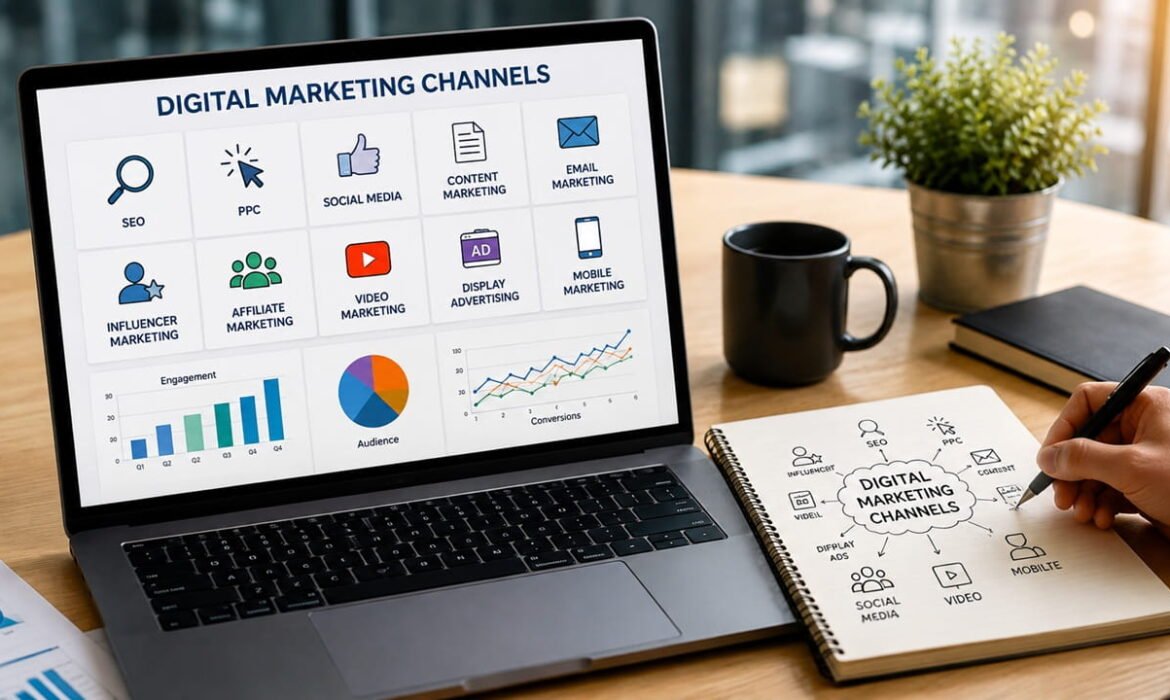
- SEO (Search Engine Optimization) gets your business found when people search for what you offer. It takes longer than ads to show results, but once it works, it keeps bringing visitors without paying for every click. Best for long-term, high-intent traffic.
- PPC (Pay-Per-Click Advertising) puts you at the top of search results right away, in exchange for a fee per click. You get full control over budget and targeting, but the traffic stops the day you stop paying. Best for fast leads and sales.
- Social Media Marketing builds awareness among people who do not know your business yet. Platforms like Instagram, LinkedIn, and YouTube help you build a community, show off your product, and stay visible.
- Content Marketing is not really a separate channel it is the fuel behind all the others. One good blog post can turn into a LinkedIn post, an email, a video script, and an SEO asset.
- Email Marketing is one of the few channels you fully own. Once someone joins your list, no algorithm can stop them from seeing your message. Best for nurturing leads and bringing customers back.
- Influencer Marketing borrows trust from people who already have an audience. It works well for consumer brands where recommendations and demonstrations matter look for relevance, not just follower count.
- Affiliate Marketing pays partners only when they deliver a result, a sale or a lead. It needs good tracking and strong partner relationships, but it can scale well once set up properly.
- Video Marketing combines visuals, sound, and storytelling, which makes it useful at almost every stage from explaining your product to answering common questions to closing a sale.
- Display Advertising shows visual ads across websites and apps. It works especially well for retargeting reminding someone who visited your website but did not buy, so they come back and complete the purchase.
- Mobile Marketing reaches customers through push notifications, SMS, and mobile-friendly experiences. The goal is not to send more messages. It is to send the right message at the right time.

AIO, GEO, and SXO: The New Layer Behind Digital Marketing
If you have done SEO for a while, you have probably noticed that search does not look the same anymore.
AIO (AI Optimization) means structuring your content so AI tools can understand and use it clear, well-organised, and genuinely useful.
GEO (Generative Engine Optimization) is about becoming a source that AI systems trust enough to mention, not just a page that ranks.
SXO (Search Experience Optimization) combines SEO with what happens after someone lands on your page. A good ranking means little if your page is slow, confusing, or hard to use on mobile.
Together, these three ideas make sure your content works for both search engines and the humans reading it.
How These Digital Marketing Channels Work Together
A customer might discover you through a social media video, search your brand on Google later, read a blog post, sign up for your email list, and finally buy after a follow-up email. Several channels played a part in that, not just one.
That is why the strongest strategies connect channels instead of treating each one as separate:
Social Media → Website → Email → Sale
PPC → Landing Page → Email Nurturing → Sale.
How Many Channels Should a Small Business Actually Use?
More channels do not mean more results. Trying to manage ten platforms at once usually means doing all of them poorly.
Most small businesses do well starting with three to five channels for example, SEO and content for long-term growth, one paid channel like PPC or paid social for quicker leads, and email or WhatsApp Marketing for retention. The right mix depends on your industry, budget, and how your customers actually buy.
Common Digital Marketing Channel Mistakes That Waste Budget
- Picking a channel because it’s trending, without checking if your customers are actually there.
- Trying to do everything at once, which usually means nothing gets done well.
- Running channels in silos instead of letting content flow between SEO, social, email, and ads.
- Skipping tracking, so you cannot tell which channel is actually bringing in leads and sales.
- Ignoring AI search, while still relying only on traditional rankings.
Frequently Asked Questions – Digital Marketing Channels
Q1. How many digital marketing channels should a small business use?
Most small businesses do best starting with three to four well-executed channels rather than spreading thin across ten. A common mix is one organic channel like SEO for long-term growth, one paid channel for quick leads, and one retention channel like email.
Q2. Which digital marketing channel has the best ROI?
There is no single winner for every business. Email marketing and SEO are usually named among the strongest performers, but actual returns depend on your execution, industry, and audience.
Q3. Should I start with paid or organic digital marketing channels?
If you need results quickly and have the budget, start with paid channels. But build organic channels like SEO and content alongside them, since these take time to grow but keep paying off long after you stop actively investing.
Q4. What is the difference between paid, owned, and earned channels?
Paid channels are ones you pay for, like ads. Owned channels are ones you control, like your website and email list. Earned channels are visibility you gain through others, like organic rankings, reviews, and shares.
Q5. Do I need a different strategy for every digital marketing channel?
Yes, but not a completely separate one. Each channel has its own format and audience behaviour, but they should all support the same business goal instead of working like disconnected departments.
Choosing the Right Digital Marketing Channels Doesn’t Have to Be a Guessing Game
The digital space keeps getting more crowded more platforms, more content, more ads, and now, more AI-generated answers. The answer is not to add another channel to your plate. It is to get more deliberate about the ones you already use.
Start with your audience. Understand how they buy. Find where demand already exists, and where you need to create it. Then build a focused mix of channels around that, and make them work together instead of competing for attention.
If you are not sure where to start, Arihant Global can help you map out the right digital marketing channels for your business, based on your audience, budget, and goals.
Get in touch for a free audit to see where your current strategy stands.