Every day, thousands of business owners type the same kind of thing into Google:
- “How to get more customers online.”
- “Best marketing strategy for small business in India.”
- “Why is my website not getting any traffic?”
Now here’s the interesting part. Some of the businesses asking these questions are growing every month. More leads, more sales, more visibility. Others are spending money on ads, social media, and SEO at the same time, with almost nothing to show for it by the end of the month. Same budget. Same effort. Completely different results. So what actually separates the businesses that grow from the ones that just spend? The answer is digital marketing done as one connected system, not as random, disconnected tactics. In this guide, you’ll learn what digital marketing really means, the strategies, services, channels, and tools that actually work, and how to build a simple plan that turns your marketing budget into real sales.
What Exactly Is Digital Marketing, And What Do Digital Marketing Services Actually Include?
Strip away the jargon, and digital marketing is simply using the internet to find customers and get them to buy from you through search engines, social media, email, WhatsApp, and paid ads, instead of TV, newspapers, or hoardings. Most digital marketing services fall into a handful of buckets: SEO, paid ads, social media, content, and email or WhatsApp marketing. Agencies package them differently, but every service exists to do one thing customer acquisition you can actually measure. Some people call this online marketing, others call it digital marketing same idea, different name. The one thing that makes it genuinely different from old-style marketing isn’t the internet part. It’s that you can see what’s working. You know exactly which ad, post, or message led to a sale, and you can put more money behind that, and stop wasting money on what doesn’t. That’s it. No mystery, no magic formula. Just marketing you can actually measure.
Why Digital Marketing Isn’t Optional Anymore
Here’s a number worth sitting with: India now has over 900 million internet users, the second-largest online population on the planet. Your customers aren’t “sometimes online” they’re online right now, comparing options, reading reviews, and deciding who to buy from. If your business isn’t visible in that moment, you’re not losing to a better competitor. You’re losing to one who simply showed up. A few more numbers that explain why the shift has happened so fast:
- India’s digital marketing market reached approximately $6.71 billion in 2025 and is projected to grow at a CAGR of around 30.2%.
- Businesses that do this properly typically see around ₹5 back for every ₹1 spent.
- WhatsApp alone has over 550 million users in India, and business messages on it get opened far more than emails ever do.
It isn’t only about today’s sale, either. Every ranked search result, every WhatsApp reply, every ad someone scrolls past is quietly building brand awareness, so the next time that person needs what you sell, your name is already familiar. None of this means you need a huge budget. It means the businesses ignoring digital marketing are quietly handing customers to the ones who aren’t.
The Digital Marketing Channels You Actually Need to Know
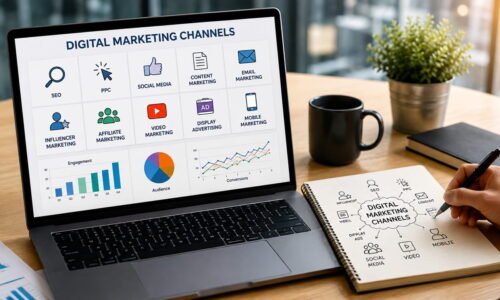
There are dozens of digital marketing channels out there, and most guides throw all of them at you at once exactly how business owners end up overwhelmed and doing none of them well. Here are the ones that actually move the needle.
Search Engine Optimization (SEO)
SEO is Getting your business to show up when someone searches Google for what you sell, without paying for every click. Slower to build than ads, but once you rank, traffic keeps coming without an ongoing cost. Behind the scenes, this means tracking rankings through Google Search Console, and studying competitors with tools like Semrush or Ahrefs.
Social Media Marketing
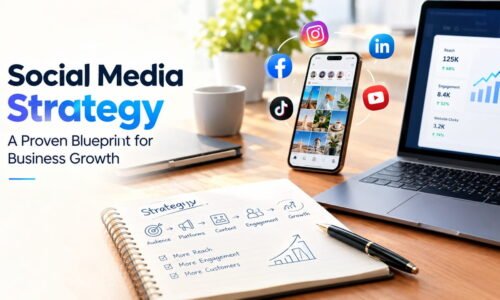
Building a presence on Instagram, Facebook, YouTube, and LinkedIn to stay visible and build trust. Instagram and Facebook sit under Meta, so targeting and ad tools carry across both. Split into organic (unpaid posts) and paid (targeted ads) you generally need both, since organic traffic alone doesn’t reach many people anymore.
Paid Search & Social Ads (PPC)
Paying to appear at the top of Google through Google Ads, or in someone’s Instagram feed through Meta Ads. This kind of paid advertising is fast, precisely targeted, and particularly effective for lead generation but the traffic stops the moment you stop paying.
Email & WhatsApp Marketing
Sending offers, updates, and follow-ups to people who’ve already shown interest. This is the one channel you fully own no algorithm can take your list away, which is why it usually delivers the highest return of any single channel.
Content Marketing
Blogs, videos, and guides that answer real questions your customers are asking. This is the fuel behind both your SEO and your social media without it, the other channels run out of material fast. Tools like ChatGPT and Gemini can speed up research and first drafts, but the local context and final judgement still need to come from someone who knows your customers. None of these channels work alone. A customer might discover you through an Instagram ad, search your name on Google a week later, then buy after a WhatsApp follow-up. That’s the customer journey in real life different channels doing different jobs at different points in the marketing funnel. Google Analytics ties this picture together, showing what actually happens after someone lands on your website. Which brings us to the question every business owner is really asking.
How Digital Marketing Works: The Journey From Stranger to Loyal Customer
Every customer who buys from you today started out as a stranger who didn’t know you existed. Digital marketing funnel is really just about moving people through five stages, one at a time this is the customer journey, and understanding it is what separates businesses that grow from ones that just spend.
Awareness
This is the moment someone first discovers you an Instagram ad, a Google search that surfaces your website, or a WhatsApp forward from a friend. The heavy lifting here is done by social media (Instagram, Facebook, YouTube), SEO, and paid advertising.
Consideration
Now they know you exist, but they’re not sure yet. They’re comparing you to competitors, reading reviews, watching your content. Content marketing, YouTube videos, and a well-ranked website the kind SEO and a strong Google presence build earn the trust needed for the next step.
Conversion
This is the sale itself. A fast landing page, a clear offer, and a simple way to buy or a WhatsApp Business number to close the deal directly is where paid ads and conversion optimization matter most. 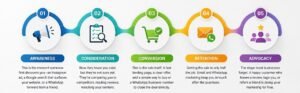
Retention
Getting the sale is only half the job. Email and WhatsApp marketing keep you in touch after the purchase, whether that’s a follow-up message, a reorder reminder, or a support update. Businesses that skip this stage end up paying to acquire the same customer twice.
Advocacy
The stage most businesses forget. A happy customer who leaves a Google review, tags you on Instagram, or refers a friend on WhatsApp is doing your marketing for free this is brand awareness compounding on itself.
This is the marketing funnel in plain terms wide at the top, narrow at the bottom. Track a customer through all five stages with Google Analytics and Google Search Console, and you’ll usually find one stage where people are quietly dropping off. That’s where your next rupee of budget should go, not into a random new channel.
Do Digital Marketing Campaigns Actually Deliver ROI?
Short answer: yes, when it’s done as a connected plan, not scattered spending. Here’s the honest comparison. Traditional advertising a hoarding, a newspaper ad asks you to spend money and hope it works, and you’ll never really know how many customers it brought in. Internet marketing services removes that guesswork: you see, in real numbers, exactly what a campaign returned, and adjust within days instead of finding out months later that it didn’t work. That’s what real ROI looks like a number you can point to, not a guess dressed up as a strategy. It’s also more fair to small businesses than traditional advertising ever was. A big brand’s hoarding budget doesn’t automatically beat a small business’s well-targeted Instagram ad. With the right targeting, a modest budget spent well can outperform a large one spent carelessly something that was almost never true with old-style advertising.
How to Build a Digital Marketing Strategy From Scratch
Most businesses skip straight to “let’s run some ads” without ever answering the questions that actually decide whether those ads will work. Here’s the order that actually matters:
- Decide what success looks like. More leads? More sales? More people walking into your shop? Pick one clear goal for this quarter, not five vague ones.
- Know exactly who you’re talking to. Not just “everyone who might buy” their age, their city, what problem they actually have, and where they sit in the customer journey. A B2B company chasing decision-makers belongs on LinkedIn, not spending its whole budget on Instagram Reels.
- Pick two channels, not eight. Match channels to your goal and audience. Trying to do SEO, ads, social media, and email all at once, on a small budget, usually means doing all four badly.
- Decide how you’ll know if it’s working. Before you spend a rupee, decide what number you’ll track cost per lead, conversion rate, whatever matches step one. Google Analytics and Google Search Console together give you most of this for free.
- Actually launch it. Get the content, ads, and people organized, with a realistic timeline instead of an open-ended “let’s see.”
- Watch the numbers, not your gut feeling. Check what’s happening after a few weeks which ad, post, or page is doing the work.
- Adjust and double down. Cut what isn’t working, and put more budget behind what is the biggest advantage digital marketing campaigns have over old-style advertising is that you’re allowed to change your mind fast.
How Much Should You Actually Spend?
There’s no universal “right” number, but here’s a realistic way to think about it, instead of picking a figure out of thin air. Start by auditing what you’re already spending most businesses have marketing money going out in scattered ways, a boosted post here, a listing fee there, with no one adding it up. Then match your budget to your strategy, not the other way around: spreading a small budget across five channels rarely works, but spending that same amount on one or two channels, properly, usually gets real results. Measure before you scale. Test small, see what a rupee actually returns on each channel, and grow the budget for whatever’s proving itself. If a channel has run for a couple of months with nothing to show for it, cut it without guilt that budget belongs somewhere else. For most small businesses in India, this means starting with a few thousand rupees a month, tracked closely, and scaling up only once there’s real proof of what’s working.
Should You Hire a Digital Marketing Agency, or Build an In-House Team?
Both work. The right choice depends on where your business is right now. An in-house team understands your business deeply and moves fast without needing to be briefed every time this makes sense once you have steady, predictable marketing needs and the budget to hire properly. A digital marketing agency brings in specialized skills someone who’s already solved the exact SEO or ad problem you’re facing, instead of learning it for the first time on your budget. This makes more sense early on, or when you need results across several channels without hiring five different specialists. A lot of growing Indian businesses land somewhere in between an in-house person handling day-to-day content and social media, with an outside expert handling the technical work like SEO or paid ads. There’s no shame in that mix; it’s often the smartest one.
What’s Changing: The Trends Already Reshaping Digital Marketing
Search results now come with AI-written answers
A growing share of Google searches end without a click, because the answer already appears in an AI-generated box, or the customer simply asked ChatGPT or Gemini instead. Businesses mentioned inside those AI answers get seen by people who’d never scroll down to the normal results.
Automation is doing the repetitive work
Scheduling posts, follow-up emails, replying to common WhatsApp questions marketing teams now automate this, freeing up time for work that needs human judgement.
AI is helping plan, not just execute
Beyond writing content faster, tools like ChatGPT and Gemini now spot patterns in what’s working and personalize messages to different customers automatically, instead of sending the same message to everyone. None of this replaces strategy. The businesses getting real value from AI are using it to move faster on a plan they’ve already thought through not as a replacement for having one.
The Mistakes That Quietly Waste Marketing Budgets
- Running five channels with no shared goal the ads team chasing clicks while sales wants actual leads.
- Treating SEO like a one-time job, then wondering why results faded after a few months.
- Ignoring email and WhatsApp while chasing whatever social platform is trending this month.
- No real tracking not even a basic Google Analytics or Search Console setup so nobody can say which channel brought in the sale.
- Sending traffic to a slow, confusing website, which cancels out every rupee spent getting people there.
- Buying tools before building a strategy the tool never fixes a plan that doesn’t exist yet.
How Arihant Global Does Digital Marketing Differently
We don’t start with a generic package. We start with an honest audit pulling real numbers from Google Analytics, Google Search Console, and tools like Semrush or Ahrefs to see where your traffic is coming from today, what’s converting, and what’s quietly burning budget. From there, we build a plan around two or three channels that genuinely fit your business, not a template sold to every client the same way. Every campaign we run gets tied back to a real number, so you always know what your marketing is actually doing not just how it looks on a slide.
Digital Marketing Frequently Asked questions
Q1. How to get more customers online?
Start with the three things that bring in customers already looking for you: a Google Business Profile, basic SEO on your website, and a WhatsApp Business number for quick replies. Most businesses jump to ads before fixing these basics, and end up paying for traffic their own website then loses.
Q2. Best digital marketing strategy for small business in India?
Pick one channel that matches your budget and stick with it for at least 90 days usually local SEO plus WhatsApp for a local business, or paid social plus a landing page for an online product. Spreading a small budget across five channels at once is the biggest reason results don’t show up.
Q3. Why is my website not getting any traffic?
Usually one of three reasons: the site isn’t set up for basic SEO, it’s too slow on mobile, or there’s no consistent content bringing new visitors in. A quick technical and SEO check usually reveals which one it is.
Q4. My ads are running but I’m not getting any sales why?
This is almost never an “ad isn’t working” problem it’s usually a “traffic isn’t converting” problem. Check your landing page speed, whether the offer matches what the ad promised, and whether there’s a clear next step for the visitor the basics of conversion optimization.
Q5. How much money do I need to start digital marketing?
There’s no fixed number, but many small businesses in India start meaningfully with a few thousand rupees a month. What matters more is tracking where every rupee goes, so you can put more into what’s working.
Q6. How long will it take to see results?
Paid ads bring visible results within days. SEO and content usually take three to six months to build up but they keep working long after, at a much lower ongoing cost.
Q7. Can I do digital marketing myself, or do I need an agency?
Yes, especially early on many small businesses run their own Google Business Profile, social media, and small ad campaigns. As the budget grows, a digital marketing agency helps you move faster and skip the expensive trial and error.
Q8. Is digital marketing really worth it for a small business, or just big companies?
It’s a bigger advantage for small businesses, because it’s measurable start small, see what’s working, and grow your budget only once there’s proof. A well-run small budget can outperform a poorly-run big one.
The Bottom Line
Digital marketing isn’t about picking one channel and hoping it works. It’s a system one clear goal, two or three channels chosen on purpose, honest tracking, and the willingness to cut what isn’t working and double down on what is. The businesses still guessing a year from now will be the ones who skipped the plan and went straight to spending. Want a digital marketing plan built around your business, not a generic template? Talk to Arihant Global and get a free audit of where your marketing stands today.
Disclaimer
The information, statistics, and figures presented herein are for general informational purposes only and do not constitute a guarantee. Marketing outcomes vary by business, industry, budget, and execution strategy.
Author Bio
A digital marketing and SEO professional specializing in SEO, content strategy, and online growth. With a focus on data-driven strategies and search trends, they help businesses build stronger visibility, authority, and sustainable organic growth.