15 SEO Mistakes Killing Your Rankings in 2026 And How to Actually Fix Them
|
Error 1 – Publishing Content Without Matching Search Intent
This is the single biggest ranking killer right now, and it’s more nuanced than most people realize. Search intent optimization isn’t just ‘is this informational search intent or transactional search intent?’ Google has gotten remarkably precise about what stage of a decision someone is in, what format they expect, and what a satisfying result actually looks like for that specific query.
A page targeting ‘best project management tools’ needs to behave like a comparison review. Not a definition. Not a promotional landing page. When your content format doesn’t match the dominant intent pattern in the top 10 results, you’re fighting an uphill battle that no Amount of backlinks will fully overcome.
✓ THE FIXBefore writing a single word, study the top 10 SERP results for your target keyword. Look at content type (guide, list, review), content format (how-to, FAQ-heavy, data-driven), and content angle (beginner vs. advanced, recent vs. evergreen). Mirror what's working, then out-execute on depth and originality.
|
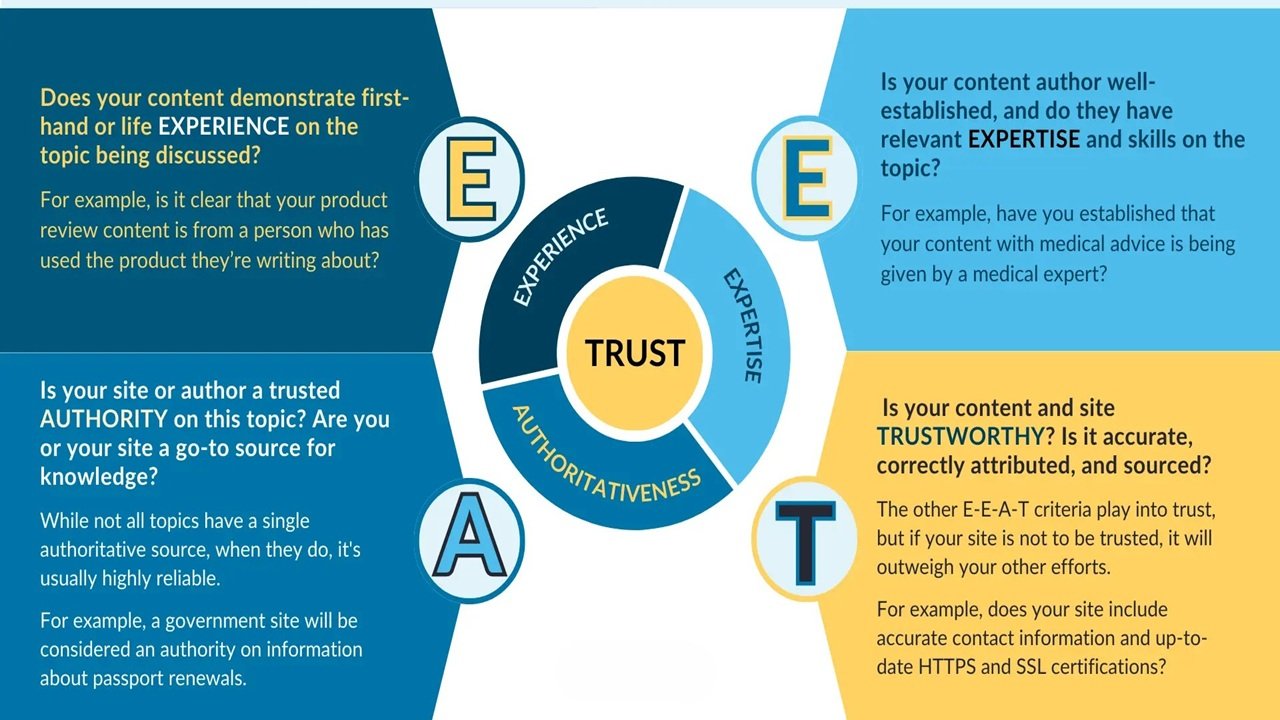
Error 2 – Treating E-E-A-T as a Checkbox Instead of a Foundation
Most people know about E-E-A-T. Far fewer actually implement it properly. The ‘Experience’ component the first E is where most sites fall flat. Google added it specifically to reward expert-driven content written by people who have genuinely done the thing they’re writing about.
Slapping an author bio at the bottom of a post isn’t E-E-A-T. Real E-E-A-T looks like, screenshots from your own testing, data from your own campaigns, case studies with specific numbers, and opinions that could only come from someone who’s been in the trenches. That’s what separates content that holds rankings from content that temporarily ranks and then quietly slides.
✓ THE FIXAudit your top 10 pages. For each one, ask: what proof is here that a real expert wrote this? Add author pages with verifiable credentials, include first-hand examples and outcomes, link to supporting sources, and ensure your site has basic trust signals like HTTPS, contact information, and transparent editorial standards.
|
Error 3 – Still Keyword Stuffing When Semantic SEO Is What Ranks
Google’s understanding of language has changed completely. Repeating a keyword 15 times does nothing and often triggers over-optimization penalties. What actually signals relevance in 2026 is topical depth. covering the entities, sub-concepts, related questions, and contextual language that belongs around your main topic.
Think about how Google reads content the way a subject matter expert would. A true expert writing about ‘core web vitals‘ would naturally mention LCP, INP, CLS, rendering, hydration, and real user monitoring not just the phrase ‘core web vitals‘ repeated endlessly. That contextual richness is what Semantic SEO is about.
✓ THE FIXMap out the Semantic SEO field around your topic before writing. Identify the key entities, related subtopics, questions people have at each stage of understanding, and the vocabulary domain experts use. Structure your content to cover all of it naturally not as a checklist, but as a genuinely thorough explanation.
|
Error 4 – Ignoring AI Search Optimization
AI Search Overviews, Perplexity, Chat GPT with browse enabled, Gemini these are now real traffic sources, and they pull content very differently than traditional blue-link search. They reward concise, direct, well-structured answers from sources they already trust. If your content buries the answer three paragraphs deep in a slow-loading webpage with no schema markup, you’re invisible to these systems.
2026 REALITY CHECKApproximately 40% of queries now trigger an AI Overview. Five or more AI platforms are actively pulling web content. Structured, answer-first content earns citation rates roughly 3 times higher than unstructured prose.
|
✓ THE FIXLead every section with a direct answer then expand. Use FAQ blocks with clear question-and-answer structure. Add proper schema markup. Write data-backed statements that AI engines can confidently cite. Think of GEO (Generative Engine Optimization) as a layer that runs alongside traditional SEO, not a replacement for it.
|
Error 5 – Trying to Rank With Isolated Articles
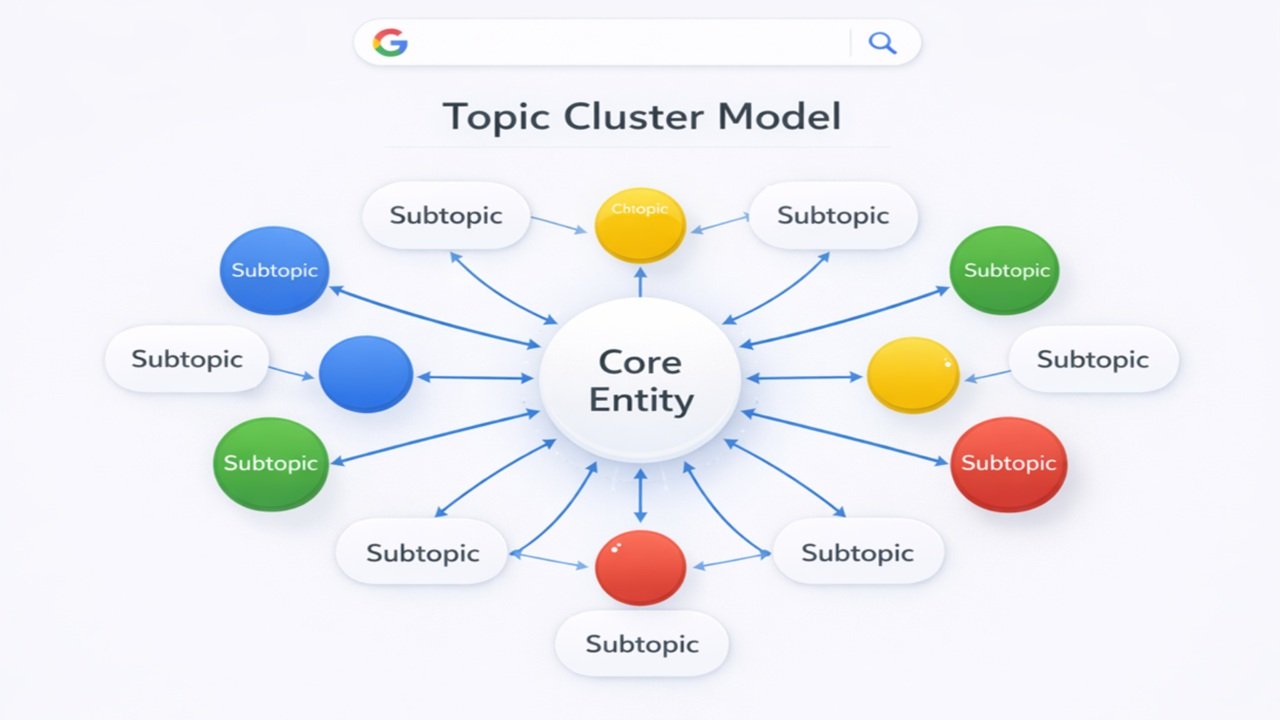
A single well-written article used to be enough to claim a keyword. That era is over. Google now rewards sites that demonstrate broad, deep, consistent expertise across an entire topic not just one piece of it. A site with 30 interconnected articles about SEO will routinely outrank a site with one ‘ultimate guide’ that covers the same keyword.
This is what topical authority SEO means in practice. It’s not just about writing volume, it’s about covering a topic from enough angles that Google recognizes your site as a genuine authority in that space.
✓ THE FIXBuild a content cluster around every core topic you want to own. Start with a pillar page that covers the broad topic, then create supporting articles for each major subtopic. Connect them with contextual internal links. For an SEO site, that pillar could be 'SEO strategy' with spokes covering crawlability, schema, Core Web Vitals, internal linking, and AI optimization separately.
|
Error 6 – Letting Technical SEO Debt Accumulate
A beautiful, well-written Webpage that Google can’t properly crawl, render, or index will rank nowhere. Technical SEO is the foundation everything else sits on and it’s one of the most neglected areas, especially on growing sites where new content is published faster than anyone audits what’s underneath.
Duplicate content without canonical tags, orphaned pages, JavaScript-heavy architectures that block rendering, crawl depth beyond four clicks from the homepage. these issues compound over time and silently drain the authority of your entire site.
✓ THE FIXRun a proper technical audit quarterly, not just once at launch. Check your XML sitemap is current and clean, that your robots.txt isn't accidentally blocking important pages, that duplicate URLs have canonical tags, and that your crawl depth is manageable. If your site runs heavy JavaScript, test rendering in Google Search Console's URL inspection tool regularly.
|
Error 7 – Ignoring Core Web Vitals in 2026
Core Web Vitals have been a ranking factor for a few years now, but the standards have tightened and the measurement has gotten more precise. The shift from FID to INP (Interaction to Next Paint) was significant INP is a much stricter measure of page responsiveness, and many sites that passed under the old metrics are now failing.
2026 TARGETSLCP under 2.5 seconds • INP under 200ms • CLS under 0.1. These aren't aspirational benchmarks — sites that consistently fall outside these ranges face measurable ranking disadvantages in competitive niches.
|
✓ THE FIXUse Google's PageSpeed Insights on your actual top-performing pages — not just the homepage. Prioritize LCP by preloading your hero image and avoiding render-blocking resources. Tackle CLS by setting explicit width and height on all images and embeds. For INP, reduce JavaScript execution time on interaction events.
|
Error 8 – Treating Internal Links as an Afterthought
Internal linking is probably the most underutilized lever in Search engine optimization. Most sites either ignore it entirely or add links randomly at the end of a post. Neither approach is effective. Google follows internal links to understand which pages you consider most important, how topics relate to each other, and how to distribute authority across your site.
Orphan pages those with no internal links pointing to them are essentially invisible to both Google and your readers, no matter how good the content is.
✓ THE FIXEvery new piece of content you publish should link to at least 3 to 5 relevant existing pages. Every existing page should receive at least one new contextual internal link from a related post. Use descriptive anchor text that describes the destination page's content not generic phrases like 'click here.' Audit for orphan pages every six months and connect them.
|
Error 9 – Not Understanding How Entity-Based SEO Works
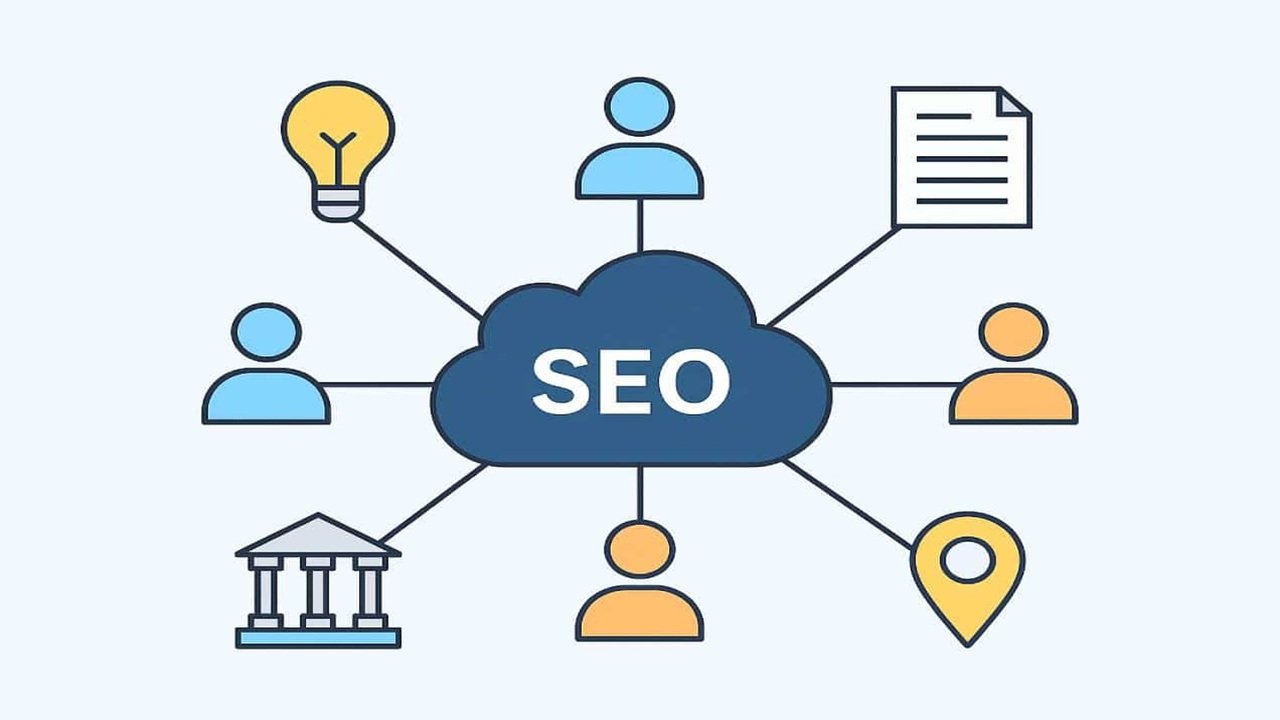
Google doesn’t just rank keywords anymore. it ranks entities and their relationships. Your brand, your authors, the topics you cover, the people you cite all of these are entities in Google Knowledge Graph. The more clearly you establish what your site is about at an entity level, the more confidently Google can rank you for relevant searches.
This is why consistent topical coverage matters so much. It’s not just about content volume, it’s about entity association. A site that writes consistently about ‘technical SEO’ becomes the entity associated with that concept in Google’s model of the web.
✓ THE FIXUse schema markup to clearly define your organization, authors, and content types. Ensure your author pages have verifiable external presence (LinkedIn, industry publications, etc.). Write consistently within your niche — entity authority comes from depth and consistency, not occasional broad coverage.
|
Error 10 – Confusing Length With Depth
A 4,000-word article that says the same thing 12 different ways is not a high-quality piece of content it’s a padded one. Google has gotten remarkably good at distinguishing genuinely helpful, information-dense content from long content that’s trying to fake depth through repetition and filler.
Winning content in 2026 earns its length. It includes real examples with specific outcomes, data with proper attribution, tables that organize genuinely complex information, and insights that you can only get from actual expertise or direct experience.
✓ THE FIXBefore publishing, apply the 'so what' test to every paragraph. If a section doesn't add a genuinely new piece of information or perspective, cut it. Add what's missing: expert commentary from real practitioners, original data, specific numbered examples, and visuals that illuminate rather than decorate.
|
Error 11 – Publishing Raw AI Output Without Human Expertise
Google’s position on AI content is frequently misquoted. They don’t penalize AI-assisted content. They penalize low-quality content and a lot of AI-first content happens to be exactly that generic, surface-level, factually shaky, and indistinguishable from a thousand other articles on the same topic.
The sites winning with AI-assisted content treat AI as a research assistant or first-draft tool never as the final author. The human layer is what adds the experience, the judgment, the real-world nuance, and the E-E-A-T signals that make content worth ranking.
✓ THE FIXUse AI to draft structure, generate FAQ ideas, and surface related subtopics. Then rewrite extensively with your own expertise, add your own examples and data, check every factual claim, and apply a full semantic and E-E-A-T layer before publishing.
The workflow is : AI Draft → Human Expertise → Semantic Enrichment → E-E-A-T Optimization.
|
Error 12 – Over-Optimizing On-Page SEO Elements
There’s a version of on-page SEO that helps and a version that hurts. Stuffing your primary keyword into the title, H1, first paragraph, every H2, the meta description, and the image alt text is no longer best practice. it’s a signal of over-optimization that can actively suppress rankings.
Natural language optimization in 2026 means your title tag should be compelling first, keyword-integrated second. Your H2s should describe what the section actually covers, not serve as keyword containers. Entity placement matters more than keyword density.
✓ THE FIXWrite your title for a human reader who's scanning a results page. Include your primary keyword naturally usually once, near the front. Use H2s to structure genuine subtopics. Use semantic variants, synonyms, and related entities throughout the body. Let the content feel like it was written by someone who knows the topic deeply.
|
Error 13 – Publishing Titles That Nobody Clicks
Your title tag is doing two jobs simultaneously satisfying Google’s relevance model and convincing a real human to click. Most SEO content is optimized for only the first job. The result is titles that rank but don’t get clicked and consistently low CTR is a signal that feeds back negatively into rankings over time.
A title like ‘SEO Guide 2026‘ is forgettable. A title like ’15 SEO Mistakes Killing Your Rankings in 2026 — And How to Fix Them’ creates curiosity, signals specificity, promises a payoff, and implies the reader has something to lose by not clicking. That difference in CTR compounds dramatically at scale.
✓ THE FIXStudy your Search Console CTR data and identify your lowest-performing titles relative to position. Rewrite them with specific numbers, a clear benefit, or a tension that creates curiosity. Test year-tagged freshness indicators, problem-framing angles, and power words that imply urgency or insider knowledge.
|
Error 14 – Skipping Schema Markup Entirely
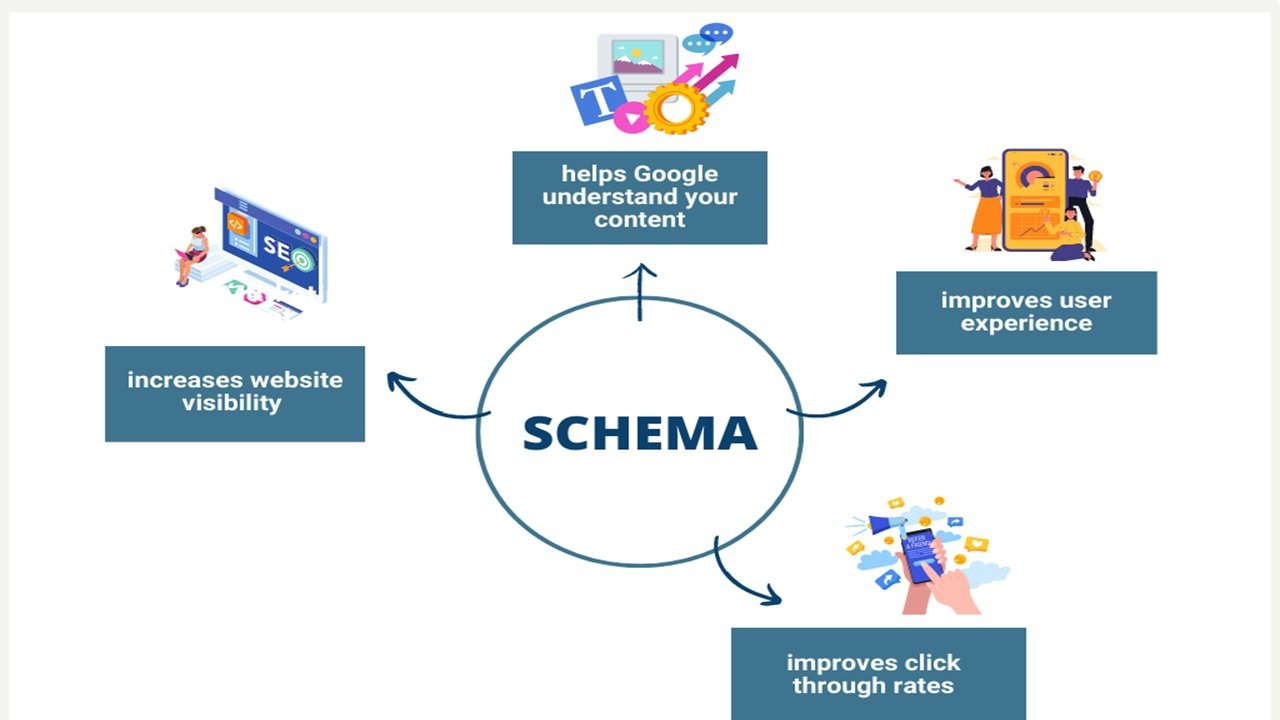
Schema markup isn’t just about rich snippets in the traditional SERP sense anymore. In 2026, schema is also how AI-powered search engines parse and categorize your content, it’s entity communication at a machine-readable level. Sites without proper schema are significantly harder for AI systems to classify and cite accurately.
At minimum, every content site should have Article, Author, Organization, Bread-crumb List, and FAQ schema markup implemented correctly across their content types. More specific schema like How To, Review, or Product adds another layer of visibility for relevant content.
✓ THE FIXStart with the foundational types Organization and Author at the site level, Article on every blog post. Add FAQ schema to any content that includes a question-and-answer section. Validate everything with Google's Rich Results Test before deploying.
|
Error 15 – Treating Search Engine Optimization as a Single-Channel Strategy
The final and arguably most strategic mistake is optimizing only for the Google blue-link SERP. In 2026, organic search visibility is distributed across Google AI Overviews, Perplexity citations, Chat GPT Browse responses, YouTube search, Reddit’s growing search presence, Bing, and more. Sites that only think about traditional keyword rankings are leaving significant traffic and brand authority on the table.
Building brand entity recognition the kind that makes Google and AI engines trust and cite you proactively requires consistent presence across multiple platforms, not just a high-ranking blog.
✓ THE FIXMap your content strategy to multiple surfaces. Repurpose strong written content into YouTube explainers, Reddit contributions, and structured FAQ content optimized for AI citation. Build your brand entity through consistent niche coverage, PR mentions, and authoritative external links. Think 'search visibility' more broadly than any single platform's algorithm.
|
||
THE 2026 SEO RANKING FORMULASEO Success = E-E-A-T + Semantic SEO Depth + Technical Foundation + UX Signals + Entity Authority + AI Search Optimization
|
||
Frequently Asked Questions – SEO
1. What are the biggest SEO mistakes in 2026?
Honestly? Still doing what worked in 2019. People obsess over keywords but publish content that says nothing new. Thin pages, zero internal links, slow load times Google's tired of it. Rankings drop and nobody knows why. The sites winning right now actually cover topics properly and write for humans first.
2. How does semantic SEO work?
You stop thinking in keywords and start thinking in topics. If someone searches about coffee brewing, they probably also want to know about grind size, water temperature, ratios. Cover the whole subject naturally and Google figures out your page belongs in more searches than just the one phrase you targeted.
3. What is entity SEO?
Google basically has a giant web of who's who and what's what. Your brand, your authors, your niche — all of it gets connected. The more consistently you talk about your subject and the clearer your credibility signals are, the more Google starts treating your site like it actually belongs there.
4. How to optimize content for AI search?
Answer the question fast, in plain language. Don't make people scroll through your life story before getting to the point. AI tools grab content they can actually understand and verify quickly. Short paragraphs, clear headings, real facts. If your page reads like a textbook intro, it probably won't get cited.
5. What are Core Web Vitals?
Three things Google watches how fast your page loads, whether buttons actually respond when clicked, and if your layout jumps around while loading. Most people ignore these until rankings drop. Fix your hosting, compress images, cut bloated scripts. A fast stable page just works better for everyone using it.
Conclusion
Search Engine Optimization in 2026 is driven by semantic SEO relevance, real expertise, technical performance, AI search optimization, and strong user experience signals not outdated keyword tricks. Websites that align with search intent , topical authority SEO, and Semantic optimize for both Google and AI-driven search platforms will dominate rankings.
If your business needs future-ready SEO Company in Jaipur built for sustainable growth, Arihant Global can help you build stronger organic visibility and long-term Ranking.
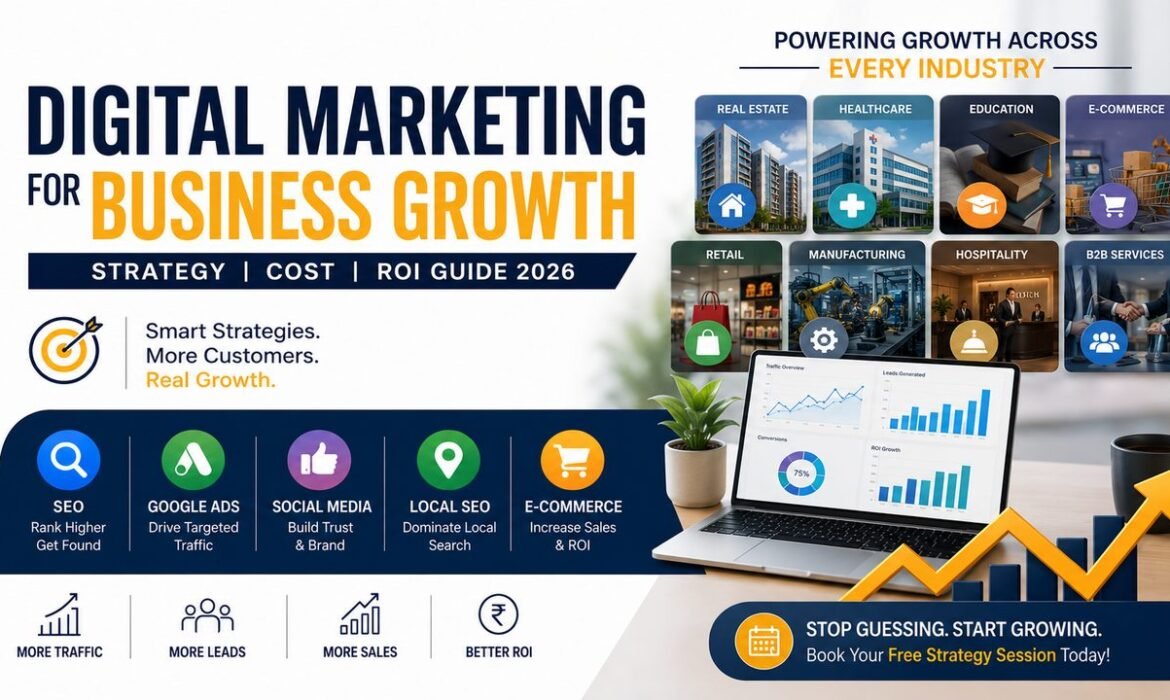
Digital Marketing for Business Growth in India: Strategy, Cost & ROI Guide 2026
“From Clicks to Customers: A Practical Growth Blueprint for Indian Businesses in 2026”
Most Indian businesses don’t have a customer problem. They have a visibility problem. they’re invisible at the exact moment a buyer opens Google and searches for exactly what they sell.
At Arihant Global, we work directly with founders across Jaipur, Delhi, Banglore and Ahmedabad every week and the frustration is consistent. money is being spent online, but the phone isn’t ringing. Traffic comes in, but sales don’t follow. That gap between digital activity and actual revenue is what this guide closes.
A serious digital marketing for business growth India is not about posting daily on Instagram or running random ads. It’s about building a predictable revenue engine — one that works even when you’re not watching it. Here is exactly what works in 2026.
What Is a Digital Marketing for Business Growth in India?
A digital marketing for business growth india is a structured, Multi-channel Marketing that moves a complete stranger through awareness, consideration, and purchase — using platforms like
Google Search, Meta Ads, Instagram, and WhatsApp API — while measuring the cost of every step.
The key word is structured. Disconnected tactics some SEO here, random Facebook posts there, a Google Ad with no matching landing page are not a strategy. They are a budget drain. A real digital growth strategy for companies defines three things precisely:
- which platforms capture your buyer’s attention,
- what message converts that attention into a lead,
- what each customer actually costs to acquire.
The 3-Stage Digital Growth Framework
Every profitable online business growth India strategy follows the same architecture.
Stage 1 — Awareness (Top Funnel):
SEO and social media ensure you appear when buyers start searching for a solution. This is your organic traffic growth strategy working 24 hours a day at a declining cost per visitor.
Stage 2 — Conversion (Middle Funnel):
Google Ads and Conversion Rate Optimization (CRO) turn that attention into qualified leads. This is where your performance marketing strategy India lives — measured entirely by Cost Per Lead (CPL) and Return on Ad Spend (ROAS).
Stage 3 — Retention (Bottom Funnel):
WhatsApp Business API and email marketing automation keep buyers engaged after the first purchase, extending Customer Lifetime Value (CLV) at a fraction of the original acquisition cost.
When these three stages are connected and measured, your multi-channel marketing approach drives consistent revenue and your cost per customer drops every month.
Digital Marketing Strategy for Business Growth In India
1. SEO Strategy for Business Growth in India
Search Engine Optimization is your permanent digital real estate. Unlike paid ads that stop the moment the budget runs dry, a properly built SEO strategy compounds month over month.
Ranking on page 1 of Google in 2026 requires topical authority SEO — covering your subject more completely and credibly than every competitor in your niche. Google’s ranking factors now reward Intent Based semantic SEO (meaning-based content) and entity-based SEO over simple keyword repetition.
A strong business growth through SEO strategy covers three layers:
- technical SEO (Core Web Vitals, crawlability, schema markup),
- on-page optimization (high-intent keywords, NLP-friendly content, user intent optimization),
- off-page authority (backlinks from relevant Indian industry sources and local citations).
Realistic timeline: Expect ranking movement between months 3 and 6. Consistent, high-quality lead generation typically stabilizes by month 8. Any agency promising page-1 results in two weeks is lying.
2. Paid Ads Strategy: Google Ads vs Meta Ads
When you need revenue this week, paid ads Marketing are the lever you pull but without discipline, Google and Meta will burn your budget on irrelevant clicks.
Google Ads Strategy India :-
Google Ads captures existing demand. The buyer is already searching. A properly structured campaign with exact-match keywords, intent-matched landing pages, and a clean negative keyword list can dramatically Reduce Cost Per Click.
Proof: A Jaipur-based service business reduced their cost per lead from ₹780 to ₹310 within 45 days by restructuring ad groups and building dedicated landing pages for each service.
Meta Ads :-
create new demand. The buyer wasn’t thinking about your product — until your ad stopped the scroll. Meta works best for visual product categories, local brand awareness, and retargeting cart abandoners.
The Decision rule: Google captures today’s buyers. Meta builds tomorrow’s pipeline. Most growing Indian businesses need both running simultaneously and SEO running underneath to lower long-term acquisition costs.
3. Social Media Marketing Strategy: The Reality Check
Followers are not revenue. A 50,000-follower account means nothing if those people never open their wallets.
A genuine social media marketing strategy starts with one question:
Does my audience trust me enough to buy from me?
Your brand awareness strategy on Instagram should show behind-the scenes work. Real client results with specific numbers, and quick useful tips that prove expertise before anyone pays you a rupee.
Social media is the trust checkpoint buyers do before calling. If your profile looks inactive or generic, you’ve already lost half those leads before they ever contact you.
4. Local SEO Strategy for Indian Businesses
If you run a clinic, retail store, or local service company, Google Maps is your single highest-ROI lead generator. When a user searches “near me,” they’re typically ready to contact a business within 24 hours.
Your local SEO Service rests on four pillars:
- Google Business Profile optimization (accurate categories, geotagged photos, weekly posts),
- Consistent review velocity (new reviews every week — not a burst from two years ago),
- NAP consistency across Just Dial, India MART, and Sulekha,
- Geo-tagged visual content
As AI-driven local search becomes the default through Google Search Generative Experience. Businesses with complete, optimized google business profiles will capture a disproportionate share of zero-click search visibility. Arihant Global’s Google My Business Optimization Jaipur Strategy have consistently delivered first-position map pack results across healthcare, education, and professional services.
5. E-Commerce Marketing Strategy for Indian Brands
Traffic means nothing if the cart stays empty. A Result-Driven E-commerce marketing Company connects the ad click directly to a frictionless checkout then recovers the 60–80% of buyers who abandon before completing purchase.
The proven e-commerce growth India playbook:
Meta prospecting and Google Shopping for traffic → dedicated product landing pages for conversion → WhatsApp API abandoned cart sequences (50–60% open rates in India) → post-purchase email flows to drive repeat orders and maximize CLV.
An E-commerce Marketing ROI strategy doesn’t measure impressions. It measures purchases completed within 30 days of the first ad click.
Conversion Rate Optimization: Your Fastest Growth Lever
Getting 10,000 visitors is pointless if your site is slow, confusing, or lacks a clear next step. Conversion rate optimization is the process of removing friction between intent and action — and it’s where the fastest, cheapest growth usually hides.
Common high-impact CRO strategy fixes for Indian businesses: moving the phone number above the fold on mobile, replacing “Contact Us” with a specific CTA like “Book a Free Audit,” compressing images to cut load time below 2 seconds, and adding a WhatsApp chat widget to capture visitors who won’t fill forms.
Industry-Specific Digital Marketing Approaches
- Real estate: Google high-intent search traffic + Meta video ads to drive site visits.
- Healthcare digital marketing: local SEO is non-negotiable — patients search during symptoms.
- B2B digital marketing India: industrial SEO and LinkedIn dominate, with WhatsApp for nurturing postcontact.
- Education marketing strategy: retargeted ads, testimonial-heavy landing pages, and webinar registrations across the extended admissions journey.
Copy-paste marketing drains budgets. Every vertical requires a different approach.
Digital Marketing Cost in India (2026 Benchmarks)
| Service | Monthly Cost | What You Get |
| Local SEO | ₹15,000 – ₹25,000 | GBP optimization, citations, map pack ranking |
| National SEO | ₹25,000 – ₹60,000+ | Topical authority, backlinks, technical SEO |
| Google Ads Management | ₹15,000 flat or 15–20% of spend | Strategy, copy, landing page coordination |
|
Full Multi-Channel Retainer |
₹35,000 – ₹1,00,000+ | SEO + Paid + Social + CRO + Reporting |
Tip : If an agency quotes ₹5,000 for “everything,” they’re either outsourcing your work to juniors or running tactics that will eventually penalize your domain.
How to Measure Digital Marketing ROI in India
Track three numbers nothing else matters more:
- ROAS: Did ₹1 in ads produce ₹4 in revenue? Healthy benchmarks: 3x for real estate, 5–8x for e-commerce.
- CPA (Cost Per Acquisition): What did one paying customer cost? Must stay below average transaction value.
- CLV (Customer Lifetime Value): A customer worth ₹50,000 over five years justifies a ₹3,000 acquisition cost. One worth ₹5,000 doesn’t.
When ROAS, CPA, and CLV are tracked together, digital marketing ROI India decisions become straightforward and budget moves to whatever channel has the best unit economics.
Why Digital Marketing Is Not Working for Your Business
Three causes appear in almost every failing campaign I’ve audited:
- Wrong targeting — broad match keywords attracting irrelevant searches, budget spent on information-seekers instead of buyers
- Weak landing pages — the ad promises a specific solution, the link goes to a generic homepage, the visitor leaves in under 10 seconds
- Zero follow-up speed — the lead was generated, then sat in a spreadsheet for 24 hours while a competitor called first
Fixing these three things, in order, resolves most digital marketing failures faster than any budget increase.
How to Choose a Digital Marketing Agency in India
Require transparent reporting showing CPA, ROAS, and lead quality not just clicks and reach. Confirm an in-house team exists, not a reseller operation. Ask for references from your specific industry. Walk away from any digital marketing agency India that guarantees #1 rankings in days, charges suspiciously below market rate, or reports only vanity metrics.
A professional Digital marketing Company acts as your external Chief Marketing Officer accountable to your revenue, not your follower count.
Frequently Asked Questions
How long does digital marketing take to show results? Google Ads generates leads within 48– 72 hours of a proper launch. SEO takes 3–6 months to rank and stabilizes into consistent lead flow by month 8.
Which channel gives the best ROI in India? SEO delivers the best long-term ROI as cost per lead decreases over time. Google Ads delivers the fastest — but cost stays fixed without active optimization. Businesses running both build the most resilient revenue model.
How do I reduce my Google Ads cost per lead? Switch from broad match to exact/phrase match, build dedicated landing pages for each ad group, and add a thorough negative keyword list.
These three changes typically cut CPL by 30–60% within 45 days.
How do I improve my Google Business Profile ranking? New reviews every week (not a burst from years ago), complete profile sections, geotagged photos uploaded regularly, and a 24-hour response rate to all reviews.
Final Thoughts
Real business growth through digital marketing doesn’t happen by accident. It happens when the right buyer finds you at the right moment, trusts you enough to make contact, and gets followed up with before a competitor does.
If your digital spending isn’t converting to sales, the market isn’t the problem the system is. Build the structured digital revenue engine that consistently growing Indian businesses are already running.
Stop guessing with your budget. Book your free Digital Marketing audit with Arihant Global today and find exactly where your current strategy is leaking revenue.
Disclaimer
This blog by Arihant Global is for educational and informational purposes only. Digital marketing results vary based on competition, industry, budget, and implementation quality. We do not guarantee specific rankings, leads, or revenue outcomes. Businesses should evaluate strategies based on their unique goals, market conditions, and operational requirements.
Search Intent Optimization: The Missing Layer in Your SEO Strategy (2026 Guide)
Learn How To Align Your Content With Intent And What Users Actually Want, Rank Higher And Drive Real Traffic & leads.
The Hidden Reason Your Traffic Isn’t Converting
Your analytics dashboard shows a massive traffic spike. Naturally, you think it’s a huge win. But then you look at your sales CRM or your WhatsApp inquiry list. Nothing. Zero new leads.
Why does more traffic so rarely equal more sales?
The issue usually hides in plain sight. Most businesses still publish content just to rank for specific words. They ignore what the person typing those words actually wants to do. This is where search intent optimization changes everything.
We aren’t in the keyword-obsessed era anymore. If you rank a generic blog post for a search term where the user actually wanted to buy a product, they will leave your site in seconds. Mastering semantic search and aligning with your buyer’s actual goals is mandatory today. Proper user intent optimization stops this immediate page abandonment. Ultimately, Search intent in SEO is the actual bridge between a random click and a paying client.
What is Search Intent Optimization?
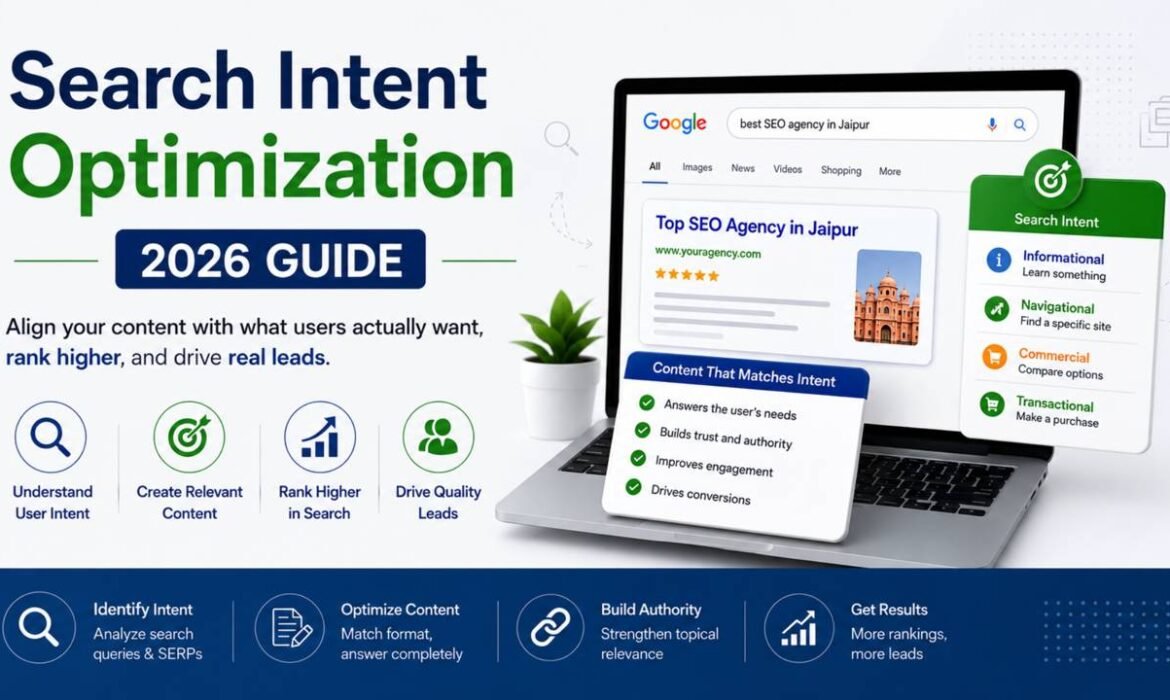
Search intent optimization is the process of aligning your content with the user’s goal behind a search query to improve relevance, engagement, and rankings.
At its core, search intent SEO means matching your webpage content to that exact goal. Doing this improves your relevance, keeps people on your site longer, and pushes your rankings up.
When you give search engines what their users want, you win. There are four main types of search intent. Here is how they look in the real world, along with practical search intent examples:
- Informational Search intent: They want to learn. Example: “How to use WhatsApp API.” They need a tutorial, not a sales pitch.
- Navigational Search intent: They want a specific website. Example: “Arihant Global client login.” *
- Commercial Search intent: They are doing research before buying. Example: “Best CPaaS providers in India.” They want honest reviews and comparisons.
- Transactional Search intent: They have their credit card ready. Example: “Hire SEO agency in Jaipur.” They need pricing details and a contact form.
Why Search Intent Matters More Than Keywords in 2026
Five years ago, you could stuff a web page with a target phrase and hit page one. Today, that strategy will tank your site. Modern AI search systems read entirely for human context.
When looking at search intent vs keywords, think of keywords as the raw input. The intent is the actual human problem.
If someone searches “fix low sales on Shopify,” Google ranking factors dictate that the top result shouldn’t just repeat that phrase fifty times. The winning page must genuinely solve the e-commerce conversion problem. Because algorithms match concepts to solutions rather than just identical words, keyword stuffing fails completely. It ignores the reader’s real goal.
How to Identify Search Intent (Step-by-Step)
You shouldn’t guess what your audience wants. The data is already out there. If you want to know how to identify search intent, here is the exact keyword intent analysis framework we use for our clients.
Step 1: Check the SERPs. Type your target phrase into Google and look at the top five results. Are they list articles, product pages, or deep-dive guides? These SERP intent signals literally show you the format Google prefers.
Step 2: Match that format. If the top spots are all YouTube videos and step-by-step blogs, don’t try to force a standard “About Us” service page into the mix. It won’t work.
Step 3: Spot the modifiers. Proper search query analysis becomes easy when you look at the extra words. Words like “buy,” “price,” or “near me” mean the user wants to spend money. Words like “how,” “what,” or “ideas” mean they just want information.
How to Optimize Content for Search Intent
Once you know what the searcher wants, you have to deliver it the second your page loads. Consider this your execution checklist and search intent optimization guide:
- Match the layout: To properly optimize for search intent, adapt your page structure. If the intent is commercial research, build a clean comparison table. If it’s transactional, use a high-speed landing page with obvious call-to-action buttons.
- Set expectations immediately: Your main headline (H1) needs to confirm the user is in the right place within three seconds. This content alignment keeps bounce rates low.
- Answer the whole question: Don’t just stop at the main topic. Look at the “People Also Ask” box on Google and answer those related questions. Creating deeply helpful, intent-driven content is what secures top rankings long-term.
Search Intent for Local SEO (The Jaipur Example)
Local search behavior is highly protective of time and budget. Understanding search intent for local SEO is exactly how small brands beat massive national competitors.
Let’s look at a real-world local SEO strategy Jaipur example. If a founder searches “SEO agency Jaipur,” their intent is heavily transactional. They want to hire a team. Your landing page better show local case studies, an office address, and a quick way to book a call.
But if they search “best SEO agency Jaipur,” their mindset shifts to commercial. They want a list to compare options before picking up the phone. Leveraging intent-based SEO for businesses means creating specific, different assets for every stage of that local buying journey.
The Mistakes Costing You Money
We audit digital campaigns across India every single week. The most expensive error we see is targeting the wrong search intent.
In recent SEO audits for several Jaipur-based businesses, we found that over 70% of their pages stuck on page 2 were failing because of an intent mismatch—not a lack of backlinks.
For instance, a dental clinic will try to rank their “Book a Root Canal” page for the search term “why do my teeth hurt.” The user just wants medical advice right now. Hitting them with a surgery booking form is jarring and makes them bounce.
Advanced Strategy: Combining Intent + Entity SEO
If you want to dominate search results for the next few years, you must look beyond basic intent. The modern standard requires combining human goals with entity-based SEO in jaipur.
Search engines read pages a lot like an industry expert would. Knowledge graph SEO ensures Google understands exactly how different concepts on your site connect to one another. Combined with natural language processing in SEO, the algorithm can now fully grasp the depth of your expertise.
When a CEO searches “best CPaaS provider in India,” Google doesn’t just match text. It uses contextual search to find trusted entities connected to telecom APIs, SaaS infrastructure, and enterprise messaging. When your website clearly maps out these connections, your brand becomes the definitive recognized expert.
Connecting the Dots
Great content doesn’t work in a vacuum. A single intent-optimized blog post needs to connect to the rest of your site logically.
This is exactly how to build topical authority in SEO. By grouping related articles together, you prove to the search algorithms that you know your industry inside and out.
For regional brands trying to capture market share, mastering an entity-based SEO strategy in Jaipur is how you start dominating standard search results and localized AI summaries.
FAQ – Search Intent Optimization
What is search intent optimization in SEO?
Search intent optimization is the process of creating content that matches the exact goal behind a user's search query. It helps improve rankings, engagement, and conversions by aligning webpages with what users actually want, whether they are searching for information, comparing options, or ready to make a purchase.
Why is search intent important for SEO in 2026?
Search intent is critical in 2026 because Google and AI-driven search systems prioritize user satisfaction over keyword repetition. Websites that solve user problems, answer questions clearly, and match search behavior are more likely to rank higher, reduce bounce rates, and generate qualified leads from organic traffic.
What are the four types of search intent?
The four main types of search intent are informational, navigational, commercial, and transactional. Informational users want answers, navigational users seek specific websites, commercial users compare products or services, and transactional users are ready to take action, purchase, contact a business, or book a service.
How can I identify search intent?
You can identify search intent by analyzing Google search results, reviewing SERP features, studying keyword modifiers, and understanding what content formats rank on page one. Terms like buy, price, or near me usually indicate transactional intent, while how or guide signals informational intent.
What is the difference between keywords and search intent?
Keywords are the words users type into search engines, while search intent represents the actual purpose behind those searches. Two people may use similar keywords but expect different results. Understanding intent helps businesses create content that satisfies user needs instead of simply targeting search phrases.
How does search intent improve conversions?
Search intent improves conversions by ensuring visitors land on content that directly matches their needs and expectations. When users quickly find relevant information, pricing, comparisons, or solutions, they stay engaged longer, trust the website more, and are more likely to complete actions such as purchases or inquiries.
Final Thoughts: Turn Your Content Into a Revenue Engine
Getting traffic is nice, but capturing leads pays the bills. Your SEO strategy can no longer rely on basic keyword matching.
When you fully integrate search intent optimization into your marketing, you stop wasting money on random, bouncing clicks. You build a resilient system that meets your buyers exactly where they are in their decision process. The shift toward intent-based SEO is permanent.
If your website traffic isn’t turning into actual sales, your content probably doesn’t match what your users want. Get In touch with Our team at Arihant Global that spends every day helping businesses fix this exact problem—turning weak pages into predictable, high-converting digital assets.
Disclaimer
This blog is for informational purposes only. SEO results are not guaranteed and may vary depending on competition, strategy, website quality, and implementation. Search engine algorithms change frequently, and outcomes can differ for each business. Readers should use this information as guidance, not a promise of rankings or results.
How to Build Topical Authority in SEO (Step-by-Step Guide for 2026)
Elevate Your Digital Presence With a Precision-Driven Topical Authority SEO Framework
Let’s be honest. If your website isn’t ranking in 2026, it’s not because you didn’t publish enough blogs.
It’s because search engines don’t trust your expertise.
You can post four articles a week, target high-volume keywords, even build High authority backlinks—but if your content feels disconnected, shallow, or generic, it won’t move the needle.
That’s where most businesses get stuck.
Meanwhile, a smaller competitor with fewer resources quietly dominates search results. Not because they’re spending more—but because their content feels complete, structured, and authoritative.
That’s what topical authority in SEO actually is.
And once you understand how it works, rankings stop feeling random.
What is Topical Authority in SEO?
Topical authority in SEO is what happens when your website becomes the most reliable, complete source of information on a specific subject.
Instead of answering one question, you cover the entire journey:
- From basic understanding
- To comparisons and decisions
- To real-world execution
Search engines don’t just evaluate single pages anymore. They evaluate how well your entire website understands a topic.
When everything connects, your site starts to feel like an expert—not just another blog.
Topical Authority SEO Framework
|
Element |
What It Means |
|
Topic Focus |
Clear niche you dominate |
|
Content Depth |
Cover beginner to advanced queries |
|
Structure |
Pillar + Topic cluster model |
|
Linking |
Contextual internal connections |
| Trust |
Real experience + proof |
The Shift to Entity-Based SEO
Search engines don’t read content like they used to.
They don’t scan for keywords and match phrases. They try to understand meaning.
That’s where entities come in.
An Entity SEO is any clearly defined concept—like a service, location, or idea. Instead of focusing on keywords, modern Entity-Based SEO Strategy focuses on how well you connect these concepts.
For example, if your website talks about WhatsApp API solutions, it should naturally cover:
- Broadcast limits
- Green tick verification
- Automation workflows
- Compliance challenges
If those connections are missing, your content feels incomplete.
And this is exactly where most websites lose the game—they never go beyond surface-level coverage.
A Real-World Example: Topical Authority vs Backlinks
A Jaipur-based dental clinic approached us after losing rankings to large national directories.
They had:
- More backlinks
- Better branding Strategy
- Active marketing Campaigns
But only one page on “dental implants Jaipur.”
That was the problem.
Instead of building more links, we focused on structure.
We created:
- One detailed pillar page
- 15 supporting articles covering cost, procedure, recovery, materials, and comparisons
Within four months:
- Organic traffic tripled
- Rankings expanded across hundreds of long-tail queries
- Lead quality improved significantly
This is exactly how structured content drives SEO results for local businesses, even in highly competitive markets.
The big directories had authority.
But the clinic built relevance.
And relevance wins. here
Topical Authority Growth Model (2026)
This is how Topical authority builds in real scenarios:
Phase 1: Base (0–30 Days)
- Define your topic clearly
- Publish a strong pillar page
Phase 2: Expansion (30–60 Days)
- Add 10–20 supporting articles
- Connect them with internal links
Phase 3: Authority (60–90 Days)
- Rankings spread across related queries
- Traffic starts compounding
This is the point where most sites begin to see real traction.
Step-by-Step Framework to Build Topical Authority
Step 1: Define a Clear Topic Scope
Don’t try to cover everything.
Pick a focused niche and own it.
Instead of “real estate in India,” focus on something like:
“commercial office leasing in Jaipur”
This gives your content direction and makes your expertise easier to recognize.
Step 2: Map Search Intent (Not Just Keywords)
Search volume alone doesn’t build Topical authority.
You need to understand:
- What people are trying to learn
- What they compare
- What they’re ready to buy
Group your topics based on intent:
- Informational
- Commercial
- Transactional
This creates a complete journey.
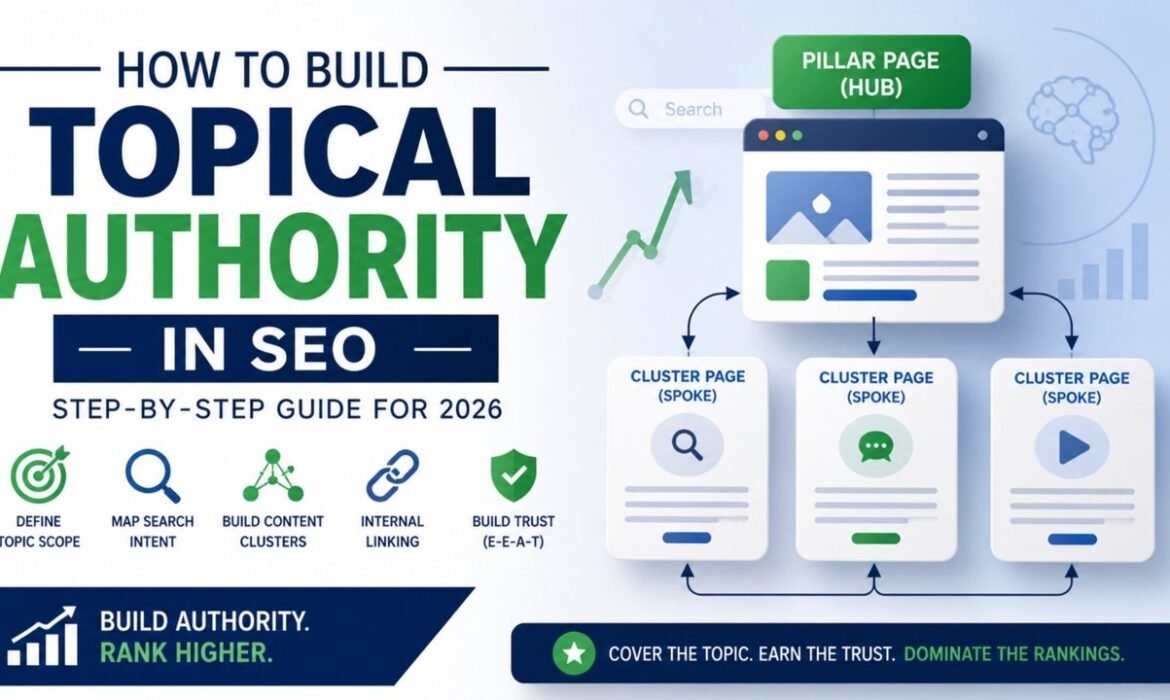
Step 3: Build a Content Cluster
This is where structure comes in. Instead of random posts,
Build a Content Cluster Strategy:
- One pillar page (broad topic)
- Multiple supporting pages (specific subtopics)
Example:
| Pillar Page | Supporting Content | Anchor Example |
| Paid Ads Guide | Google Ads vs Meta Ads | choosing the right paid platform |
| Cost Per Click Optimization | improving PPC ROI | |
| Retargeting Strategy | local retargeting setup |
For example, your main Paid Ads Guide should internally link to Google Ads vs Meta Ads, cost-per-click optimization, and retargeting strategies to build clear topical relationships.
If your content isn’t structured like this, rankings will always feel unpredictable.
Step 4: Semantic SEO Optimization
Once your structure is mapped, you need to actually write the pages. This is where most local businesses fail. They simply look at the top-ranking competitors and rewrite their content. In 2026, this is called “copycat content,” and it gets ignored.
To increase organic traffic, you must focus on Semantic Search SEO Strategy. Information gain measures what unique value, experience, or data your article provides that no other page on the internet has.
Ask yourself:
- Does this post include original data from my business?
- Am I sharing a unique case study?
- Does my search intent optimization truly solve the user’s problem faster than the current #1 result?
Adding real-world micro-depth—like sharing the exact cost reduction a client saw after implementing a specific topical authority strategy—is the ultimate content depth SEO play.
Step 5: Connect Everything with Internal Linking
Content without links is invisible.
Every page should:
- Link back to the main topic
- Connect to related subtopics
This builds a clear structure that search engines can understand.
Step 6: Focus on Information Gain
This is where most content fails.
If you’re just repeating what already exists, your content adds no value.
Ask yourself:
- Does this include real data?
- Am I sharing actual experience?
- Is this better than what’s already ranking?
For example, instead of saying “reduce CPC” show actual before-and-after results from a real campaign.
That’s what makes content stand out.
Step 7: Strengthen E-E-A-T Signals
Search engines look for proof of expertise.
You can’t fake this.
Add:
- Real author profiles
- Case studies
- Clear business information
If your content feels like it comes from real experience, it builds trust naturally.
Step 8: Expand Consistently
Topical authority isn’t built in one week.
Once you cover one area completely:
- Expand to related topics
- Update old content
- Remove weak pages
Over time, your site becomes a complete resource.
Common Mistakes That Ruin Topical Authority
- Posting random blog articles without any topic
- Using high-traffic keywords rather than focusing on topics
- Poor internal linking strategy
- Copying competitor content without contributing new value
- Lack of practical examples
Topical Authority Checklist
- Define a clear topic and scope
- Map content based on search intent
- Create one strong pillar page
- Publish 10–20 supporting articles
- Link everything logically
- Add real experience and data
- Keep updating and expanding
FAQs
1. What is topical authority in SEO?
Topical authority in SEO is the level of trust and expertise search engines assign to a website based on how comprehensively it covers a specific subject. It is built by creating in-depth, structured content that answers every stage of a user’s journey.
2. How do you build topical authority quickly?
To build topical authority quickly, choose a narrow niche, create a detailed pillar page, and publish 10–20 supporting articles covering all related subtopics. Connect them with internal links and focus on real experience, data, and information gain.
3. Why does entity-based SEO improve rankings?
Entity-based SEO improves rankings by helping search engines understand the relationships between concepts instead of just matching keywords. Covering related entities and subtopics increases relevance and allows pages to rank for multiple long-tail queries.
4. What is the difference between topical authority and backlinks?
Backlinks signal popularity and trust from other websites, while topical authority proves expertise and relevance on a subject. Strong rankings require both, but topical authority drives deeper visibility across multiple related keywords.
5. How do AI Overviews impact SEO strategy?
AI Overviews prioritize structured, clear, and authoritative content. To appear in them, your content must directly answer questions, follow logical formatting, and demonstrate deep topical coverage that AI systems can easily understand.
6. What is a pillar page in SEO?
A pillar page is a comprehensive guide on a broad topic that connects to multiple supporting articles covering specific subtopics. This structure helps search engines understand content relationships and builds strong topical authority.
7. How long does it take to build topical authority in SEO?
Topical authority typically starts showing results within 60 to 90 days if you publish structured content clusters consistently. However, stronger authority and competitive rankings may take several months depending on competition and content depth.
8. How many articles are needed to build topical authority?
Most websites need one comprehensive pillar page supported by 10 to 20 high-quality articles covering related subtopics. The exact number depends on how competitive the niche is and how deeply topics are covered.
9. How do AI Overviews SEO impact my content strategy?
AI Overviews summarize search results directly at the top of Google. To appear in them, your content must be structured cleanly with clear headings, direct answers, and deep topical coverage that an AI can easily parse and trust.
Stop Guessing, Start Structuring
Digital dominance is not a creative exercise. it is an organizational one. Search engines want to rank the absolute best answer to a user’s question. By organizing your website into logical SEO Content clusters, proving your real-world experience, and answering the questions your competitors ignore, you leave algorithms with no choice but to rank you first.
At Arihant Global, we have spent the last 12+ years building predictable digital revenue systems for over 2,000 clients across India. We know that publishing random blog posts doesn’t generate leads. Structuring your expertise does.
Disclaimer
The information provided in this article by Arihant Global is for educational and informational purposes only. While every effort has been made to ensure accuracy, SEO outcomes may vary based on industry competition, website condition, and implementation quality. This content does not constitute guaranteed results or professional advice tailored to your specific business.
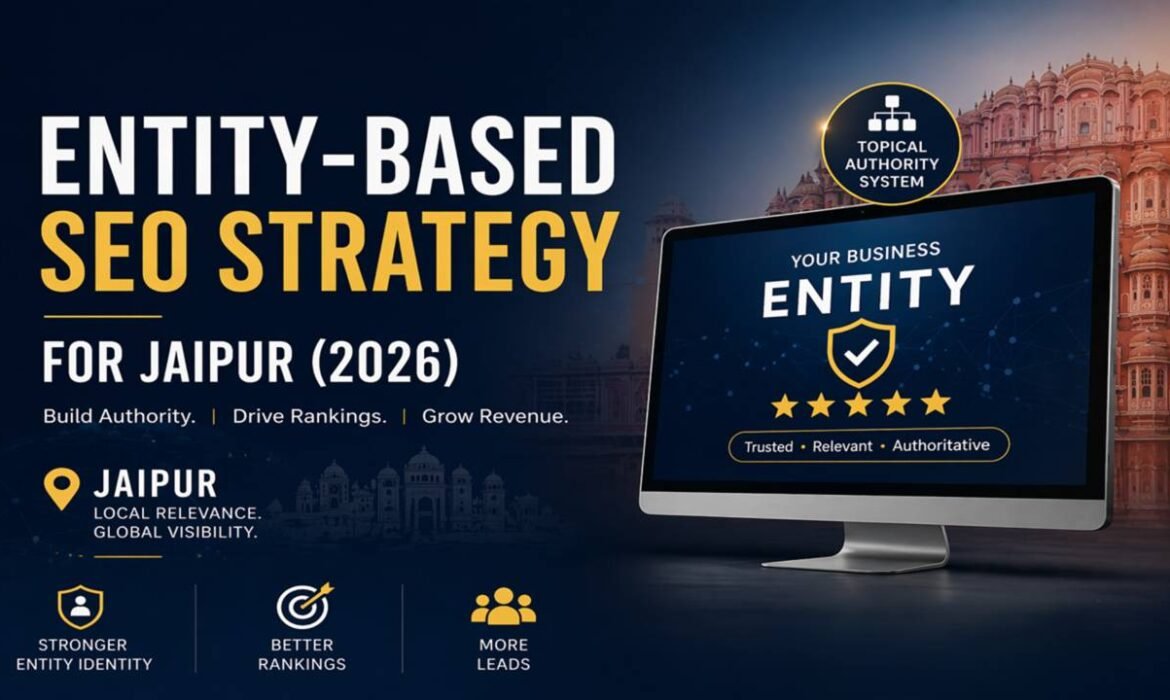
Entity-Based SEO Strategy Jaipur (2026): From Keywords to Rankings & Revenue
Move beyond keywords – build a verified business entity that ranks, earns trust, and drives consistent local leads in Jaipur.
In 2026, Jaipur’s digital landscape is divided into two camps: those chasing “empty” traffic and those building a strong topical authority SEO strategy. Most local businesses are still playing a 2018 game stuffing keywords into blogs and hoping for rankings.
Google has moved on. It now ranks entities verified, real-world organizations with proven expertise. If your digital footprint doesn’t clearly define who you are and why you’re a leader in your niche, your rankings will remain vulnerable to every algorithm update.
This shift is exactly what teams like Arihant Global have been adapting to moving from keyword-heavy execution to structured, entity-based SEO Strategy Jaipur that align with how search actually works today.
What is Entity-Based SEO?
Entity-Based SEO is not a new trick or tool. It is a shift in how search engines interpret your business. Instead of matching words on a page, Google tries to understand:
“Is this a real, credible business I can trust for this topic?”
To answer that, it connects signals from:
- your website
- your Google my Business Profile
- mentions across other websites
- structured data (schema)
- user engagement behavior
So your website stops being “pages with keywords” and becomes a recognized business identity inside Google’s system.
How entity-based SEO connects content, business identity, and local signals to improve rankings in Jaipur
Why Traditional SEO Fails in Competitive Markets like Jaipur
Most SEO strategies fail for a simple reason they focus on output, not structure. Businesses keep publishing blogs, chasing keywords, and building backlinks, but everything stays disconnected. The content exists, rankings may show up for a while, but there’s no real system behind it that search engines can understand or trust long-term.
That gap becomes even more obvious in competitive markets like Jaipur. Here, SEO isn’t just about getting traffic anymore. If your content, website, and business signals don’t work together, the results don’t hold.
This is also where many businesses miss a big opportunity with Google Business Profile optimization. A lot of companies either set up their Google listing and forget about it, or they treat it separately from their website SEO. That’s where things break.
How Google Actually Sees Your Business
Search engines now evaluate businesses using three silent questions:
1. Identity –
Who exactly are you as a business?
2. Relevance
What topics are you consistently associated with?
3. Trust
Can your presence be verified across multiple sources?
If your digital footprint gives inconsistent answers, Google reduces visibility even if individual pages are optimized well.
Branding vs SEO: The 2026 Power Dynamic
Most Jaipur businesses treat Branding and SEO as two different departments. In 2026, that’s a mistake. SEO gets you found, but Branding gets you chosen. Without a brand, you are just a “commodity” link in a list. With a brand, you are an Entity.
“For a deeper look at merging these two worlds, refer to our comprehensive guide: [ Branding vs SEO -Building a Verified Entity ].”
The Entity-based SEO Cluster Model
Instead of treating SEO as individual pages, build it like a connected system.
A. Pillar Page (Main Authority Page)
This is your core topic.
Example:
This page should clearly explain:
- what you do
- who it is for
- your expertise in that domain
B. Supporting Pages (Context Builders)
These explain sub-topics in depth:
- Local SEO in Jaipur
- Technical SEO foundations
- Conversion-focused SEO strategy
- SEO pricing and business impact
- Google Business Profile optimization
Each page should support the pillar—not compete with it.
C. Intent Pages (Revenue Drivers)
These are pages built for action:
- SEO services Jaipur
- Seo agency jaipur
- SEO audit service
- consultation page
- hire SEO expert Jaipur
- best SEO company Jaipur
- case study pages
These convert traffic into leads.
|
Content Tier |
Purpose | 2026 Strategy |
|
The Pillar (Core Entity) |
Establishes the “What” |
A 3,000+ word master guide on Entity-Based SEO in Jaipur that defines your territory. |
|
Support (Topic Clusters) |
Establishes the “How” |
Deep-dives into Local Schema, Semantic Search, and GBP Optimization. These feed authority to the Pillar. |
| Intent (Revenue Nodes) |
Captures the “Who” |
Service pages and Case Studies. These don’t need traffic; they need Conversion. |
Entity Signals That Actually Matter
Search engines don’t trust what you say; they trust what they can verify. To turn your business into an “Entity,” we focus on three technical pillars:
- Organization Schema: We don’t just list your address. We use JSON-LD structured data to tell Google’s API exactly who your founders are, your social profiles, and your official brand name.
- The Knowledge Panel: We optimize brand for “Brand SERP.” When someone searches your name, your business shouldn’t just be a link—it should be a verified box on the right side of the screen.
- NAP Consistency: Name, Address, and Phone number must be identical across your website, Google my Business Profile (GBP), and Jaipur business directories. A single mismatch is a “Trust Leak.”
Internal Linking Strategy (The Part Most People Underestimate)
Internal linking is not about SEO structure.
It is about telling Google:
“These pages belong to the same business and topic universe.”
A clean structure looks like:
- Pillar page → supporting blogs
- Supporting blogs → pillar page
- Blogs → conversion pages
This creates a clear path for both:
- users
- search engines
Without this, your content exists in isolation—and loses authority impact.
Content That Actually Builds Authority (Not Just Traffic)
In 2026, “filler” content is a liability. If a blog looks like it was written by a generic AI, Google will devalue the entire domain.
High-Authority content must provide “Information Gain”:
- Proprietary Insights: Share what worked for a Jaipur-based client last month.
- Density over Length: Don’t write 2,000 words if the answer takes 500.
- Experience (The “E” in E-E-A-T): Use phrases like “In our experience managing Jaipur accounts…” or “What we’ve observed in the local market…”
How Jaipur Businesses Can Use This to Win Faster
Jaipur is still in a transition phase in digital maturity.
Many businesses still rely on:
- basic keyword SEO
- inconsistent content publishing
- disconnected social + SEO strategies
This creates a clear opportunity.
Businesses that build Local entity structure early will naturally:
- gain stronger visibility
- reduce dependency on ads
- build long-term organic leads
Because competition is still not fully structured at an entity level.
SEO + Social Media Marketing Should Work Together (Not Separately)
One common mistake is treating SEO and Social media Marketing as unrelated systems.
In reality, they should support each other.
A simple structure:
- Social content → drives interest
- Landing pages → capture intent
- SEO pages → build long-term discovery
- CRM → tracks real conversion value
When these are connected, Digital marketing becomes measurable—not guesswork.
Realistic SEO Timeline (What Actually Happens)
Good SEO doesn’t give overnight results.
A realistic pattern looks like:
- Month 1–2: structure + technical fixes
- Month 3–4: early visibility improvements
- Month 5–6: consistent traffic + lead signals
- Month 6+: authority compounding begins
Delays usually happen when:
- content is not structured properly
- internal linking is weak
- conversion tracking is missing
Why Most SEO Efforts Don’t Produce Revenue
Stop reporting on “Position #1.” It’s a vanity metric.
A professional SEO service in jaipur tracks Qualified Leads. We look at which “Intent Page” converted a visitor into a phone call or a WhatsApp inquiry. If your traffic is up but your phone isn’t ringing, your Entity isn’t attracting the right audience. We optimize for Revenue, not just Clicks.
Frequently Asked Questions
1. what is entity-based SEO?
entity-based SEO makes your business known and understood. The process involves associating your business through the site, Google Business Profile, etc., to make Google understand that your business is credible.
2. What sets it apart from the conventional one?
The difference between entity-based SEO and conventional SEO is that while the latter concentrates on keywords and backlinks, the former focuses on your business details and consistency.
3. How can I rank my business in Jaipur?
It is necessary to maintain consistent details, establish a proper Google Business Profile, and write content related to the search demands in Jaipur. Structure is essential for ranking alongside content.
4. Significance of a Google Business Profile
The Google business profile is crucial since it proves to Google that the business is credible. It ensures that the company appears in the local searches on Maps, thereby generating more leads.
5. How long does it take for SEO in Jaipur?
It’s not an overnight process. however, it takes some time for your traffic and leads. But that also depends upon how competitive your industry is.
6. Why am I receiving traffic on my website but no leads?
The reason why this could be happening is because although your content may be drawing traffic, it fails to direct those visitors to convert into leads. In case there aren’t any landing pages, visitors don’t reach out to you.
7. What does topical authority mean?
Topical authority means having comprehensive content about a certain subject matter instead of only writing one blog post related to a particular theme. Once your site proves its knowledge base, Google ranks it higher.
Final Thought
Search Engine optimization today is no longer about publishing more content. It is about building a clear, connected identity that search engines can understand and trust.
When your business is structured properly:
- visibility becomes stable
• traffic becomes relevant
• leads become predictable
And at that point, SEO stops feeling like marketing—and starts behaving like a system. Most Jaipur businesses are already getting traffic they just aren’t getting customers from it. The issue is rarely effort. It’s structure, intent alignment, and entity clarity.
Want SEO that actually brings leads, not just rankings? Get in touch with Arihant Global and see what’s possible for your business.
Disclaimer
This content is for informational purposes only. SEO results are not guaranteed and may vary depending on competition, strategy, website quality, and implementation. Search engine algorithms change frequently, and outcomes can differ for each business. Readers should use this information as guidance, not a promise of rankings or results.
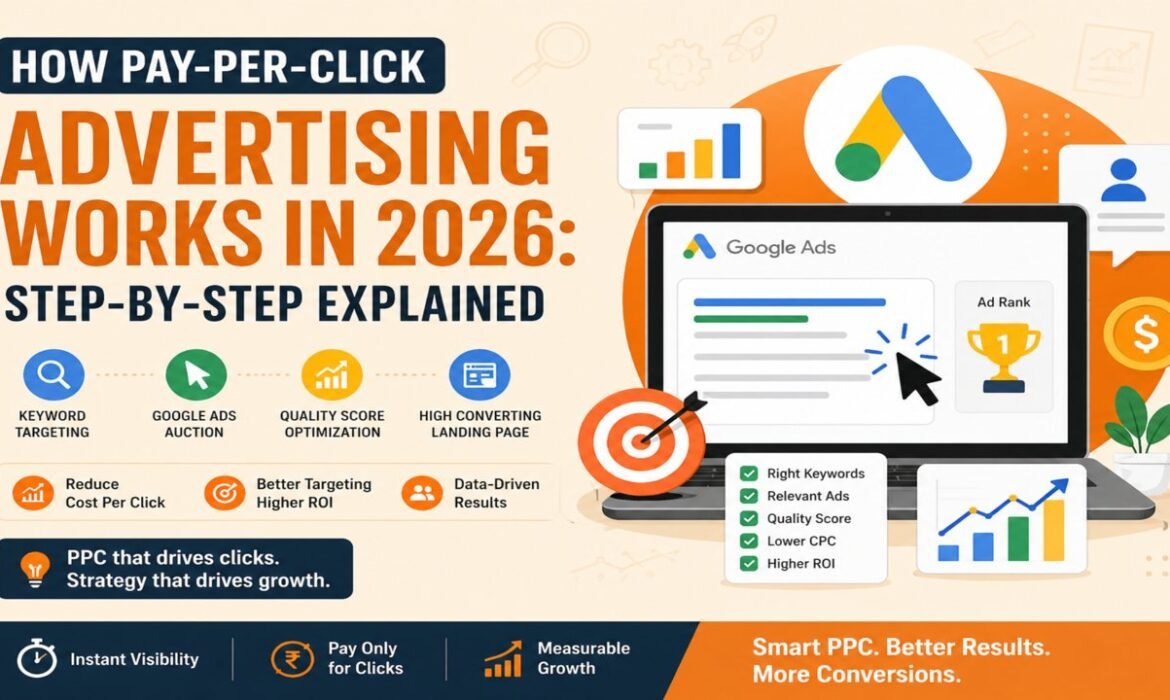
How Pay-Per-Click Advertising Works in 2026: Step-by-Step Explained
Understand the Google Ads auction, Quality Score, and bidding system to reduce CPC and turn clicks into consistent, high-quality leads.
Pay-Per-Click Advertising (PPC) runs on a real-time auction. You pick the keywords you want to show up for, create ads, and platforms like Google Ads decide which ones actually appear. You’re only charged when someone clicks, nothing for impressions.
What most people don’t realize is how fast this happens. Every search triggers a mini auction with hundreds of advertisers competing at once. It’s done in milliseconds.
And here’s the shift in 2026, money alone doesn’t win anymore. Relevance does. If your ad matches what the user wants, you’ll often beat someone spending more than you. If it doesn’t, you’ll either overpay… or disappear.
While this guide focuses on the technical mechanics of the Google ads auction, you can view Full PPC Marketing Guide for beginners for a complete overview on pay-per-click marketing.
What is PPC?
Pay-Per-click Marketing (PPC) is a model where you pay for actual visits to your website. Instead of waiting months for SEO to work, you can show up instantly in front of people already searching for what you offer.
PPC in Simple Terms
Let’s not overcomplicate it:
- You choose keywords
- You write ads
- An auction happens when someone searches
- The most relevant ad gets shown
- You pay only if someone clicks
That’s the core of it. Everything else is optimization.
How PPC Actually Works
- Someone searches on Google
- The system triggers an instant auction
- Advertisers targeting that keyword enter
- Google evaluates each ad
- Ads are ranked and displayed
- A user clicks
- The advertiser pays for that click
This entire process is invisible and happens faster than you can blink.
What Happens Behind the Scenes?
From the outside, it looks simple. Behind the scenes, it’s anything but.
It Starts With Intent
Take a search like:
“PPC marketing agency in Jaipur”
Google doesn’t just read the words. It understands the intent—someone is looking for guidance, probably with a business goal in mind.
Who Gets to Compete?
Platforms like Microsoft Advertising and Google Ads pull in advertisers who are bidding on that keyword (or something close to it).
You’re not alone in that auction—far from it.
How Google Decides Who Wins
This is where most people get it wrong. The system doesn’t just look at how much you’re willing to pay.
It uses a Ad Rank Formula :
Ad Rank Formula = Bid × Quality Score + Extensions
The biggest factor in this equation is Quality Score optimization in Google Ads, which directly Reduce CPC and higher ranking.
But here’s what that actually means in real terms:
- Your bid is just your ceiling
- Your Google ads quality score reflects how relevant and useful your ad is
- Your extensions add extra value (like call buttons or links)
If your ad is more useful to the user, you can win with a lower bid.
What You Actually Pay
You don’t pay your full bid. You pay just enough to beat the advertiser below you. That’s why two businesses can target the same keyword and one ends up paying half as much for better placement.
How PPC Campaigns Are Actually Set Up
This is where most beginners burn money. Not because PPC is expensive, but because it’s easy to set up poorly.
Step 1: Get Clear on the Goal
Before opening any tool, answer one thing:
What do you want?
- Calls?
- Leads?
- Website visits?
Tools like Google Analytics and Google Tag Manager help track what happens after the click but only if your goal is clear.
Step 2: Choose Better Keywords
Broad keywords look attractive, but they’re expensive and Vagues.
Compare:
- “Real estate”
- “3BHK flats near Vaishali Nagar with amenities”
The second one costs less and converts better. Why? Because the intent is clear.
Step 3: Structure Matters More Than You Think
A messy campaign quietly drains money.
A clean setup looks like this:
- Campaign → controls budget
- Ad group → focuses on a theme
- Ads → deliver the message
When everything is aligned, performance improves with reduce Cost per Click.
Step 4: Bidding Isn’t Just About Control
You’ve got two main options:
- Manual bidding → you control everything
- Automated bidding → the system optimizes using real data
If you don’t have enough data yet, manual is safer. Once you do, automation can outperform you.
All of these steps happen inside the Google Ads auction system, which decides which ads appear based on bids and quality.
Why Quality Score Changes Everything
This is where most advertisers lose money without even knowing it. You can literally pay less and rank higher—if your ad is better.
Here’s what Google looks at:
- Will people click your ad?
- Does your ad match what they searched?
- Is it a high converting landing page that keeps users engaged and drives action?
If the answer is yes across all three, your costs drop. If not, you pay more for worse results.
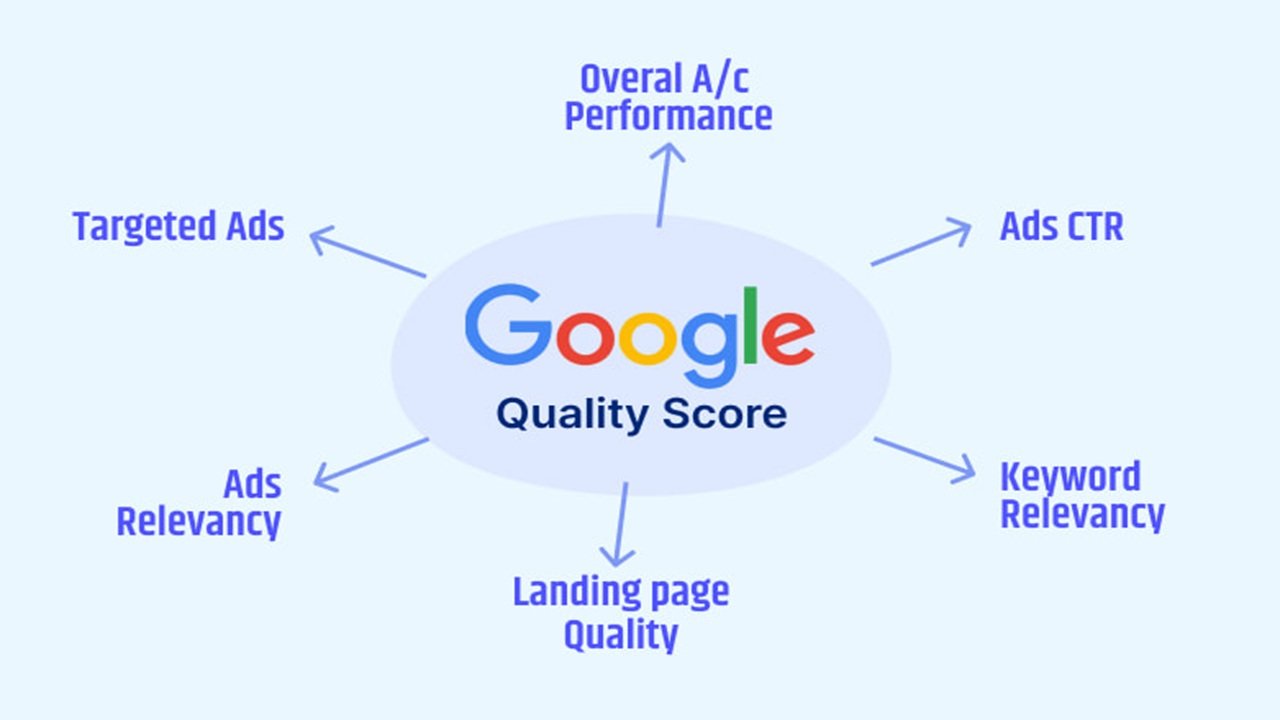
Google Ads Quality Score depends on CTR, ad relevance, keyword targeting, and landing page experience, which directly impact ad performance and CPC.
Who Should Actually Use Google Ads PPC?
Google Ads PPC makes the most sense when speed matters.
- Local businesses that need leads now
- Startups testing demand
- Service providers targeting ready buyers
- Businesses entering competitive markets
If you need immediate visibility, this is one of the fastest ways to get it.
What Actually Works in 2026
Most ads still sound the same:
- “Best quality”
- “Lowest price”
People ignore them.
What works now is specificity. Something like:
“5 minutes from Jaipur Airport”
That tells the user something real. Something useful. And that’s what gets clicks.
A Practical Way to Think About Strategy
If you’re comparing PPC vs SEO, think of it this way:
- PPC gives you immediate traffic
- Search Engine Optimization builds long-term visibility
Both matter—but for different reasons.
Also, campaign structure inside Google Ads has a direct impact on cost. A poorly structured account doesn’t fail loudly—it just drains your budget quietly.
Common Mistakes That Cost You Money
- Targeting broad keywords without intent
- Sending traffic to weak pages
- Ignoring ad relevance
- Not tracking conversions
Most cost issues don’t come from high bids-they come from poor setup.
Pay-Per-Click Advertising FAQs (2026 Guide)
1. How does PPC actually work?
PPC is a split-second auction. You don't pay a dime just to show up on Google you only pay when someone actually clicks your link. And Google doesn't just hand the top spot to whoever has the deepest pockets. they actively reward ads that are genuinely relevant to what the person is searching for.
2. What is Google Quality Score?
Basically, it’s Google grading your ad. They look at your click rate, how relevant your ad is to the search, and whether or not your landing page is actually helpful. Keep the searcher happy, your score goes up, and Google rewards you with better placements and cheaper clicks.
3. How do I get my cost per click (CPC) down?
Stop being broad. Target hyper-specific keywords, make sure your ad copy matches exactly what the user searched for, and send them to a page that immediately delivers on your promise. Doing this spikes your Quality Score, which literally forces Google to give you a discount.
4. Is PPC better than SEO?
They just do different things. PPC is a faucet you pay, turn it on, and get traffic today. SEO is like planting a tree. it takes time and effort, but eventually gives you free, long-term traffic. Smart businesses don't pick one. they use PPC for quick wins while their SEO grows.
5. What is the cost of Pay-per-click Marketing in India?
Pay-per-click Marketing entirely depends on who you are competing against. In a quiet niche, you might pay just ₹5 to ₹10 a click. But if you're battling it out in highly profitable spaces like real estate, law, or finance, expect to pay ₹100 to ₹500+. You're paying for the competition level, not a set rate.
Final Thought
PPC in 2026 will be less focused on beating other advertisers based on bids and more focused on being the most relevant at the moment of search intent for each user. Every click will be determined in milliseconds through a real-time auction where Quality Score, Ad Relevance, and Landing Page Experience are going to be far more important than Budget alone! Properly structured PPC provides you with a viable lead-generating system as opposed to just a cost to your company.
If you’re looking for Result-driven PPC Agency that help businesses turn ad spend into consistent and measurable growth through data-driven PPC execution, then look at Arihant Global.
Disclaimer
this article is for educational and informational purposes only. While every effort has been made to ensure accuracy, Pay-Per-Click Advertising strategies, Google Ads policies, and performance results may vary based on industry, competition, budget, and platform updates. Readers are advised to test and validate strategies before making business or financial decisions. Arihant Global do not guarantee specific rankings, ad performance, or ROI outcomes. All trademarks, including Google Ads, are the property of their respective owners.
Google Ads for Beginners (2026) : Step-by-Step Guide to First Sales
Winning at Google Ads in 2026 comes down to “Signal Integrity.” Instead of fighting the algorithm, you need to feed it high-quality conversion data.
“Let’s be real – Google Ads has become a ‘black box.’ If you’re running your 2026 campaigns with a 2022 playbook, you’re essentially donating your hard-earned money to Google. I’ve seen too many entrepreneurs from D2C hair care brands to real estate firms hit ‘Go’ only to watch their budget vanish without a single sale.
At Arihant Global, we don’t believe in ‘hacks.’ We’ve spent years in the trenches of marketing to build a system that actually speaks to human intent. If you are tired of basic robotic tutorials on Google Ads for beginners, this 2026 guide is your way out. It moves past the fluff and dives straight into the mechanics of lead generation ads that prioritize real ROI over empty clicks.“
What is Google Ads?
At its simplest, Google Ads is an auction house for attention. When someone goes to Google with a search like “how to stop hair fall” or “Best Digital marketing company in Jaipur” Google looks for the most relevant answer. It is the cornerstone of search engine marketing (SEM). Unlike social media Marketing, where you’re essentially interrupting someone’s scrolling, Google Ads Marketing allows you to appear exactly when a person is actively looking for a solution. You aren’t just buying a cost per click (CPC) which, let’s be honest, can feel like a moving target lately.
If you’re new to the world of paid search, our comprehensive Pay-Per-Click Marketing Guide for Beginners breaks down how these platforms work together to drive growth.”
How Works Google Ads: A High-Speed Matchmaker Explained
Think of Google as a matchmaker with a split-second memory. Every time someone types a query into that search bar, Google has to decide in milliseconds which business deserves that person’s attention.
It’s not a “pay-to-play” system where the biggest bank account always wins. If it were, small businesses would never stand a chance. Instead, Google uses a balancing act to decide who gets the top spot. They want to make sure the user is happy, because a happy user comes back to search again. If you want to dive deeper into the mechanics, check out our guide on how to reduce cost per click in Google Ads without losing your position.”
The “Secret Sauce” Formula
Google looks at two main things before they place your ad:
- Your Bid: What is the maximum you’re willing to pay for a click?
- Your Quality Score: This is essentially your “reputation” for that specific search. Google asks: Is this ad actually helpful.? Does the website load fast.? Did the user find what they were looking for.?
When you multiply these two, you get your Google Ads Rank Higher on Google SERP.
The Real-World Advantage: If your ad is incredibly relevant and your website is great, you can actually pay a lower cost per click (CPC) than a massive corporation and still beat them to the #1 spot.
At Arihant Global, we call this “out-smarting, not out-spending.” We focus on making your google ads Campaigns so relevant to the person searching that Google rewards you with better placement for less money. It’s about being the best answer to someone’s problem, which is exactly how you turn a stranger into a customer.
Google Ads Account Setup: The Right Foundation
While exploring Google Ads for beginners, don’t fall for the “Express” or “Smart” campaign traps. They are designed for Google’s convenience, not your profit.
- Expert Mode Only: Always switch to Expert Mode. It gives you the “manual transmission” control you need to drive performance.
- Conversion Tracking: This is non-negotiable. If you aren’t tracking sales or leads, you’re flying blind. Set up your Google Tag before you even think about writing an ad.
- The Arihant Edge: We always recommend linking your GA4 early. It provides the “why” behind the “what.”
Keyword Research: Hunting for Intent
In 2026, chasing high-volume keywords is a rookie mistake. You want high-intent keywords.
|
Search Query |
Intent | Action |
|
“Hair loss causes” |
Researching | Don’t bid (Too expensive) |
| “Best hair serum” | Comparing |
Bid moderately |
| “Buy Kesh Sanjevni serum” | Buying |
Aggressive Bid |
Match Types Simplified
- Broad Match: Great for discovery, but watch it like a hawk it can get messy.
- Phrase Match: The sweet spot. It keeps your ads focused on specific phrases.
- Exact Match: Pure precision. Use this for your highest-performing terms.
Step-by-Step Campaign Setup
The most expensive mistake we see when reviewing Google Ads for beginners is a messy, overcomplicated account. Forget the complex structures. Use my 1-3-3 Framework:
- 1 Campaign: One clear goal (e.g., Get Sales).
- 3 Ad Groups: Three different “angles” or product categories.
- 3 Ads per Group: Give the AI enough options to find a winner, but not so many that you dilute your data.
Trigger Sentence: Successful audience targeting in 2026 requires setting your segments to “Observation” first to let the data tell you who is actually buying.
Bidding & Budgeting: How Not to Go Broke
For your first google ads campaign setup, start with Maximize Conversions. It’s the easiest way to let the machine find your first few customers. Once you have a steady flow of data (about 30+ sales), you can start tightening the screws with a Target CPA strategy to keep your cost per conversion in check.
Writing Ads That Humans Actually Click
Stop trying to sound like a corporate brochure.
- The Headline: Use your primary keyword, but add a benefit. “Grow Your Hair Back” is better than “Hair Serum For Sale.”
- The Assets: Use every “Ad Extension” available. Site links, callouts, and structured snippets make your ad look huge on the screen and improve your Click Through Rate (CTR).
Landing Page Optimization: Where the Money is Made
Your landing page optimization lives and dies here. If your ad promises a “Hair Growth Serum” and your link goes to a generic homepage, the user will bounce in seconds. You need to match the message perfectly, keep the page fast, and make the “Buy” button impossible to miss.
Visual Brief: The Conversion Roadmap
Graphic Description: A clean, horizontal timeline.
- Point A: A person typing a frustrated query into Google.
- Point B: Your ad appearing as the perfect solution.
- Point C: A clean, fast landing page.
- Point D: A “Thank You” page (The Sale).
- Caption: “The shortest distance between a problem and a sale.”
Metrics That Matter (And Those That Don’t)
Don’t get distracted by “Impressions.” They don’t pay the bills.
- Cost Per Acquisition (CPA): What are you paying for a customer?
- Conversion Rate: Is your website doing its job?
- ROAS: Is the money you’re putting in coming back with friends?
Meta Ads vs Google Ads : Which One Is Better
This is the “million-dollar question” we hear at our Jaipur office almost every week. Business owners often feel they have to pick a side, but the truth is that these two platforms aren’t even playing the same game. Choosing the right one depends entirely on where your customer is in their head when they see you. Most local business founders think they have to pick a side. They don’t. These platforms aren’t even playing the same game. For a deep dive into building multi-platform funnels, you should read our comprehensive Full Meta Ads vs Google Ads Comparison Guide.
Here is the reality. Google Ads Marketing is pure demand capture. When someone types “emergency plumber Jaipur,” they have a burning problem. They want a solution immediately. You are simply paying to be that answer.
Meta Ads Campaigns are completely different. They generate demand. Nobody opens Instagram actively looking to buy a D2C face serum. They are scrolling to kill time. Your ad must be a visual pattern interrupt that creates a desire out of thin air.
Google ultimately harvests existing buyer intent. Meta ads builds it. Use Google for urgent needs. Use Meta for highly visual, lifestyle brands.
The Strategic Comparison
|
Feature |
Google Ads (Search) | Meta Ads (Social) |
|
User Mindset |
“I need this now.” |
“Show me something cool.” |
|
Targeting |
Based on specific keywords. |
Based on interests and behavior. |
|
Primary Format |
Mostly text-based. |
Highly visual (Images/Video). |
| Conversion | Usually faster (high intent). |
Usually takes more “touches” to close. |
However, the most successful 2026 strategies we build for our clients use both. We use Google Ads to catch the people ready to buy today, and Meta Ads to stay “top of mind” so that when those people are ready tomorrow, they already trust your brand name.
FAQ: Google Ads for Beginners
1. My google ads get clicks but zero sales. What’s wrong?
Check your "Search Terms" report. If queries are irrelevant, fix your match types. If queries are perfect, your landing page is the issue—it’s either too slow or doesn't directly answer the user's specific problem.
2. How much daily budget do I actually need in google ads?
Set a budget high enough to buy 10 to 15 clicks daily. If your average cost-per-click is ₹40, start with at least ₹500. Anything less starves Google’s AI, preventing it from finding real buyers.
3. Should I turn on "Auto-Apply Recommendations" in google ads?
Turn it off immediately. Google’s automated suggestions often maximize platform spend, not your profit. Handing over control as a beginner usually leads to rapidly wasted budget on irrelevant broad-match keywords.
4. How do I outrank competitors with massive budgets in google ads?
Beat them with relevance. Google heavily rewards a high Quality Score. If your ad copy and landing page directly match the user’s exact intent, Google gives you a massive cost discount, letting you outrank wealthy competitors
5. Search Ads vs. Performance Max for beginners?
Stick strictly to Search Ads. Performance Max (P Max) is a black box that spreads your budget across YouTube, Display, and Maps. Without months of historical conversion data, P Max will rapidly burn through your cash.
The Bottom Line
Mastering Google Ads for beginners step by step isn’t about being a math genius—it’s about understanding your customer and making smarter decisions. it’s about being a student of your customer’s behavior. it’s about being a student of your customer’s behavior. The 2026 landscape is competitive, but it’s also incredibly rewarding for those who focus on quality and genuine digital advertising strategy.
At Arihant Global, we don’t just “run ads” we build growth engines. If you’re tired of the DIY struggle and want a Google ads strategy for beginners that actually moves the needle for your business, let’s talk. We help you turn “maybe” into “sold.”
Stop wasting your budget. Get a Professional audit from Arihant Global and start scaling today.
Disclaimer
This guide is for informational purposes only. Google Ads results vary based on budget, competition, and market changes. Arihant Global does not guarantee specific sales or ROI. Users are responsible for their ad spend and compliance with Google’s policies. Always test small before scaling your investment.