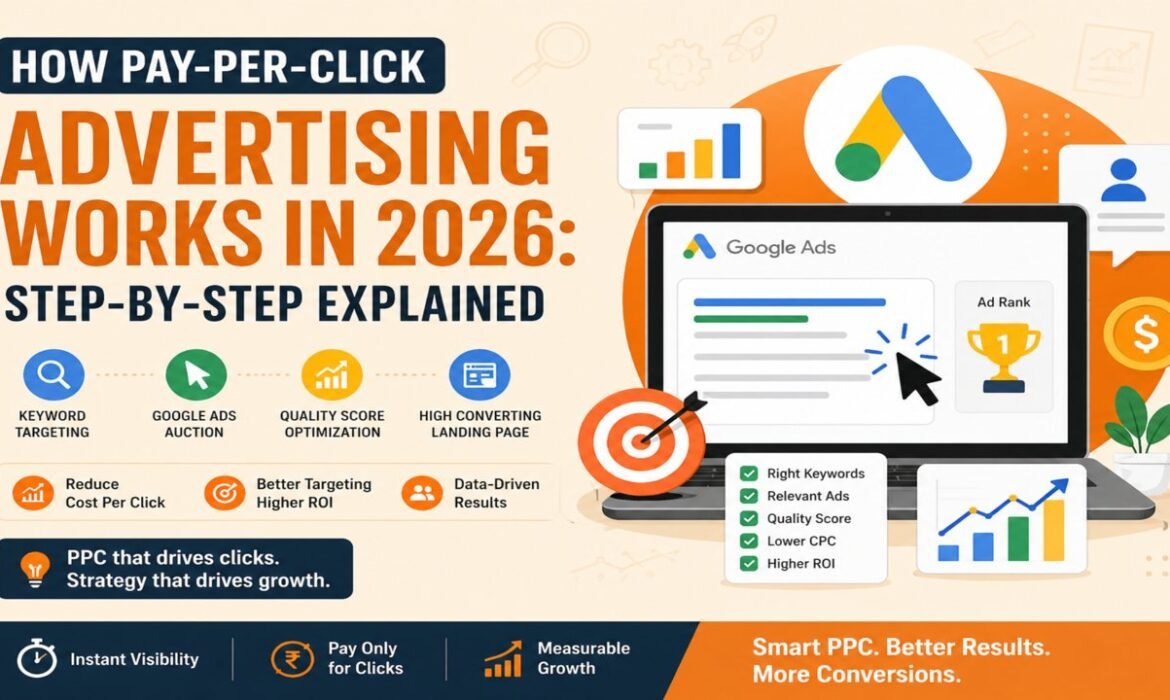
Understand the Google Ads auction, Quality Score, and bidding system to reduce CPC and turn clicks into consistent, high-quality leads.
Pay-Per-Click Advertising (PPC) runs on a real-time auction. You pick the keywords you want to show up for, create ads, and platforms like Google Ads decide which ones actually appear. You’re only charged when someone clicks, nothing for impressions.
What most people don’t realize is how fast this happens. Every search triggers a mini auction with hundreds of advertisers competing at once. It’s done in milliseconds.
And here’s the shift in 2026, money alone doesn’t win anymore. Relevance does. If your ad matches what the user wants, you’ll often beat someone spending more than you. If it doesn’t, you’ll either overpay… or disappear.
While this guide focuses on the technical mechanics of the Google ads auction, you can view Full PPC Marketing Guide for beginners for a complete overview on pay-per-click marketing.
What is PPC?
Pay-Per-click Marketing (PPC) is a model where you pay for actual visits to your website. Instead of waiting months for SEO to work, you can show up instantly in front of people already searching for what you offer.
PPC in Simple Terms
Let’s not overcomplicate it:
- You choose keywords
- You write ads
- An auction happens when someone searches
- The most relevant ad gets shown
- You pay only if someone clicks
That’s the core of it. Everything else is optimization.
How PPC Actually Works
- Someone searches on Google
- The system triggers an instant auction
- Advertisers targeting that keyword enter
- Google evaluates each ad
- Ads are ranked and displayed
- A user clicks
- The advertiser pays for that click
This entire process is invisible and happens faster than you can blink.
What Happens Behind the Scenes?
From the outside, it looks simple. Behind the scenes, it’s anything but.
It Starts With Intent
Take a search like:
“PPC marketing agency in Jaipur”
Google doesn’t just read the words. It understands the intent—someone is looking for guidance, probably with a business goal in mind.
Who Gets to Compete?
Platforms like Microsoft Advertising and Google Ads pull in advertisers who are bidding on that keyword (or something close to it).
You’re not alone in that auction—far from it.
How Google Decides Who Wins
This is where most people get it wrong. The system doesn’t just look at how much you’re willing to pay.
It uses a Ad Rank Formula :
Ad Rank Formula = Bid × Quality Score + Extensions
The biggest factor in this equation is Quality Score optimization in Google Ads, which directly Reduce CPC and higher ranking.
But here’s what that actually means in real terms:
- Your bid is just your ceiling
- Your Google ads quality score reflects how relevant and useful your ad is
- Your extensions add extra value (like call buttons or links)
If your ad is more useful to the user, you can win with a lower bid.
What You Actually Pay
You don’t pay your full bid. You pay just enough to beat the advertiser below you. That’s why two businesses can target the same keyword and one ends up paying half as much for better placement.
How PPC Campaigns Are Actually Set Up
This is where most beginners burn money. Not because PPC is expensive, but because it’s easy to set up poorly.
Step 1: Get Clear on the Goal
Before opening any tool, answer one thing:
What do you want?
- Calls?
- Leads?
- Website visits?
Tools like Google Analytics and Google Tag Manager help track what happens after the click but only if your goal is clear.
Step 2: Choose Better Keywords
Broad keywords look attractive, but they’re expensive and Vagues.
Compare:
- “Real estate”
- “3BHK flats near Vaishali Nagar with amenities”
The second one costs less and converts better. Why? Because the intent is clear.
Step 3: Structure Matters More Than You Think
A messy campaign quietly drains money.
A clean setup looks like this:
- Campaign → controls budget
- Ad group → focuses on a theme
- Ads → deliver the message
When everything is aligned, performance improves with reduce Cost per Click.
Step 4: Bidding Isn’t Just About Control
You’ve got two main options:
- Manual bidding → you control everything
- Automated bidding → the system optimizes using real data
If you don’t have enough data yet, manual is safer. Once you do, automation can outperform you.
All of these steps happen inside the Google Ads auction system, which decides which ads appear based on bids and quality.
Why Quality Score Changes Everything
This is where most advertisers lose money without even knowing it. You can literally pay less and rank higher—if your ad is better.
Here’s what Google looks at:
- Will people click your ad?
- Does your ad match what they searched?
- Is it a high converting landing page that keeps users engaged and drives action?
If the answer is yes across all three, your costs drop. If not, you pay more for worse results.
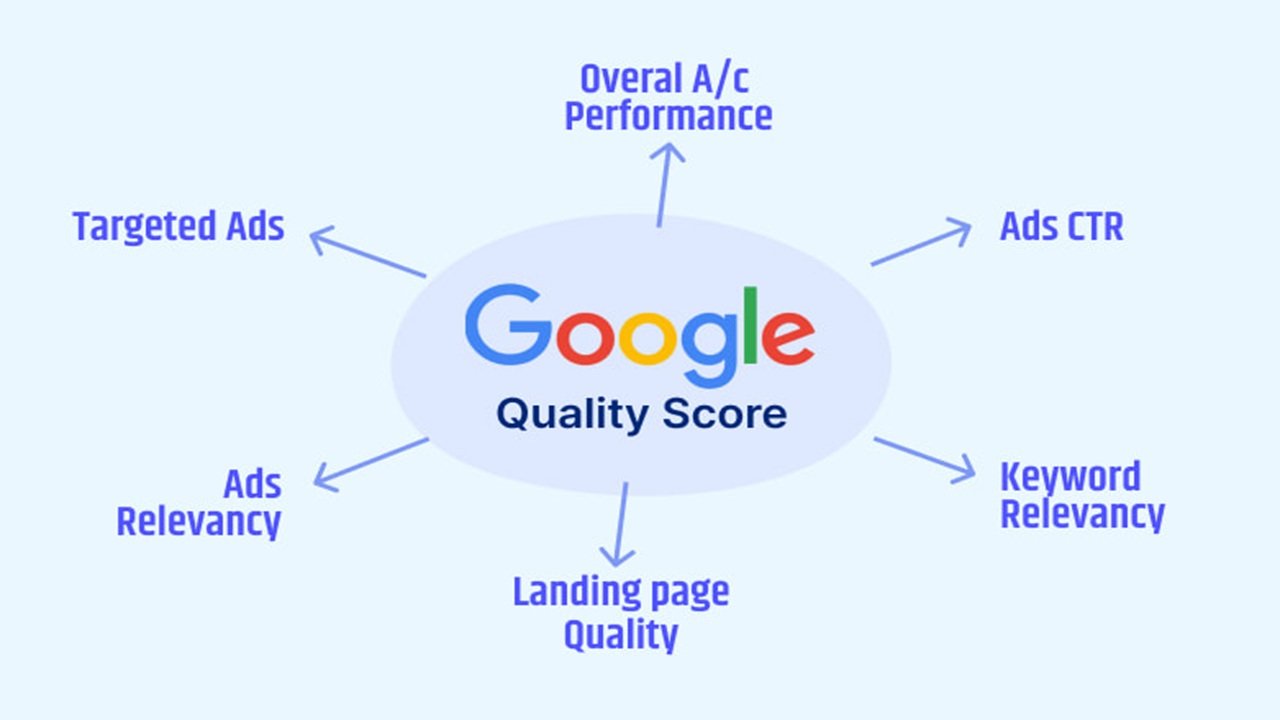
Google Ads Quality Score depends on CTR, ad relevance, keyword targeting, and landing page experience, which directly impact ad performance and CPC.
Who Should Actually Use Google Ads PPC?
Google Ads PPC makes the most sense when speed matters.
- Local businesses that need leads now
- Startups testing demand
- Service providers targeting ready buyers
- Businesses entering competitive markets
If you need immediate visibility, this is one of the fastest ways to get it.
What Actually Works in 2026
Most ads still sound the same:
- “Best quality”
- “Lowest price”
People ignore them.
What works now is specificity. Something like:
“5 minutes from Jaipur Airport”
That tells the user something real. Something useful. And that’s what gets clicks.
A Practical Way to Think About Strategy
If you’re comparing PPC vs SEO, think of it this way:
- PPC gives you immediate traffic
- Search Engine Optimization builds long-term visibility
Both matter—but for different reasons.
Also, campaign structure inside Google Ads has a direct impact on cost. A poorly structured account doesn’t fail loudly—it just drains your budget quietly.
Common Mistakes That Cost You Money
- Targeting broad keywords without intent
- Sending traffic to weak pages
- Ignoring ad relevance
- Not tracking conversions
Most cost issues don’t come from high bids-they come from poor setup.
Pay-Per-Click Advertising FAQs (2026 Guide)
1. How does PPC actually work?
PPC is a split-second auction. You don't pay a dime just to show up on Google you only pay when someone actually clicks your link. And Google doesn't just hand the top spot to whoever has the deepest pockets. they actively reward ads that are genuinely relevant to what the person is searching for.
2. What is Google Quality Score?
Basically, it’s Google grading your ad. They look at your click rate, how relevant your ad is to the search, and whether or not your landing page is actually helpful. Keep the searcher happy, your score goes up, and Google rewards you with better placements and cheaper clicks.
3. How do I get my cost per click (CPC) down?
Stop being broad. Target hyper-specific keywords, make sure your ad copy matches exactly what the user searched for, and send them to a page that immediately delivers on your promise. Doing this spikes your Quality Score, which literally forces Google to give you a discount.
4. Is PPC better than SEO?
They just do different things. PPC is a faucet you pay, turn it on, and get traffic today. SEO is like planting a tree. it takes time and effort, but eventually gives you free, long-term traffic. Smart businesses don't pick one. they use PPC for quick wins while their SEO grows.
5. What is the cost of Pay-per-click Marketing in India?
Pay-per-click Marketing entirely depends on who you are competing against. In a quiet niche, you might pay just ₹5 to ₹10 a click. But if you're battling it out in highly profitable spaces like real estate, law, or finance, expect to pay ₹100 to ₹500+. You're paying for the competition level, not a set rate.
Final Thought
PPC in 2026 will be less focused on beating other advertisers based on bids and more focused on being the most relevant at the moment of search intent for each user. Every click will be determined in milliseconds through a real-time auction where Quality Score, Ad Relevance, and Landing Page Experience are going to be far more important than Budget alone! Properly structured PPC provides you with a viable lead-generating system as opposed to just a cost to your company.
If you’re looking for Result-driven PPC Agency that help businesses turn ad spend into consistent and measurable growth through data-driven PPC execution, then look at Arihant Global.
Disclaimer
this article is for educational and informational purposes only. While every effort has been made to ensure accuracy, Pay-Per-Click Advertising strategies, Google Ads policies, and performance results may vary based on industry, competition, budget, and platform updates. Readers are advised to test and validate strategies before making business or financial decisions. Arihant Global do not guarantee specific rankings, ad performance, or ROI outcomes. All trademarks, including Google Ads, are the property of their respective owners.