Why Your Business Is Getting Website Traffic but Not Generating Quality Leads
When people visit your website it is a sign. It shows that they have found your business are looking for your services and have some interest in what you provide.
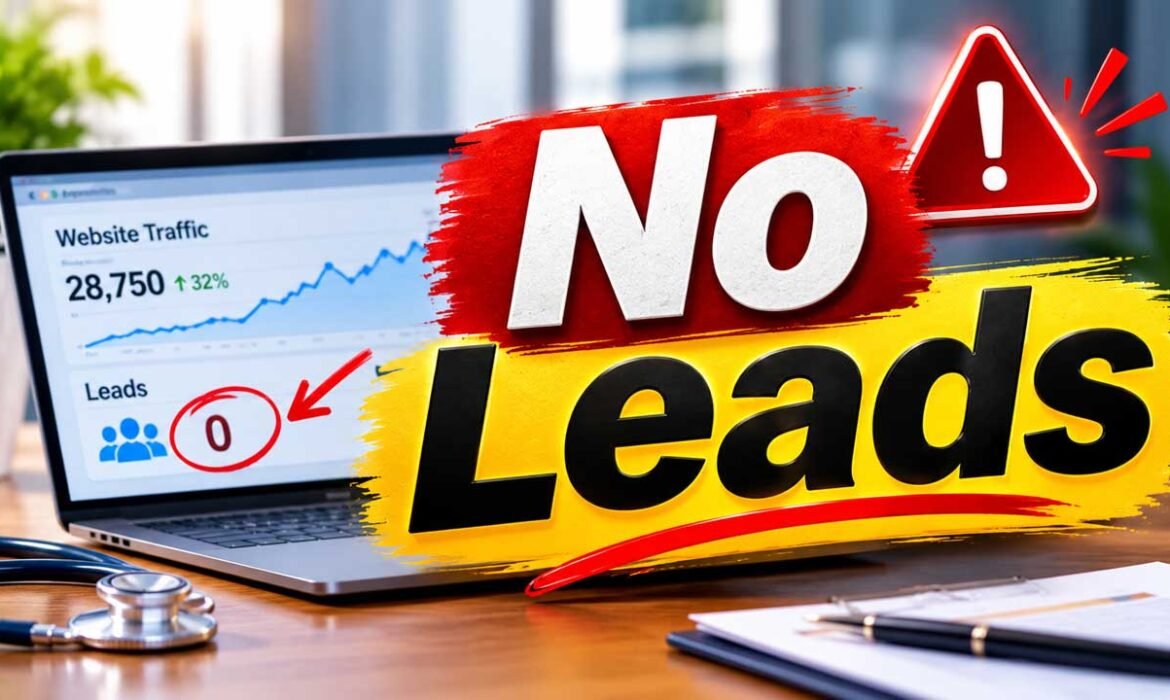
What if your site gets hundreds or even thousands of visits and still only gets very few real questions?
This is a problem that many businesses face today.
Companies spend money on SEO, media, paid ads and content marketing to bring more visitors to their sites. Still more visitors do not always turn into sales chances.
The real issue may not be how many people visit. What they do after they arrive on the site.
If your business has website traffic but no leads you should look past the visits. Figure out what stops potential customers from acting.
Many things can stop visitors from becoming prospects, such as drawing the wrong audience, unclear messages or bad site design.
In this guide we will look at why website enquiriesre low in quality and explain how to generate quality leads, with practical SEO, site improvement and digital marketing tactics.
1. You Are Attracting Website Traffic From the Wrong Audience
One of the reasons behind poor lead generation is bringing in visitors who are not really interested in buying your products or services.
For instance a company that offers digital marketing services might get a lot of traffic from people who are searching for free marketing courses digital marketing definitions or beginner-level tutorials. These visitors may increase the number of page views. They are not likely to become customers.
This problem often happens when your website targets general keywords without paying attention to what the person is actually looking for.
How to Identify the Problem
Look at your website visitors. See if they match your ideal customer profile.
- Are the visitors searching for the services you offer?
- Are they business owners or just people looking for information?
- Are they going to your service pages. Only reading your blog posts?
- Are the keywords you are using pulling in people who are ready to buy?
How to Fix It
Shift your focus to transactional keywords. These are the types of searches that show someone is actively looking to buy or use a service.
For example of just using broad terms like “digital marketing ” try targeting more specific searches such as “digital marketing services for small businesses” or “SEO services, for business.”
A good SEO strategy should bring in visitors who already have a problem and are looking for a solution. When you target the keywords you attract people who are more likely to become customers.
2. Your Website Content Is Not Addressing Customer Problems
People go to business websites because they are looking for answers, solutions or information that helps them decide something.
If your website content talks about your company, what you have done and what you offer without showing how you fix customer issues people might not see a good reason to get in touch with you.
Your website needs to show the value of your services from the customers point of view.
What Your Website Content Should Include
- The problems your business helps with.
- The benefits customers get from your services.
- How your process works.
- Why customers should pick your business.
- Examples of projects or good results.
- Answers to questions that customers often ask.
How to Fix It
Change descriptions of your services into messages that focus on the customer.
Of writing:
“We provide professional SEO services.”
Write:
“Having trouble ranking on Google and getting the right people to visit your site? Our SEO strategies help businesses get search visibility bring in the right audience and create more chances, for growth.”
The second message clearly shows the problem the solution and the possible benefit.
3. Your Website Has Weak or Unclear Call-to-Actions (CTAs)
Imagine a visitor arriving on your website looking at your services and starting to feel interested. The visitor does not know what to do next.
Should they call you? Fill out a form? Request a quotation? Schedule a consultation?
When the next step is unclear visitors often leave without taking action.
A strong call to action guides visitors toward a conversion goal.
Common CTA Mistakes
- Using buttons such as “Click Here.”
- Hiding contact information.
- Placing enquiry forms at the bottom of long pages.
- Using too many competing call to actions.
- Not providing a clear reason to take action.
How to Fix It
Use action‑oriented call to actions that match the visitor’s needs.
Examples include:
- Get a Free Consultation
- Request a Custom Quote
- Discuss Your Business Requirements
- Book a Strategy Call
- Get a Free Website Audit
Place call to actions, on your homepage, service pages landing pages and important blog articles.
Remember your visitors should never have to search for a way to contact your business.
4. Your Website Is Not Optimised for Mobile Users
A lot of people look at websites using their phones. If your website isn’t easy to use on a phone you could lose people before they even see what you offer.
A website that looks good on a computer can be hard to use on a screen.
For example big pictures, text, slow websites hard to fill out forms and buttons that are tough to touch can make the experience bad for users.
How to Make Mobile Experience Better
- Use a website design that works on all devices.
- Make buttons easy to press.
- Keep contact forms simple.
- Make images to load faster.
- Make phone numbers easy to click.
- Keep details where people can see them without scrolling too much.
Mobile optimisation is not, about looking good. It is a part of Website Conversion Optimization because visitors need to be able to do something no matter what device they are using.
5. Your Website Loading Speed Is Affecting Conversions
Online visitors expect a website to load quickly. If a website takes long to show important information potential customers may leave before exploring a websites services.
Slow loading can also hurt a websites search visibility. Create a frustrating browsing experience.
Common Reasons for Slow Website Speed
- Uncompressed images.
- Poor-quality website hosting.
- Scripts.
- Unnecessary animations.
- Unoptimised website code.
- Many third‑party tracking tools.
How to Fix It
Start by testing a website through Google PageSpeed Insights.
Review the performance recommendations and prioritise improvements such, as image compression, browser caching reducing scripts and improving server response time.
A faster website makes it easier for visitors to explore a websites services and important actions.
6. Your Landing Pages Are Not Matching Search Intent
Suppose someone searches for “PPC advertising services for businesses” and clicks on your website.
Of finding a page that is specifically about PPC services they end up on a general homepage that talks about all the business services you offer.
The visitor might have a time finding the information they were looking for.
This difference between what the person was searching for and what they see on the page can lower the chances of them taking action.
What Makes a High-Converting Landing Page?
A good landing page should have:
- A clear and relevant title.
- A short description of the service.
- The problems customers face and how your service solves them.
- The advantages of working with your business.
- Real customer. Examples of past work.
- A clear form to ask questions or a call to action that stands out.
- Responses, to the common concerns people have.
How to Fix It:
Make landing pages for each of your main services and marketing campaigns.
For instance if you provide SEO, website design, branding and paid advertising each of these services should have its landing page.
This helps visitors find what they need without having to go through unrelated content.
7. You Are Getting Clicks Through PPC Advertising but Not Quality Enquiries
Paid advertising can bring traffic fast. That does not guarantee real leads.
I have seen many businesses spend budgets on Google Ads or social media campaigns and still not receive enquiries that match their target audience.
This can happen when broad keyword targeting, irrelevant search terms, weak ad messaging or designed landing pages are used.
Common PPC Advertising Mistakes
- Targeting keywords without purchase intent.
- Using advertisements.
- Not excluding search terms.
- Sending all advertisements to the homepage.
- Not tracking conversions correctly.
- Focusing on clicks of lead quality.
How to Fix It
Your PPC strategy should focus on attracting the audience instead of just raising clicks.
Use keywords, location targeting, audience segmentation, negative keywords and relevant landing pages.
Monitor metrics such as cost per lead, conversion rate, qualified lead percentage and cost, per acquisition.
Professional PPC Advertising Services should focus on business outcomes not campaign traffic. A well‑managed advertising campaign should connect the audience with the right offer and a relevant landing page.
8. Your Website Does Not Build Enough Trust
Before sharing their contact information or making a purchase decision visitors want to know if your business can be trusted. If your website does not show proof of credibility people may think before reaching out. Trust matters most when the service is value like in B2B, healthcare, education or professional services.
Important Trust-Building Elements
- Genuine customer testimonials.
- Project examples.
- Ratings.
- Contact details.
- Information about your team and experience.
- Industry certifications, where applicable.
- Clear privacy. Service information.
How to Fix It
Show proof instead of just claiming things. For example publish a case study that shows a customer’s problem the steps taken to solve it and the results that were achieved. When potential customers see how your business solved a challenge they feel more confident, about starting a conversation.
9. Your Lead Generation Form Is Too Complicated
Your website might be bringing in people who’re interested but a complicated enquiry form can stop them from becoming leads.
Imagine a visitor who just wants a chat. They come to your site hoping to get help.. Then they see a form asking for company size, annual revenue, full address, budget, industry, business history and a list of other details. It feels like much. They may just click away.
How to Create a Better Enquiry Form
Keep your form simple. Ask for the information you need to start a conversation.
For businesses the key fields are:
- Full Name
- Business Email or Phone Number
- Service Required
- Short Description of Requirement
You can always ask for more details during your first call or message. Adding much upfront makes people hesitate.
Also make sure your form works well on phones and tablets. Many people browse on their phones. If the form is hard to use they will leave.
After someone submits the form show a confirmation message. Let them know their message has been sent and that you will get back, to them soon.
The goal is to make it easy for people to reach out. Reduce the effort they need to give while still getting information to identify a potential customer.
10. You Are Not Following Up With Potential Leads
Not every website visitor is ready to buy away.
Some people need details. Others want to compare service providers. A few may still be waiting for approval from their team before they decide.
If your business does not follow up with these visitors you could miss out on great opportunities.
Practical Lead Follow-Up Strategies
- Send an acknowledgement email after someone makes an enquiry.
- Contact qualified leads quickly as possible.
- Use WhatsApp Business for timely follow-ups.
- Share service. Real case studies to build trust.
- Keep a CRM database to track all leads.
- Set up follow-up reminders for your sales team to stay on top of things.
A structured approach to Lead Generation Services should not end with collecting contact details.
It should also include lead qualification, timely communication and strong follow-up processes.
A proper lead management system makes sure that enquiries do not get lost between marketing and sales.
Remember, getting a lead is the first step.
Turning that lead into a paying customer takes communication.
It is not about getting names and emails.
It is, about staying in touch providing value and guiding prospects all the way to a decision.
11. Your SEO Strategy Focuses on Rankings Instead of Business Results
Ranking on Google is important. Rankings alone do not measure the success of your digital marketing efforts. A business may rank for keywords and get regular organic traffic without getting meaningful enquiries. This often happens when SEO strategies focus on boosting impressions rankings and clicks instead of bringing in potential customers.
What a Result-Oriented SEO Strategy Should Include
- Commercial keyword research.
- Search intent analysis.
- Service-focused website content.
- Local SEO optimisation.
- Relevant internal linking.
- Technical SEO improvements.
- Conversion tracking.
- Regular content performance analysis.
How to Fix It
Work with a strategy that connects search visibility with business objectives.
Professional SEO Services for Business should focus on attracting visitors improving service-page performance and creating opportunities, for enquiries.
For businesses targeting customers optimising Google Business Profile, local landing pages and location-based keywords can also improve the chances of attracting relevant leads.
12. You Are Not Tracking Website Conversions Properly
Sometimes a business thinks its website is not generating leads because it only checks how many enquiry forms are submitted.
Customers can reach out via phone, WhatsApp, email or other ways.
Without tracking it is hard to know which marketing effort is actually making enquiries.
Important Metrics to Track
| Metric | What It Tells You |
| Website Traffic | How many visitors reach your website |
| Conversion Rate | How many visitors complete a desired action |
| Bounce Rate | How frequently visitors leave after viewing a page |
| Cost Per Lead | How much you spend to generate a lead |
| Qualified Lead Rate | How many enquiries match your target customer profile |
| Lead-to-Customer Rate | How many leads become paying customers |
How to Fix It
I recommend using Google Analytics 4 Google Search Console, Google Tag Manager and a suitable CRM tool to keep track of your website and marketing performance.
Set up conversion events for actions such, as form submissions, phone clicks, WhatsApp enquiries and consultation bookings.
Review the data regularly to identify which pages, keywords and campaigns are creating business opportunities.
13. How to Generate Quality Leads: A Practical Action Plan
Understanding the problems is important. Putting the right solutions into action is what really makes a difference, in business performance.
If you want to understand How to Generate Quality Leads begin by looking at your entire customer journey. Think about what happens from the time someone visits your website to the moment they make a final enquiry.
Here is a practical action plan to help your business go from attracting visitors to actually generating qualified enquiries.
| Priority | Action | Expected Benefit |
| 1 | Review website traffic sources | Identify irrelevant audiences |
| 2 | Research high-intent keywords | Attract potential buyers |
| 3 | Improve service landing pages | Match visitor expectations |
| 4 | Optimise website speed and mobile design | Improve user experience |
| 5 | Add clear CTAs | Encourage enquiries |
| 6 | Display testimonials and case studies | Build customer confidence |
| 7 | Simplify enquiry forms | Reduce conversion barriers |
| 8 | Set up conversion tracking | Measure actual performance |
| 9 | Improve lead follow-up | Increase sales opportunities |
| 10 | Review campaigns regularly | Improve marketing efficiency |
Implement these improvements gradually and measure their impact. Even small changes to your website’s messaging, landing pages, and enquiry process can help identify why visitors are not converting.
14. Why Businesses Need a Conversion-Focused Digital Marketing Strategy
I think website traffic, search rankings, social media engagement and advertising clicks are marketing indicators. However they must support a business objective: generating relevant enquiries and creating sales opportunities.
This is where a strategy that focuses on converting visitors into customers makes a difference.
Businesses need to link SEO, website design, paid advertising, content marketing and lead management of treating each activity separately.
For example a company may invest in SEO to attract visitors use well‑designed landing pages to communicate its services apply website conversion optimisation techniques to encourage enquiries and use professional lead generation services to manage and nurture those enquiries.
A coordinated approach helps find gaps across the customer journey.
If your business is looking for support working with a Digital Marketing Agency in Jaipur can help you develop a strategy based on your industry, target audience, marketing goals and conversion challenges.
The right approach is not about generating the number of visitors. It is, about attracting people who genuinely need your services and giving them a reason to choose your business.
15. Final Thoughts
Getting website traffic but not producing leads is a problem that needs more focus than just raising your marketing budget.
The real challenge may be drawing the audience sharing unclear value using poor landing pages missing trust signals or making it hard for visitors to reach your business.
Start by understanding the audience finding where visitors depart improving the website experience and measuring the actions that matter.
Importantly stop judging your digital marketing success only with traffic and clicks. Focus, on enquiries, meaningful conversations and real business opportunities.
Remember: Website traffic brings people to your business but a well‑planned conversion strategy gives them a reason to take the step.