You post on Instagram on Monday. Nothing on Tuesday or Wednesday. Then a reel on Thursday because someone told you reels work. By Friday, you’re not sure why you’re even posting anymore.
This is how most small businesses use social media, posting whenever they remember to, with no real plan behind it. And then they wonder why followers aren’t turning into customers.
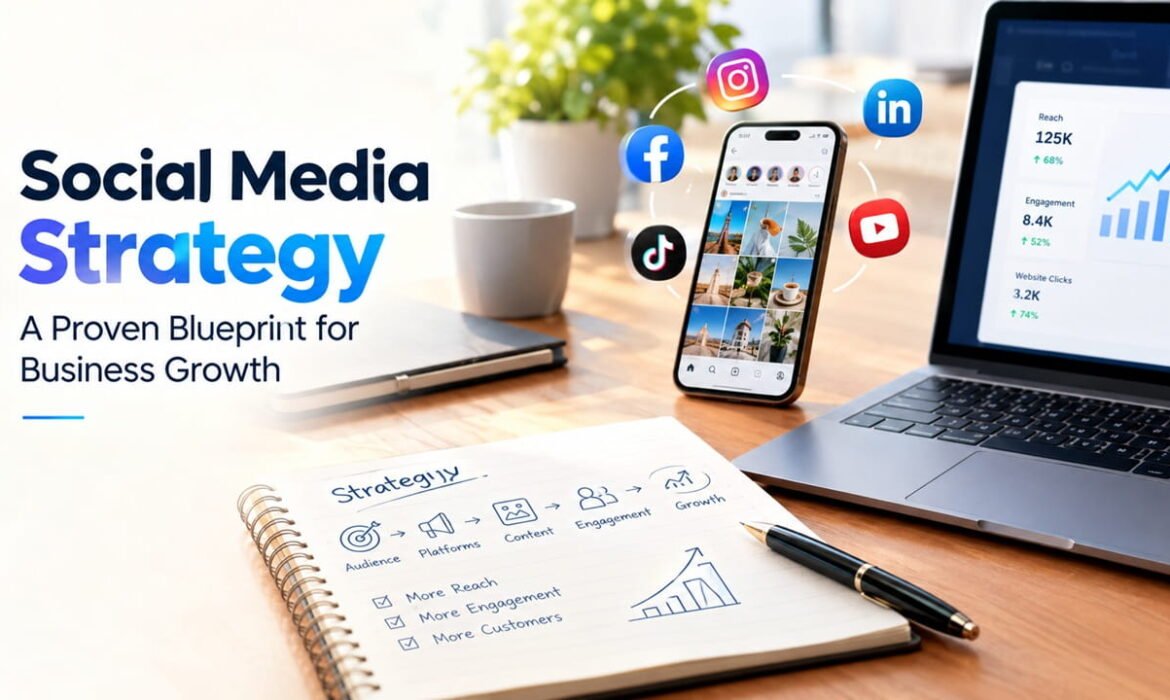
The businesses that actually grow through social media aren’t posting more often. They’re posting with a plan. That plan is what’s called a social media strategy, and it’s the difference between social media being a time-waster and it actually bringing in business.
This guide walks you through what a social media marketing strategy actually means and how to build one that fits your business, step by step.
What Is a Social Media Strategy?
A social media Marketing strategy is simply a structured plan for how you use social platforms to reach specific, measurable business goals, more enquiries, more sales, more brand awareness, instead of posting randomly and hoping something works.
It answers a few basic questions before you post a single thing.
- Who are you trying to reach?
- Which platforms are they actually on?
- What do you want them to do after seeing your content?
Without answers to these, posting becomes guesswork.
Why Random Posting Doesn’t Work
Posting without a plan usually looks busy but produces very little. You might get likes and views, but likes don’t pay your bills.
A proper social media strategy framework connects your content to an actual business goal. Every post either builds brand awareness, moves someone further along your marketing funnel, or directly asks them to take an action. If a post isn’t doing at least one of these, it’s just noise.
Step 1: Start With Audience Research
Before deciding what to post, you need to know who you’re posting for. Audience research means understanding your customer’s age group, interests, problems, and the kind of content they actually stop scrolling for.
A B2B business selling to other companies behaves very differently online compared to a fashion brand selling directly to young shoppers. Your audience strategy should reflect that difference, not copy whatever a competitor in a completely different industry is doing.
Step 2: Choose the Right Platforms
Not every business needs to be on every platform. This is where platform strategy comes in, picking where your actual audience spends time, instead of trying to be everywhere at once.
- Still useful for local businesses and slightly older audiences who actively use groups and community pages.
- Works well for visual businesses, fashion, food, real estate, home decor, where photos and reels do the heavy lifting.
- The go-to platform for B2B businesses, recruitment, and building a professional brand presence.
- Best when you have something worth explaining in detail, tutorials, demos, or behind-the-scenes content.
Most brands don’t need to build a huge presence everywhere. Meta alone, through Facebook and Instagram, covers a large part of most businesses’ audience needs, especially when starting out.
Step 3: Plan Your Content, Don’t Wing It
Once you know your audience and platform, content planning comes next. This means deciding, ahead of time, what kind of posts you’ll create and when, instead of scrambling for an idea the morning you’re supposed to post.
A simple content strategy usually mixes a few types of posts, something educational, something that builds trust like a testimonial or behind-the-scenes look, and something that clearly promotes what you sell. Planning even a week or two in advance removes most of the last-minute pressure that leads to inconsistent posting.
Step 4: Build Consistent Brand Awareness
People need to see your brand more than once before they trust it enough to buy. This is where brand strategy and online branding matter, your colours, your tone, and your message should feel the same whether someone sees your Instagram post, your website, or your LinkedIn page.
Inconsistent branding, sounding professional on LinkedIn and overly casual on Instagram in a way that feels like two different companies, quietly confuses people and slows down trust.
Step 5: Focus on Real Engagement, Not Just Views
A social growth strategy isn’t only about follower count. It’s about real interaction, comments, shares, replies to your stories, people tagging their friends.
This is your engagement strategy at work. Replying to comments, asking questions in your captions, and responding to DMs all build community growth over time. A page with fifty highly engaged followers who actually message you is often more valuable than one with five thousand silent ones.

Step 6: Connect Social Media to Your Bigger Marketing Funnel
Social media rarely closes a sale by itself. It usually plays an earlier role in the customer journey, someone sees your reel, checks your profile, visits your website later, and then reaches out.
This is why your social media roadmap should connect to the rest of your marketing strategy, your website, your WhatsApp, your email list, instead of existing as a separate, disconnected activity. Every platform should gently guide people to the next step, not leave them stuck at just ‘liking’ your content forever.
Common Social Media Strategy Mistakes
- Posting without a goal. If you can’t say what a post is meant to achieve, it’s probably not worth posting.
- Copying competitors blindly. What works for one brand’s audience may not work at all for yours.
- Chasing every trend. Jumping on every trending reel format usually dilutes your actual brand message.
- Never checking the numbers. Without reviewing what’s actually working, you keep repeating the same mistakes.
Frequently Asked Questions
Q1. What is a social media strategy in simple words?
It's a clear plan for who you're trying to reach on social media, which platforms to use, and what you want people to do after seeing your content.
Q2. Do I need to be active on every social media platform?
No. It's usually better to be consistent on two or three platforms where your actual audience spends time than to spread thin across all of them.
Q3. How often should a business post on social media?
There's no fixed number that works for everyone. Being consistent, even three well-planned posts a week, works better than posting daily with no plan and then disappearing for weeks.
Q4. Can a small business handle social media strategy on its own?
Yes, especially in the beginning. As the business grows and platforms multiply, many owners bring in outside help to keep things consistent and properly planned.
Q5. How do I know if my social media strategy is actually working?
Look beyond likes. Check whether it's bringing in enquiries, website visits, or actual conversations with potential customers.
Bringing It All Together
A social media strategy isn’t about posting more. It’s about posting with a clear reason behind every piece of content, built around your actual audience and business goals.
Start small. Understand your audience, pick two or three platforms that actually make sense for your business, and plan your content instead of creating it under pressure at the last minute.
If your social media currently feels more like a chore than a growth channel, Arihant Global can help you build a social media strategy that’s actually tied to real business goals, not just likes and follower counts. And if you’d simply like a second opinion on your current approach, Arihant Global is happy to take a look and point out where the gaps are.