
Executive Summary
Client Industry - Real Estate and Property Development
Primary Challenge
The developer had run Facebook lead generation campaigns before but the leads that came in were mostly people who had clicked out of curiosity rather than genuine buying intent. The sales team was spending hours every day calling contacts who had no memory of filling out a form or no real interest in the project. Cost per lead looked acceptable on paper but cost per serious conversation was far too high to justify continuing.
Arihant Global’s Solution
Rebuilt the Meta lead generation strategy around buyer intent signals, introduced project specific campaigns with targeted audiences, developed creative that attracted serious buyers rather than casual browsers, restructured the lead forms to include qualifying questions and introduced a follow up process that dramatically improved the rate of leads converting into actual site visits.
Key Measurable Outcomes
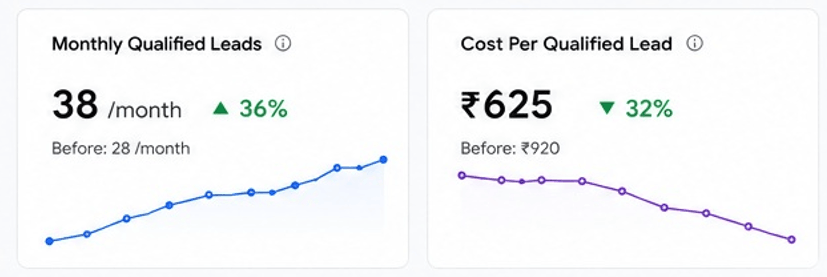
- Cost per qualified lead reduced by 32% within 4 months
- Site visit bookings from Meta leads increased by 36%
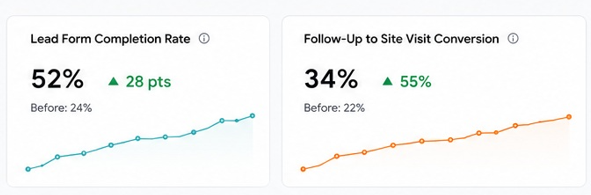
- Lead form completion rate improved by 28%
- Follow up to site visit conversion rate improved from 22% to 34%
Background and Context
The client is a residential developer with active projects across plotted development and affordable housing segments. The company had been operating for over nine years and had a sales team that was comfortable closing face to face once they had a serious buyer in front of them. Facebook and Instagram lead generation had been attempted twice before both times the volume of leads looked promising for the first few weeks and then the quality became impossible to ignore. Most contacts either did not pick up the phone, had no recollection of the project they had enquired about or were nowhere near the budget range the projects required. Management had almost written off Meta as a channel before deciding to try it one more time with a proper strategy behind it.
Challenges
- Previous Meta campaigns had generated volume but almost no leads that converted into site visits
- Lead forms were too short and asked nothing that would separate a serious buyer from someone who clicked by accident
- Ad creative was project imagery with price overlays nothing that gave a buyer a real reason to stop scrolling and engage
- Audiences were broad and based on generic real estate interests with no layering around income, life stage or specific buyer behaviour signals
- No retargeting existed anyone who engaged with an ad or visited the project page but did not fill out a form was never followed up with
- The follow up process was inconsistent leads were being called once and if there was no answer they were marked as cold and moved on from
- There was no tracking connecting Meta lead spend to actual site visits and bookings so management had no real picture of what the channel was delivering
Approach, Strategy and Solution
The work followed a structured 4 month rollout, each phase addressing a specific gap in the existing Meta lead generation setup.
Month 1 – Audit and Strategy Build
Every previous campaign was reviewed the creative that had been used, the audiences that had been targeted, the lead form questions that had been asked and what had happened to the leads that came in after they hit the sales team’s hands. The pattern was clear broad audiences, weak creative, forms that asked for nothing useful and a follow up process that gave up after one call. That review shaped the entire approach that followed, including which buyer segments to prioritize and what questions the lead form needed to ask to filter out casual interest before it reached anyone in sales.
Month 2 – Campaign Build and Creative Development
Separate campaigns were built for each active project with creative developed specifically for the buyer profile each project was targeting. Plotted development creative focused on ownership, long term value and the practical advantages of having your own plot. Affordable housing creative addressed the EMI reality, possession timelines and what the actual buying process looked like the specific things a first time buyer needs to understand before they feel confident enough to visit a site. Lead forms were restructured to include budget range and purchase timeline questions so every submission came with enough information for the sales team to immediately assess seriousness.
Month 3 – Audience Targeting and Retargeting
Cold audiences were built with multiple layers location, age range, income indicators, life stage signals and property related behaviour patterns rather than just broad real estate interests. A retargeting sequence was introduced for anyone who had engaged with an ad, watched more than 40% of a video or visited a project page without submitting a form. Retargeting creative was softer project walkthroughs, construction update videos and answers to the questions buyers typically ask before visiting rather than a direct push for contact details.
Month 4 – Follow Up Process and Optimization
A structured follow up protocol was introduced every lead called within 90 minutes of submission, WhatsApp message sent immediately as a backup and a second call attempted within 24 hours if the first did not connect. This change alone had a measurable impact on site visit conversion rates. On the campaign side, the best performing audiences and creative combinations from month three were identified and budget was concentrated there. Underperforming ad sets were paused and the saved spend was reinvested into what was actually producing site visit bookings.
Results
The shift showed up first in the sales team’s daily experience the ratio of calls that turned into real conversations changed noticeably within the first six weeks of the restructured campaigns going live.
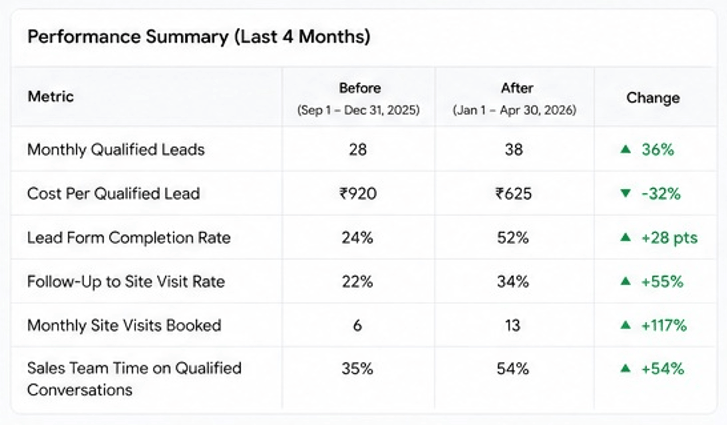
55% Improvement in Follow-Up to Site Visit Conversion (from 22% to 34%)
32% Lower Cost Per Qualified Lead (within 4 months) and 36% Increase in Site Visit Bookings (from Meta leads)
28% Higher Lead Form Completion Rate
Conclusion
Meta had not failed this developer the way the campaigns had been set up had. Broad audiences, weak creative, forms that said nothing useful and a follow up process that gave up too quickly were the real problems. When all of those things were fixed together the channel started delivering what it was always capable of. Cost per qualified lead came down by 32%, site visit bookings nearly doubled and the sales team stopped wasting half their day on contacts that were never going to convert. Facebook and Instagram work for real estate when the campaign is built around how a serious buyer actually thinks and what they need to see and feel before they are ready to visit a site.
If your property leads from Facebook and Instagram are coming in but not converting into site visits, the problem is in how the campaigns are structured and how the leads are being followed up on. Share your current Meta setup with Arihant Global and we will go through it and tell you exactly what needs to change to start generating leads that your sales team can actually work with.
Why Businesses Choose Arihant Global
Real estate developers come to Arihant Global for Meta advertising because they have usually already tried it and been let down by the lead quality. Running Facebook and Instagram campaigns for property is not about generating volume it is about attracting the right buyer at the right stage of their decision and giving them enough information and trust to take the next step. We build campaigns around buyer intent signals, develop creative that speaks to real concerns rather than just showing project renders and structure lead forms and follow up processes that turn digital interest into actual site visits. That is what makes the difference between a campaign that looks busy and one that actually sells property.