Industry: D2C Ecommerce Home Goods and Kitchen Products

Services Delivered: Shopify SEO Audit · Product and Collection Page Optimization · Technical SEO · Content Strategy · Schema Implementation

Engagement Duration: 5 Months

The Client
The client is a D2C home goods brand selling kitchen organizers, storage solutions, and sustainable kitchenware through their Shopify store and two marketplace channels. Founded in 2020, the brand had built a following through Instagram and word of mouth, and had been investing in Meta Ads to drive Shopify traffic since 2021.
By 2024, their paid traffic economics had worsened. Meta CPMs had increased significantly from 2022 levels, and the ROAS on their best-performing campaigns had dropped from 4.1× to 2.3×. The brand’s Shopify store was generating around ₹2.1 lakh per month in organic revenue but organic traffic had been flat for fourteen months despite the brand adding 40+ new products. They came to Arihant Global to fix the organic stagnation before it became a structural revenue problem.
The Challenge
Shopify SEO Default Architecture Was Working Against Them
Shopify creates predictable technical SEO problems when used with default settings and no Shopify SEO configuration. The brand’s store had several of these simultaneously: collection pages were generating both /collections/kitchen-storage/ and /collections/kitchen-storage?sort_by=price-ascending URLs that were being indexed as separate pages. Product variants (different colours of the same product) were creating near-duplicate product pages. And the default Shopify canonical tag implementation had not been reviewed or customized, meaning some collection pages were self-canonicalizing incorrectly.
Zero Content on Collection Pages
The brand’s collection pages which should have been their highest-traffic commercial pages contained nothing beyond a product grid and a page title. No descriptive text, no buying guide content, no FAQ, no internal links. Google had no content signal to distinguish their ‘bamboo kitchen organizers’ collection from any other kitchen organizer retailer. These pages were effectively invisible for high-commercial-intent category searches.
Product Page Thin Content
Product descriptions averaged 60–80 words and were largely copied from supplier briefs. Several products in the same category had near-identical descriptions with only the product name changed. User reviews existed in Shopify but were not displaying in a format that Google could parse for rich result eligibility the reviews app being used did not generate Product schema with Aggregate Rating, so the brand was invisible for star-rating rich snippets in search results.
No Blog Content, Zero Topical Authority
The brand had a Shopify SEO blog section that contained three posts two of which were brand announcements and one product launch update. There was no content targeting the research-stage queries that home goods buyers use before making purchase decisions: product comparisons, material guides, organization tips, size and specification guides. Competitors with active content strategies were capturing this research traffic and earning the brand awareness that converts later into direct purchase intent.
The Approach
Phase 1 Months 1–2 Technical SEO and Shopify SEO Configuration
The technical work addressed Shopify SEO problems first. Faceted navigation URLs were handled through a combination of canonical tags and robots.txt disallow rules that prevented collection filter pages from consuming crawl budget. Product variant pages were canonicalized to their parent product URL. The reviews app was replaced with one that generated valid Product schema with Aggregate Rating making 64 product pages immediately eligible for star-rating rich snippets in Google search results. Internal linking was restructured so the homepage, top-level navigation, and blog content all linked to collection pages with consistent, keyword-informed anchor text.
Phase 2 Months 2–4 Collection and Product Page Content Rebuild
Shopify Collection pages were rebuilt with 200–350 words of genuine category-level content: what the product category is, who it is best suited for, what materials and size considerations to look for, and how the brand’s products address those considerations. Each collection page received an FAQ section targeting the top People Also Ask queries for that category. Product descriptions were rewritten from scratch for the 40 highest-traffic products written for the buyer, not from a spec sheet. Each description addressed use case, material, dimensions, care instructions, and common buyer questions.
Phase 3 Months 3–5 Blog Content and Topical Authority
A content plan of 16 blog posts was built around the research-stage queries buyers in the brand’s category were using. Topics included material comparison guides (bamboo vs. stainless steel), organization guides for specific kitchen sizes, product pairing recommendations, and buying guides for their top-selling product sub-categories. Each post was internally linked to the relevant collection page. By month five, 8 of these posts were ranking on page one for their target queries and driving measurable referral traffic to the collection pages they linked to.
The Results
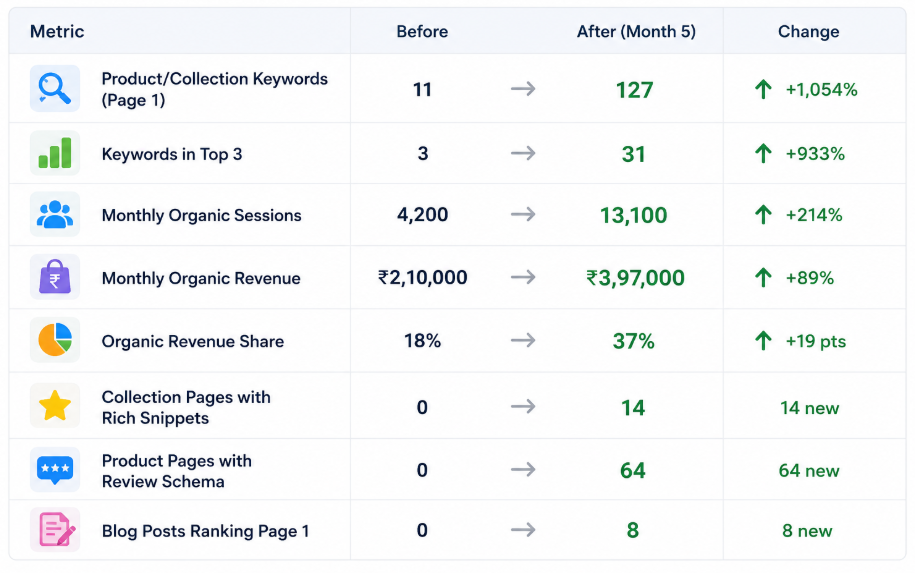
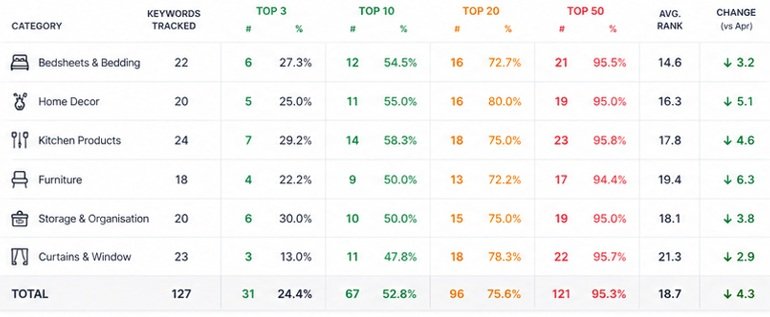
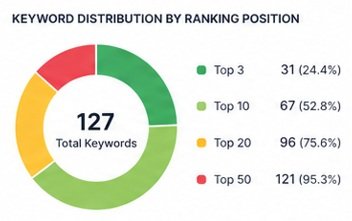
We Ranked Shopify website on 120+ product keywords
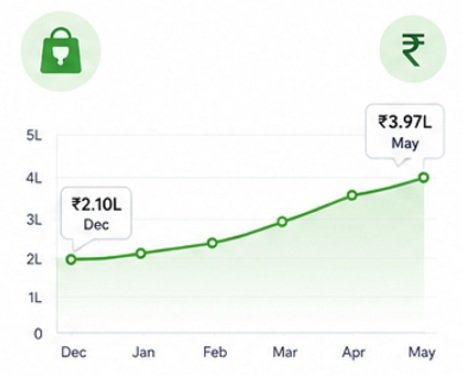
we Increased Monthly Organic Revenue by 89%
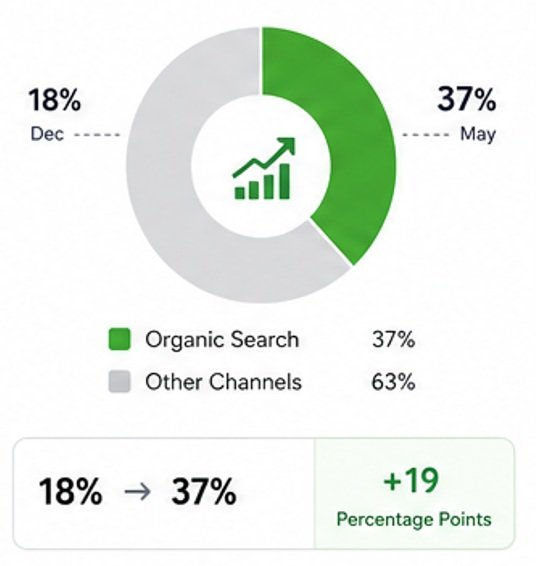
Organic Revenue Share increased by +19%
Key Takeaways
- Shopify’s defaults are not SEO defaults: Faceted navigation, variant canonicalization, and review schema implementation all require active configuration. Default Shopify is actively unhelpful on these points.
- Collection pages are the commercial SEO asset: A D2C Shopify brand’s collection pages are the equivalent of a service business’s service pages they capture high commercial intent and they need content, not just products.
- Reviews schema is a conversion and ranking tool: 64 product pages becoming eligible for star-rating rich snippets was free it required replacing one app and a schema configuration. The CTR improvement from star ratings in search results directly contributed to the traffic and revenue growth.
Conclusion
Long-term ecommerce growth comes from building strong organic visibility, not relying only on paid advertising. Through technical SEO, optimized product and collection pages, and a content-first strategy, Arihant Global helped this Shopify brand turn organic search into a major revenue channel. Want sustainable ecommerce growth? Partner with Arihant Global for Shopify SEO strategies that drive rankings, traffic, and sales.
Disclaimer
The results shown are based on a specific Shopify SEO engagement. Performance varies depending on website condition, competition, product demand, content quality, and overall SEO implementation.