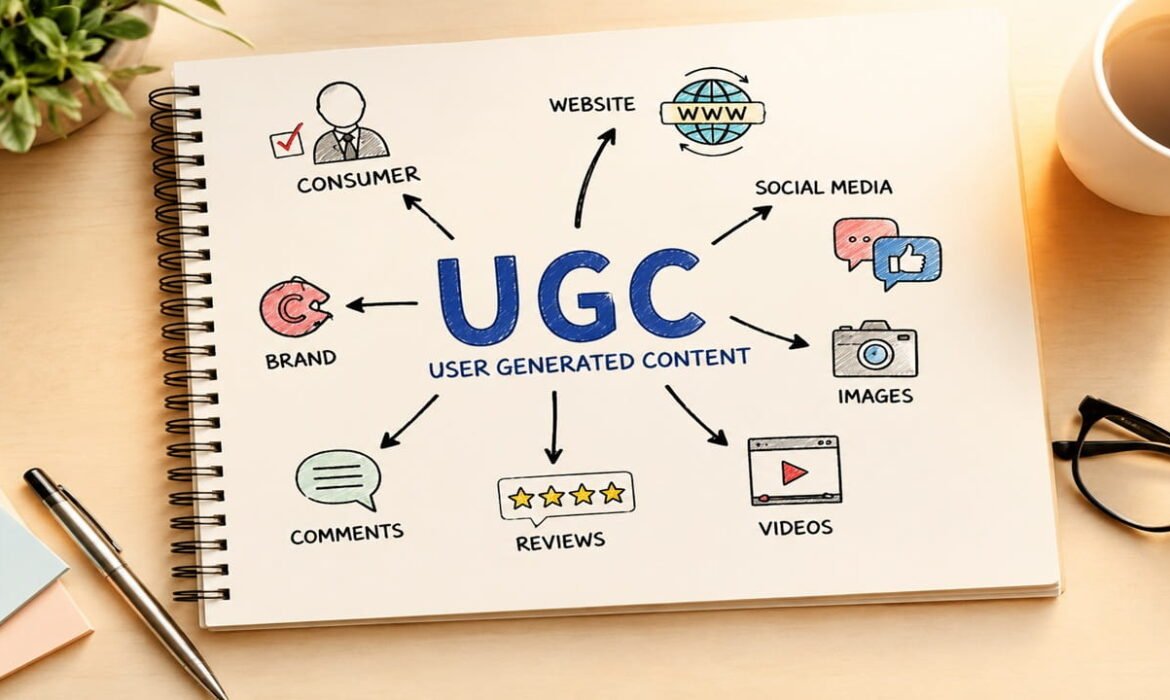
Most brands eventually notice the same thing their own polished, professionally shot content doesn't always outperform a shaky phone video from an actual customer talking about the product. That's not a fluke. People trust other people more than they trust an ad, no matter how good the ad looks. That trust gap is exactly why user generated content has become less of a nice bonus and more of a core part of how brands actually market themselves now.

The tricky part isn't understanding why UGC works. It's building a system that consistently gets it, without just waiting around and hoping customers post about you unprompted.
What is User Generated Content?
User generated content is, simply, anything created by real customers or fans rather than the brand itself a review, a photo, an unboxing video, a tweet, a Reel showing the product in actual use. What makes it valuable isn't the production quality. It's that it doesn't look or sound like marketing, even though functionally, it absolutely is.
A quick way to spot whether a brand is actually using UGC well: check the last several posts on their feed or ads. Is there a mix of real customer content alongside the brand’s own? Or is everything clearly shot and scripted in-house? Accounts leaning entirely on polished brand content are usually leaving one of the most persuasive formats sitting completely untouched.
How User Generated Content (UGC) Improves Marketing Performance
Turning scattered customer content into an actual marketing channel takes more than just hoping people tag the brand occasionally. UGC marketing is the deliberate process of encouraging it, collecting it, and then actually putting it to work across ads, the website, and organic posts.
A workable UGC marketing approach usually includes:
- A clear, easy way for customers to actually share content a branded hashtag, a simple prompt at checkout, something low-effort
- Permission requests built into the process, so content can be reused without an awkward DM after the fact
- A system for actually collecting and organizing what comes in, instead of it getting lost in tagged posts nobody checks
- A plan for where that content actually gets used ads, the website, product pages, email
Without that last step, a lot of UGC just sits there being nice to look at and never actually does any work for the business.
What Are UGC Content Creators and Why Do Brands Hire Them?
Not every business gets enough organic UGC to work with, especially early on. That’s where UGC content creators come in people who create authentic-feeling, customer-style content specifically for a brand to use, without necessarily being an existing customer or having any real following themselves.
A few things worth knowing about this space:
- UGC Content creators are paid for the content itself, not for their reach the content usually gets used in the brand’s own ads and posts, not the creator’s
- It tends to be noticeably cheaper than traditional influencer marketing, since audience size isn’t part of the deal
- The best briefs still leave room for a natural, unscripted feel over-directed UGC-style content tends to look exactly like what it is, an ad in disguise
- It works especially well for performance ads, where that authentic, testimonial-style feel often outperforms polished brand creative
Genuine customer UGC and paid UGC-style content usually work best together, not as a choice between one or the other.
How User Generated Content Increases Ecommerce Sales
Ecommerce is where UGC tends to earn its keep the fastest, mostly because a shopper on a product page is actively trying to decide whether to trust what’s in front of them.
| UGC Placement | What It Does |
| Product page photos/videos from real customers | Builds trust right at the decision moment |
| Reviews with photos attached | Adds credibility beyond just star ratings |
| UGC-style ads (testimonials, unboxings) | Often outperforms polished brand ads in cost per result |
| Instagram Shopping tagged posts | Lets browsing turn into buying without leaving the app |
| Email featuring customer content | Reinforces trust for anyone still deciding |
A single well-placed customer video on a product page can move conversion rate more than another round of professional photography usually does.
When Should You Work with a UGC Marketing Agency?
At some point, collecting, organizing, and actually deploying UGC across every channel becomes more than an internal team can consistently manage, especially on top of everything else marketing requires. That’s usually when a UGC marketing agency actually earns its place.
What that tends to look like in practice:
- Setting up systems to actually collect UGC consistently, not just hoping it shows up
- Sourcing and briefing paid UGC creators to fill gaps where organic content is thin
- Handling usage rights and permissions properly, so nothing gets used without consent
- Testing UGC against brand-made content in ads, to actually prove which performs better rather than assuming
Common User Generated Content Marketing Mistakes to Avoid
- Never actually asking customers to create or share content, then wondering why there’s none
- Using UGC without getting proper permission first
- Over-scripting paid UGC creators until it stops feeling authentic
- Collecting UGC but never actually using it anywhere beyond the original post
- Treating all UGC the same, instead of testing what actually performs in ads versus what just looks nice organically
Industries That Benefit Most from User Generated Content
- Ecommerce
- Beauty & Skincare
- Fashion
- Food & Beverage
- Fitness & Wellness
- Travel & Hospitality
- Tech & Gadgets
Product-based businesses tend to see the fastest, clearest wins, though service businesses benefit too, usually through testimonials and client success stories.
How Arihant Global Builds High-Performing UGC Campaigns
At Arihant Global, UGC work starts with building an actual system for collecting content, rather than hoping it shows up on its own. That’s the unglamorous first step, and it gets skipped a lot elsewhere, but even the best UGC strategy falls flat without a steady, reliable way to gather it. Once that’s in place, the focus shifts to sourcing paid UGC creators where gaps exist, securing proper usage rights, and actually testing this content against brand-made creative in ads so decisions are based on what’s proven to work, not just what looks good.
Our User Generated Content Marketing Process
- Audience & Customer Discovery
- UGC Collection System Setup
- Paid Creator Sourcing (where needed)
- Permissions & Usage Rights Management
- Content Curation & Organization
- Deployment Across Ads, Site & Social
- Performance Testing
- Monthly Reporting
Frequently Asked Questions – User Generated Content
Q1. What counts as user generated content?
Basically anything a real customer or fan creates that features the brand, without the brand having produced it themselves a photo, a review with an image attached, an unboxing video, a tweet, a Reel showing the product in daily use. What makes it valuable is exactly that it wasn't made by the brand, which is part of why people trust it more than they trust something obviously scripted and shot in-house.
Q2. Why does UGC often outperform brand-made content?
Mostly because it doesn't look or feel like an ad, even though it's doing the same job. People have gotten fairly good at tuning out polished marketing, but a real customer talking about their actual experience reads as more honest, even if the production quality is nowhere close to professional. That perceived authenticity tends to translate into better trust and, often, better ad performance too.
Q3. What's the difference between UGC and influencer content?
Influencer content usually comes with an existing audience attached part of what's being paid for is that reach. UGC, whether organic or from a paid UGC creator, isn't really about reach at all; it's about the content itself being used elsewhere, typically in the brand's own ads or on its own channels. A UGC creator might have almost no following of their own and that's completely fine, since their followers were never the point.
Q4. Do I need permission to use customer content?
Yes, always, even if it feels like a formality for something small. A simple comment asking permission, or a note in the brand's terms about tagged content, usually covers it but using someone's photo or video in paid ads without any consent at all is a real risk, both from a trust standpoint and, depending on where the business operates, potentially a legal one too.
Q5. How do I get more customers to actually create content?
Usually by making it easy and giving them a reason to bother. A branded hashtag helps, but a specific prompt works even better asking for a photo at checkout, running a small incentive, or simply being the kind of brand that replies to and reshares customer posts. People are more likely to create content when they can see that someone's actually going to notice it.
Q6. Is paid UGC as effective as organic UGC?
Often, yes, especially in ads, since a well-briefed paid UGC creator can produce that same authentic, unscripted feel without a business having to wait around for real customers to post. The main thing to watch is over-directing the brief the second it feels scripted, it starts looking exactly like what it secretly is, and a lot of that trust advantage disappears.
Conclusion
If your brand’s marketing feels like it’s all coming from one voice yours that’s usually a sign UGC is an untapped opportunity, not a lost cause. Arihant Global can help build a system for collecting real customer content, sourcing the right paid creators to fill the gaps, and actually putting all of it to work across ads and social. Reach out and let’s talk through what that could look like for your brand.
Ready to Turn Customer Stories Into Marketing That Converts?
Build a UGC strategy that helps your brand collect authentic content, improve ad performance, and build stronger customer trust.
→ Talk to Arihant Global About Your UGC Campaign
Disclaimer
The information shared in this article is for educational purposes and reflects general marketing practices. Actual outcomes may differ based on business objectives, campaign strategy, audience behavior, content quality, and implementation.