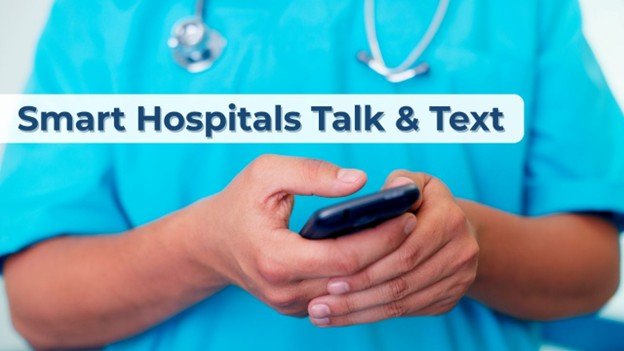
In an evolving digital landscape, the hospitals and healthcare centers need to adopt technology to facilitate smooth operations. Among other cost-effective and reliable communication options, bulk SMS (Short Message Service) and IVR (Interactive Voice Response) are two of the most amicable available solutions. The innovations have the potential to completely transform how hospitals think about patient interactions, health alerts, appointment reminders, and operational efficiency. Hospitals and other health providers will need to embrace technology if they seek to deliver better care in an increasingly digital world. Bulk SMS (Short Message Service) and IVR (Interactive Voice Response) systems are two of the most dependable and affordable communication solutions on the market today. These solutions have the potential to completely transform how hospitals handle patient interaction, health warnings, appointment reminders, and operational efficiency.
This article examines how healthcare providers can improve patient happiness and streamline communication by utilizing bulk SMS and IVR.
Why Communication Matters in Healthcare
A key component of providing high-quality patient care is effective communication. The health outcome of a patient can be greatly impacted by missed appointments, postponed examinations, and a lack of prompt medical advice. Conventional means of communication, such as emails or phone calls, are no longer enough. They are costly, time-consuming, and frequently disregarded.
IVR and bulk SMS offer an automated and scalable way to:
- Cut down on no-shows
- Increase compliance among patients
- Distribute health alerts in real time
- Provide individualized treatment
What is Bulk SMS?
Sending a huge number of text messages to a number of recipients at once is known as Bulk SMS. It is:
- Instantaneous: Within seconds, messages are delivered.
- Direct: Delivered directly to the patient’s mobile device.
- Cost-effective: Much less expensive than making manual calls.
- Widely accessible: The recipient does not need internet access.
What is IVR?
An automated phone system called Interactive Voice Response, or IVR, enables callers to communicate with a computer by either keypad inputs or voice commands. It is able to:
- Assist patients in scheduling appointments
- Approve or cancel appointments
- Get results of tests or health information
- Get feedback from patients
Benefits of Bulk SMS for Hospitals
1. Appointment Reminders
Forgetfulness is one of the main causes of patients missing appointments. No-show rates are considerably decreased by sending an SMS reminder 24–48 hours prior to a scheduled appointment.
Example Message:
“Reminder: You have an appointment with Dr. Sharma on 10th May at 4:00 PM. XXXX Hospital Name”
2. Health Campaign Alerts
Hospitals can notify patients about upcoming health check-up camps, vaccination drives, or awareness campaigns.
Example Message:
“Free Diabetes Screening Camp at City Hospital, 12–14 May. Call 1800-123-456 for registration.”
3. Test Result Notifications
When lab results are available for pickup or online viewing, hospitals can send an SMS alert instead of making several calls.
Example Message:
“Your lab test results are now available. View them securely at www.cityhospital.com/results”
4. Prescription Refill Reminders
People with chronic illnesses frequently need to take medication on a regular basis. They can receive an SMS reminding them to review or replace their medicines.
Example Message:
“Hi Sudesh, it’s time to refill your BP medication. Please visit the pharmacy or call 1800-123-456.”
Benefits of IVR for Hospitals
1. Automated Appointment Booking
Without having to wait for an operator, patients can plan or reschedule appointments by calling a specific hospital number and navigating a voice-guided IVR menu.
Example:
“Press 1 to book an appointment. Press 2 to speak to a nurse. Press 3 to check lab report status.”
2. Multilingual Support
Regional languages can be supported by IVR, facilitating more inclusive communication, particularly for older or rural people.
3. Feedback Collection
IVR-assisted post-treatment calls can gather feedback, enhancing patient happiness and service quality.
Example:
“Please rate your experience with our hospital. Press 1 for Excellent, 2 for Good, 3 for Poor.”
4. Emergency Announcements
IVR can disseminate critical instructions, such revised OPD hours, COVID policies, or staff reassignments, during outbreaks or medical situations.
Integrating SMS & IVR with Hospital Management Systems
Hospitals must incorporate these communication technologies with their current Electronic Health Records (EHR) or Hospital Management System (HMS) for optimal efficacy. This makes it possible for:
- Updates on appointments in real time
- Automatic synchronization of patient data
- Messages customized to each recipient’s medical history
- Reports and analytics for administrators
This integration is smooth because to APIs and dashboards that may be customized on modern cloud-based platforms.
Ensuring Compliance & Data Privacy
Regulations like these must be followed when communicating healthcare:
- HIPAA (in the U.S.)
- NDHM guidelines (in India)
- GDPR (in the EU)
Hospitals need to make sure that:
- Consent from the patient is acquired before communicating via SMS or IVR
- Information that is sensitive is encrypted
- There are options for opting out
- Only authorized staff are permitted access
Real-World Use Case: Apollo Hospitals
One of the biggest healthcare organizations in India, Apollo Hospitals, makes considerable use of SMS and IVR systems:
- SMS for health alerts and appointment confirmations
- IVR for effectively handling customer support call routing
- Voice reminders that are automated for patients in chronic care
This has resulted in:
- 30% less appointments were missed
- 50% rise in patient involvement
- Increased reliability and belief in the brand
Best Practices for Hospitals
1. Personalize Messages
To personalize the message, include the names of the patients, doctors, and pertinent medical information.
2. Maintain Message Timing
Don’t send texts too early in the morning or too late at night.
3. Use Short and Clear Language
Steer clear of medical jargon. Make sure your message is clear and concise.
4. Test IVR Flows
To prevent confusion or drop-offs, thoroughly test your IVR system. The selections should be placed properly, and the voice should be clear.
5. Collect Feedback
Get patient input on a regular basis by using IVR or SMS. This can enhance general care delivery and communication.
Challenges to Consider
Although the advantages are obvious, there are certain difficulties as well:
- In rural areas, poor coverage of mobile networks
- Senior citizens who are not familiar with IVR systems
- Language barriers in English for SMS
- Older populations’ resistance to digital communication
Offering messaging in regional languages, having human backup support, and educating patients while they are in the hospital are some solutions.
Future of SMS & IVR in Healthcare
The next generation of SMS and IVR will be even more potent with the emergence of AI-powered voice bots and Intelligent messaging systems. While rich SMS formats (RCS) can contain buttons, links, and graphics, voice AI is better at understanding patient intent.
Hospitals are anticipating:
- Chatting with patients in both directions
- Voice bots for patient inquiries 24/7
- Campaigns using many channels (SMS, WhatsApp, email, and IVR)
Conclusion
IVR and bulk SMS are becoming required communication tools in contemporary hospitals; they are no longer optional. When carefully applied, they can:
- Cut down on missed appointments
- Improve the experience of patients
- Boost the effectiveness of operations
- Encourage sustained involvement
Hospitals that make these investments now will be better able to provide patient-centered, individualized, and timely treatment in the future.
AI-powered voice bots awareness campaigns bulk message sender bulk messaging bulk messaging service Bulk SMS bulk SMS and IVR bulk sms api bulk sms marketing bulk sms sender bulk sms service bulk sms service provider bulk text messaging bulk texting customer relationship management in hospital free bulk sms online free bulk sms sender health check-up camps hospital administration software hospital information management system hospital management application Hospital Management System hospital management system modules intelligent messaging systems interactive voice response IVR ivr call center ivr service provider ivr solutions ivr system mass texting service revenue cycle management in medical billing send bulk sms online send bulk text messages send bulk texts smart hospital management system sms blast software for hospital vaccination drives