
Executive Summary
There’s a trap a lot of brands fall into once they’ve been around long enough every single piece of content starts sounding like a pitch. Every blog post ends with a call to action, every social post is quietly trying to sell something, and at some point, without anyone really noticing, the audience just stops listening. That was more or less where this client landed. A financial services and investment advisory firm with a genuinely solid existing client base, but newer visitors kept bouncing off their content because, honestly, it read like an ad no matter what it claimed to be about.
We came in to help them rework their whole approach to content build things that actually taught people something, without a sales angle wedged into every paragraph. It felt genuinely risky to them at first. Publishing content that didn’t push a product felt, to them, like giving something away for nothing. But that’s exactly the thing that started rebuilding the trust that had been quietly leaking away for a while.
Results Snapshot
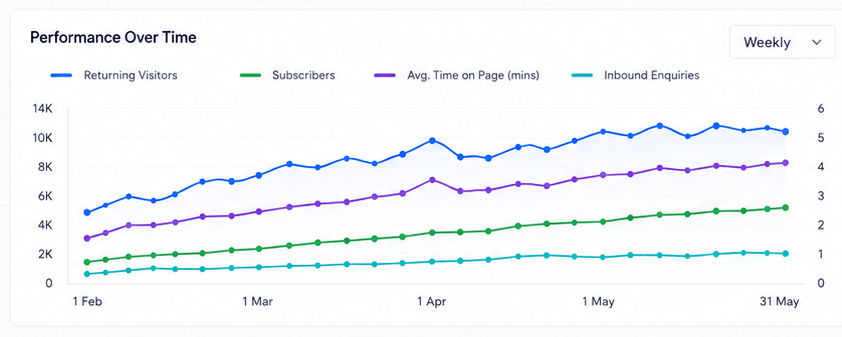
112% Increase in returning website visitors
64% Growth in newsletter subscribers
2.9x Increase in time spent on content pages
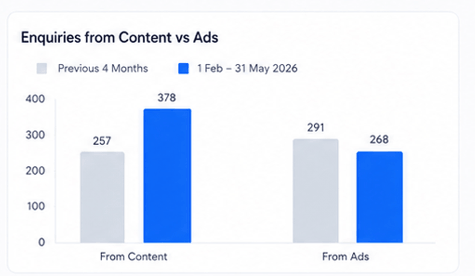
47% Rise in inbound enquiries from content, not ads
Background and Context
The client had been publishing content for years, and almost all of it followed the same shape a thin explanation of some financial concept, followed almost immediately by a pitch for their advisory services. Not dishonest, exactly. Just obviously self-interested in a way people picked up on pretty fast, even if they couldn’t quite say why a piece felt off. New visitors would read one or two articles, sense where it was heading, and quietly never come back.
Meanwhile, some of their competitors, particularly the newer fintech-style brands, had built genuinely loyal followings by publishing content that helped people actually understand money without trying to close a deal in the same breath. The client could feel that gap even before we put numbers to it people would sit through a first consultation still visibly guarded, asking questions that made it pretty clear they hadn’t fully bought into the advice yet, even after they’d walked through the door.
The Challenges
Once we dug into it, a few things stood out fast. Almost every piece of existing content was built around a product pitch rather than an actual question a reader had, which meant it wasn’t ranking well either search engines, much like people, tend to notice when content exists to sell rather than to explain. There was no consistent voice running through any of it. Different writers, different tones, some pieces overly technical, others dumbed down to the point of being useless. Nothing addressed the more basic, honest questions people actually sit with, things like “is now even the right time for me to be investing” or “what happens if I need this money back sooner than planned,” because those kinds of questions don’t lead neatly into a pitch. And there wasn’t any real Content strategy stitching pieces together into something that built expertise over time it was scattered, reactive, published whenever someone got around to it.
Approach and Strategy
Phase 1: Being Honest About What Was Actually Educational (Days 1–15)
We went through their entire Educational content library and sorted it, as honestly as we could content that genuinely taught something, versus content dressed up as education that was really just a pitch wearing a disguise. Most of it fell into the second bucket, which was a hard thing for the client to sit with, but it’s exactly what needed to happen before anything else could improve.
Phase 2: Starting From What People Actually Wanted to Know (Days 10–25, overlapping)
Instead of starting from what the client wanted to promote, we started from what their audience genuinely wanted to understand pulling from search data, customer service tickets, and the actual conversations their advisors were having with clients week after week. Some of the best content ideas came straight from questions their own team answered constantly but had never bothered writing down anywhere.
Phase 3: Rebuilding the Content From the Ground Up (Days 20–50)
This is where the real shift happened, honestly. We rewrote things to answer the actual question first, with any mention of the client’s services pushed to the very end, framed as one option worth considering rather than the obvious answer to everything. Some pieces ended up not mentioning the client’s products at all. That made the client uncomfortable at first, understandably. But that discomfort is kind of the whole point content that doesn’t need to sell you anything is exactly what earns enough trust that people eventually buy something anyway.
Phase 4: Building a Voice People Could Actually Trust (Days 35–55, overlapping)
We worked with the client’s real advisors and specialists to build content around actual named expertise instead of anonymous copy sitting on a page. That mattered a lot in a category like financial advice, where people genuinely want to know there’s a real, qualified person behind what they’re reading, not just a brand talking at them.
Phase 5: Actually Sticking to a Publishing Rhythm (Days 50–75)
Instead of the scattered, whenever-someone-remembers approach from before, we set up a real content calendar built around building expertise gradually foundational topics first, more advanced or niche ones later so someone who came back a second or third time actually had somewhere to go next, instead of hitting a dead end after one article.
Phase 6: Watching Trust, Not Just Traffic (Ongoing from Day 60)
We kept an eye on things that actually reflect trust rather than just clicks how many people came back, how long newsletter subscribers stuck around, how far people scrolled and how long they stayed on a page, and eventually, how enquiries coming from content compared to enquiries coming from ads in terms of how far along people already were in actually deciding to work with the client.
Results
| Metric | Before | After |
| Returning website visitors | Baseline | +112% |
| Newsletter subscribers | Baseline | +64% |
| Average time on content pages | 1:40 | 4:50 |
| Inbound enquiries from content | Small share | +47% |
| Content pieces ranking page 1 | 12 | 41 |
| First-consultation conversion rate | Baseline | Noticeably higher |
We Increased Returning Visitors & Subscribers

Over Time Educational content marketing Performance
Honestly, the number that mattered most to the client wasn’t on this table at all. It was hearing, from their own advisors, that people arriving through content now showed up already trusting the advice being given, instead of sitting through a first meeting looking visibly unconvinced. That’s the kind of change that’s hard to put a percentage on, but everyone on their team noticed it pretty quickly.
Conclusion
This project really comes down to a simple, slightly uncomfortable truth content that’s obviously trying to sell you something rarely earns real trust, no matter how well it’s written. What actually moved things here was the client being willing to publish content that genuinely helped people, even when it didn’t push a product in every paragraph, even when it felt, at first, like giving something away for free. Ironically, that’s exactly what brought people back, kept them reading longer, and got them to an actual consultation already halfway convinced, because the brand had already shown it wasn’t just there to close a sale.
Want Educational content Marketing to build real trust instead of just chasing clicks?
Talk to Arihant Global about a Educational content strategy built around genuinely helping your audience first.
Why Businesses Choose Arihant Global
A lot of content marketing quietly optimizes for the pitch instead of the reader, and audiences can tell, even when they can’t quite articulate why something feels off. Arihant Global builds educational content Marketing strategies that put the reader’s actual question first, backed by real expertise and a voice people learn to trust over time. The goal was never content that gets clicked once and forgotten it’s content that brings people back, earns their trust before they ever talk to your team, and makes the eventual sale feel like an obvious next step instead of a hard pitch.
Disclaimer
Results reflect this client’s specific market and circumstances. Content marketing outcomes vary based on industry, audience, execution, and consistency, and past performance doesn’t guarantee similar results for other businesses.