
Executive Summary
Festive season for an ethnic wear brand is a bit like exam season for a student who’s put off studying all year everything that actually matters gets crammed into one short window, and if you’re not ready when it arrives, there’s no second attempt until next year rolls around. That was exactly the pressure sitting on this client. A growing ethnic wear business selling sarees, lehengas, and festive menswear, doing reasonably well the rest of the year, but watching their festive season numbers flatten out for two years running, even while the overall ethnic wear market kept growing around them.
We came in a few months before the season started to build a real festive campaign strategy, and honestly, the brief wasn’t “run some ads during Diwali.” It was closer to treating the whole lead-up as an actual campaign its own timeline, its own content, its own momentum building toward launch day instead of switching ads on the week of the festival, which is basically what they’d been doing for years.
Results Snapshot
194% Increase in online orders during the festive period
68% Growth in new customer acquisitions
3.4x Return on ad spend during the campaign window
41% Increase in average order value
Background and Context
The client had a decent website and a genuinely loyal base of repeat customers, but their festive ecommerce marketing had always been kind of last-minute a burst of ads in the two weeks before Diwali, a handful of Instagram posts, whatever inventory happened to be photographed and ready. That approach worked fine when there was less competition around. But ethnic wear got crowded fast, with newer D2C brands treating festive season as the single biggest push of their entire year, planning months out with proper content calendars and early-access campaigns.
This client, in comparison, was basically showing up to the party right as it started, while everyone else had spent weeks building anticipation before the doors even opened. By the time this brand’s ads went live, customers who might have bought from them were already three scrolls deep into a competitor’s collection reveal.
The Challenges
Once we sat down and actually mapped out what had happened in previous seasons, a few gaps stood out fast. There was zero early anticipation-building no teasers, no “something’s coming” posts, nothing to get loyal customers excited before the sale technically started. Product photography and content usually weren’t ready until uncomfortably close to launch, which meant ads went out looking rushed and inconsistent instead of the polished festive aesthetic customers expect from brands in this space. Nobody had ever really separated new customers from returning ones everybody got the same generic “festive sale is on” message, whether they’d bought five times before or never heard of the brand. ecommerce Marketing and inventory weren’t talking to each other either, so ads regularly drove traffic to products that sold out within a couple of days, which is about as wasteful as ad spend gets. And there was no real retargeting for people who browsed a lot but didn’t buy right away, which during festive season, when everyone’s comparing five brands at once in the same tab, is a genuinely huge miss.
Approach and Strategy
Phase 1: Building the Timeline Way Earlier Than Usual (Days 1–15, roughly ten weeks out)
Instead of starting a couple of weeks before the festival like every year before, we laid out a full campaign calendar starting about ten weeks ahead a teaser phase, an early access phase, the peak sale window, and a final push in the last few days before the festival itself. Having all of that mapped out early meant every later phase had something to build toward, instead of everyone scrambling reactively the way they always had.
Phase 2: Getting Content Ready Before the Pressure Hit (Days 10–35, overlapping)
We worked with the client to get product photography shot well ahead of time, styled specifically around the new festive collection instead of reused catalog shots. Sounds like a small thing, but festive shoppers are extremely visual, and content that actually looks festive versus content that just looks like a regular product photo made a real, visible difference once campaigns went live.
Phase 3: Building Anticipation Before the Sale Even Opened (Days 25–45)
About four or five weeks out, we started a teaser campaign aimed specifically at existing customers and warm audiences sneak peeks of the collection, early access sign-ups, countdown content leading up to launch day. This was the piece that had been completely missing before. It gave the client’s most loyal customers an actual reason to show up on day one instead of drifting in whenever they happened to remember.
Phase 4: Speaking Differently to New vs. Returning Customers (Days 35–70, overlapping)
Instead of one generic sale announcement going out to everyone, we built two separate tracks early access and loyalty-driven messaging for returning customers, and a more discovery-focused, first-impression campaign for people who’d never bought from the brand before. Each group needed a genuinely different reason to click, and treating them identically had quietly been leaving money on the table for a couple of seasons already.
Phase 5: Making Sure Ecommerce Marketing and Stock Were Actually Talking (Days 40–75, overlapping)
We worked closely with the client’s inventory team to make sure ad budget was going toward products that could actually keep up with demand, instead of pushing traffic to things that would sell out in two days and leave that spend working for nothing. That meant checking in regularly and shifting focus as stock levels moved throughout the season.
Phase 6: Chasing the People Who Browsed But Didn’t Buy Yet (Days 50–85)
Festive shoppers almost never buy on the first visit they compare, they screenshot, they come back a few days later once they’ve made up their mind. We built a proper retargeting sequence for anyone who’d browsed without purchasing, with messaging that shifted as the festival got closer, building a genuine sense of urgency in the last few days without it feeling like a fake countdown clock.
Results
| Metric | Before | After |
| Online orders during festive window | Baseline | +194% |
| New customer acquisitions | Baseline | +68% |
| Return on ad spend | 1.9x | 3.4x |
| Average order value | Baseline | +41% |
| Products selling out within 3 days | A recurring problem | Rare, and mostly intentional |
| Repeat customer early-access orders | Never really tracked before | 22% of total festive orders |
194% Increase in online orders and 68% Growth in new customer acquisitions
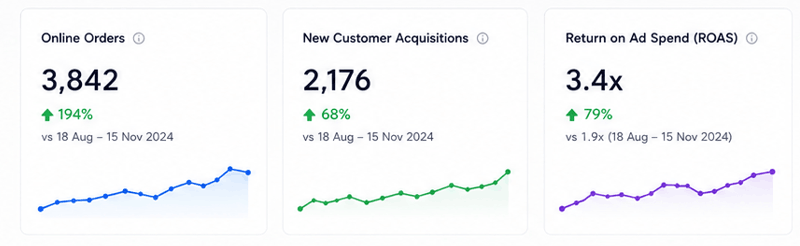
Online Order performance over time

What actually caught the client off guard was how much of the surge happened before the “real” sale even began. That teaser and early-access phase alone brought in a meaningful chunk of orders from customers who clearly didn’t want to risk missing their size or waiting around. That’s revenue that simply hadn’t existed in past seasons, because nothing before launch day had ever given anyone a reason to pay attention early.
Conclusion
This one really comes down to treating festive season like the campaign it actually deserves to be, instead of a rushed two-week sprint bolted onto business as usual. Building anticipation weeks ahead, having content ready before the pressure hit, talking to loyal customers differently than first-time visitors, keeping Ecommerce marketing and inventory in sync, and following up with people who browsed but hadn’t bought yet none of that is complicated on its own. But doing all of it together, and starting early enough for it to actually land, is what turned two flat festive seasons into the biggest one this business had ever had.
Want your next festive season to feel less like a scramble and more like a real plan?
Talk to Arihant Global about building a festive campaign that starts early enough to actually work.
Why Businesses Choose Arihant Global
Festive Ecommerce marketing for ethnic wear isn’t just about switching ads on during the sale it’s about building anticipation ahead of time, keeping Ecommerce marketing and inventory in sync, and speaking to loyal customers differently than first-time visitors, all on a timeline that doesn’t leave everything to the last two weeks. Arihant Global plans festive campaigns the way they actually need planning early, properly segmented, and tightly coordinated with what’s really in stock, so the biggest season of the year doesn’t get wasted on last-minute scrambling.
Disclaimer
Results reflect this client’s specific market and circumstances. Ecommerce Marketing outcomes vary based on product, competition, region, budget, and execution, and past performance doesn’t guarantee similar results for other businesses.