
A D2C fashion label reached out after noticing something odd in their analytics. Their branded searches were healthy, people knew the name, but almost nobody was finding their actual products when searching for things like "linen co-ord set" or "block print maxi dress." Amazon and Myntra listings for nearly identical products were outranking their own website, for their own designs.
Background & Context
- Client:
- Sector: Fashion & Apparel (D2C, Women’s Contemporary Wear)
- Engagement: 7 months
- Service: E-commerce SEO (Fashion)
The brand had been running for about four years, sold primarily through its own website with a smaller presence on two marketplaces, and had built a loyal repeat-customer base mostly through Instagram. Revenue was steady but almost entirely dependent on people who already knew the brand name, either from social media or word of mouth.
The problem showed up clearly once we pulled search data. For category terms, the kind of searches someone runs when they don’t have a specific brand in mind yet, the website barely appeared. Meanwhile their own products, listed on marketplaces by the brand itself, were ranking well for those exact terms. They were essentially helping Amazon outrank their own site for their own designs.
Ecommerce SEO Challenges
Product pages were the core issue. Titles were things like “Product 4521” or a stylized name with no descriptive text, which meant Google had almost nothing to match against an actual search query. Descriptions, where they existed, were short marketing copy written for someone already on the page, not for someone trying to find the page in the first place.
Category pages had similar problems, thin content, no real structure around the way people actually search for fashion, by fabric, occasion, silhouette, season. A search for “cotton kurta for office wear” had no page on the site built to answer it, even though they had dozens of products that fit.
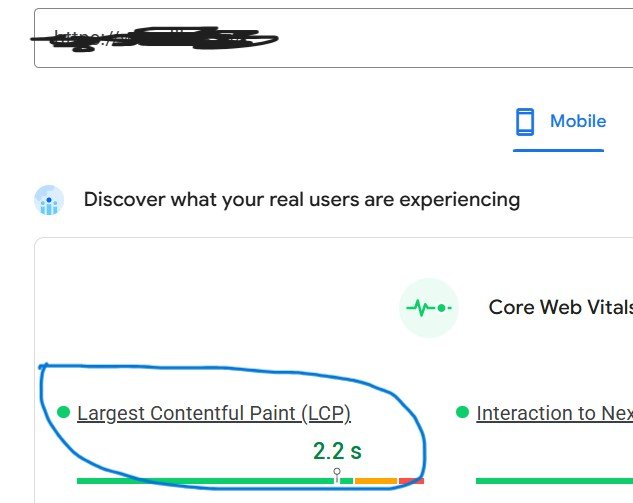
There was also a technical issue nobody had caught: their product images, which were genuinely well shot, weren’t optimized at all, some running past 2MB each, which was dragging page speed down badly on mobile, where most of their shoppers actually were. And with a catalog that changed seasonally, older product URLs were going dead every few months without redirects, quietly losing whatever ranking they’d built up.
Ecommerce SEO Approach, Strategy & Solution
We rewrote product page SEO titles and descriptions around how people actually search, fabric, fit, occasion, styling context, without losing the brand’s voice in the process. This took longer than expected since we worked page by page with their content team rather than templating everything, but it meant the copy still sounded like the brand and not like it had been optimized by a machine.
Category pages got rebuilt around real search intent instead of just internal catalog categories. Instead of only “Dresses” and “Tops,” we built pages like “Cotton Co-ord Sets” and “Wedding Guest Ethnic Wear,” each with enough real content to actually rank, alongside the products themselves.
We compressed and properly tagged every product image, fixed the redirect chain so seasonal product turnover stopped bleeding ranking value, and cleaned up a decent backlog of broken internal links that had built up over a few catalog migrations.
On the authority side, Arihant global ran outreach toward fashion and lifestyle publications for gift guides and seasonal roundups, the kind of feature that doesn’t just bring a backlink but occasionally sends a real spike of relevant traffic on its own.
Results
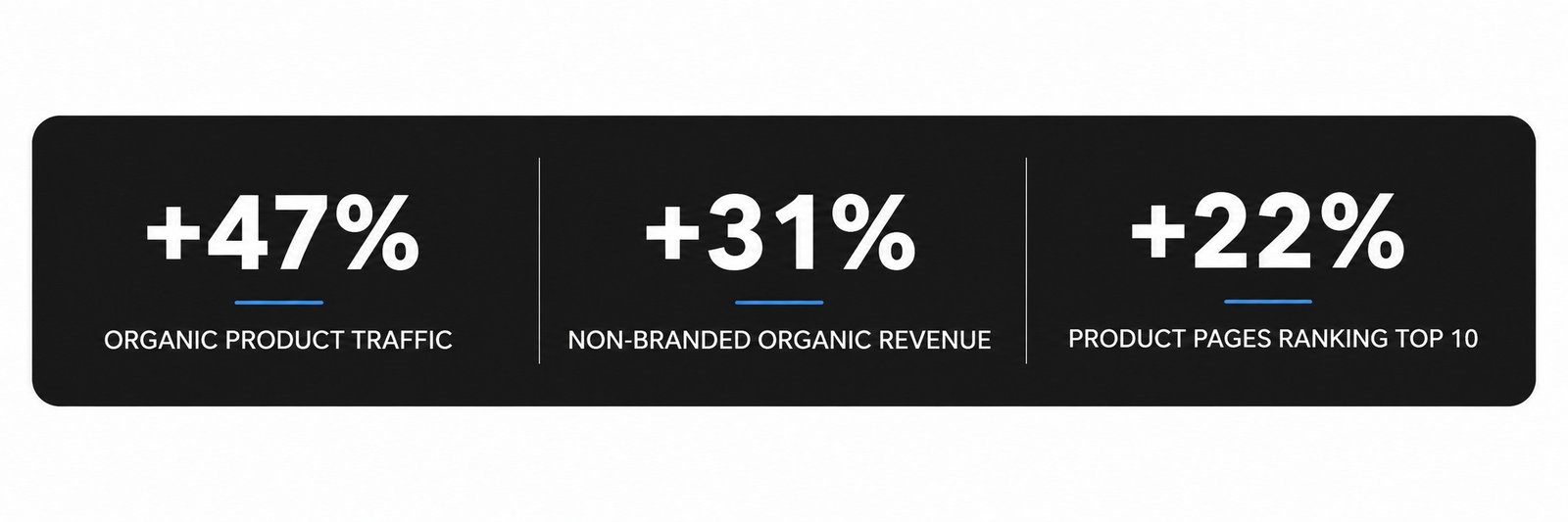
Seven months, spanning two seasonal collection launches. Movement was slow through the first two months while new pages got indexed and reworked content settled into rankings, then picked up noticeably from month three onward.
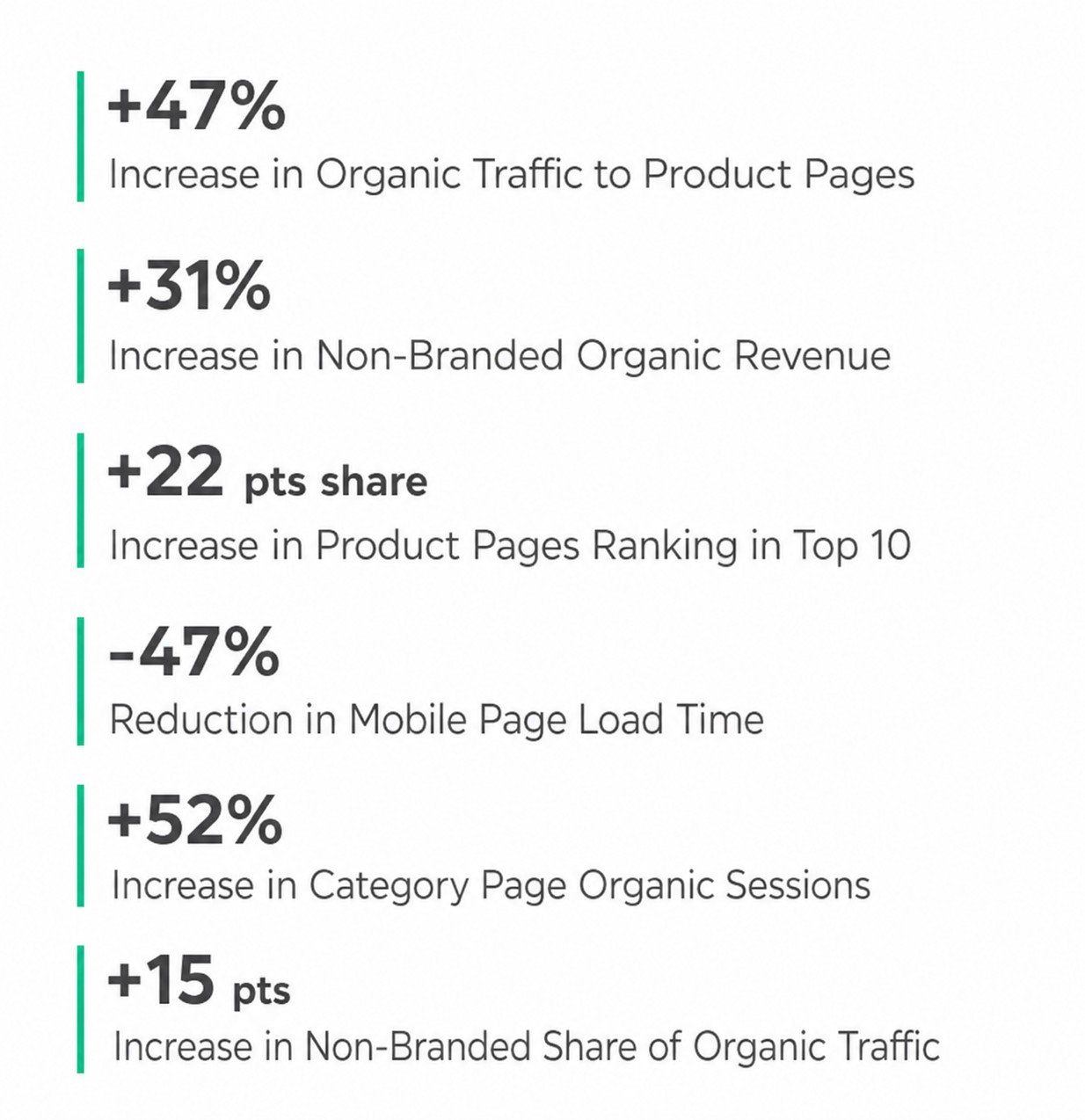
Somewhere around month five, their founder mentioned that a customer had messaged asking where they’d “found this exact dress on Google,” unprompted, just noting it as a nice surprise. Small thing, but it was the first real sign the site itself had become a discovery channel instead of just a place existing customers checked out on.
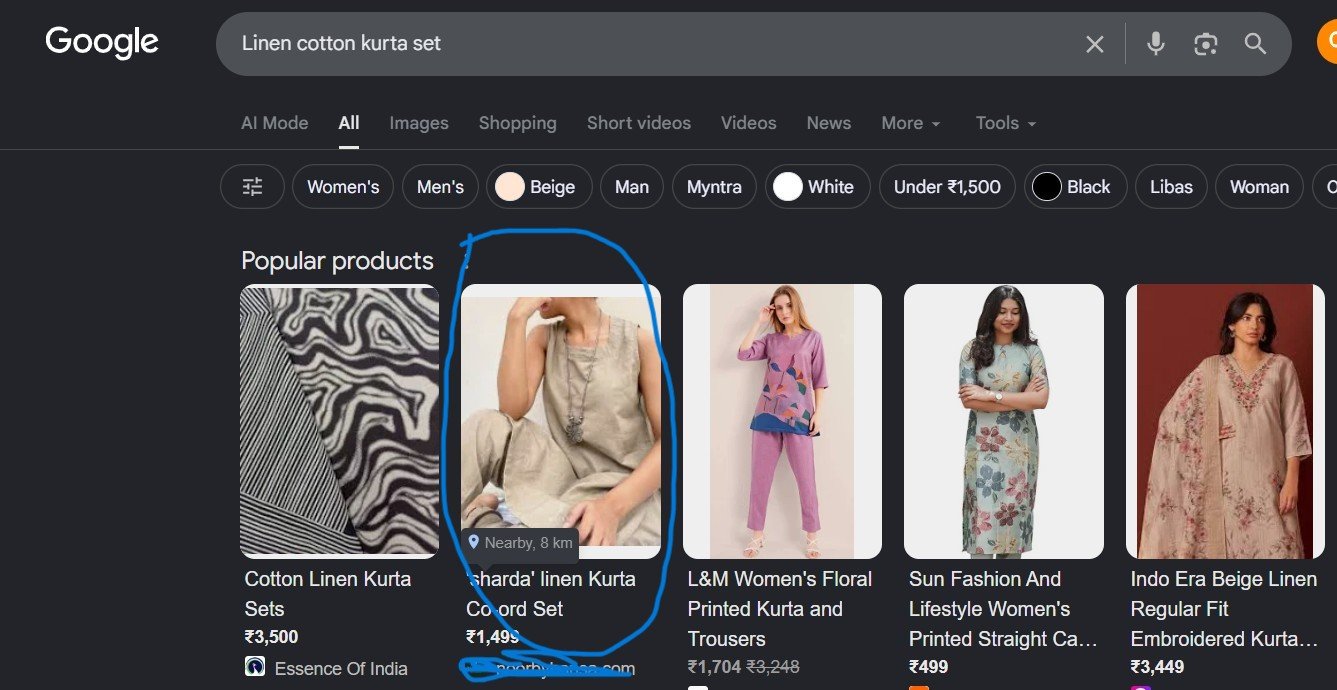
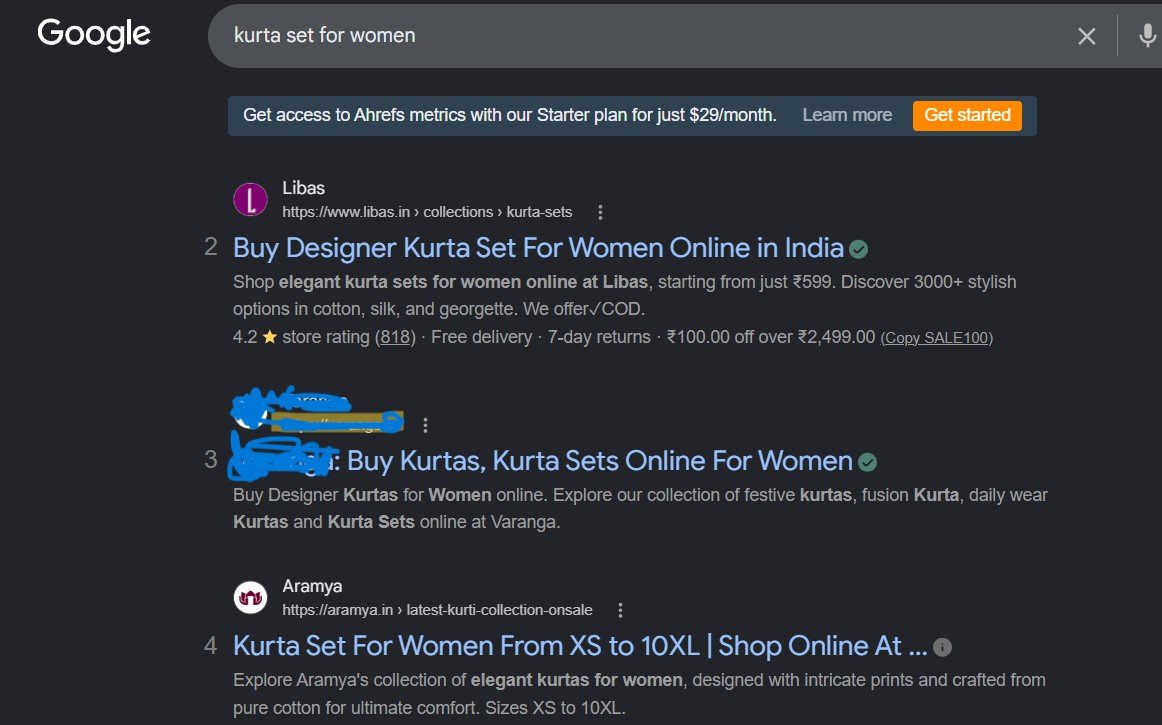
Product Page Ranking in Top 10
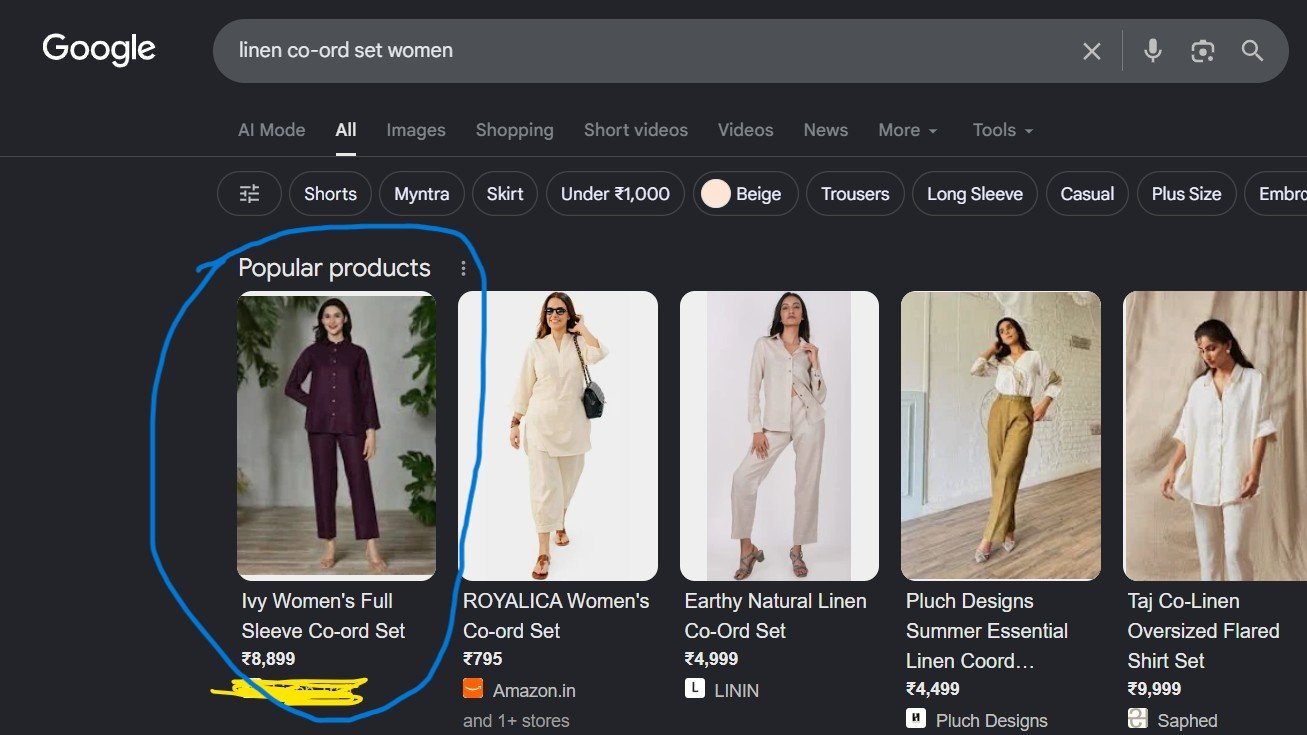
Mobile Page Loading Time Reduced
Ranked in Google’s Top 3 Search Results
Conclusion
The brand’s products were genuinely good, and they had real photography and real design work behind them. None of that mattered if Google couldn’t understand what was on the page well enough to show it to someone searching for it. Most of the fix wasn’t clever, it was just giving every page enough real, specific information to actually compete for the searches that mattered.
Curious What This Would Look Like for Your Brand?
Arihant Global will audit your current product and category pages for free, no changes made, just an honest look at what’s stopping Google from finding what you already sell.
Ask us for a free fashion Ecommerce SEO audit.