 When NestUp Co-Living (name anonymized) approached Arihant Global in the end oct 2025, their digital situation was bleak in a way that's surprisingly common among growing Prop Tech startups: a two-page website, zero SEO infrastructure, no content strategy, and a business entirely dependent on paid ads to generate tenant enquiries. For a brand trying to compete against established co-living operators with years of online authority, that starting point felt almost impossible.
Eight months later, it didn't feel that way at all.
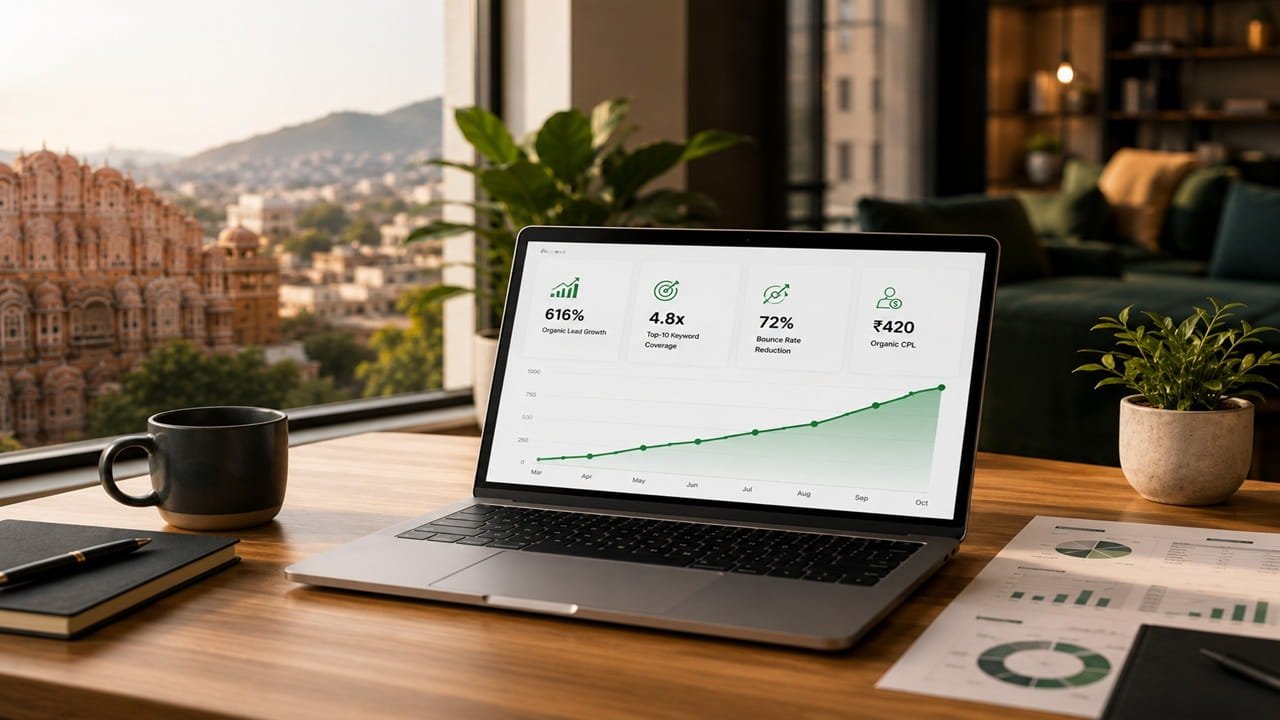
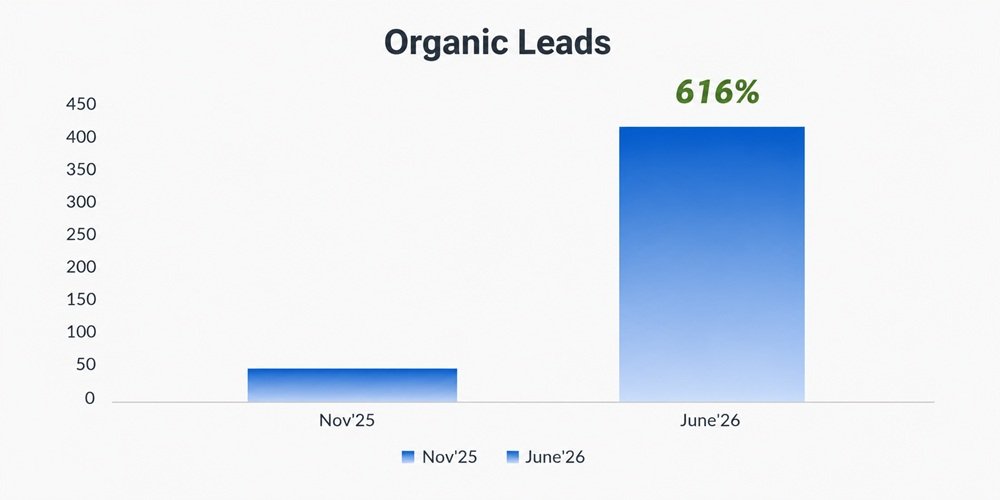
Through a structured, phase-wise SEO program covering technical foundations, programmatic location pages, UX redesign, content strategy, and local search optimization organic leads grew by 616%. Paid dependency dropped. Cost per enquiry from organic channels fell to ₹420 against a paid average of ₹1,850. The brand went from invisible on Google to ranking on the first page for over 140 high-intent co-living and PG queries across three cities.
When NestUp Co-Living (name anonymized) approached Arihant Global in the end oct 2025, their digital situation was bleak in a way that's surprisingly common among growing Prop Tech startups: a two-page website, zero SEO infrastructure, no content strategy, and a business entirely dependent on paid ads to generate tenant enquiries. For a brand trying to compete against established co-living operators with years of online authority, that starting point felt almost impossible.

Eight months later, it didn't feel that way at all.

Through a structured, phase-wise SEO program covering technical foundations, programmatic location pages, UX redesign, content strategy, and local search optimization organic leads grew by 616%. Paid dependency dropped. Cost per enquiry from organic channels fell to ₹420 against a paid average of ₹1,850. The brand went from invisible on Google to ranking on the first page for over 140 high-intent co-living and PG queries across three cities.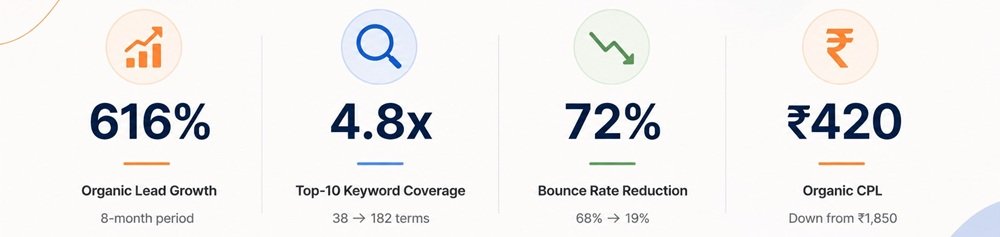
| BACKGROUND & CONTEXT
NestUp Co-Living launched in late 2024 with a clear market read: Jaipur's influx of IT professionals, BPO employees, and students from outside Rajasthan created a genuine demand gap between cramped, unregulated PG accommodations and expensive independent apartments. The founders built their first property in Mansarovar 42 beds, furnished rooms, high-speed internet, housekeeping and filled it almost entirely through Facebook groups and referrals within the first three months.

By early 2024, they had expanded to three properties across Jaipur, with a fourth in Pune and a fifth under construction in Delhi's Dwarka sector. Revenue had crossed ₹80 lakh annually. The referral model was still working, but the founders could see what was coming: as properties scaled from 3 to 10 to 20, word-of-mouth alone would not fill beds fast enough. And their paid ad spend already at ₹1.4 lakh per month was producing diminishing returns as competition from NoBroker, Stanza Living, and local PG aggregators intensified.

The website, built by a freelancer in 2024, had two pages: a homepage and an About Us page. No property pages. No pricing. No amenity detail. No location-specific pages. No blog. Anyone searching 'co-living in Jaipur' or 'furnished PG near Mansarovar' on Google found everyone except NestUp.
Company Snapshot at Engagement Start

🏢  Properties: 5 (3 Jaipur, 1 Pune, 1 Delhi pre-launch)

🛏  Total bed capacity: ~240 beds

💰  Annual revenue: ~₹80 lakh

📄  Website pages: 2

🔍  Organic monthly leads: 9

💸  Paid ad spend: ₹1.4 lakh/month
|
Target Tenant Profile

Working professionals aged 22–34 relocating for employment in Jaipur's IT, BPO, and manufacturing sectors. Typically searching Google for co-living or PG options 2–4 weeks before their planned move date. High intent, low tolerance for incomplete information if a property page doesn't show pricing, amenities, and availability, they move on within 30 seconds.

Secondary: students from outside Rajasthan enrolling in Jaipur's private universities, searching for 'girls PG near Sitapura' or 'co-living for students Jaipur' with shared-room budget constraints.
|
| CHALLENGES
The audit completed in the first two weeks of the engagement revealed five distinct, interlocking problems. None was unsolvable on its own. Together, they explained why nine months of business growth hadn’t produced a single meaningful organic ranking.
01
|
No website structure Google could evaluate

The two-page website gave search engines nothing to crawl beyond a homepage with 160 words of generic text and an About Us page with founder photos. There were no property pages, no amenity pages, no pricing, no location-specific content. Google cannot rank pages that don't exist. Co-living searchers never found NestUp because there was nothing to find.
|
02
|
Zero local SEO footprint across three cities

NestUp had three active Jaipur properties but no Google Business Profiles, no local schema markup, and no location-specific content. Searches like 'co-living near Sitapura industrial area' or 'furnished PG Mansarovar Jaipur' the highest-intent, most conversion-ready queries in the category were returning competitors exclusively. NestUp didn't appear for a single city-level search.
|
03
|
Paid-only dependency creating a fragile acquisition model

100% of qualified leads were coming through Meta and Google Ads at an average CPL of ₹1,850. Every time ROAS dropped or ad costs increased which had been happening consistently for six months lead volume fell immediately. There was no organic baseline to absorb the variance. The business had no floor on its lead generation, only a ceiling determined by how much the founders were willing to spend on ads each month.
|
04
|
Property pages that couldn't convert even paid traffic

The homepage the only destination for paid ad clicks had no above-the-fold pricing, no clear amenity list, no enquiry form visible without scrolling, and a mobile page speed score of 24/100. Bounce rate on paid traffic was 68%. People were clicking ads, landing on a page that answered none of their questions, and leaving within seconds. The paid spend was funding a broken funnel.
|
05
|
Competitive SERP landscape with entrenched aggregators

Co-living and PG searches in Jaipur were dominated by NoBroker, MagicBricks, NestAway, and Stanza Living brands with millions of pages, years of domain authority, and dedicated SEO teams. For a two-year-old brand with a 2-page website, competing head-to-head on broad terms like 'co-living in Jaipur' was not the starting point. A category entry strategy was needed, not a head-on challenge.
|
| APPROACH & STRATEGY
The overarching principle was simple: before any ranking can happen, the website needs to deserve to rank. For NestUp, that meant building the digital infrastructure that should have existed from day one and doing it in the right order.
Work was structured across four phases, each with defined deliverables and measurable checkpoints before the next phase began.
PHASE 1 Months 1–2
|
Technical Foundation & Website Architecture

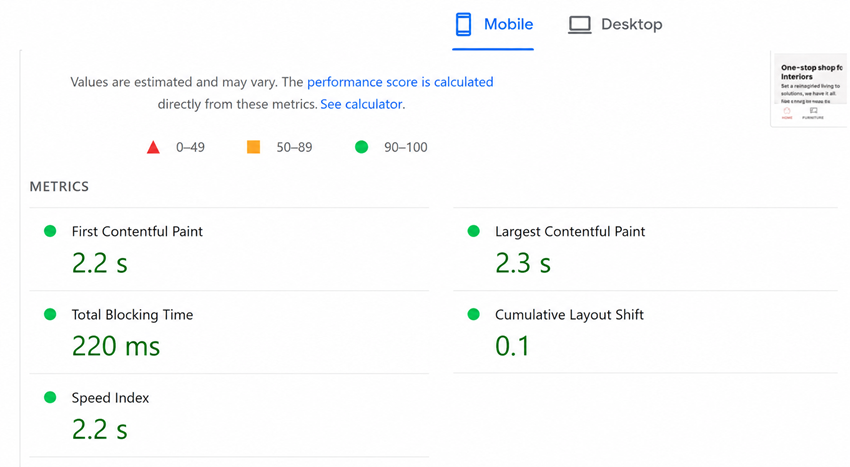
Full technical audit: fixed 31 crawl errors, implemented canonical tags, resolved duplicate title tags across property pages (once built), set up XML sitemap, submitted to Google Search Console, and fixed HTTPS redirect chains. Restructured the site architecture from 2 pages to 38 pages property pages for each location, amenity pages, city-hub pages, a pricing comparison page, and an FAQ hub. Each page built with a clear purpose, a defined keyword target, and a brief tied to real tenant search intent. Mobile Core Web Vitals fixed: LCP improved from 9.4s to 2.2s, CLS resolved, INP brought into 'Good' range.
|
PHASE 2 Months 2–4
|
Programmatic Location Pages & Local SEO

Built a programmatic SEO framework generating structured, crawlable pages for 48 location-specific query combinations: city + locality + gender + type (e.g., 'girls PG near Sitapura Jaipur,' 'co-living for professionals Dwarka Delhi,' 'furnished PG Hinjewadi Pune'). Each page included accurate property details, pricing ranges, amenity checklists, locality context, and an embedded enquiry form above the fold. Set up and fully optimised Google Business Profiles for all five properties: primary categories, services, photo sets (47–63 photos per location), Q&A responses, and a post-consultation review request system via WhatsApp. NAP consistency enforced across 12 local directories.
|
PHASE 3 Months 3–5
|
Property Page UX Redesign for Conversion

Rebuilt all five property pages with a user-first layout: clear above-the-fold headline with location and price range, visual amenity grid, transparent room-type pricing table, tenant testimonials section, neighbourhood guide (walkability to offices, metro, supermarkets), photo gallery with real images (not stock), and a sticky enquiry CTA visible at all scroll depths on mobile. Heatmap analysis confirmed that 61% of mobile users never scrolled past the first screen on the old pages. New layout moved all decision-critical information above that threshold. A/B tested enquiry form with 3-field vs 7-field version 3-field (name, phone, city) outperformed by 2.3x on completion rate.
|
PHASE 4 Months 4–8
|
Content Strategy & Topical Authority Build

Published 24 long-form blog posts targeting non-brand, informational, and comparison queries: 'co-living vs PG in Jaipur what's actually different,' 'how to find furnished accommodation before relocating for work,' 'what to check before signing a co-living agreement,' 'best localities for working professionals in Jaipur.' Each post was internally linked to a relevant property or location page. Six pieces secured featured snippet positions within 60 days of publishing. Content addressed the full tenant decision journey awareness, comparison, shortlisting, and booking ensuring NestUp appeared at every stage of the search.
|
| RESULTS
LCP improved from 9.4s to 2.2s
6x Improvement in Organic Leads – 8 Months
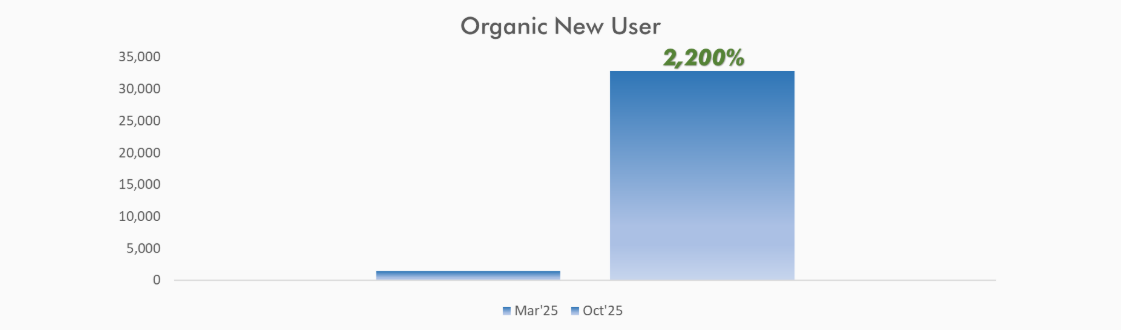
22x Improvement in Organic New User – 8 Months
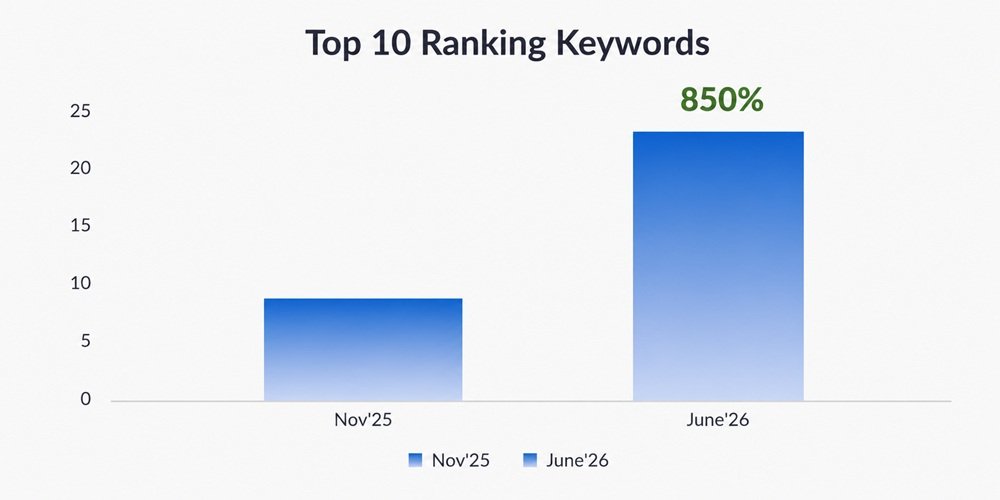
4.8x Improvement in Rankings – 8 Months
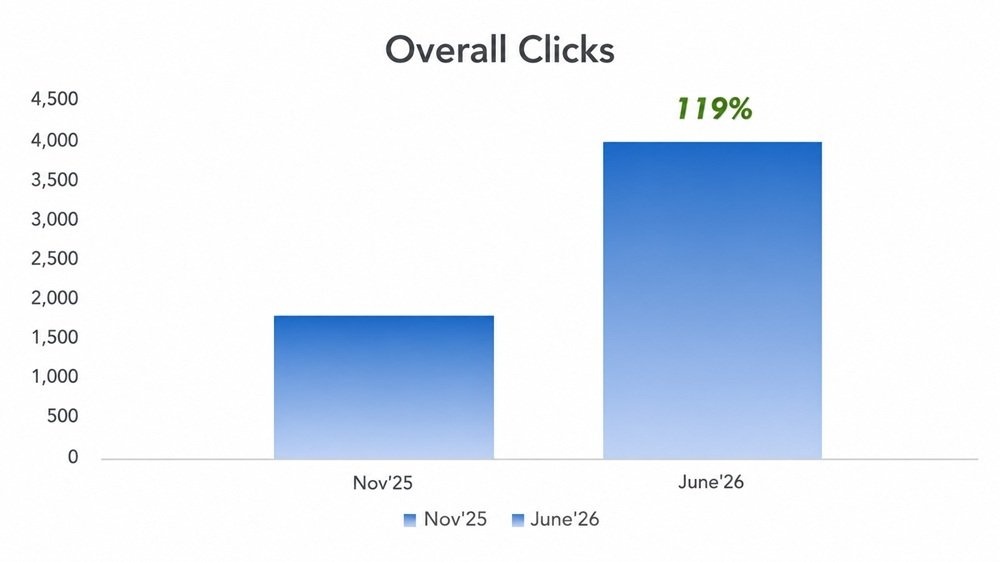
119% Improvement in Overall Clicks
► Occupancy rate: Jaipur properties reached 94% average occupancy by month 7 against a 71% baseline at engagement start. The Mansarovar property ran a waiting list for the first time.
► Paid ad dependency reduced: Monthly paid spend was reduced from ₹1.4 lakh to ₹72,000 by month 8 without a drop in total lead volume the organic channel absorbed the difference.
► Delhi pre-launch traction: The Dwarka property page built and optimised three months before the property opened was generating 14 organic enquiries per month by the time the property launched. Opening day had 22 confirmed bookings.
| CONCLUSION
NestUp’s situation at the start of this engagement isn’t unusual. Most early-stage co-living and PropTech brands build the product first and the digital infrastructure never or far too late. The result is a business with genuine commercial capability that Google simply cannot surface, because the signals it needs to do so don’t exist.
What changed here wasn’t the product. The rooms were the same. The pricing was the same. The amenities were the same. What changed was Google’s ability to understand what NestUp was, where it operated, who it served, and why someone searching for ‘co-living near Sitapura’ should land on a NestUp property page. That’s a solvable problem and it compounds. The 65 leads in month 8 aren’t the ceiling. They’re the baseline for month 9.
The ₹420 cost per organic lead tells the most important part of the story. At that number, every additional property NestUp opens has a customer acquisition model that makes economic sense at scale. That’s not a campaign result. That’s infrastructure.
Is Your Co-Living or Rental Brand Invisible on Google?

If your properties are filled by paid ads and referrals alone and you know that won't scale that's the problem we fix. Arihant Global specializes in building organic lead infrastructure for PropTech, co-living, and real estate brands that want to reduce paid dependency and grow without a leaking acquisition budget.

Start with a free SEO audit. No pitch. No templates. Just your data, honestly read.