Executive Summary
Client Industry: Healthcare Outpatient Clinic and Specialist Practice
Primary Challenge
Every week, confirmed appointments were quietly disappearing, and nobody at the clinic had a real way to stop it. Patients forgot they’d booked, turned up on the wrong day, or didn’t come at all often without any warning. The front desk was running everything off phone calls and a paper register, with no consistent way to remind people or track who was actually coming in.
Arihant Global’s Solution
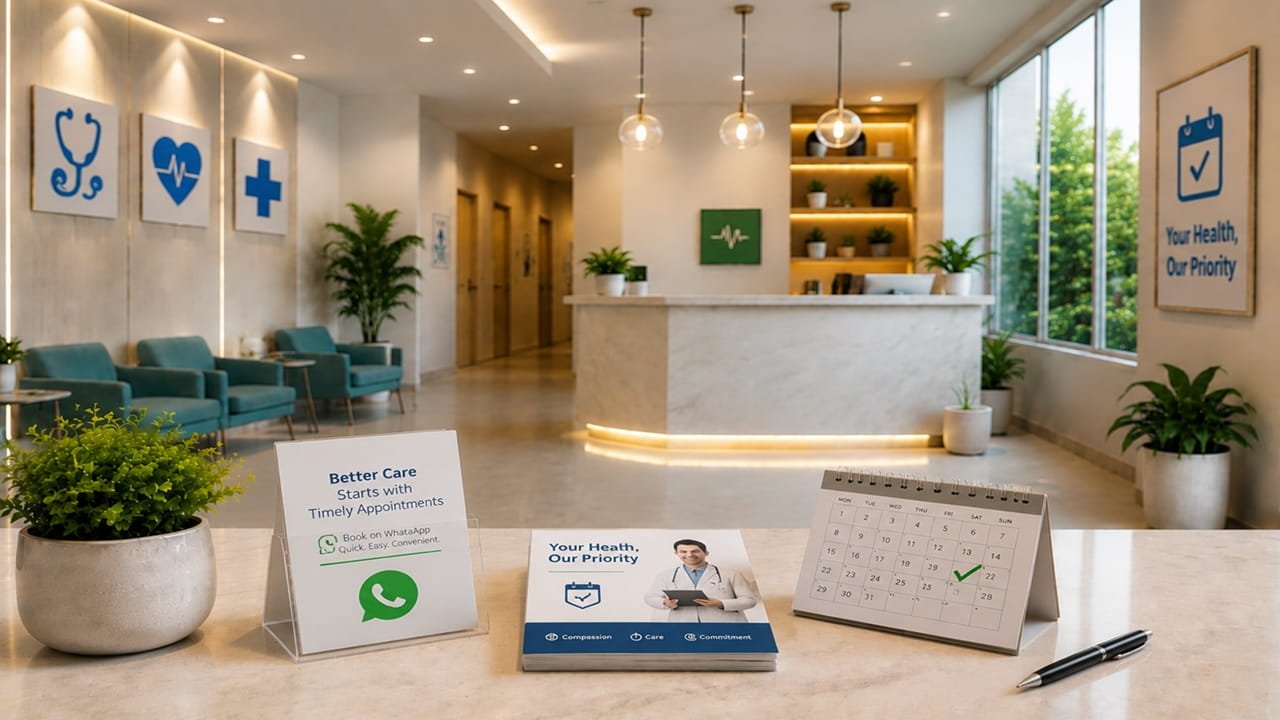
We built a WhatsApp marketing and communication system designed around how the clinic already worked, not against it. Patients got instant booking confirmations, reminders landed at the right moments, and confirming, rescheduling, or cancelling an appointment became as easy as replying to a text. No more missed calls. No more front desk staff chasing people down between patients.
Key Measurable Outcomes
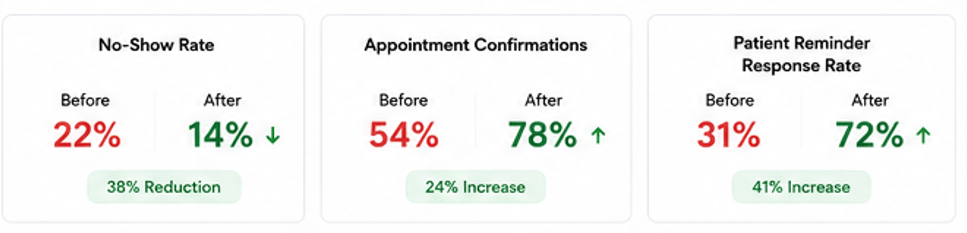
Missed appointments dropped by 38% within 3 months
Confirmation rate climbed from 54% to 78%
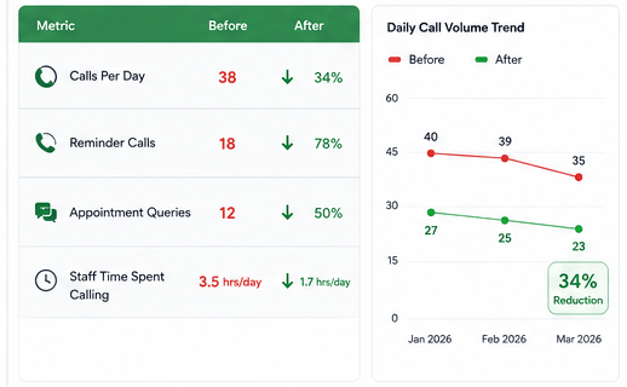
Front desk call volume fell by 34%
Seven out of ten patients responded to WhatsApp reminders
Background and Context
The client runs a specialist outpatient clinic that has been treating patients for over six years, covering general medicine and chronic disease management. It’s a busy practice the doctor sees between 20 and 28 patients a day, five days a week. But the appointment process itself hadn’t changed since the clinic opened. Patients called in to book, the front desk logged it in a register by hand, and someone would try to call and remind them the day before, if there was time. Most days, there wasn’t. The result was a no-show rate stuck around 22% of confirmed appointments, month after month slots the doctor and staff were ready to fill that patients simply never showed up for.
This is the exact gap that WhatsApp marketing is built to close. It’s not about running promotions or blasting offers for a clinic, it’s about using a channel patients already check constantly to keep them informed, engaged, and accountable to their own appointments.
Challenges
- No-show rate sitting at roughly 22% of confirmed appointments, week after week
- The only reminder system in place was an occasional phone call the day before inconsistent, and a drain on front desk time
- Patients who wanted to reschedule had no easy way to do it without calling during busy hours, so many just skipped the appointment instead
- Front desk staff were spending a large chunk of their day on booking calls, reminder calls, and follow-ups instead of helping patients who were physically in the clinic
- No way to track who had confirmed, who hadn’t responded, and who had cancelled everything lived in a paper register
- Last-minute cancellations weren’t reaching the clinic early enough to offer the freed-up slot to another patient
- Patient phone numbers were collected at registration but had never been used for any real communication beyond the odd reminder call
Approach, Strategy and Solution
We rolled this out over three months, with each phase building directly on the one before it, so the clinic ended up with a complete WhatsApp marketing and appointment management system rather than a patchwork of quick fixes.
Month 1: Audit, Setup and WhatsApp Business Configuration
We started by mapping out exactly how the existing process worked how bookings were taken, how (or if) reminders went out, where in the process no-shows were happening most, and which types of patients were least likely to confirm or show up. From there, we set up WhatsApp Business properly for the clinic. a verified Google business profile, accurate clinic details, listed consultation hours, and a professional greeting message that set the right tone from the first interaction. We also built a contact database from the clinic’s existing registration records, pulling in every patient with a mobile number on file and tagging each one with their appointment history.
Month 2: Automated Reminder Sequence and Booking Flow
This is where the WhatsApp marketing engine really came together. Every patient now receives a booking confirmation on WhatsApp the moment they schedule an appointment date, time, doctor’s name, and what to bring. A second message goes out 24 hours before the appointment, asking for a quick reply to confirm attendance. If there’s still no response, a final reminder lands two hours before the appointment. Every single one of these messages includes a simple way to reschedule or cancel by replying directly, removing the old barrier of having to call during clinic hours. If a patient cancels more than 12 hours out, the front desk gets an automatic alert so that slot can be offered to someone on the waiting list instead of sitting empty.
Month 3: Two-Way Communication and Performance Review
By the third month, the system could handle bookings coming the other way too. A patient could message the clinic’s WhatsApp number directly, and a guided flow would collect their name, preferred date, and reason for the visit before the front desk confirmed availability and sent back a formal booking confirmation. We also reviewed three months of appointment data to see which reminder touchpoints were driving the strongest confirmation rates, and whether particular patient groups needed extra follow-up. A few adjustments to message timing and wording followed, based directly on what the numbers showed was working.
Results
The change showed up first in how the front desk was spending its time. Within the first month, outbound reminder calls dropped noticeably, and for the first time in over a year, the no-show rate started moving downward instead of holding steady.
| Metric | Before | After |
| Monthly No-Show Rate | 22% of confirmed appointments | 14% of confirmed appointments |
| Appointment Confirmation Rate | 54% | 78% |
| Front Desk Call Volume per Day | 38 calls per day | 25 calls per day |
| Patient Response Rate to Reminders | Not measured | 72% |
| Cancellations Rescheduled vs Lost | Under 20% rescheduled | 44% rescheduled |
| Monthly Revenue Lost to No-Shows | Rs. 28,000 per month | Rs. 19,320 per month |
We Increased Patient Confirmations by 24% & Reduced No-Shows by 14%
We Reduced Front Desk Calls by 34%
Conclusion
The clinic wasn’t losing appointments because patients didn’t want to show up. It was losing them because there was no system making it easy for patients to confirm, reschedule, or flag a cancellation in time for that slot to be reused. Arihant Global built that system through a structured WhatsApp marketing approach in just three months. Missed appointments fell by 38%, confirmation rates jumped from 54% to 78%, and the front desk got a meaningful chunk of their day back from outbound calls. Revenue that had been quietly slipping away through empty slots started flowing back in. If your clinic runs a full schedule and loses a predictable slice of it every week to no-shows, the fix is a lot simpler than most clinic owners assume.
Talk to Arihant Global about what a WhatsApp marketing and appointment system could look like for your practice, and what a realistic drop in no-shows could mean for your monthly revenue.
Why Businesses Choose Arihant Global
Healthcare clinics turn to Arihant Global for WhatsApp marketing because no-shows are a revenue problem that compounds week after week, and fixing it doesn’t require expensive software or tearing up how the clinic already runs. Patients already have WhatsApp open on their phones every day the right setup, the right message sequence, and genuine two-way communication is usually all it takes to bring the no-show rate down in a real, lasting way. We design systems that fit into how a clinic already operates, rather than asking the whole team to change everything at once.
Disclaimer
Results reflect outcomes achieved for a specific client based on their patient volume and clinic setup. Individual results may vary depending on practice size, patient demographics, and implementation approach.