
There are two ways a D2C brand in India can grow on Meta Ads. The first is to spend more. The second is to spend smarter. Most brands try the first and never discover the second. This is the story of one that did.
The Client
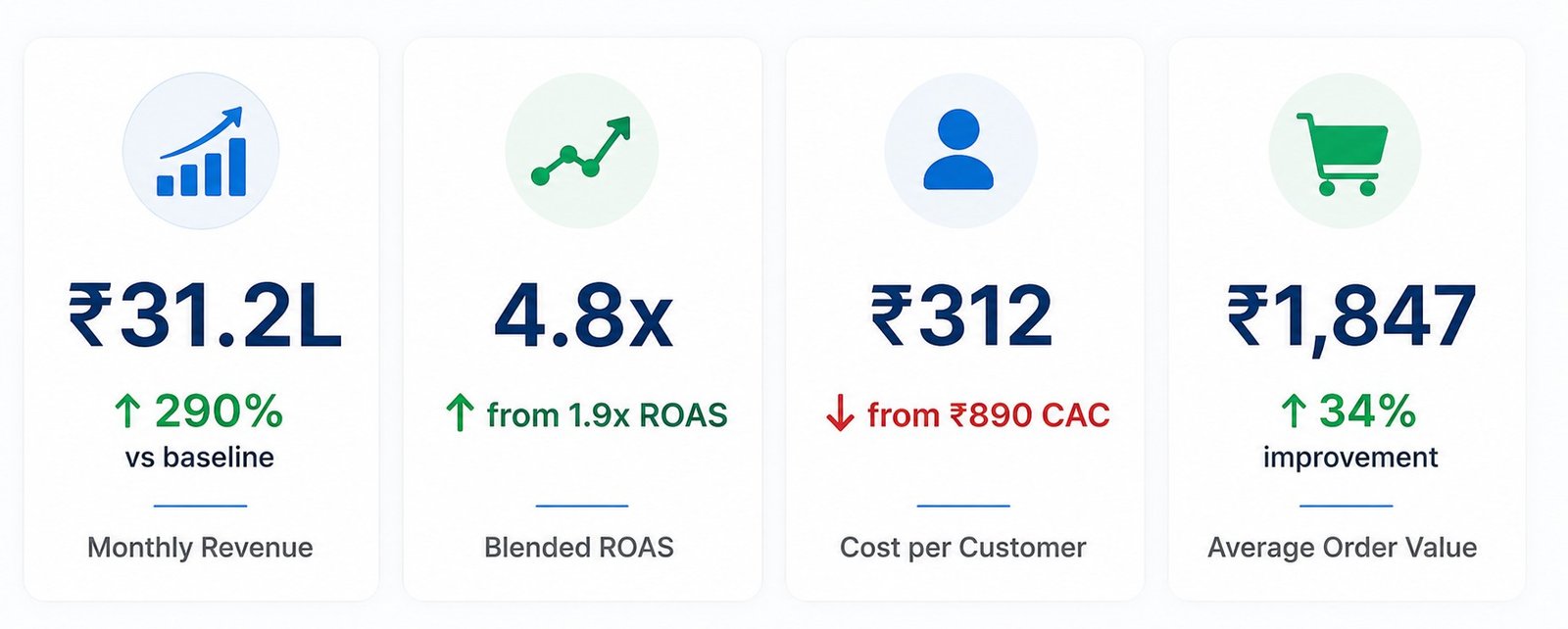
A Jaipur-based D2C skincare brand two founders, four hero products, Shopify store had been selling primarily through Instagram organically and occasional Meta Ads campaigns run in-house. Monthly revenue was sitting between ₹7–9 lakh consistently. Good enough to feel like momentum. Not enough to actually build a business. They came to Arihant Global in October 2024 with one clear ask: scale revenue without the ROAS collapsing. They had tried increasing budget before. Every time spend went up, ROAS went down. They had no idea why.
The Problem
What the audit found
The technical and account audit took four days. What it revealed was a pattern we see constantly in D2C brands that have grown organically and then tried to bolt paid advertising onto their existing setup.
1. One campaign, one ad set, broad audience India Meta's algorithm had no structure to optimize within

2. No Meta Pixel events firing correctly

3. No Conversions API (CAPI) configured

4. Landing page LCP of 6.2 seconds on mobile

5. No retargeting campaigns running

6. Creative: one static image used across all placements
Root cause

Revenue was stuck not because the product was wrong or the audience was wrong. It was stuck because the tracking was broken, the creative was mismatched to placement, and warm audiences the highest-converting segment in any D2C account were being ignored entirely.
|
What Arihant Global Did
Month 1 Foundation
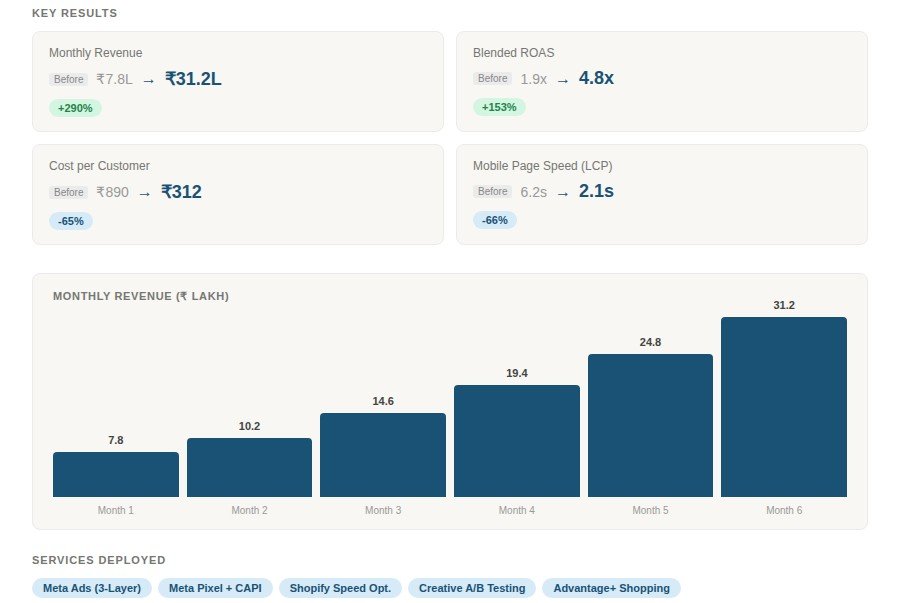
Week one was entirely technical. Meta Pixel reinstalled from scratch with correct event mapping. Conversions API configured via Shopify's native API integration. GA4 purchase events cross-referenced against Meta Ads Manager data to establish a true attribution baseline. Shopify store speed audit completed images compressed to WebP, Shopify theme unnecessary apps removed, LCP brought from 6.2s to 2.1s on mobile.
Month 2 Campaign Architecture Rebuild
The single campaign was replaced with a three-layer account structure. Top of funnel: broad interest and lookalike audiences targeting women aged 22-38 in Tier 1 and Tier 2 Indian cities with 15-second Reels showing the product in use. Middle of funnel: video view remarketing (people who watched 50%+ of the Reels) with carousel ads showing before/after user-generated content and ingredient benefits. Bottom of funnel: website visitor and Add to Cart abandoner retargeting with a direct-response offer ad and urgency copy.
Month 3–6 Scaling and Creative Testing
Creative testing ran on a two-week cycle. Each cycle tested one variable: hook (first 3 seconds), offer framing, or social proof format. Winning creatives were scaled. Losers were killed within 72 hours. Advantage+ Shopping campaigns were introduced in Month 4 for the two best-performing products, running alongside the manual campaigns. Budget increased from ₹60,000/month to ₹1,85,000/month but only as ROAS justified each increase, never in advance of the data.
Results at Month 6
| What made the difference
Fixing attribution before increasing spend. Most D2C brands increase budget hoping for more revenue. This brand fixed what was broken first which meant every rupee that was already being spent immediately performed better, and every rupee of new spend entered a system that could actually optimize correctly. |
Conclusion
This case study highlights how the right strategy, accurate tracking, and continuous optimization can turn marketing spend into sustainable business growth. Instead of chasing short-term results, Arihant Global focuses on building scalable digital marketing systems that deliver measurable ROI. If you’re ready to increase qualified leads, improve conversions, and grow your business with confidence, connect with Arihant Global today and let’s build your next success story.
Results Disclaimer
These figures reflect a specific campaign under specific conditions including product category, seasonality, creative quality, and market dynamics. Individual results vary.